This article first appeared as part of Patricia Clarke on technology. A new newsletter exploring the fascinating and frightening future being built around us – and the people engineering it. To sign up, click here.
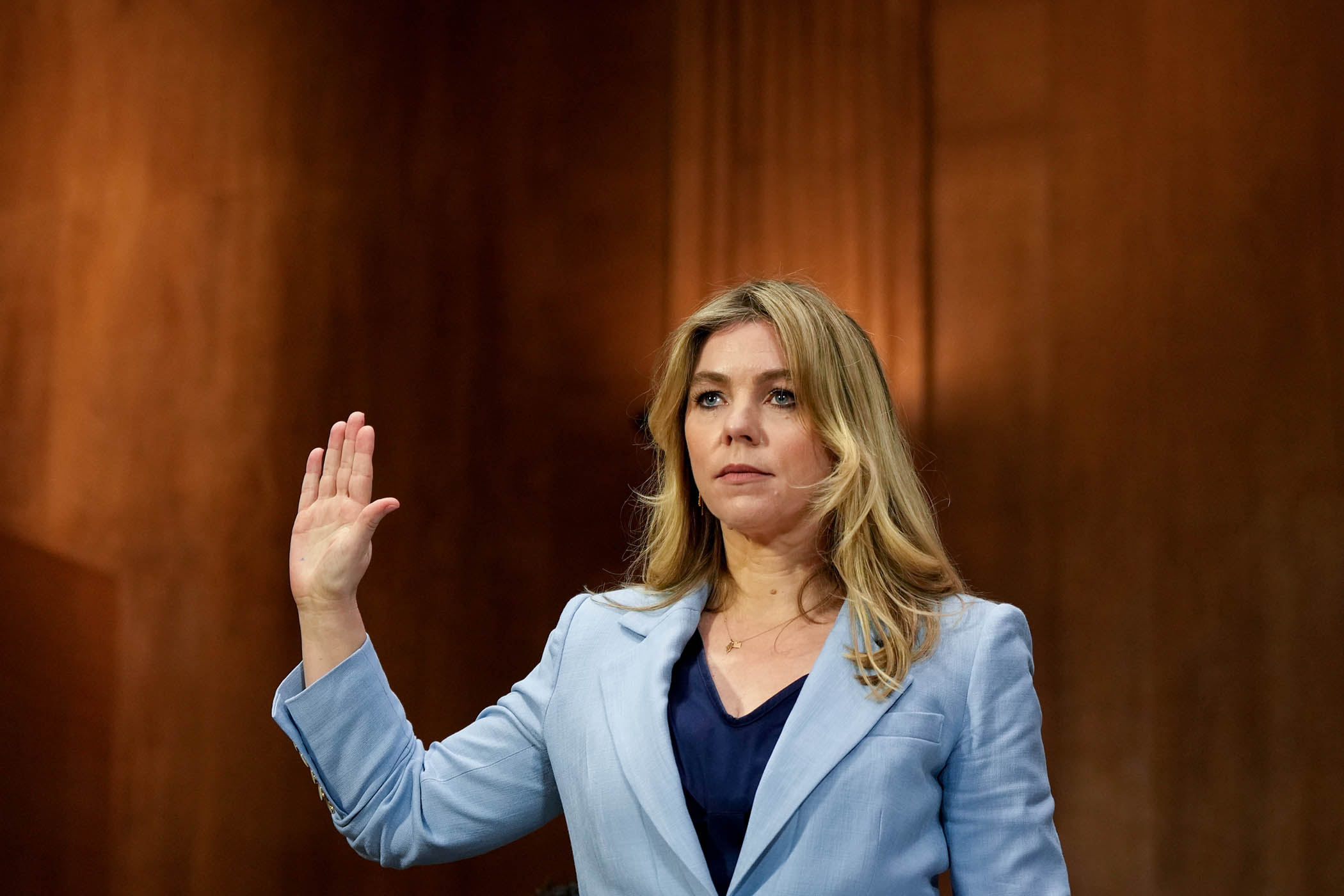
When the whistleblower Sarah Wynn-Williams appeared on stage at the Hay literary festival in May, she did so in total silence. While her fellow panellists debated the reach of the technology giants, Wynn-Williams sat motionless, not so much as nodding, lest she breach the terms of a far-reaching legal order obtained by her former employer, Facebook, and its parent company, Meta.
“How much power is too much power?” the session billing asked. The answer may have been in the room. In the audience were Meta’s representatives, who had travelled across the country to rural Wales to document Wynn-Williams’s appearance and gather evidence that she had broken said order, which barred the promotion of her memoir, Careless People.
Wynn-Williams, who rose to director of global public policy at Facebook between 2011 and 2017, alleges in the book that she was sexually harassed by senior executives, chief among them her boss Joel Kaplan, now Meta’s president of global affairs; that Mark Zuckerberg would have given the Chinese government access to user data to enter China; that Facebook failed to stop its platform inciting ethnic violence in Myanmar; and that the company tracked when teenage girls felt “worthless”, to sell them advertising. Meta says the book is inaccurate and calls it “divorced from reality”, but it has become a number-one bestseller, selling 150,000 copies in the UK alone.
In the days around the UK publication, Meta moved to suppress the book, invoking a non-disparagement clause Wynn-Williams had signed on leaving her job in 2017. Without her present, an emergency arbitrator in the US granted Meta an “interim award” that barred her from making any “disparaging, critical or otherwise detrimental” comment about Meta – even if it is true – and from promoting the book (or indeed holding the book, or standing near it in a bookshop or airport). In essence, the interim award is a temporary gag order, designed to keep Wynn-Williams silent while the wider legal fight is ongoing. The threat is a $50,000 fine for each breach – meaning there could be hundreds if not thousands of alleged breaches within the book – and it is enforceable internationally.
Now Meta alleges that Wynn-Williams’s silent appearance at Hay was another breach – this time of the interim award – because the attention she drew amounted to promotion. The company wants the arbitrator to fine her a further $1,500 for each alleged violation of the interim award – each perceived promotion of the book – plus costs and any income from the events, including book sales. The penalties, she believes, “would ruin me and my family”.
In a new filing in California, submitted last week, Wynn-Williams has asked a federal judge to scrap the interim award as an unconstitutional restraint on speech. The sworn declaration she submitted alongside this filing is, for now, the only place she has been able to describe her experience of the past 15 months. She writes that Meta’s “surveillance” affects “how I regard every public space I enter, every camera I pass, every person I meet” and that “to be silenced is a lonely thing”. The order’s reach, she says, extends to her private life – to what she says at home, with her own family.
Ravi Naik, her UK lawyer, told me: “The world needs to know that Sarah hasn’t just gone away. She’s been suffering in and by silence – silence as sought and enforced by Meta. And now she’s fighting back.”
But there is not much else Naik can say, because he too is impacted by the interim award, which stretches to Wynn-Williams’s legal representatives. In theory, it could bar him from so much as discussing his own previous lawsuits against Meta, which might be construed as disparaging the company, and trigger a fine against his client.
In 2022, Meta executives told shareholders that the company would “not require or encourage our personnel to remain silent about harassment or discrimination”. But four years on, the company has gone to extraordinary lengths to suppress the allegations made by Wynn-Williams.
Newsletters
Choose the newsletters you want to receive
View more
For information about how The Observer protects your data, read our Privacy Policy
In my own investigative work I have found a growing sense of fear among whistleblowers within big tech companies – the threat of legal exposure greater than ever, the surveillance among employers more sophisticated as these companies grow ever more powerful. According to The Information, internal teams at OpenAI have allegedly used a custom version of ChatGPT to work out which employees may have leaked information to the press. The instinct to watch – and to deter – employees from speaking out seems to be becoming an industry norm.
But the accounts of whistleblowers have never mattered more. A handful of technology companies now shape how we work, learn – even how we love. Understanding how those companies operate is a matter of public interest and, without insiders willing to speak, much of that world would remain hidden.
Zelda Perkins, founder of the Can’t Buy My Silence campaign and a former assistant to the disgraced film producer Harvey Weinstein, is sure Wynn-Williams will prevail. In the 1990s, Perkins became the first of Weinstein’s accusers to break her non-disclosure agreement. “I had to wait more than 20 years,” she says. “But right does win out in the end.”
In a statement, Meta spokesperson Andy Stone said: “This former employee is trying to use the legal process to sell books, which an arbitrator already ruled broke the agreement she signed with the company when she accepted a large severance payment years ago.” He noted that Wynn-Williams signed a voluntary severance agreement, not an NDA.
Photograph by Kent Nishimura/Bloomberg via Getty Images