
This article first appeared as part of the Daily Sensemaker newsletter – one story a day to make sense of the world. To receive it in your inbox, featuring content exclusive to the newsletter, sign up for free here.
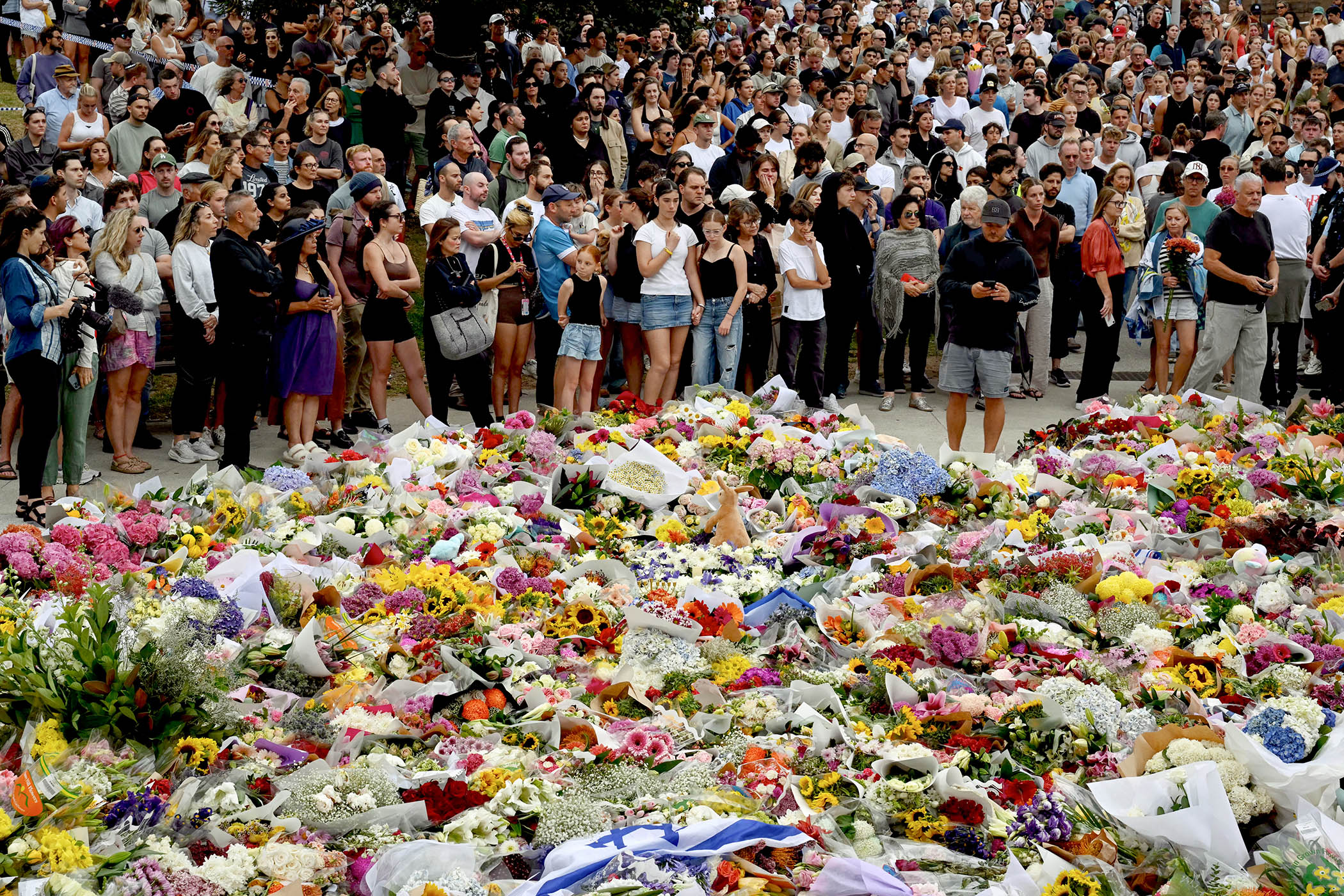
Australia has pledged to tighten its gun laws after an antisemitic terror attack on Bondi beach killed at least 15 people and injured dozens of others.
So what? The attack has reverberated around the world. Mass shootings are rare in Australia. Sunday’s shootings by a father and son, who used legally registered firearms, is the deadliest since a gunman killed 35 people in 1996. It has
•
irrupted into the Jewish holiday of Hanukkah;
•
sparked a national debate about weapon controls; and
•
brought home the brutal dangers of rising antisemitism.
What happened. The horror began when two gunmen opened fire from a footbridge, targeting a park where a Hanukkah celebration was taking place. Children were having their faces painted and enjoying a petting zoo as families shared food.
What we know. The suspected attackers have been named as 50-year-old Sajid Akram and his son Naveed Akram, an unemployed bricklayer. Sajid Akram was shot dead by police. Naveed Akram was arrested and taken to a hospital, where he is being treated for critical injuries.
Known. The son was investigated by the security services in 2019, according to Australian prime minister Anthony Albanese. Albanese has since said the attack appears to have been “motivated by Islamic State ideology”.
Legal. The father held a firearms licence, with six registered weapons. Four were found at the scene, while two more were seized from a house in Sydney. Police have not confirmed what was used in the attack, but it appears to have included a bolt-action rifle and shotguns.
Background. Sajid Akram arrived in Australia on a student visa in 1998. Police have not disclosed his nationality, but authorities in Manila confirmed he entered the Philippines using an Indian passport last month. His son, who visited the Philippines with him, is a citizen born in Australia. Although the pair’s motives have not been fully established, Albanese has confirmed the killings were “a targeted attack on Jewish Australians”. Police said they are investigating the purpose behind the pair’s recent trip to the city of Davao in the Philippines.
Bomb threat. Officers discovered improvised explosive devices in the attackers’ car. If they had gone off, the death toll could have been considerably higher.
Everyday hero. The actions of shopkeeper Ahmed Al-Ahmed, who disarmed one of the gunmen, almost certainly averted more bloodshed. He was having coffee when the attack began and was shot several times. He is an Australian citizen who arrived from Syria two months ago.
Newsletters
Choose the newsletters you want to receive
View more
For information about how The Observer protects your data, read our Privacy Policy
Human toll. The first victim to be named was Eli Schlanger, a rabbi from London. The dead also included a 10-year-old girl and a Holocaust survivor originally from Ukraine.
Community in despair. Most of Australia’s 117,000 Jewish residents live in Melbourne and Sydney. Although they make up less than 0.5% of the national population, they represent substantial minorities in several neighbourhoods.
Rising tide. Reports of antisemitic incidents in Australia surged by 316% in the year after October 7. These include arson attacks on synagogues and Jewish businesses.
Elsewhere there was a 260% increase in recorded incidents of antisemitism in France between 2022 and 2024, while Britain saw a rise of 112% over the same period. The Bondi beach massacre follows an attack on a Manchester synagogue in October during Yom Kippur, the holiest day in the Jewish calendar, which left three people dead including the perpetrator.
Measures. In response to rising antisemitism, Australia had strengthened its hate speech laws and appointed a special task force. But Benjamin Netanyahu, the Israeli prime minister, has accused Australia of pouring “fuel on the antisemitic fire” by recognising Palestinian statehood. No evidence has emerged that Sunday’s attack was motivated by this.
Proliferation. Questions are being asked of Australia’s gun laws, which were strengthened after the 1996 mass shooting in Tasmania. Although they are considered to be among the strictest in the world, the number of firearms in the country has surged by 100% in the past 24 years.
What’s more… New restrictions could include regular reviews of the gun licences of individuals and restrictions on sales to foreign nationals. Rooting out antisemitism may prove more difficult.
Photograph by Aurelien Meunier/Getty Images