


This article first appeared as part of the Daily Sensemaker newsletter – one story a day to make sense of the world. To receive it in your inbox, featuring content exclusive to the newsletter, sign up for free here.
Keir Starmer said that recent attacks against British Jews were a “crisis for all of us”.
So what? They are, most of all, a crisis for Jewish people. The government yesterday announced an extra £1m in funding for community safety work and interfaith projects. This follows £25m announced last week. But these sums may still not be enough to
•
root out hatred against Jewish people;
•
combat the impulse to blame them for the actions of Israel; and
•
make them feel safe to publicly practice and display their Judaism.
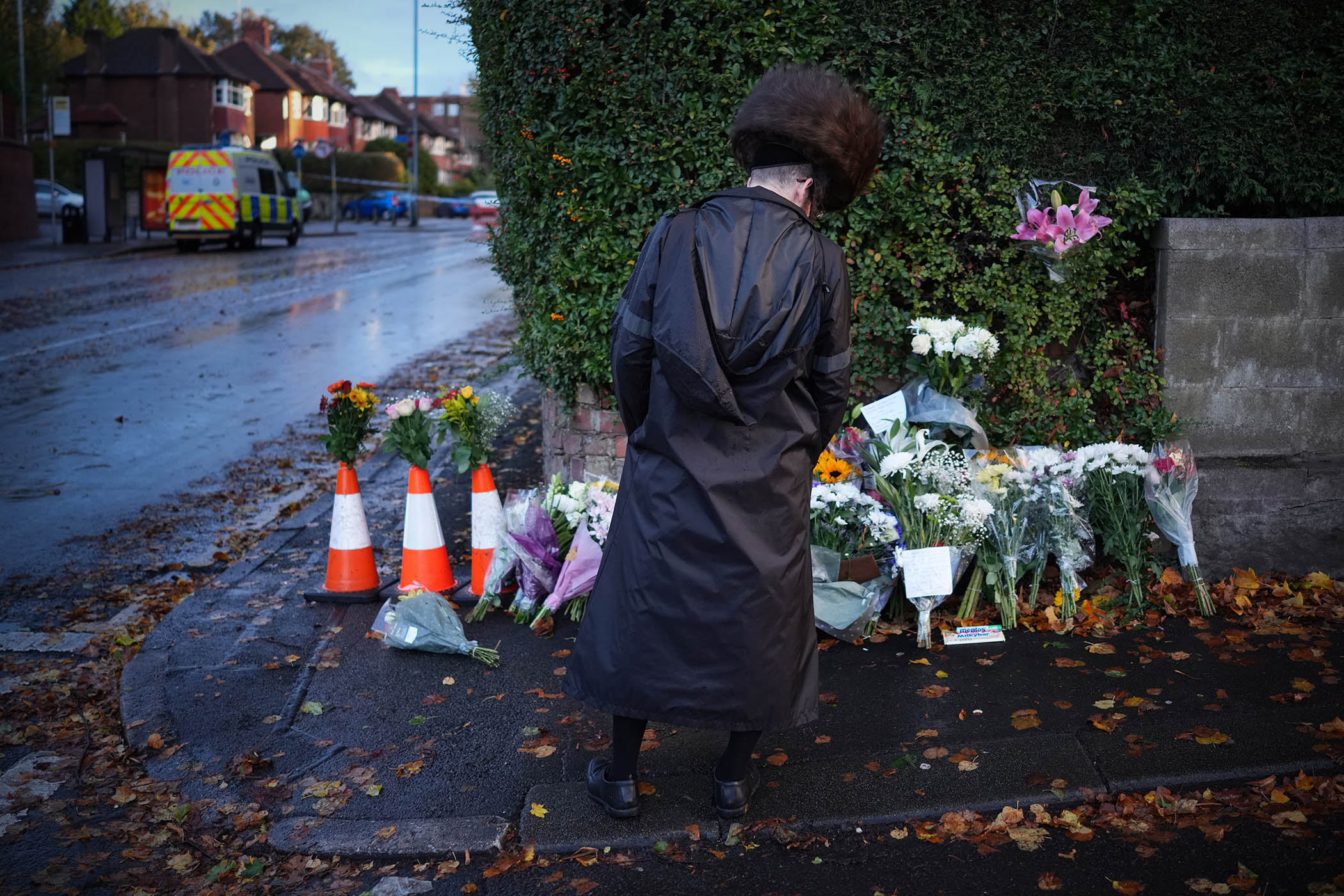
Violent times. Two Jewish men were stabbed in Golders Green last week. One was allegedly attacked as he left a synagogue, while the other was allegedly wounded as he adjusted his kippah at a bus stop. The suspect has a history of serious violence and mental health issues.
Familiar tale. The stabbings were the latest in a series of recent attacks on Jewish people and sites, which include
•
an arson attempt at Finchley Reform Synagogue;
•
the torching of four community ambulances in Golders Green; and
•
the killing of two worshippers outside Heaton Park Hebrew Congregation in Manchester.
Grim reading. The Heaton Park stabbing was the first fatal antisemitic terror attack in Britain since the Community Security Trust, a charity set up to protect British Jews from antisemitism and terrorism, began recording incidents more than 40 years ago.
The numbers. British Jews, who make up 0.5% of the population, suffered the highest rate of recorded hate crimes of any religious group in 2024/2025. There was also a 19% rise in hate crimes targeting Muslims. The director of public prosecutions said yesterday that hate crime charges would be fast-tracked to deal with “daily incidents affecting the Jewish community”.
The wider threat. Last week the government raised the nation’s terrorism threat level to severe, meaning it was “highly likely” that an attack could happen. Counter-terror police pointed to a rise in both Islamist and extreme right-wing terrorism.
Close call. This February, three men were convicted over a foiled plot to carry out a mass shooting of Jewish people in Greater Manchester.
Again and again. Antisemitism is generally seen as a cyclical hatred that spikes at times of societal turmoil. It can range from acts of discrimination to outright violence. Jewish people often have different opinions about the level of danger they face. This includes Zack Polanski, the only Jewish leader of a major political party in the UK. Days before the Golders Green stabbings, he asked if Jews were experiencing a “perception of unsafety” or “actual unsafety”.
To note: Polanski is struggling to deal with accusations of antisemitism within the Green party.
A notable shift. Roughly 35% of British Jews reported feeling unsafe in the country in 2025, compared to 9% before October 7.
But no mass exodus. According to Israeli government figures, 742 British Jews immigrated to Israel in 2025. This is the largest number since the 1980s, but still a relatively low figure, representing two out of every 1,000 British Jews. The Institute for Jewish Policy Research has concluded that the overwhelming majority “feel able to practice their Judaism in the UK”.
With conditions. Armed security is increasingly common at British synagogues, with Orthodox Jewish areas of London patrolled by a community group called Shomrim. Volunteers from Shomrim, which runs a 24-hour emergency hotline and rapid response service for anyone in the area, were quickly on the scene after the recent incidents in Golders Green.
Political dimension. Starmer confirmed yesterday that officials were investigating whether foreign states, such as Iran, were inciting antisemitism in the UK. A group believed to be connected to Tehran has claimed responsibility for several of the recent attacks.
Political football. Starmer has also suggested the government could block some pro-Palestinian marches due to their “cumulative effect” on the Jewish community. Kemi Badenoch, the Tory leader, has called for them to be banned completely. Left-wing Jewish groups are a consistent presence on these marches.
Not as one. Polling last year showed a quarter of young British Jews identify as anti-Zionist. More than half overall said Israel’s conduct in Gaza was incompatible with their religious values.
What’s more… Badenoch believes that marches organised by the far-right activist Tommy Robinson should still go ahead, despite Robinson’s own history of antisemitism.
Photograph by Christopher Furlong/Getty Images
Newsletters
Choose the newsletters you want to receive
View more
For information about how The Observer protects your data, read our Privacy Policy