
This article first appeared as part of the Daily Sensemaker newsletter – one story a day to make sense of the world. To receive it in your inbox, featuring content exclusive to the newsletter, sign up for free here.
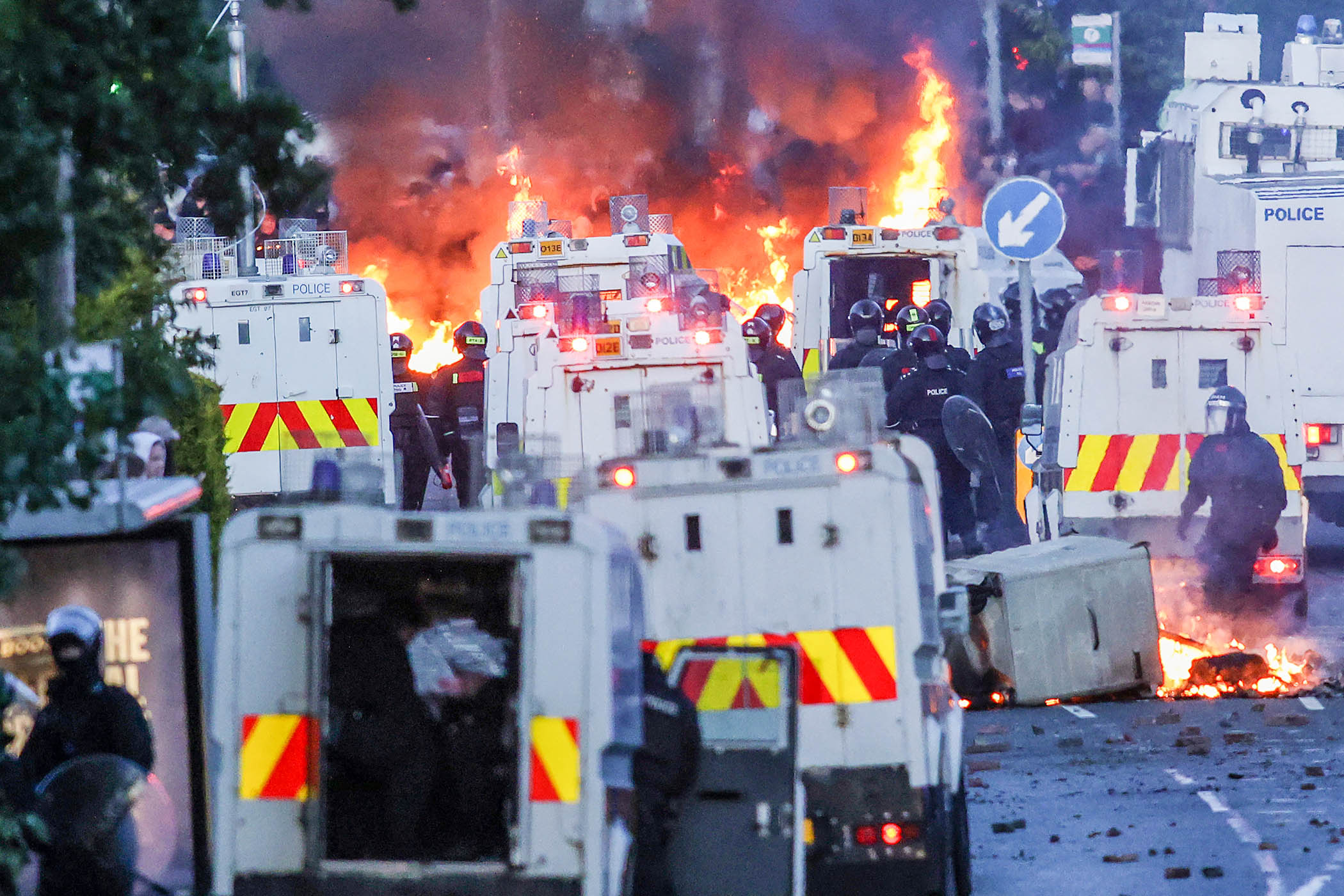
Northern Ireland secretary Hilary Benn has condemned rioting against ethnic minorities and migrants in Belfast as “racist thuggery”.
So what? The region has now seen three consecutive summers of anti-immigration unrest. Unrest spread into Northern Ireland from England in 2024, followed by racist disorder in Ballymena and other towns last year. The latest violence
•
was concentrated in loyalist areas of Belfast;
•
has been fanned by far-right activists;
•
carries echoes of the Troubles.
The trigger. Mobs torched dozens of homes on Tuesday night after a Sudanese asylum seeker was charged with the attempted murder of Stephen Ogilvie – an attack that was filmed and then widely shared on social media. Cars, a bus and a Middle Eastern supermarket were set ablaze, as masked men carrying bricks chanted “get foreigners out”.
Echo of history. Much of the disorder took place on Shankill Road and Crumlin Road, not far from where Catholic families were burned out of their homes by loyalists in 1969.
Stirring the pot. Despite an appeal for calm from Ogilvie’s family, there was more rioting on Wednesday. The rioters were egged on by far-right activists, who claimed that newcomers were stealing jobs, occupying scarce housing and committing crimes.
Fertile ground. This sentiment is not unique to Northern Ireland: similar rhetoric helped fuel the protests in Southampton sparked by Henry Nowak’s killing, as well as the unrest that gripped parts of England in 2024. But several factors make the mood particularly febrile.
Headline figures. Northern Ireland is one of the least diverse regions of the UK, with foreign-born residents making up 6% of the population, compared with the national average of 16%. But since the Good Friday Agreement ended the turmoil of the Troubles, it has experienced the UK’s sharpest surge in newcomers.
Crowded. Against this backdrop, there is an acute housing shortage, caused by underinvestment in social housing, rising construction costs and sectarian segregation. This meant house prices rose by 9% in Belfast in 2024, while the national average was 3.2%.
Demographic distortion. Since the Protestant population of Belfast is shrinking while the Catholic community grows, immigrants can more easily find housing in working-class loyalist neighbourhoods – areas that are densely-packed, deprived and demarcated by peace walls.
Ground zero. This is where the bulk of Tuesday’s violence erupted, even though the attack against Ogilvie occurred in a predominantly nationalist area.
Still here. These areas are also the stomping ground of loyalist paramilitary groups like the Ulster Volunteer Force and the Ulster Defence Association. Their original mission was to drive out Catholics and maintain Protestant cohesion. Now they are considered criminal gangs, maintaining links to the British far right and focusing much of their attention on ethnic minorities, especially during moments of tension.
Magnified. The presence of these groups meant the riots that gripped Northern Ireland after the Southport stabbings in 2024 exhibited more coordination than the unrest that erupted in the rest of the UK, according to one study. Another report, for the British and Irish governments, found that underground paramilitary structures make anti-immigration unrest more likely.
What’s more… Last year there were more than 1,500 hate crimes in Northern Ireland, the highest number since records began, even though overall crime fell to its lowest level since 1998.
Photograph by Paul Faith/AFP via Getty Images
Newsletters
Choose the newsletters you want to receive
View more
For information about how The Observer protects your data, read our Privacy Policy