
This article first appeared as part of the Daily Sensemaker newsletter – one story a day to make sense of the world. To receive it in your inbox, featuring content exclusive to the newsletter, sign up for free here.
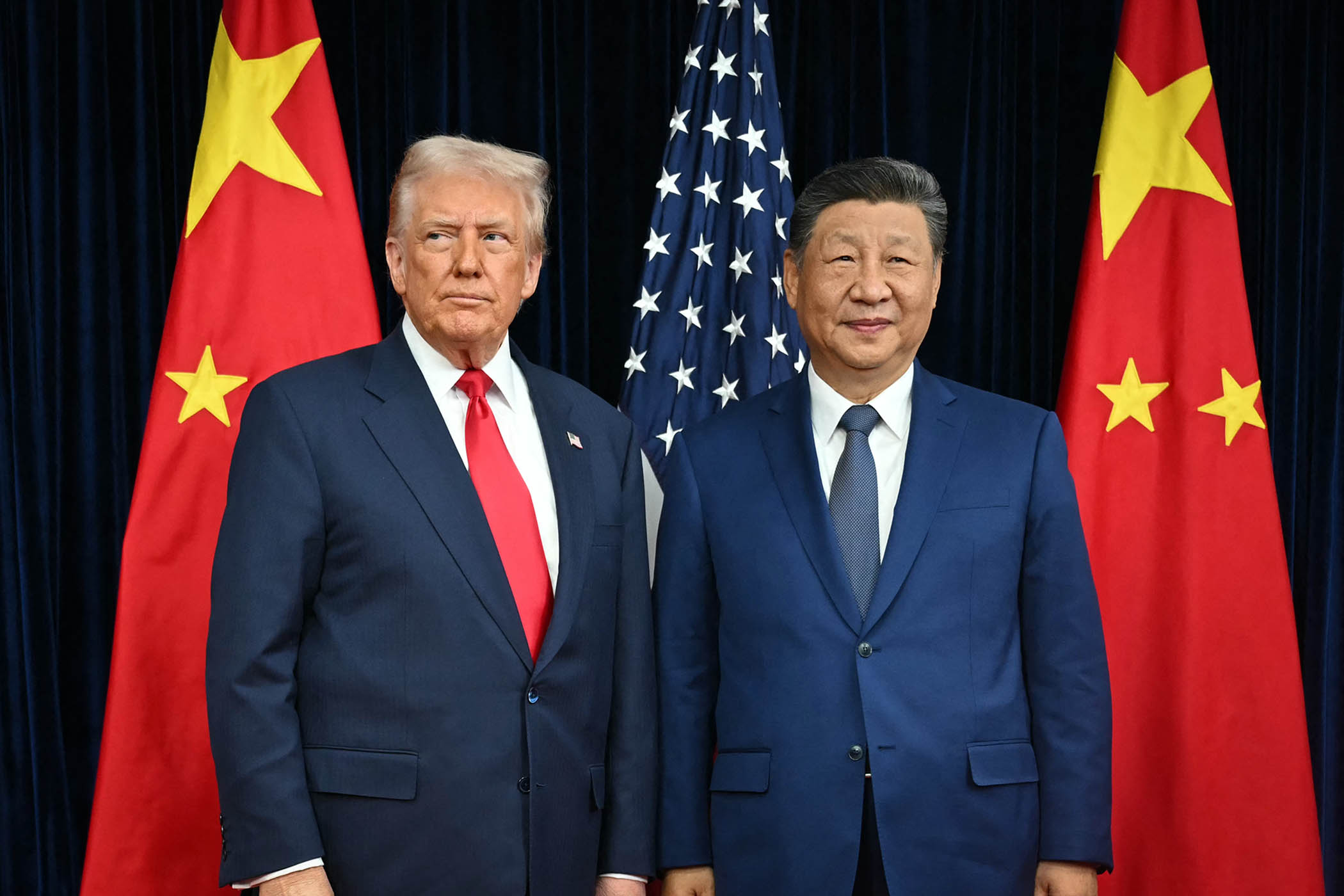
Donald Trump travels to China today with a retinue of top executives for the first visit by a US president in nearly a decade.
So what? While the Labour party self-combusts over the future of Keir Starmer, talks between Trump and Xi Jinping could set the tone of relations between the world’s two biggest superpowers for years to come, and shape policy on
•
global trade;
•
what happens next in Iran; and
•
the future of Taiwan and the rules-based order.
On the agenda. After arriving in Beijing on Wednesday night, Trump will take part in a welcome ceremony on Thursday and meet one-on-one with Xi before they tour the Temple of Heaven – a religious complex dating to the 15th century. A state banquet on Thursday evening will be followed by a tea and working lunch with Xi before Trump departs on Friday.
Big fat hug. Relations between the US and China have stabilised since Trump met with Xi in South Korea last year, putting the trade war between the two countries on hold. Trump has said he expects a “big, fat hug” from Xi, for whom he has repeatedly expressed admiration.
A wary detente. But the truce is an uneasy one. Their relationship is characterised by deep mistrust and mutual exposure. China and the US are trying to disentangle their economies before the other can weaponise the dependence.
What Trump wants. China’s decision to cut back on purchases of American agricultural exports has hurt farmers in states that voted for Trump. The US president wants China to buy more soybeans and beef as well as Boeing aircraft. He would also like Beijing to loosen its chokehold on crucial rare earth minerals.
What Xi wants. China, in turn, seeks better access to US advanced technologies, such as semiconductor chips, exports of which are controlled due to national security concerns. Beijing would also like the US to drop a recently announced trade probe into unfair business practices that could allow Trump to reinstate higher tariffs on Chinese goods.
Thorn in the relationship. Taiwan is the “biggest risk” to bilateral ties, Wang Yi, the Chinese foreign minister, told Marco Rubio in a recent call. In December, Trump announced the biggest ever weapons package for Taiwan, which China claims as its own territory.
Mixed signals. At the same time, Trump has played down the US’s commitment to defend Taiwan and said the island “doesn’t give us anything” in return for security guarantees. China is not mentioned in a six paragraph section of the US national security strategy devoted to “deterring military threats”.
Semantics. For decades, the US has stuck with a carefully formulated position that it does not support independence for Taiwan. Beijing may push for stronger wording such as “the US opposes Taiwan independence”.
Sweetener. China could give Trump a victory to take home by releasing high-profile detainees, which include Americans and individuals held because of their ties to the US.
Role to play. The US wants China to use its leverage over Tehran to reopen the Strait of Hormuz. That is in Beijing’s interest, too. While not heavily dependent on energy from the Gulf, a global economic slowdown is bad for Chinese exports. Acting as peacemaker also cements China’s narrative that it is a force of stability in contrast with an erratic White House.
Unforced errors. And yet, Beijing is in no rush to bail the US out of the Middle East. Trump’s entanglement in Iran is further eroding the global standing of the US, while preventing a foreign policy pivot to Asia.
What’s more… With the US midterms later this year, Xi’s leverage will only increase as Trump looks for wins to present to the electorate.
Photograph by Andrew Caballero-Reynolds/AFP via Getty Images
Newsletters
Choose the newsletters you want to receive
View more
For information about how The Observer protects your data, read our Privacy Policy