Diogo Jota. I still smile every time I say or hear the name. Honestly, it brings this big, beaming grin to my face. Affection. Appreciation. Love.
It is a strange contradiction, I know, that thinking about Diogo makes me happy because losing him, and losing him in the way we did, is impossible to understand. It just felt – and still feels – so cruel. One of those moments where even people who believe in a bigger purpose, in a higher meaning – like I do, like Diogo did – find themselves asking questions. Why Diogo? Why now? Why like this?
I still believe, but a moment like this tests that belief. The only way I can make sense of it, even a little, is by holding onto the truth that great grief is the price we pay for great love. And you could see, from the people closest to Diogo to his supporters around the world, just how big that love was for him and his brother, André Silva. The scale of the heartbreak tells you everything.
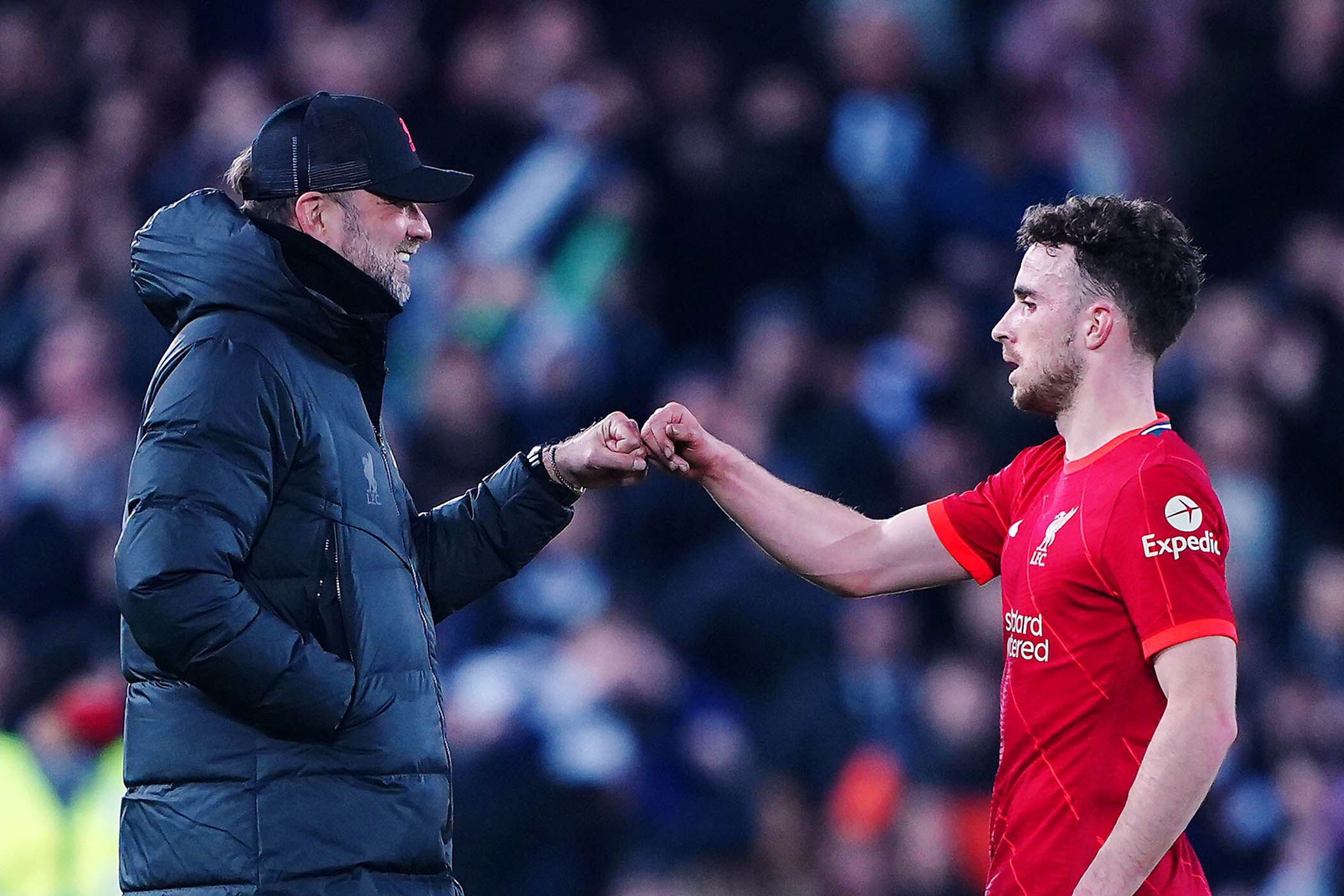
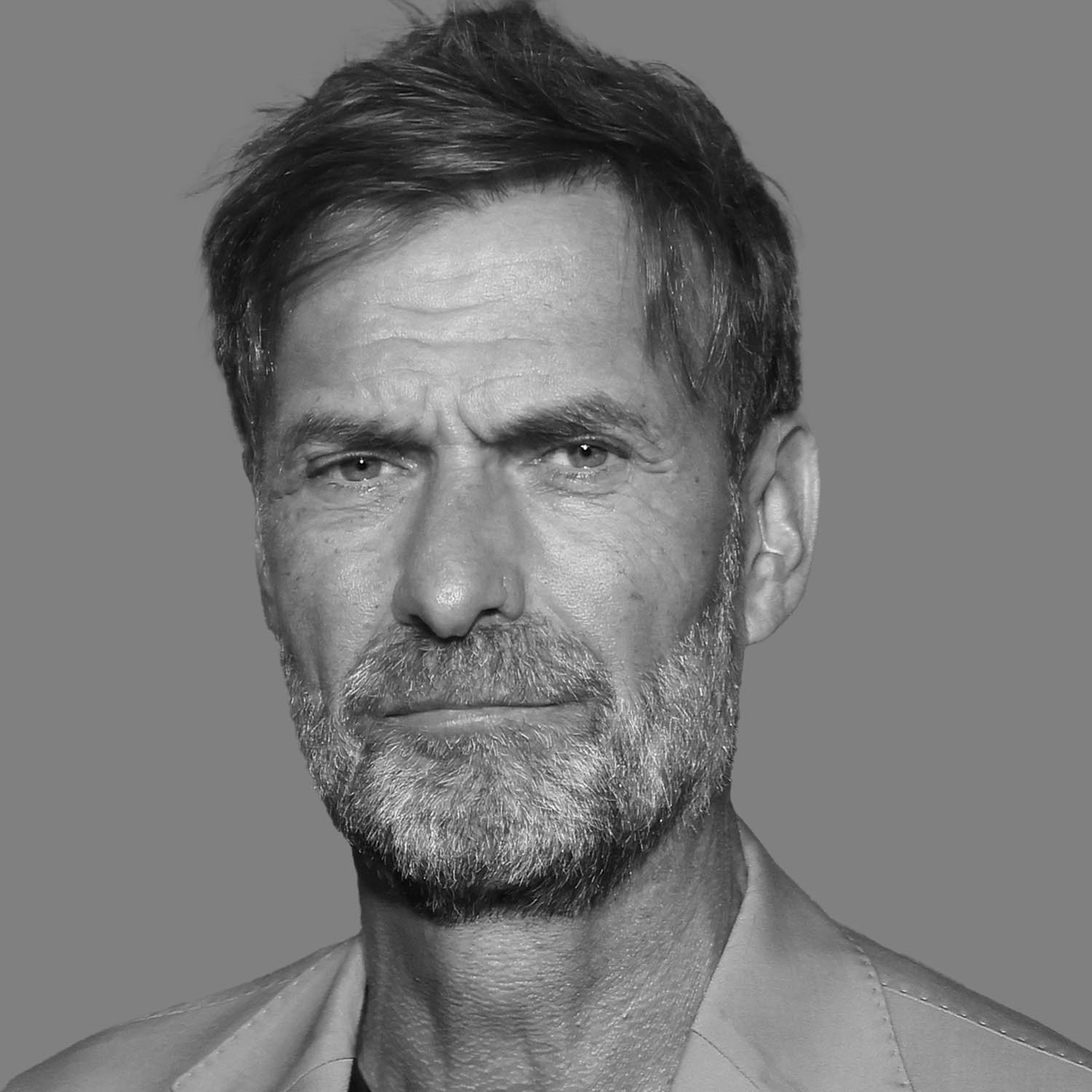
Liverpool manager Jürgen Klopp congratulates Diogo Jota after Liverpool’s 3-1 victory over Newcastle on 16 December 2021
In life he brought out the best in people and even in death this stayed the same. Arne Slot, the staff and players at Liverpool. Roberto Martínez, the staff and players of Portugal. Supporters, rivals, opponents, teammates, politicians, community leaders, children – they all showed their very best side as a reflection of Diogo and everything he stood for. Could there be a more fitting tribute?
Why was he so loved? For me, it’s simple. Because in Diogo, people saw the very best of themselves. Or maybe the best of what we wanted to be. He was humble and authentic. He didn’t pretend to be anything other than who he was. And in the tributes that came in, in those terrible hours and days after the accident, the words were always the same: he was fun, he was normal, he was genuine. Diogo was simply Diogo. Unashamedly. Although I remember the footballer with huge pride, it is the person I remember most. But the beautiful thing is: both versions of him shared the same qualities.
When I first met him properly, that spark was obvious straight away. Of course, he was a top footballer; we all saw that at Wolves. His movement, his finishing, his intelligence, his work-rate was elite. But what really caught my eye was the hunger, the humility. He didn’t need to announce himself. He just worked. He listened. He tried to make the team better. And when I looked at Liverpool in 2020, I thought: “We need this guy.” Not only for his football, but for his character. Someone who could score important goals but also lift the dressing room, raise the standard and bring the group closer. That’s exactly what happened. I remember the effect he had when he came into the team so fondly. It was better than we could have hoped for. The goal against Arsenal on his Premier League debut; the hat-trick at Atalanta; the solo goal at Brighton… “What a player we have here!” we all thought. And what character.
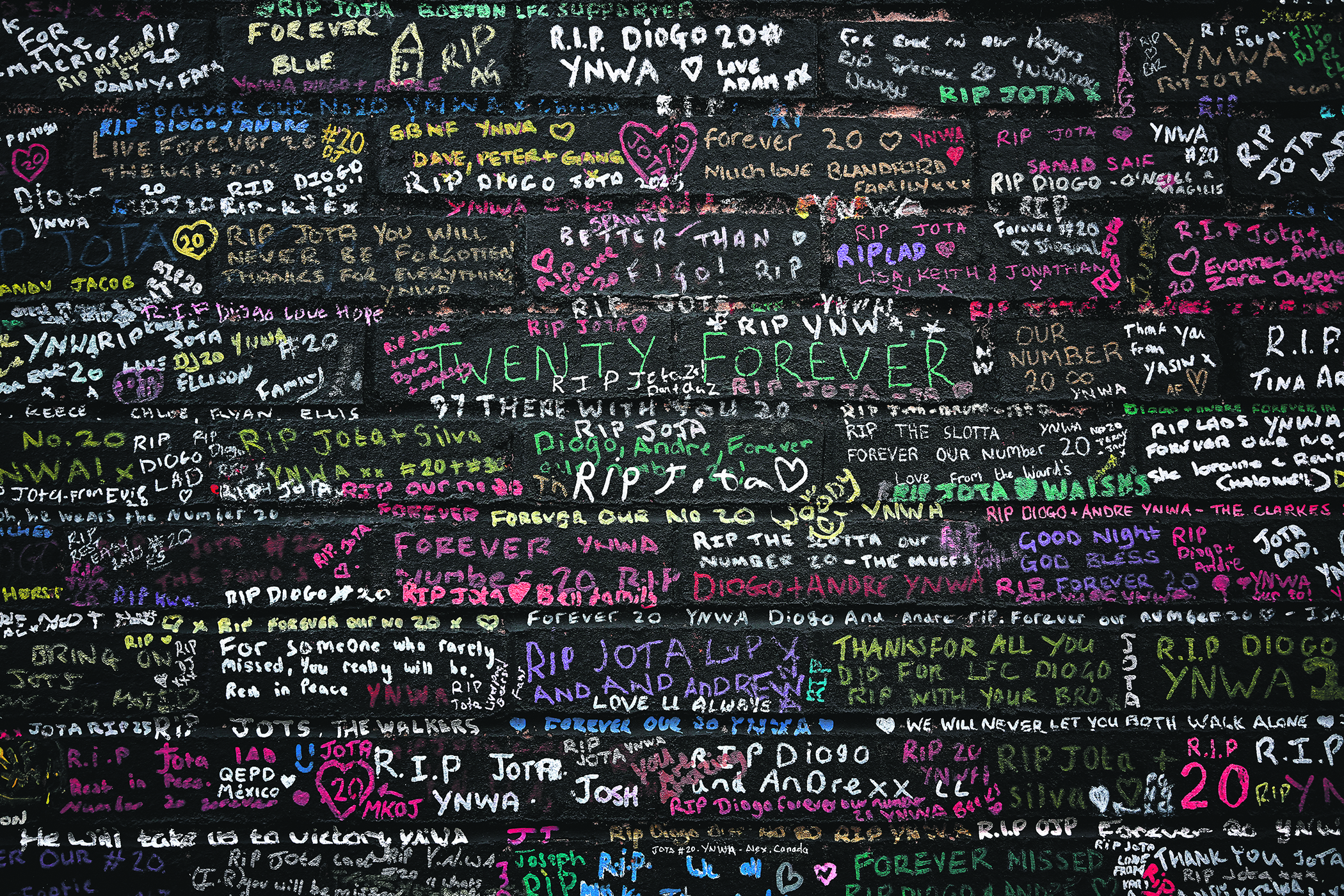
Tributes on a wall near Anfield
That continued throughout my time at the club – and even after I left. In the biggest moments, when we needed him most, he delivered again and again. I celebrated his winning goal against Everton in April this year from my living room, but did so as if I were a supporter on the Kop. A title-defining moment. Now an immortal moment, one alongside some of the most significant in the club’s storied history. I always said: as an attacking player, you must also work defensively – and Diogo did that unbelievably well. He chased everything. He fought for every ball. He pressed like crazy. And then the next second he would give you this smile, or a handshake, or a little joke in the corridor.
I remember walking down the plane or bus on away trips and seeing Diogo juggling devices: one playing Championship Manager; another with Candy Crush; the third watching someone gaming; and the fourth following and supporting André, who played professionally in Portugal. This complex mix of competitiveness, total absorption in football and absolute kindness – that was Diogo.
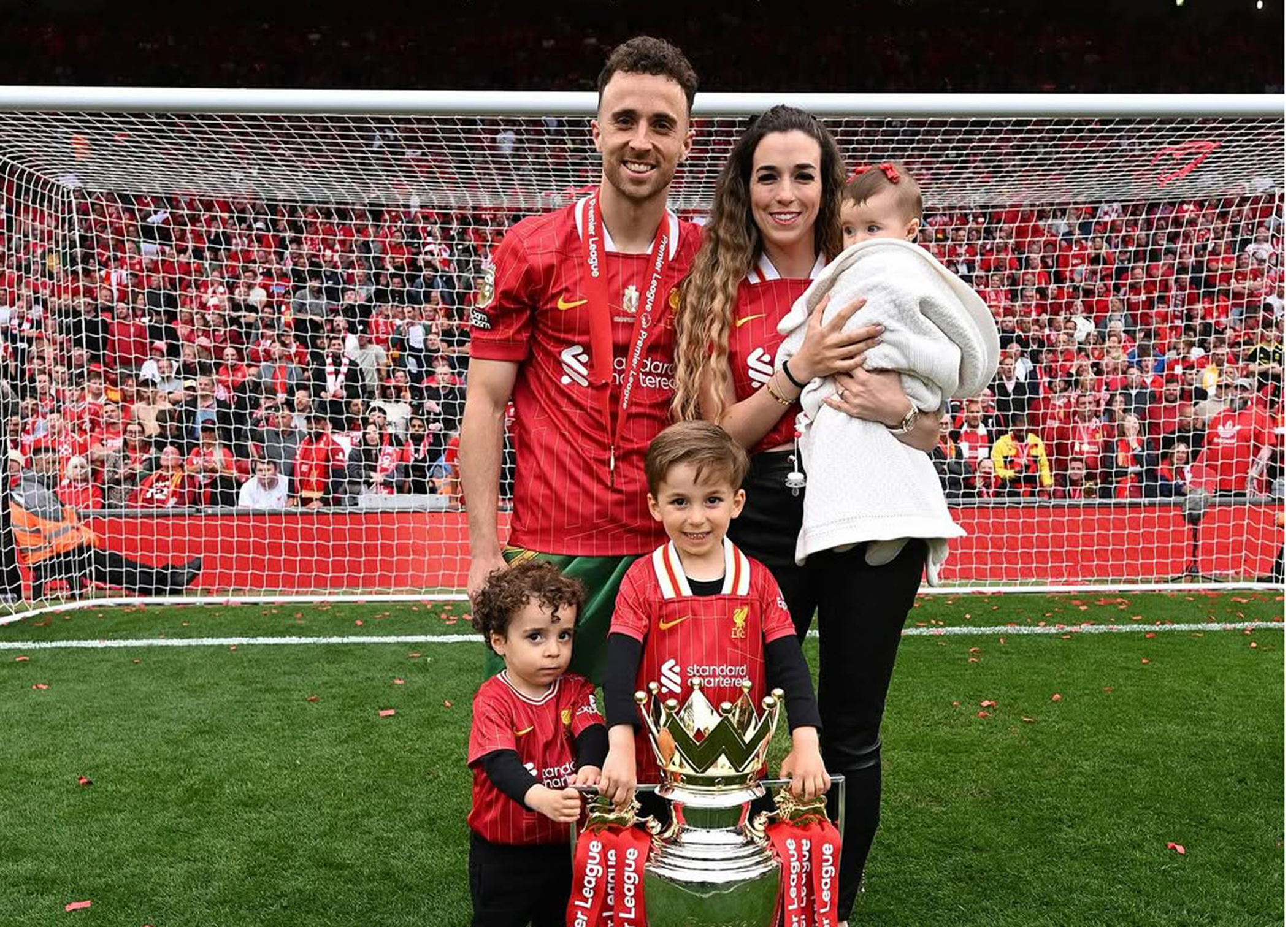
Off the pitch he was a joy. He loved life. He loved his family so much. He loved his beagles – they were a massive part of his home life. He never forgot where he came from. The boy from Gondomar. He had this laugh that could fill a room, this little sparkle in his eyes when he was joking around with the boys. He never acted like a star. He was always approachable, always respectful, always warm. Always interested in the other person and what was going on in their life. I loved that about him.
His loss – and André’s loss – is one of the hardest moments I’ve ever had to try to process. In truth I still haven’t found any answers. Some questions have no answers, I guess. But despite all that pain, I also felt something else: gratitude. Gratitude I coached him. Gratitude I knew him. Gratitude I brought him to Liverpool – those supporters in particular got to share in his brilliance and his goodness.
Newsletters
Choose the newsletters you want to receive
View more
For information about how The Observer protects your data, read our Privacy Policy
Diogo said in his first interview as a Liverpool player that he was “a team player. I will help [the team] the best I can.” He lived those words every day. Ability plus attitude.That is why he had such a big impact in Liverpool. He was the supporters’ representative on the pitch. As demonstrated by his reaction to slotting the winning penalty against Leicester City in the Carabao Cup… a competition we went on to win. He was screaming at the away section of Anfield and I wondered why. Later I was told it was because he took exception to chants from some of Leicester’s supporters that night about poverty in Liverpool. So Diogo.
You don’t need to be there – as I no longer am – to understand, how the Liverpool and Portugal dressing rooms will never feel the same without him. For the players and staff, I know from my experience of the group that the team walking out at Anfield will never feel the same without that grin you always got from him.
I said, “You can’t replace someone like him.” And I want people to understand that was not about football; it was about life. There is only one Diogo.
But even in the sadness, I choose to remember joy because he brought so much of it. He lived with joy. He played with joy. I honestly believe remembering him with a smile is exactly what he would want.
For Rute, for the children, for the whole family, I hope you know how deeply he was admired and how much he meant to so many people. My thoughts, my heart, my strength are with you.
Rest in peace and walk on, my friend.
My number 20. Football’s number 20.
My Diogo.
Forever in our hearts and never walking alone.
rutecfcardoso14/Instagram, PA/Alamy, Paul Ellis/AFP via Getty Images