Related articles:
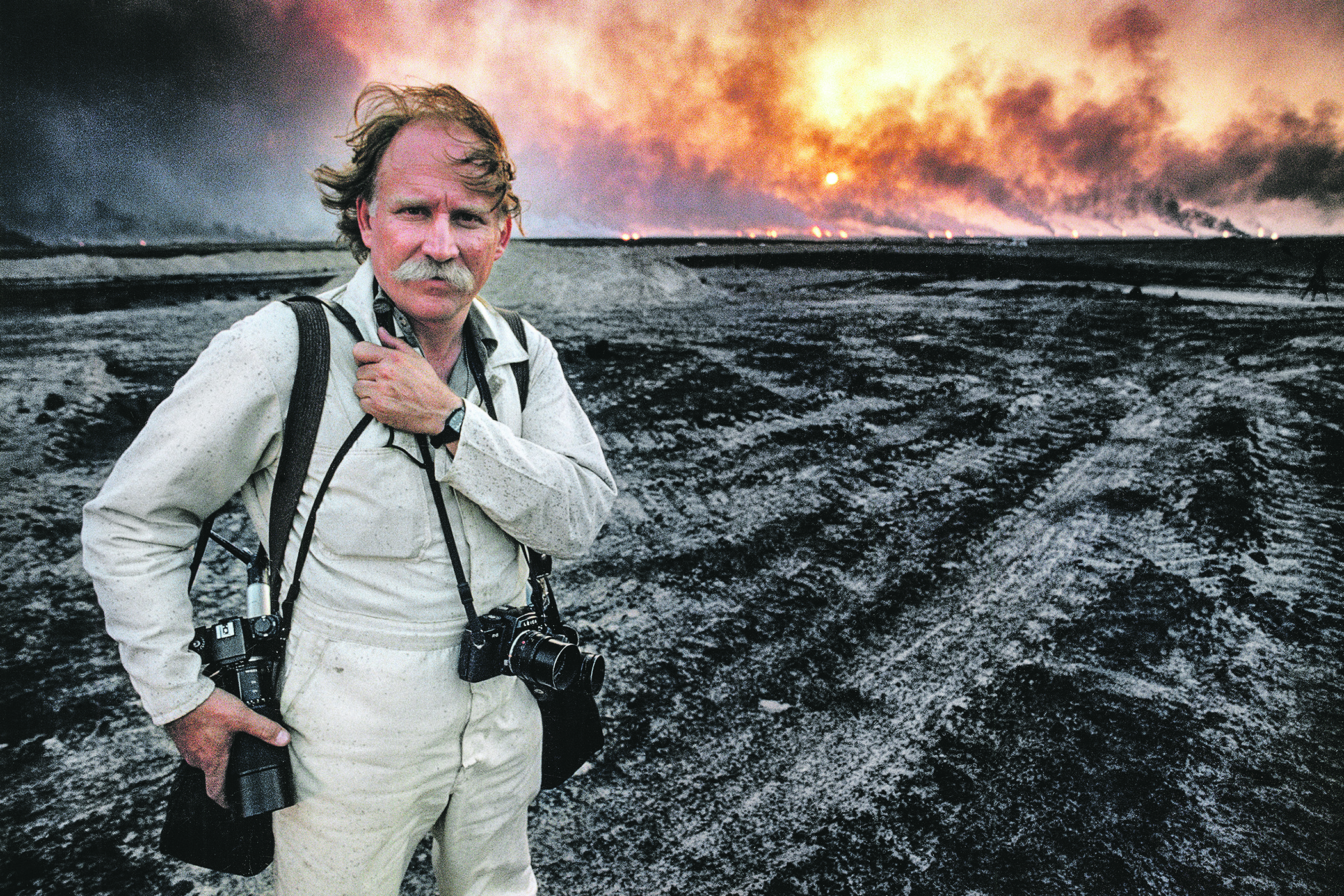
In June 1986, soon after I started working for Magnum Photos, I was wandering around the Paris office when this guy with an impressive moustache and long blond hair spilling onto the collar of his jacket came up to me and introduced himself as Sebastião Salgado. He pushed into my hand a badly typed proposal for a photographic project called Workers, with a budget of more than a million francs. I remember my response: “Good luck with that one, mate.” It was ridiculously ambitious – photographing 42 different stories on manual labour all around the world – but as I came to learn, as his agent for nearly 40 years, Sebastião always had these ridiculously ambitious projects and somehow managed to pull them off.
He really caught the zeitgeist with Workers, looking at the decline of manual labour, and he did it again with Migration. That project, which examined globalisation and movements of people, was begun in an optimistic mood, but ultimately left him depressed. Part of his recovery was to spend six years travelling the world photographing pristine regions of the planet, which became Genesis. Finally, he spent many years photographing the landscape, animals and people of Amazonia, another project of breathtaking ambition.
He was a highly intelligent, very driven individual from humble beginnings. His family had a farm in rural Brazil, growing cattle and soy. They didn’t have electricity. They used to take a car battery to town to be recharged so they could listen to the radio. He was educated in the local town, and went on from there. The story goes that, at 29, he was faced with a decision between working for the World Bank in Washington or becoming a photojournalist in Paris. I wonder what would he have done if he had continued as an economist. He probably would have ended up heading the World Bank.
As time went on, he became that very odd thing, a famous photographer. In 2023 he was mobbed at a lecture he gave at the LSE. We had to go and hide backstage afterwards until everyone had gone away. That does have an effect on your interaction with the world, when everyone who approaches you wants to talk about you and your work.
I never travelled with him, although I did edit him sometimes, and he was a very tough person to edit. I remember he put together a set of 60 pictures from Indian coal mines. I went through it and pulled out 20 and said: “These are all repeats, you have better ones.” He went very carefully through the pictures I pulled out, and said, “You can have that one,” and put the other 19 back in.
His death was a huge surprise. The last time I spoke to him, he was supposed to be coming to London to speak at an event in May. He called me and said he was ill and couldn’t come. He’d caught malaria in Indonesia in 2010, a particularly nasty variety, and somehow that precipitated a form of leukaemia. I don’t think people quite understood how serious it was. Sebastião just got on with things. He’d gone into hospital the weekend before he died and came out, and I thought that was the end of it. I sent him an email the following Friday saying, “Behave yourself, take it easy,” but he had died the day before.
He left the most enormous legacy. I’ve worked with photographers for almost 50 years, and I know very few who wouldn’t have given their left arm to have done just one of the projects that Sebastião completed. He was always determined that his pictures would help change things, would change the way people saw and understood the world, and they did. His pictures of the great famine in Sahel in the 1980s raised millions for Médecins Sans Frontières and Christian Aid. His pictures of landmine victims in Cambodia raised the funds that established the Cambodia Trust, now called Exceed. And his projects Genesis and Amazonia are still inspiring people to help save the planet.
He was so intense in terms of getting the work done and getting it out there. There’s so much hanging around in photography, but Sebastião would go and spend six weeks on an assignment. On one occasion, when photographing a feeding station in Ethiopia during the famine of 1984, he counted 34 news crews pass through the camp in the 10 days he spent photographing there. He really took the time to understand what was happening.
Newsletters
Choose the newsletters you want to receive
View more
For information about how The Observer protects your data, read our Privacy Policy
Related articles: