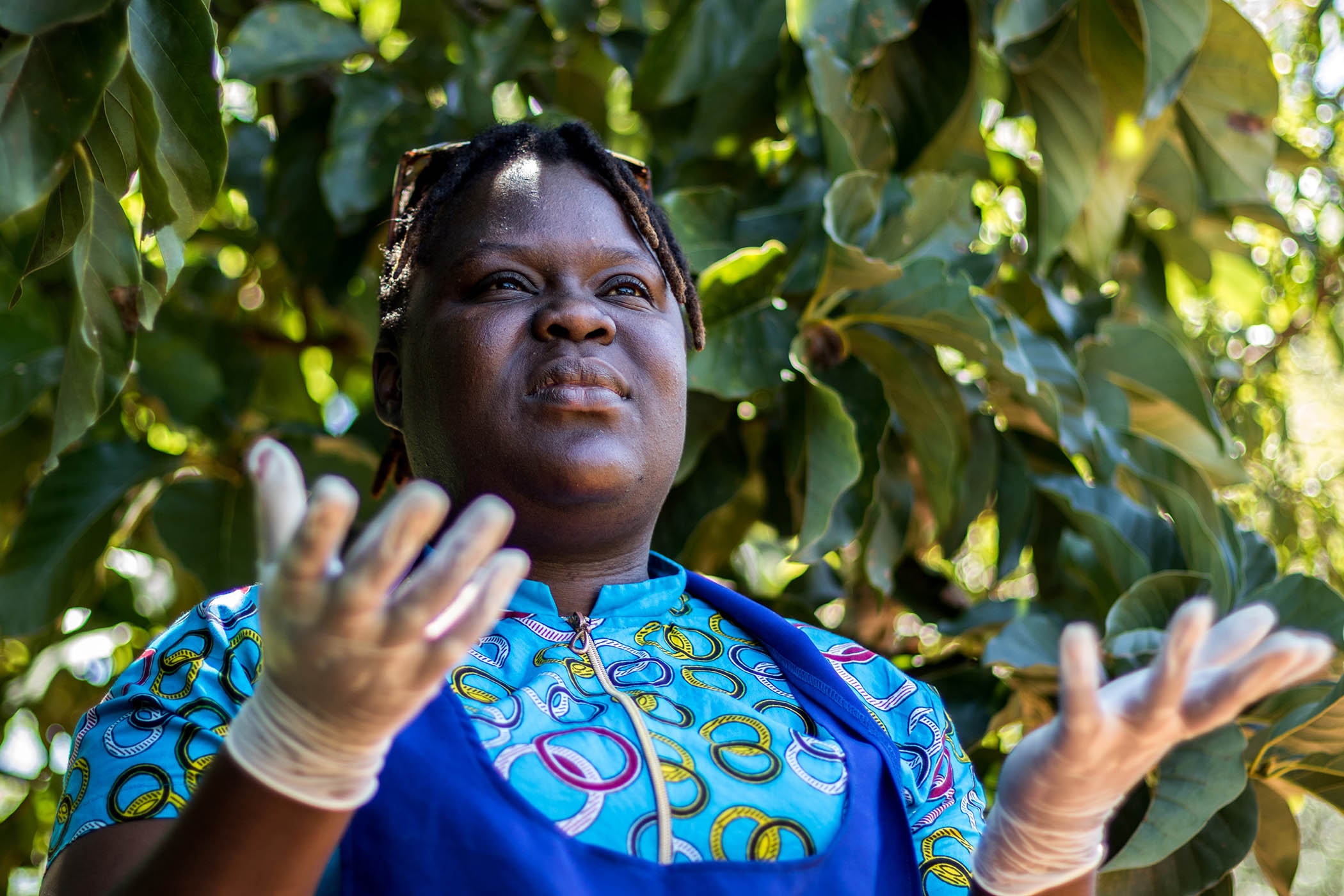

When Linda Masarira was sentenced to almost three months in Harare’s notorious Chikurubi prison in 2016 for taking part in protests against Robert Mugabe’s government, she was never going to serve her time peacefully.
She soon mobilised other female prisoners into protesting against poor conditions, particularly the lack of medical treatment or sanitary pads, which forced them to use dirty rags. As their ringleader, Masarira was beaten by guards and transferred to the men’s section where she spent 18 days in solitary confinement, comforting herself, and irritating her jailers, by singing revolutionary songs.
Nine years later, she said the harsh treatment had not cowed her. “What I learned is loneliness is a good space,” she said. “It makes you reconnect with yourself and makes you a fighter … I came out with the resolve to fight for social economic justice.”
Masarira became ever more active in opposition politics. She was a spokesperson for the faction of the Movement for Democratic Change, once led by Morgan Tsvangirai (MCD-T), which came third in the 2018 national assembly elections after Mugabe was deposed as president. In 2019 she formed her own party: Labour, Economists and African Democrats (LEAD).
It had minimal electoral success. When Masarira stood in the assembly byelection for Harare Central in 2022, she got only 20 votes; LEAD candidates in two other byelections that year received 92 and three votes respectively. Her plan to stand in the 2023 presidential election was thwarted by being unable to raise the $20,000 (£15,000) nomination fee, which Zimbabwe’s Electoral Commission had increased from $1,000. This was an own goal, since she had argued for a rise in order to improve the quality of candidates.
However, she was prominent as an advocate for women’s rights, having founded the Zimbabwe Women in Politics Alliance, which sought gender parity in government (women make up 30% of members in the national assembly), and had declared her ambition to stand for president in 2028. Her most successful campaign sped up the repatriation in 2018 of more than 200 Zimbabwean women who had been trafficked to Kuwait.
Linda Tsungirirai Masarira was born in Hwange, a town in Matabeleland, two years after Zimbabwe gained independence from Britain. Her mother died when she was six and Masarira was raised in Harare, where she said she was the only Black child in her first class. Her friends were almost all male, leading her to become something of a tomboy.
After high school, she worked as a computer technician but was sacked for leading industrial action. She later said she was the only female technician in the company when she joined. “That is the first time I realised that society looks at us differently,” she recalled.
Masarira was married twice and had five children. “Motherhood was the best thing for me,” she said. “I realised that when you become a mother you naturally become a protector and you understand the value of femininity.”
In 2006, she joined the National Railways of Zimbabwe, where she got further involved in trade union activities and was again fired for mobilising workers over labour rights. She soon became involved in the Zimbabwe Activists Alliance and the Tajamuka/Sesjikile campaign, which organised protests against corruption, economic oppression and human rights abuses under Mugabe’s regime.
Newsletters
Choose the newsletters you want to receive
View more
For information about how The Observer protects your data, read our Privacy Policy
“I realised if I didn’t speak, no one else was going to speak out,” she said. “I don’t have any weapon except my voice and my brains.” She was arrested in May 2015 for insulting Mugabe. The following summer she was arrested again while taking part in the Occupy Africa Unity Square campaign of protests and refused bail as a state security threat.
After her release from Chikurubi, she unsuccessfully sued Emmerson Mnangagwa, then vice-president, and other officials for unlawful detention. She also challenged Mnangagwa’s legitimacy when he became president after Mugabe was deposed.
However, Masarira was later accused of becoming friendly with Mnangagwa’s Zanu-PF party. In 2019, she was sacked as the MDC-T’s spokesperson after a photograph appeared of her wearing a sarong with a Zanu-PF logo. She said it was a gift from her in-laws but would not challenge the expulsion “as that would put me at the same level of myopia, tomfoolery and intolerance”. She criticised Thokozani Khupe, the leader of MDC-T, for having “succumbed to pressure from sheep in wolves’ clothing posing as loyalists”.
Masarira had suffered from respiratory problems and diabetes for some time but her death at the age of 43 was unexpected. Last month, she had criticised the government for failing to honour a promised salary increase for civil servants. President Mnangagwa said she had been “a bold and outspoken voice in Zimbabwe’s political and civic space” and praised her for advocating dialogue. “She demonstrated that Zimbabweans of diverse political backgrounds can disagree without being enemies,” he added.
Last November, Masarira wrote a letter to her 18-year-old self. “You will walk through fire and sometimes that fire will be your only light,” it said. “People will try to silence your truth, but never allow them. You were born to challenge systems, not to conform to them. Love yourself enough to forgive, to fight, and to raise again and again. The crown you wear will come from courage, not comfort. Keep your faith and keep your fire burning with love and pride.”
Linda Masarira, Zimbabwean activist, was born on 3 October 1982, and died on 24 May 2026, aged 43
Photograph by Jekesai Njikizana/AFP via Getty Images