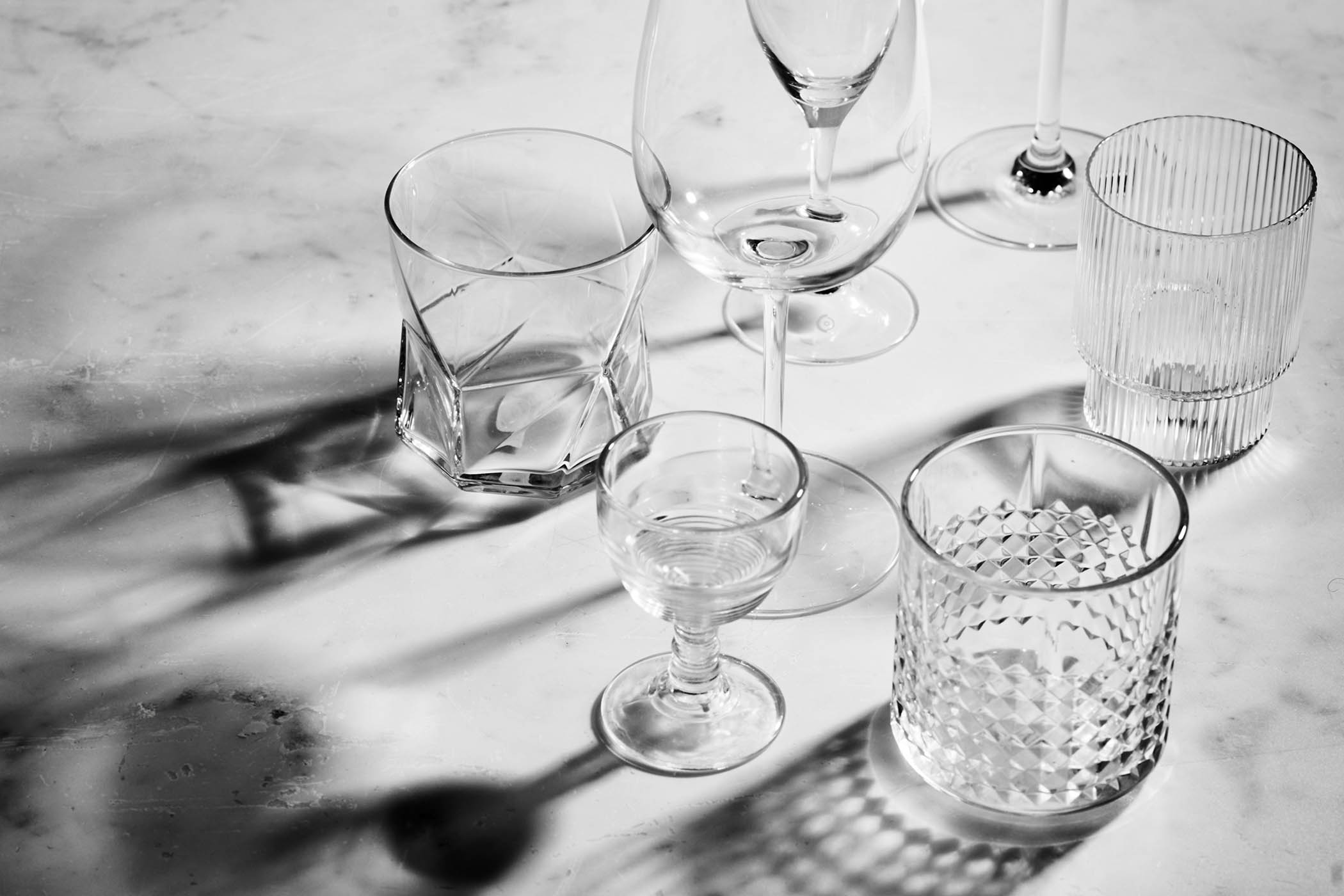



They say you should write what you know, and after attempting to pour wine for eight people over the weekend just gone, what I know is that I have only three wine glasses left. I live with a chef, and there’s very little for me to actually do when people come over for dinner. Keeping everyone’s glasses filled is my only real responsibility, so it was difficult to ignore the fact that my friends were sipping red wine from a miscellany of flutes, coupes and tiny ISO tasting glasses. It was a blunt reminder that I should have replenished my stock by now, but there’s been no time. Sorry, everyone, Mummy’s had a busy year.
I used to have a pristine row of Richard Brendon x Jancis Robinson universal wine glasses, The Chef soon put a stop to that. So now I’m on the market for something new but don’t yet have the money to replace my treasured RB x JRs, the only glass I really need for wine. So let me tell you about the things I consider when replenishing my at-home stemware.
Let me tell you about the things I consider when replenishing my at-home stemware
Let me tell you about the things I consider when replenishing my at-home stemware
Now I’m in the market for some new at-home stemware, and there are many things to consider. First, the glass must be light. So light that when I pick it up I might, every now and then, accidentally fling it over my head. It must be thin enough for me to easily admire the colour of the wine but strong enough to endure a firm hold. The ultimate goal here, for me at least, is to have as little physical barrier between myself and the wine as possible – to feel as if I’m not using a tool or an object to drink, but instead manipulating the wine with air.
And speaking of air, this is the most crucial thing to consider when selecting the style of your stemware. As soon as its grapes are crushed, a wine is at the mercy of oxygen: controlled exposure in the processing and ageing process can help it develop complex flavours; but too much, and the wine is ruined completely. Over-exposure, owing to a faulty seal perhaps, can lead to oxidation, where the wine tastes flat and its colour becomes dull and lifeless.
When we talk about letting wine breathe, we’re talking about a healthy exposure to oxygen, which unlocks the drink’s aromas and flavours once the bottle has been opened. In most cases, using good glassware is the way to achieve this. A tulip-shaped glass, where the bowl of the glass (the bit before the stem begins) is wider than the rim, is perfect. A wider bowl means the wine is in contact with more oxygen, especially when swilled around in the glass. A rim that’s narrower than this bowl concentrates the aromas when you go in for a sniff.
I use tulip glasses for red, white, rosé, orange, fortified and even sparkling wine – you never really appreciate how much this glass shape does for a wine until you try drinking the same thing from a flute or a coupe –or one of those wine glasses that’s the same width all the way to the top, like some sort of terrifying love child of the two.
For excellent tulip glasses, I wholeheartedly recommend the crystal stemware range at Zara Home. Unlike the homeware offerings at most fashion brands – which tend to be, by nature, a bit style over substance – Zara’s stemware is genuinely functional, useful and expensive seeming (the latter being my MO when I buy pretty much anything). Their universal-style glass offers everything I need; even their flutes are excellent. They’ll soon be filling the spaces on my shelves, until the next “accident”.
Related articles:
Newsletters
Choose the newsletters you want to receive
View more
For information about how The Observer protects your data, read our Privacy Policy