

I’ve always had a soft spot for things that don’t quite fit into a box, the genre-busting books, films and music that are neither entirely one thing nor another but maybe a bit of both. Most of us do, I reckon. Although the people who sell us stuff will always prefer a nice, neat category – this is a thriller, this is a memoir, this is rock, this is pop – to make their lives easier, sometimes the biggest hits are things that are neither-nor but so much more, whether that’s the equal-parts very funny and very sad recent BBC TV series Small Prophets or Prince in his all-over-the-musical-spectrum 1980s pomp.
I feel much the same way about the recent outbreak of boundary-blurring in the world of wine, where the once-rigid colour categories – white, red, rosé – have broken down in all kinds of deliciously interesting ways.
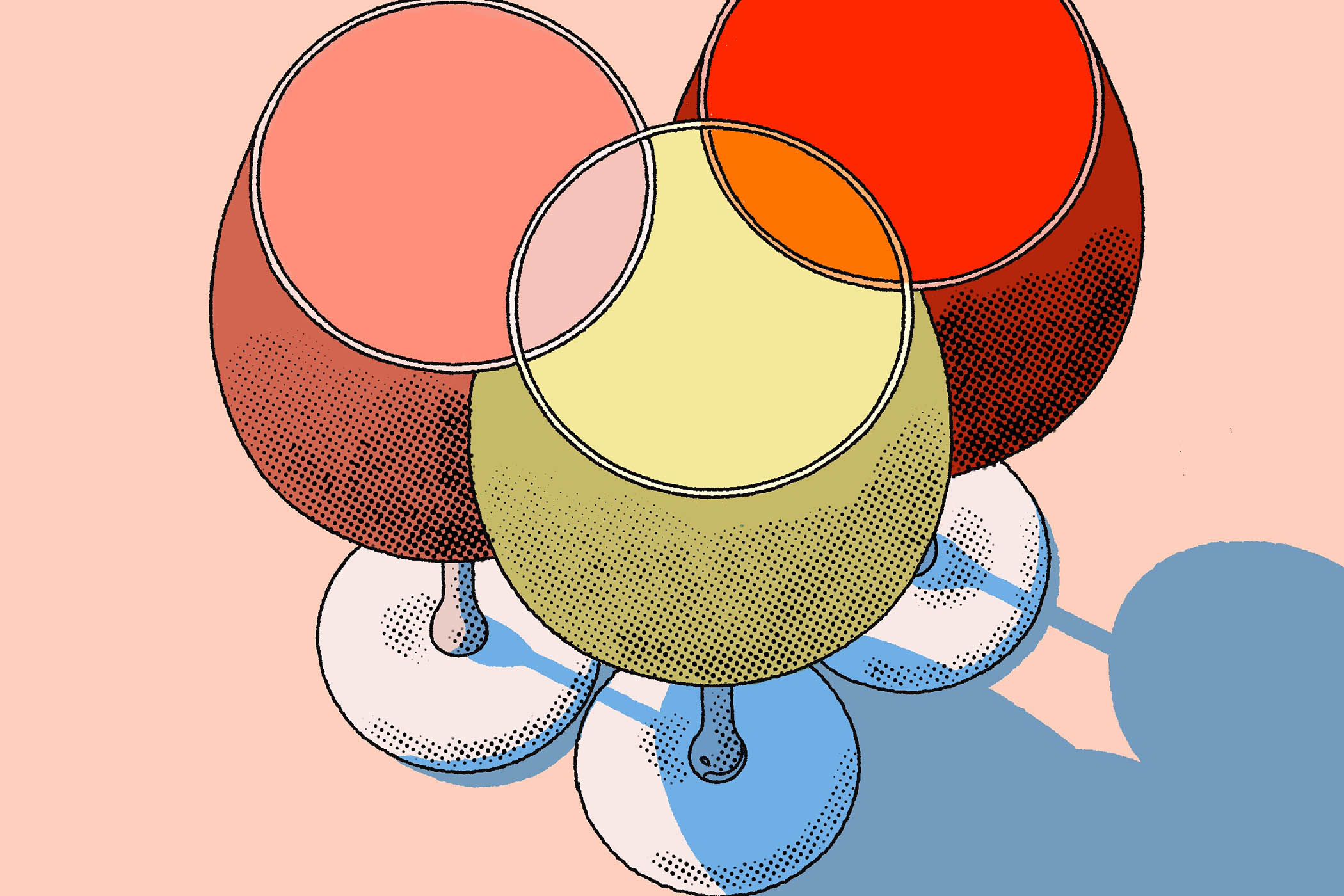
Orange wines made from white grapes with tannins like reds. Reds that are as light and refreshing as whites. Rosés so pale you’d barely believe they were made from black grapes, and rosés so dark they must surely qualify as red. It’s not particularly helpful for retailers looking to arrange their shelves or sommeliers trying to organise their wine lists, but the centre of the Venn diagram where the three core colours meet is where some of my favourite wines are now being made. I do have some sympathy for anyone trying to sell wines such as the Al Fresco 2024 (£8.75, Co-op), a red from Navarra in north-east Spain that is so light of tannin and full of fruity brightness that it’s practically a gently alcoholic (11% abv) berry smoothie.
Most people under 40 seem to have got a handle on what orange wine is and what to expect from it now (it’s joined sourdough as a go-to signifier for gentrification in unimaginative comedy skits on fashionable east London or Brooklyn life). But I know from experience that this new style of barely tannined, chillable red still has the capacity to cause unpleasant surprises for habitual red-wine drinkers. In the words of a one-star review underneath the southern French winemaker Gérard Bertrand’s (rather fun in my view) 11% abv contribution to the genre, Le Chouchou Grenache-Syrah 2024 (£13), on waitrosecellar.com: “This wine is not really red it is undecided.”
And it’s true: it’s nothing like the forceful, spicy, rich and robust Languedoc reds Bertrand usually makes from syrah and grenache – I’d be disappointed in Le Chouchou (and Al Fresco) if that was what I was expecting. But Bertrand, a highly successful vinous entrepreneur, is clearly attuned to the moment. As well as experimenting with light reds, he is one of a handful of big commercial winemakers who is blurring the lines between conventional and natural wine, bringing some of the features of the anarchically artisanal movement to a mainstream audience in a less funky, more stable form. His latest release, M&S Trouble Cloudy Rosé 2025 (£12), for example, is unfiltered and unrefined like a natural wine, and cloudy with harmless sediment like many natural wines, although, since it is made very conventionally in all other ways, its pleasant clean berry fruitiness doesn’t quite have the wildness and textural liveliness that can make natural winemaking so exciting.
There is plenty of that excitement in Alsace winemaker Domaine Loew’s OMAGY All You Need is Loew 2022 (£22, The Wine Society), however. A pink-tinged orange wine made by macerating the pink-skinned “white” grape gewürztraminer for eight days with its skins, it’s wonderfully aromatic with classic notes of rose petal coupled with dried herbs and gentian root and a tingling gingery spice. With the fresh pulse of a classic white and the rooibos-tea tannins of a light red, it’s a perfect illustration of the joys to be found in the spaces in between.
Newsletters
Choose the newsletters you want to receive
View more
For information about how The Observer protects your data, read our Privacy Policy