


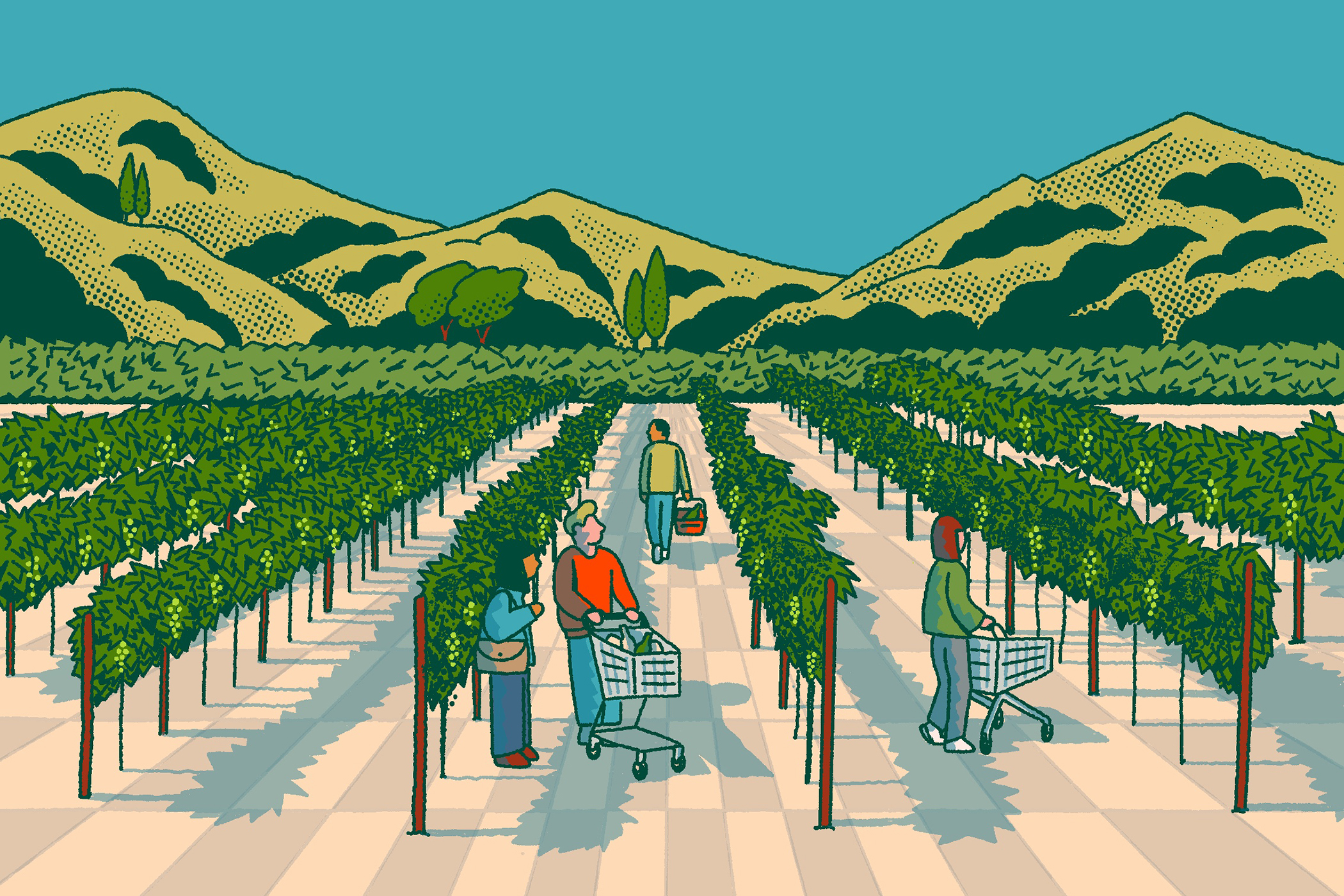

If you’re lucky, the butcher’s is just about holding on, maybe the bakery, too, although its attempt to pass itself off as a coffee shop was always going to struggle once the Costa opened along the bypass. The candlestick maker is long gone, of course, but don’t worry, you can still buy a plastic example of that ancient craft in the shape of a dragon in the baffling wizard shop that opened up in the old bank between the vape store and the Oxfam last year.
It may not have the life-or-death significance of the crises in the NHS or the poisoning of the waterways, but the slow decay of the nation’s high streets is a sometimes under-rated factor in the Great Disgruntlement that has become the dominant theme of British life and politics since 2008. It’s something many of us, certainly if we live outside a big city, grumble about, and we may even feel a vague twinge of guilt about as we click the “buy now” button on Amazon.
But rather than handwringing as we continue to scroll, there is a way of stanching at least some of the flow of life from town centres: start using the local independent shops that are still out there battling the various irresistible forces (rising costs and greedy landlords as well as apathy, entropy and the internet) lined up against them. Certainly, when it comes to the subject of this column, going local doesn’t mean you’d be engaging in a purely civic-minded or charitable act. Getting your weekly wine supply from one of the UK’s 1,037 independent wine merchants (the very precise current number supplied by the sector’s in-house monthly journal, The Wine Merchant) can be better and more cost-effective than picking it up with the supermarket shop or going online.
That might seem like a strange claim to make about a sector that, according to an extensive survey of about a fifth of those merchants published last month by The Wine Merchant, has an average spend per bottle of £17.09 (more than twice the UK retail average), and where you can find very few bottles cheaper than the most expensive things on offer at Aldi or Lidl. But if you’ve ever spent or considered spending upwards of £12 on a bottle, the pleasure-per-pound rate in an independent is almost always higher.
But there’s more to it than that. As Sam Howard of Norfolk independent HarperWells put it to me at the judging of the Wine Merchant magazine’s top 100 competition for independent-only wines in April: “It’s really all about personal service and relationships.” If you make friends with a merchant, they’ll get to know the things you like and steer you towards stuff you’d never find yourself. Sometimes this relationship can go on for decades, Howard says, while another independent judging at the top 100, Gemma Welden, from the Jolly Vintner in Tiverton, said: “Some people just really like the idea of having their own personal merchant.”
Not every merchant is going to live up to this idyll. The indie scene has its share of the snobbish and the rude. But, even if it’s a bit awkward at times, this sort of face-to-face interaction seems better than the socially atomised alternative. All the more so if it means coming home with such delicious, superb-value, indie-only wines as the spicy Rhône-alike red Waterkloof False Bay Old School Syrah, Coastal Region, South Africa 2023 (£9.50, ND John); the fleshy but freshly balanced apricot-fragrant Moulin de Gassac Viognier, IGP Pays d’Oc, France 2025 (£13.25, Yapp Brothers); the brisk, appley, super-pure sparkling Bernard Fouquet Domaine des Aubuisières Vouvray Brut, Loire NV (£15.30, Haynes Hanson & Clark); or the pale, perfumed Turkish red Kuzubag Cal Karasi 2024 (£15.53, Strictly Wine).
Newsletters
Choose the newsletters you want to receive
View more
For information about how The Observer protects your data, read our Privacy Policy