


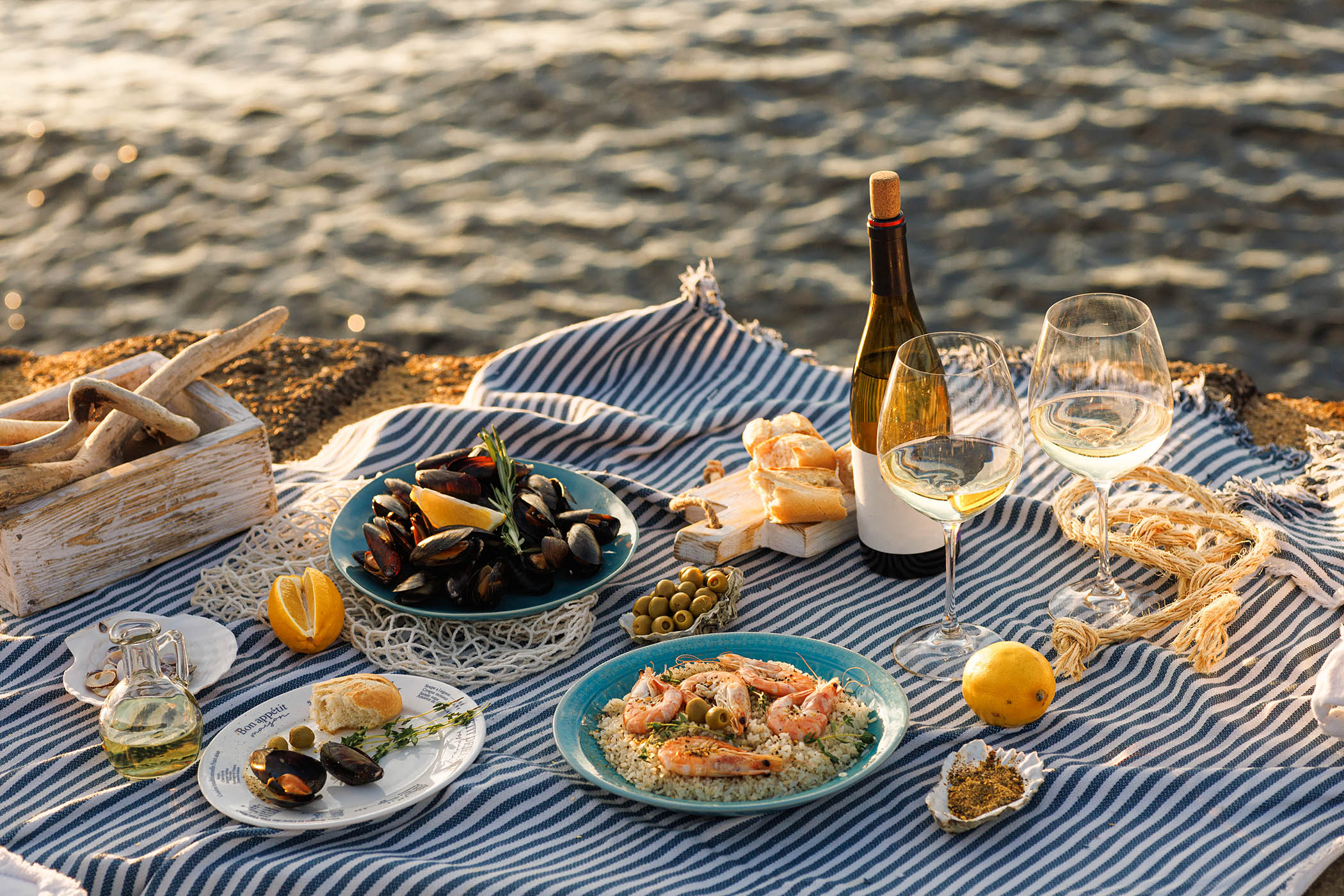

I find it very hard, these days, not to get carried away by the romance of Greek wine. Just a sniff of a dry white made from one of the country’s many hazily aromatic grape varieties is enough to put me in a dreamy, swooning, yearning sort of a mood. Lemon skins, pine trees, thyme, jasmine… the scent of moschofilero is nothing less than the smell of Greece on a soft summer evening.
There is romance, too, in the stories behind Greek wine. Tasting with a roomful of Greek winemakers in London last month, I’m handed a glass of Rouvalis Winery’s Lagorthi 2021 (£18.50, Maltby & Greek), a graceful dry white infused with delicate watercolour washes of lemon and herb. It’s made in a region called Slopes of Aigialeia, a mountainous northern Peloponnese appellation whose name alone has a pleasingly mythic quality. Viticulture there is officially heroic: the steep vineyards are very tough to work. The lagorthi grape itself, I learn, is a rarity, planted in no more than 24 hectares of vineyard. But it’s in far better shape than it’s been in a very long time: at the end of the 20th century, it was on the brink of extinction.
That seems to be the case with many of Greece’s glorious range of indigenous varieties: the gorgeously exotic malagousia, for example, a star of many modern Greek white wines, was also on the way out until it was revived in the 1980s in Epanomi (just southeast of Thessaloniki) by the producer still responsible for one of its best examples, Gerovassiliou. (The latest, 2025 vintage – £25.69, Hay Wines – ripples with ripe citrus, fleshy white peach and honeysuckle.)
The part stands for the whole: by all accounts,Greek wine was in a terrible state when Vangelis Gerovassiliou embarked on the revival of his family’s vineyards. Even at the turn of the millennium, when I first visited a Greek vineyard, the country was still bafflingly miles behind fellow ancient southern European wine cultures, Italy and Spain. There were nice bottles to be found here and there in Greece. But there was no fine-wine equivalent of Barolo or Rioja, and, mixed in among quantities of very ordinary wine, there were many appalling, toilet-cleaner-like examples of pine-resinated Retsina.
The first real stars of Greek wine’s remarkable 21st-century renaissance were the “Aegean Chablis” of Santorini: taut, mineral, crackling with energy, these dry whites, made from very old vines of the local assyrtiko variety, seemed to be drained straight from the island’s volcanic soil. They’re increasingly hard to come by, and the combination of drought, the always low yields of the old vines and the rise in demand, has also put prices up. But names such as Estate Argyros, Gaia Estate and Paris Sigalas’s Oeno P are still at the pinnacle of modern Greek wine-making.
That Olympian peak is getting more crowded by the vintage, but Greek wine has delights at every level. You can find Greek wine priced for ordinary mortals in most supermarkets now (such as the bright, briskly lemony dry white Co-op Irresistible Assyrtiko 2024 from Macedonia, £9.95). At the London tasting, meanwhile, favourites included the evocative wild herb and dried cherry dry red of Foundi Estate Xinomavro, Naoussa 2021 (£37.73, Clark Foyster); the stone fruits, orange zest and white flowers of Kontozisis Sun White Malagousia, Karditsa 2025 (£22.50, Jolly Vintner); and a pair from the excellent Novus Winery, a gently incisive, beautifully refined moschofilero A Priori 2025 (£20.50, Shrine to the Vine) and Cultura Nemea 2022 (£24, Novus Winery), a red full of just-ripe plum and pomegranate, made from a variety, agiorgitiko, that, as winemaker Leonidas Nassiakos delights in reminding me, has perhaps the most heroic backstory of all.
According to the myth, it was the wine drunk by Hercules after slaying the Nemean lion.
Newsletters
Choose the newsletters you want to receive
View more
For information about how The Observer protects your data, read our Privacy Policy