

How do you overcome pre-flight jitters? The fearlessness of my early youth – the kind that made it a good time to learn how to drive, date loads and engage in lots of international travel – has passed. That phase of my life is peeling away, revealing a jumpiness around risk and a sincere yet mortifying preference for safety. Ugh.
I have always been a little anxious about sitting in a tin can hurtling through the sky. Now I’m at the point where I have to think of various ways to sedate myself ahead of time. And, sadly, I can’t write a column on the joys of CVS’s own-brand melatonin (only the American mind could dare to imagine a drug so strong that tastes so delicious), so I’m here to talk about wine on planes.
Two glasses of wine! The perfect amount of alcohol to give you the sleepy buzz you need to fall asleep on the shoulder of the stranger next to you. As they asked on the latest episode of Saturday Night Live UK: “Am I nailing my life? No, I’ve simply had two glasses of wine.”
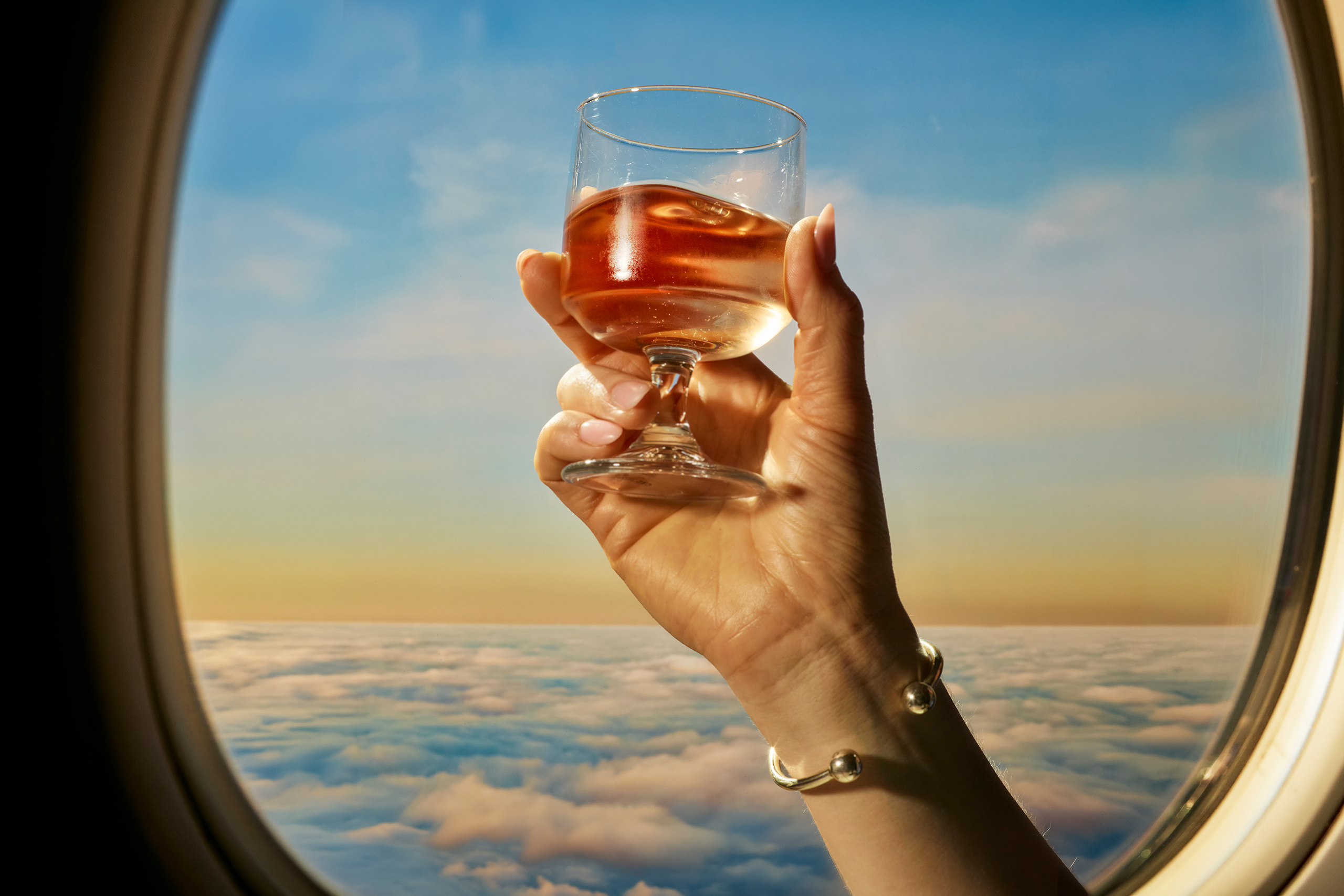
When it comes to choice, pickings tend to be slim, with only a red or white on offer (plus sparkling, if you’re lucky enough to be flying business class). They often taste a little… different from what’s expected, even though they’re often tried-and-tested favourites.
Being on a plane can drastically change the wine experience. Unsurprisingly, at 35,000ft our tastes are altered. To smell wines properly, we need a certain level of humidity: the mucous membranes in our nose need to be sufficiently moist (ugh again) to capture the aromatic compounds as they whirl out of the glass. Humidity can be less than 12% on a plane, which severely stunts our ability to smell, and therefore taste, the wine properly. The perception of taste, as we know, is mostly smell.
Then there’s the actual tasting part.
The dry air, combined with low pressure, significantly reduces the efficacy of our tastebuds. Sensitivity to sweet and salty flavours falls by around 30%, according to a 2010 study commissioned by Lufthansa. But our perception of bitter flavours is almost unaffected, meaning that once the perception of sweet fruit is diminished certain wines can appear even more angular, rough and tannic.
Knowing this, airlines opt for wines that meet the challenge of these conditions: full-bodied sparkling wines in business, for example, so wines that usually feel zesty and sharp don’t feel acerbic and thin. Blanc de noirs – champagnes made from black grapes – and vintage wines with a softer mousse are good for this.
When it comes to still wines, the thing to do is to pick something intensely aromatic, so compounds are still forthcoming, with soft tannins. The resulting wine won’t taste angular, but rather fruit-forward and approachable. Think sauvignon blanc, a variety known to be very aromatic, which should survive in the air. The most recent flight I took had merlot as the house pour. Plummy, low in tannin and with medium acidity, it’s a style of red that thrives in a low-pressure environment. The shoulder of that neighbour is starting to look inviting…
Newsletters
Choose the newsletters you want to receive
View more
For information about how The Observer protects your data, read our Privacy Policy