
In the summer of 2024, Emma Sidi was midway through her Edinburgh Fringe show Sue Gray, named for the civil servant who investigated Boris Johnson’s Partygate scandal, when she learned that Lorne Michaels wanted a ticket. Michaels is the impresario who created Saturday Night Live, the late-night American sketch show that launched the careers of Bill Murray, Eddie Murphy, Julia Louis-Dreyfus, Tina Fey, Adam Sandler, Amy Poehler and Will Ferrell. Last year, during celebrations of the show’s 50th anniversary, it was roundly agreed that the 81-year-old remains American comedy’s presiding kingmaker. When Michaels asks a comedian for a seat at their show, they usually find him one.
But Sidi, a nimble comic actor who specialises in sharply observed, slightly deranged character studies, was unconvinced the request was real. “Like, I’m not going to be on SNL, am I?” she told her agent. And in any case, the show was sold out. “I told his people, ‘I’m sorry, Lorne can’t get in today and I doubt he’d enjoy it anyway.’” Only later was she told that Michaels was scouting her for a British spin-off. “I was like, that’s cool,” she told me. “You’re saying the words ‘SNL UK’, but I doubt that’s a thing.”
And yet it was. A year after Sidi was first approached, UK comedy agents were asked to submit clips of their clients to Michaels and his team, while writers for British comedy institutions – programmes like Have I Got News for You and 8 Out of 10 Cats – were invited to supply sample jokes and sketches. During auditions, which were held in London last summer, performers delivered their routines under bright lights to a darkened room – Michaels sat passing judgment somewhere in the shadows, jet-lagged and inscrutable. Sidi, who by this time had given birth to her first child, remained sceptical, until the comic actor Jamie Demetriou, who was helping to cast the show, called her up, assured her it was real, and asked whether she might send over a screen test. Only when the cast was formally announced, in February, did much of the British comedy industry seem to accept that SNL UK was coming after all.
To understand why that news seemed unbelievable, it helps to understand what SNL is. Since its debut in New York, in 1975, the sketch show has become, to many Americans, a weekly ritual. The show is built in a state of controlled panic during the course of a week. A famous host arrives; writers pitch dozens of topical, political and absurd sketches; the strongest survive a table read and dress rehearsal; the rest are rewritten, cut, cannibalised or abandoned; and, late on Saturday night, the whole precarious enterprise goes out live. For more than half a century, that machinery has proved almost absurdly durable. Presidents, movie stars, athletes, musicians and politicians have passed through its studio. To host the show is to have arrived; to be mocked on it is, in a different way, to have mattered.
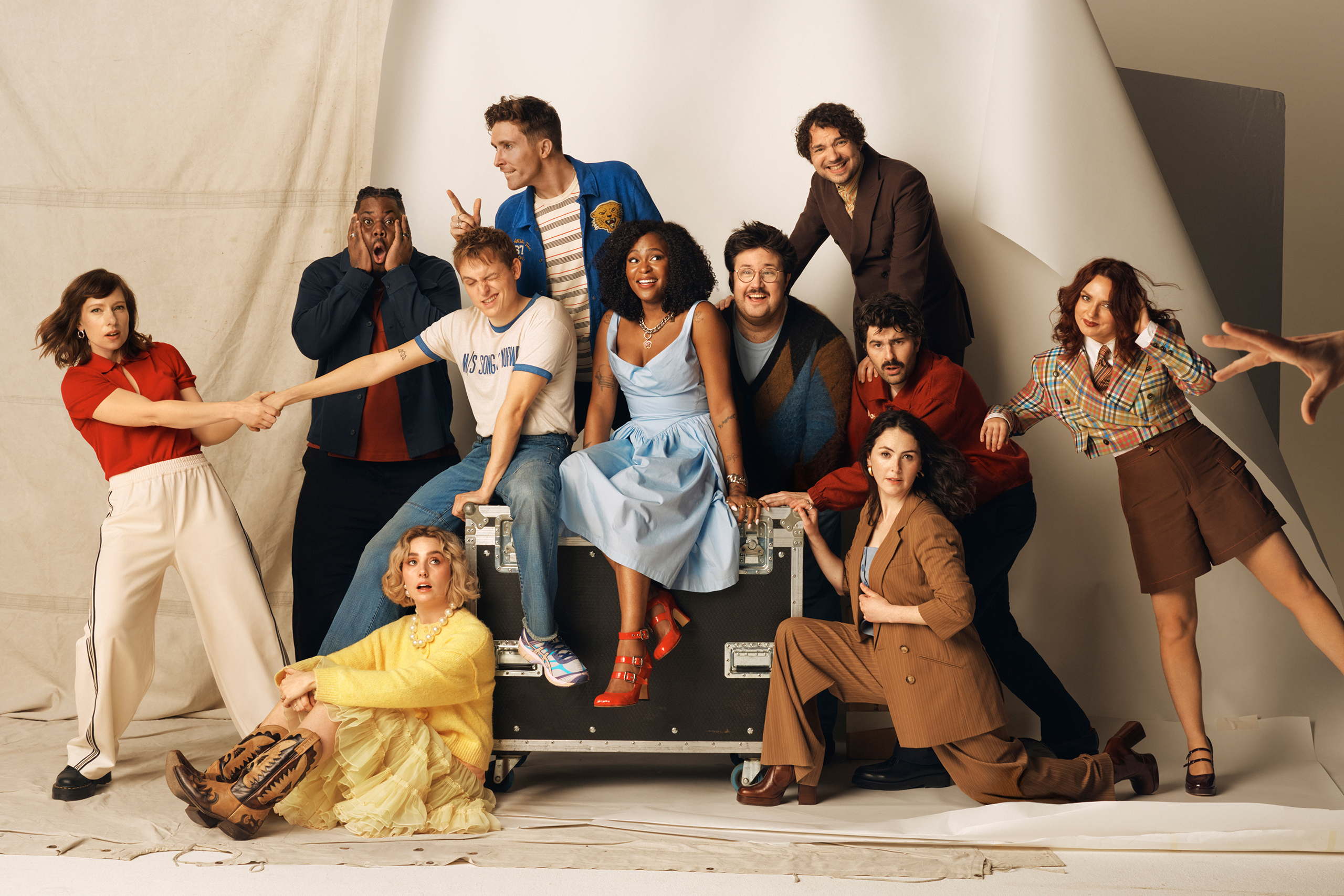
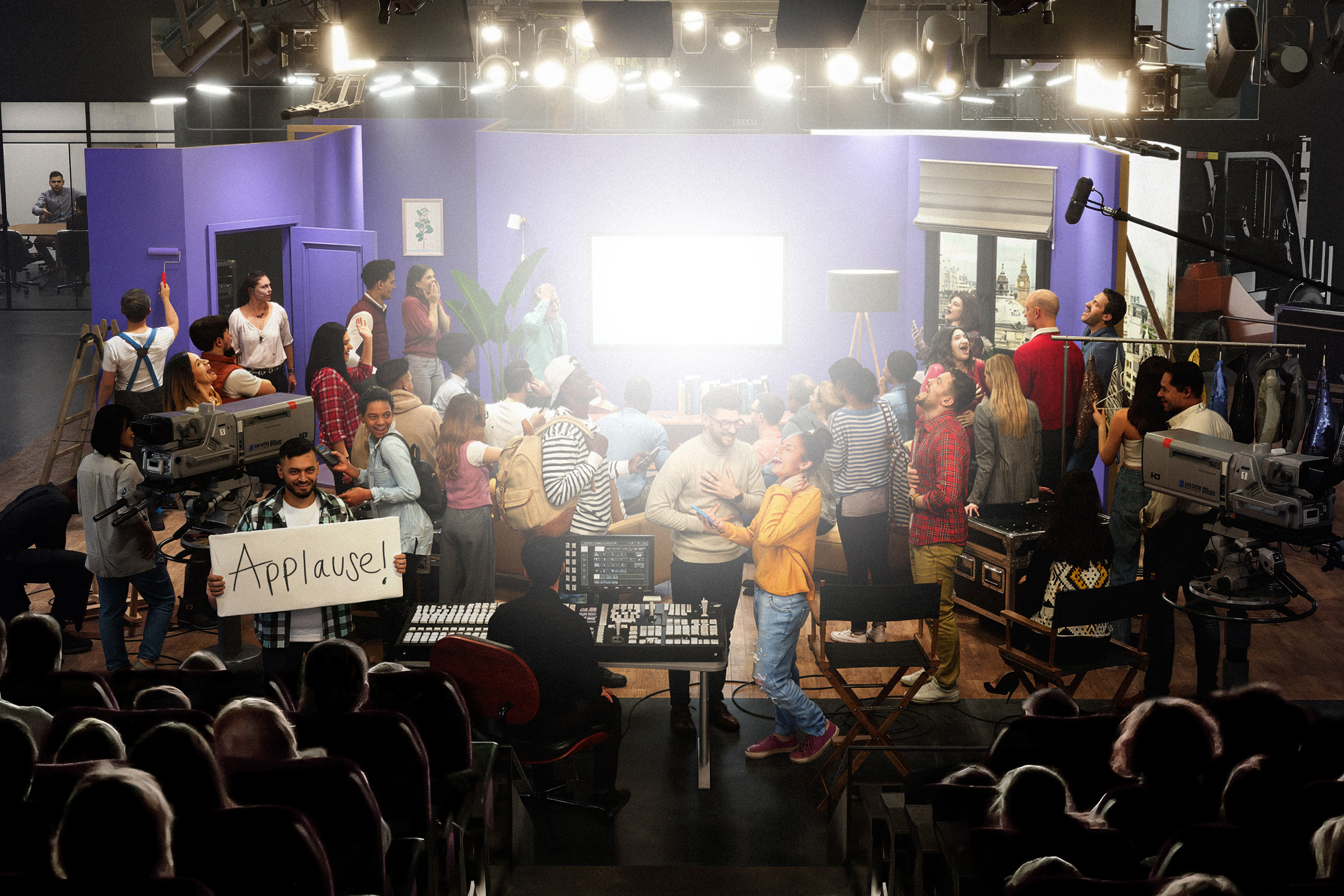
‘Almost immediately viewers witnessed the force of the show’s young ensemble’: the cast of SNL UK
But could it survive translation to the UK? Britain has its own deep sketch tradition – from Monty Python and The Two Ronnies to Not the Nine O’Clock News, French & Saunders, A Bit of Fry & Laurie, Smack the Pony – and a deep-seated suspicion of imported American bombast. And while SNL depends on a competitive, last-man-standing writers’ room, where ideas are pitched, fought-over and killed with unusual speed, British comedy has long preferred to imagine itself as collegiate rather than cut-throat. To sceptics, SNL UK threatened to combine the worst of several worlds: American machinery, British accents and a cast of relative newcomers pressed into the service of a format with almost unbearable cultural weight.
The timing of the project sharpened the discomfort. British TV had been battered by post-pandemic contraction: freelancers were out of work, budgets had been squeezed and development pipelines had narrowed. In 2025, a poll by the broadcasting and entertainment union Bectu reported almost half of workers in the UK TV industry were unemployed; some senior producers had taken jobs as shelf-stackers and car-park attendants. The promise of Lorne Michaels arriving, with Sky’s lavish backing and the prospect of hundreds of jobs, might have seemed a cause for celebration. But instead the production was enveloped by a thick cloud of cynicism. To many, SNL UK looked at once like a lifeline and a provocation: a lavish American inheritance arriving in an industry struggling to fund its own traditions.
It was also, by British comedy standards, extravagantly expensive. In March, Variety reported that SNL UK costs £2.1m per episode. (Sky declined to confirm the figure.) Even before the first episode aired, the show carried a question much larger than whether it would be funny: could a broadcaster justify spending that kind of money on a live sketch format in a TV economy increasingly governed by clips and social sharing?
Asked about a UK version of SNL, John Oliver, who began his career in Britain before becoming a star of American late-night TV, called it “a terrible idea,” adding: “I don’t know how you can impose that cult on to the UK.” Chortle, the UK comedy guide, warned that a British version faced “an uphill battle,” citing the cultural differences that might make the format hard to translate. Inside the industry, the mood was more complicated – a blend of envy, hope and anticipatory schadenfreude. “Everyone wants it to fail,” one BBC comedy producer told me last December. “But the industry here is also in ruins. So everyone also kind of wants it to work.”
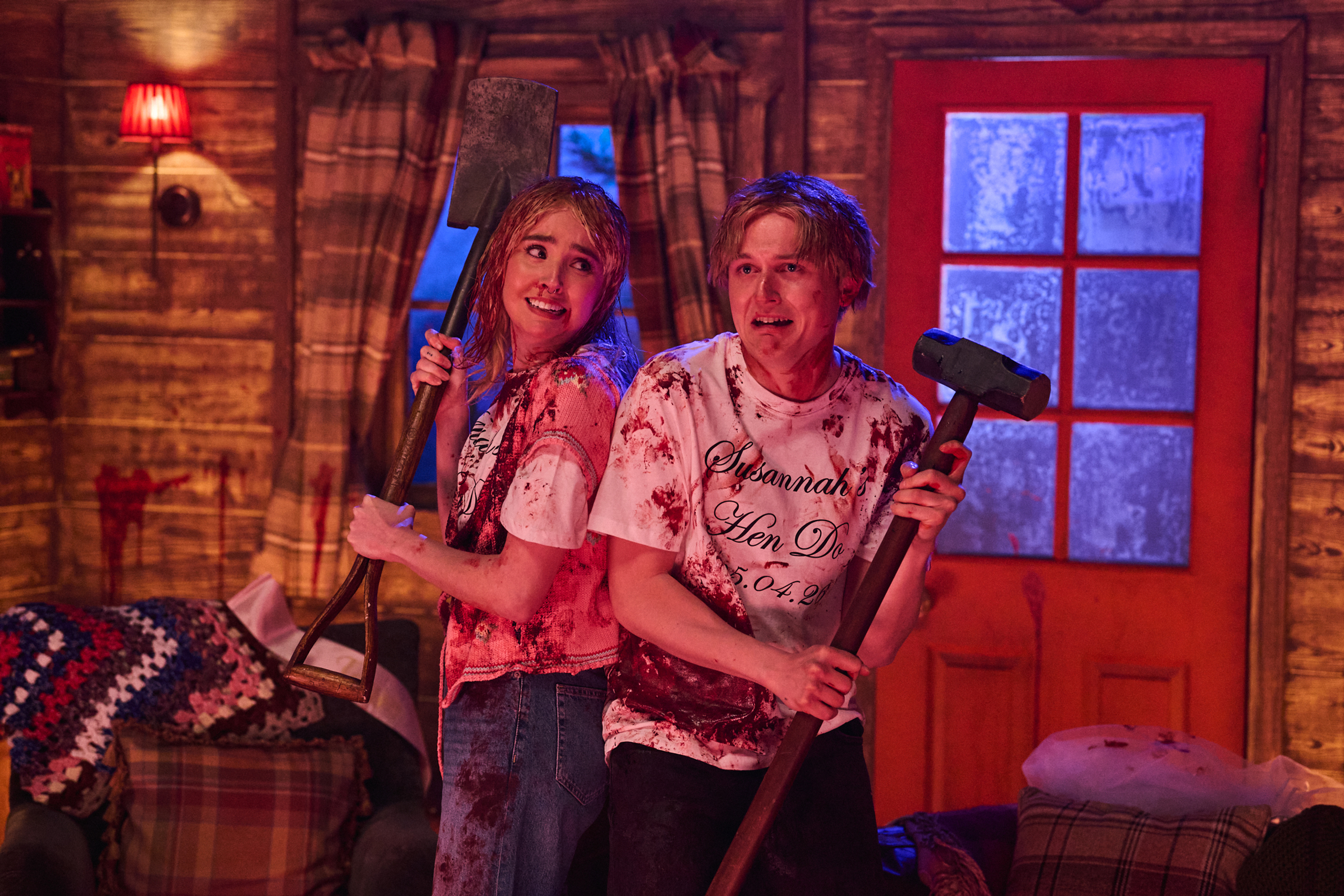
Annabel Marlow and Jack Shep in the Cabin sketch, where a hen-party goes awry
Michaels first raised the idea of creating an “edgier British cousin” to the American SNL in the twilight months of the pandemic, but the response at the executive-suite level was mixed. Sky was the natural place for the conversation to land: it sits within the same Comcast family as NBC, home of SNL in America, and the British version would be made in collaboration with Broadway Video, a Michaels company. But corporate proximity did not make the idea feel any less risky. “It was a big swing, obviously, and something a lot of people thought had risk attached,” Philip Edgar-Jones, Sky’s executive director of unscripted, told me. “But there was a real appetite. We very quickly went from discussing the ‘if’ to the ‘how.’”
In the weeks before the show’s 21 March premiere, the misgivings of onlookers curdled into open hostility. When Humphrey Ker, one of the show’s writers, appeared on Chris Moyles’s Radio X programme, Moyles dispensed with any pretence of neutrality. “Is it going to be funny?” he demanded, adding, with some relish, that the programme had already been widely slated. “We’re aware there’s an awful lot of weight of expectation,” Ker replied, graciously. Graham Norton, who appeared in the first UK episode alongside its American host Tina Fey, later admitted on his podcast that he, too, had doubts. “I was there and I was knocking it,” he said. “I was thinking: ‘This is going to be so bad.’”
It wasn’t. In the opening monologue to the first show, Fey offered viewers a brisk tour of the British comedy canon, signalling both her own fluency and the format’s appreciation of the national inheritance into which it was intruding. She confronted the scorned premise directly: why even start a new SNL? “Like so many large-scale American operations these days,” she joked, “no one really knows.” Almost immediately viewers witnessed the force of the show’s young ensemble: Jack Shep’s unhinged portrayal of Princess Diana, Sidi’s range and comic precision, George Fouracres’s twinkling absurdity. The reviews, when they came, reinforced the feeling of wary surprise. The Daily Telegraph described the episode as “shockingly competent”. The Independent noticed a “huge groundswell of support” from viewers who had previously written it off. Even the New York Times drew favourable comparisons with the American original, citing a “promising debut” with “as many, if not more, funny premises than in a typical episode”.
The surprise was not that every sketch was universally loved (Seth Myers, a cast-member on the US show for 13 years, told the UK writers that the perfect episode features three things you love, and two things that aren’t quite for you). It was that this British version actually seemed viable. SNL UK was initially commissioned for six episodes, but was extended to eight before the first run was over – a modest but telling vote of confidence.
To understand better how SNL UK worked, I visited Studio 1 at Television Centre midway through the show’s debut run. The building was once one of the great engines of British broadcasting, home to Doctor Who and Blue Peter, a place of camera crews and costume racks, barked instructions and sets being built. Since the BBC sold much of the site in 2013, the institutional clamour has ebbed. But at around midday, the cast, writers and crew of SNL UK began to drift in and the old machinery stirred.
In five days’ time, the series’ fifth episode would go out live to a few hundred people in the room, a modest live audience on Sky, and later to many millions more through clips cut up and flung around online. But for now nothing had been written. In the inherited SNL rhythm, everything must be conceived, pitched, selected, rehearsed and performed within the next five days.
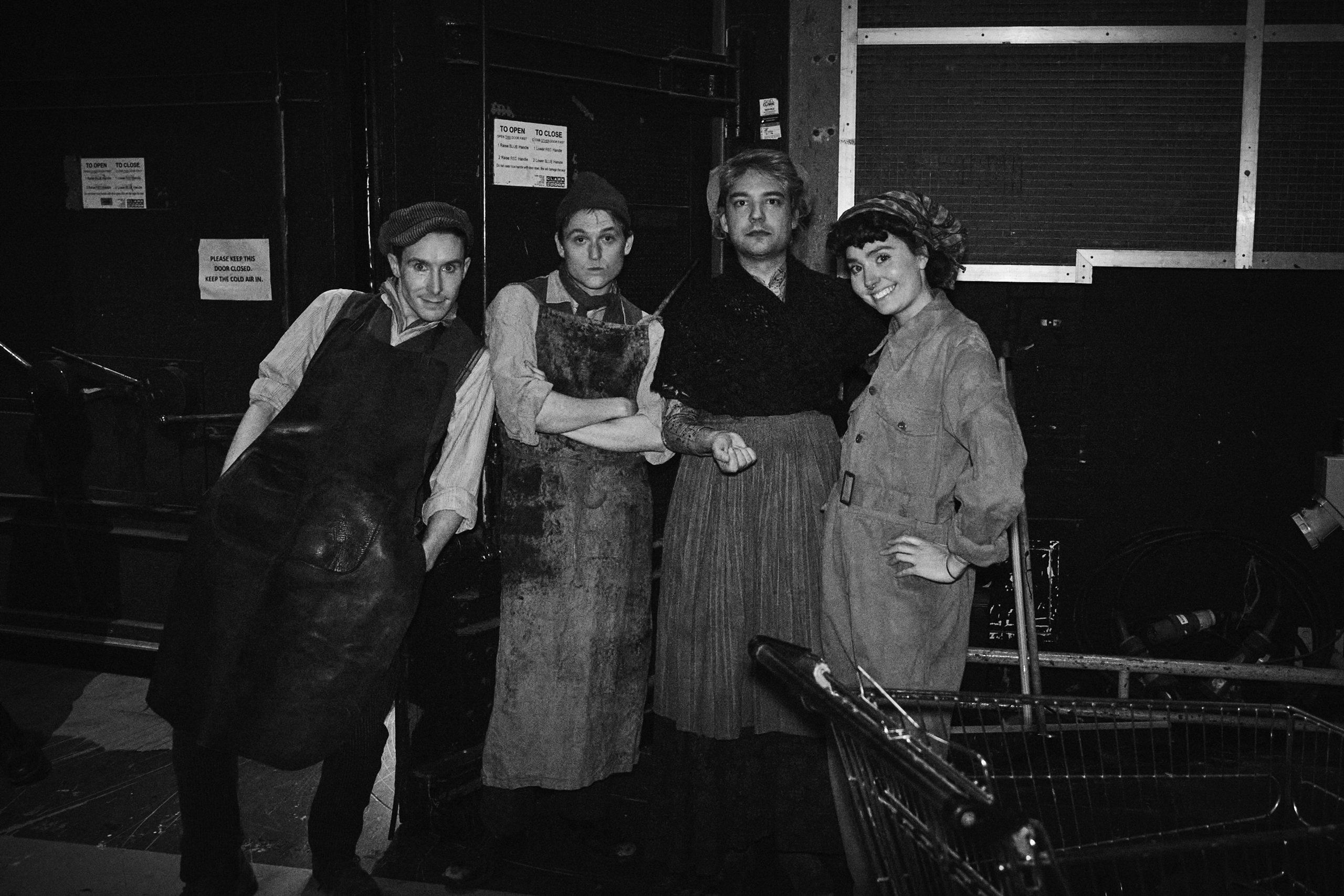
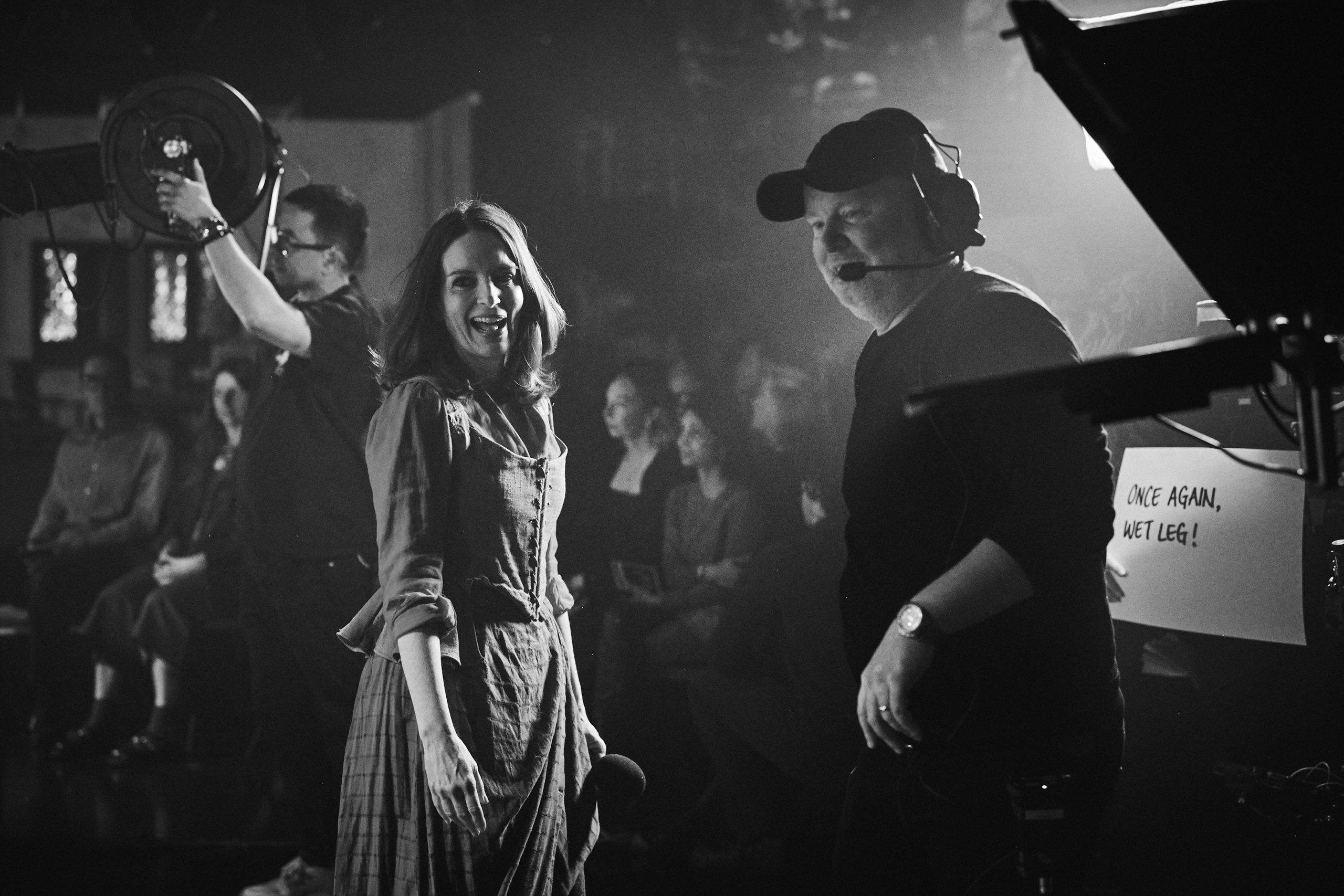
‘A sketch either lands or it does not, and the verdict arrives instantly’: behind the scenes
As in New York, the show pivots on Wednesday, when the 20-strong writing team and 11 cast members pitch their ideas at the table read, and sketches are assessed and culled via a system of Darwinian meritocracy. It is an elaborate, expensive, stressful way of making television. But the UK production is not being left to fend for itself. James Longman, the show’s lead producer, who has worked on formats on both sides of the Atlantic, including Never Mind the Buzzcocks and The Late Late Show with James Corden, speaks to Michaels every week. “When you’re stuck,” Longman says, “Lorne will go, ‘Well, here’s how we got through it.’”
The result is not only a schedule but a scale almost unknown in contemporary British comedy. SNL UK employs 300 people, many of them in departments that underwent near-death experiences post-pandemic. The lavishness has been a revelation for British writers and performers. “I’ve done so many other shows where it’s just a lot more stripped back, and you don’t work with as many people, and the writing room isn’t as lively,” said Laura Claxton, whose writing credits include Never Mind The Buzzcocks and Have I Got News for You.
Every aspect on set feels expensively artisanal. In a black-draped cubby behind one of the sets, a team of cue-card writers scribbles lines for the performers in marker pen; teleprompters are too unwieldy for the live show, where lines are being rewritten until moments before broadcast, and where the placement of a card can determine not only whether an actor remembers the joke, but whether their eyeline lands in the right place. Wally Feresten, who has run the cue-card department at SNL in New York for more than 30 years, visited London to train the British team. It is one of a thousand details that make the production feel at once archaic and fashionable: a mass-entertainment product built, week by week, by hand. “It’s given a real shot in the arm to the TV industry,” Longman told me.
But the framework and funding were only half the answer. SNL has always relied on the discovery of performers who can survive its pace. From the beginning, the British production’s answer was not to lean on established names, but up-and-comers. That youth-championing ethos flows from Michaels himself, who has always preferred to cast relative unknowns who lack the reputational gravity that might destabilise an ensemble. The UK cast members, who range from 26 to 36, are hardly obscure to audiences attuned to British comedy. Both Sidi and Ania Magliano had already broken through on Taskmaster, one of the few remaining domestic platforms for emerging comics. But they belong unmistakably to a different lineage from the household names produced by the panel-show circuit that formerly defined mainstream British comedy. “When we announced the cast earlier this year,” Edgar-Jones told me, “people started to turn on to it a little bit more. Like, ‘OK, it’s not the usual suspects.’”
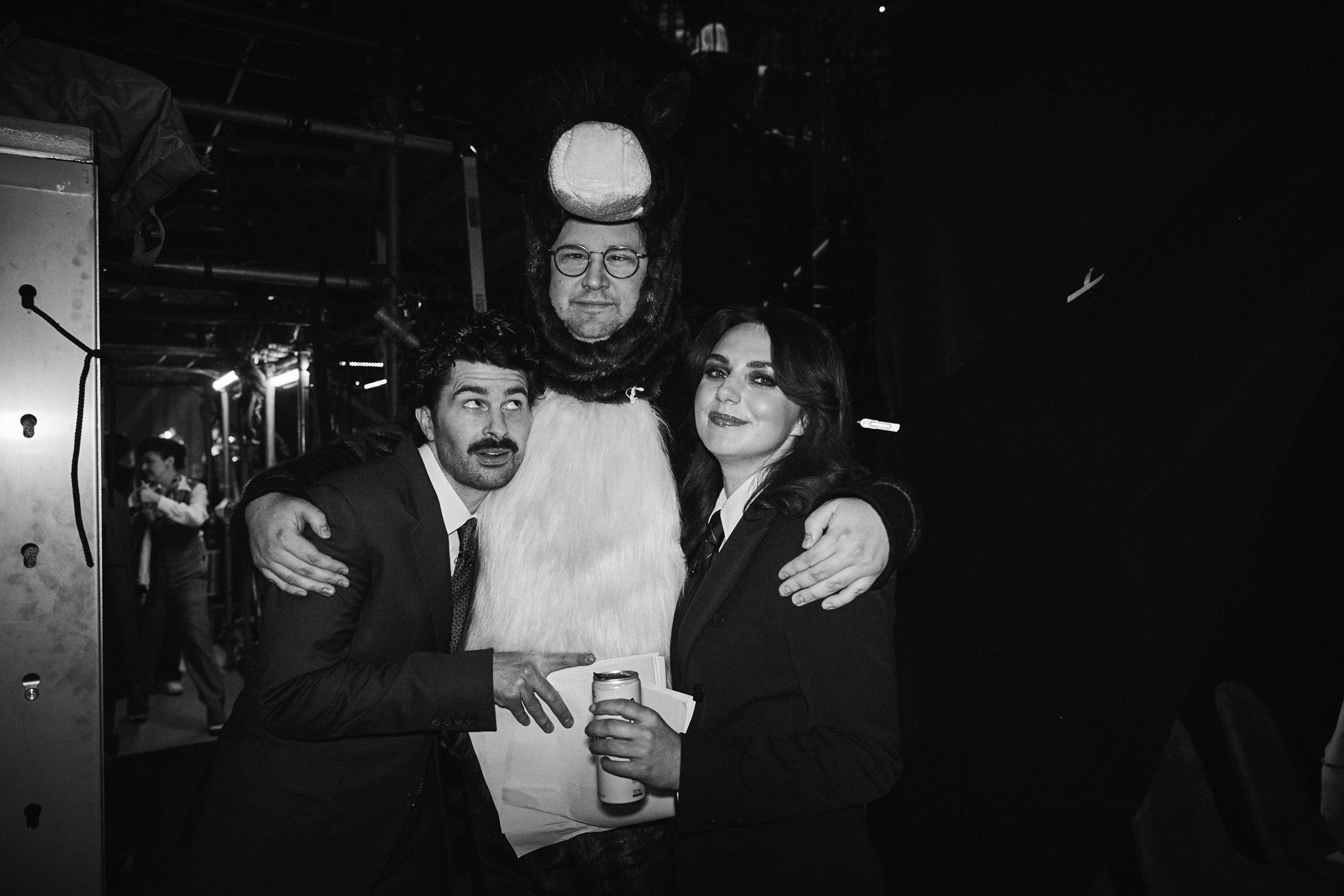
Having a laugh: behind the scenes of Saturday Night Live UK
But even once they’d signed up, the writers and performers worried that accepting the role might harm their careers rather than accelerate them. Ayoade Bamgboye, one of the show’s youngest cast members, was in the middle of her debut Edinburgh Fringe run when she took the call. She had applied to join SNL UK as a writer; instead, she was told she had been cast as one of its performers. She’d only recently left a job in advertising, and the scale of the leap seemed absurd. Unable to process the news, she hung up on her agent and immediately fell asleep. “My system was in shock,” she said. “It felt like I was going from primary school to a doctorate at Harvard Law.”
What reassured her, she said, was hearing who else was involved: writers whose work had helped define the past decade of British comedy and a cast who, in a healthier television ecosystem, might already have become household names. When the creative team met in late 2025 to begin discussing ideas, belief within the camp began to strengthen. “I suddenly felt a flood of relief: ‘It’s going to be good.’” Chris Cantrill, whose credits include the BBC comedy Alma’s Not Normal, told me, “I had been feeling cynical, too. But after those days in December I said to my wife, ‘I think we could do this.’”
Still, the team has had to discover its own tone, if not the format. Finding elegant ways to honour SNL’s American heritage in British accents became an obsession during the planning stages. “We probably worried about that too much,” Edgar-Jones said. “In the end it naturally comes through: the cast are British, the writers are British, they have British themes.” There were smaller negotiations of contract and tone, too. In the US version, cast members with whom audiences are failing to connect, or who struggle with the demands of the process, can be dismissed midseason; their British counterparts were reportedly contracted for the full run, even if no guarantee of screen time was offered. The writers also pushed for more swearing than the American original typically allows, arguing that a late-night British sketch show bleached of profanity would sound weirdly sanitised. Initially, Michaels and his team reportedly resisted. Fey, arriving for the first week as host and emissary from SNL’s home base, argued that a British late-night sketch show without swearing would sound bloodless. The rule was relaxed.
Let’s get this started: Tina Fey in a sketch from the first episode
There is a British bite to the social critique, too. During the Easter episode, one sketch referred to Jesus Christ as “the only murdered Palestinian we’re allowed to mention”. Another took aim at the unconscious bias visible in the BBC’s hit show The Traitors, where contestants have often voted off minorities first for vague, unexamined reasons: at the round table, George Fouracres, dressed as a giant red crab, gurgled and clicked his pincers while the other players soberly trained their suspicions on Riz Ahmed’s character, Imran.
If the American show’s mythology is one of danger and excess – backstage punch-ups, inter-cast sex, desks dusty with cocaine – its British cousin has, so far, acquired a different romance: a slightly startling collective earnestness about comedy’s public value. “It’s a real vehicle of critique and satire and comment on the times we’re living in,” Sidi told me. “At a time when that has almost died off as an art form.”
Online, however, audiences are unconcerned with satirical value. Comic work is rarely granted the patience afforded to drama, where a slow start can be excused as world-building, or a weak episode folded into the promise of a season-long arc. A sketch either lands or it does not, and the verdict arrives instantly. The defence is that the show gave viewers something to argue about: the Gen-Z slang, the occasionally musty references, the choice of musical acts, which has been a touch BBC Radio 6 Music dad-core.
And viewer figures have complicated the creative success story. Half a million people watched the first episode on live and catch-up, making it Sky One’s most-watched programme. (By contrast, six million watched the first episode of Last One Laughing, a comparatively cheap-to-make series that features established UK names.) By SNL’s midpoint, however, those numbers had fallen by 30%. Sky argues that overnight ratings no longer capture all of the data: clips, social sharing and perma-scroll have displaced old metrics of success. A Sky spokeswoman told me SNL UK videos had “racked up 105m organic views,” which would make it the broadcaster’s most viewed show on social media ever. Among 25-34-year-olds, audience share had increased across the season.
To host Saturday Night Live is to have arrived; to be mocked on it is to have mattered
To host Saturday Night Live is to have arrived; to be mocked on it is to have mattered
The economics are not as simple as dividing cost by viewers. Sky is owned by Comcast, which also owns NBCUniversal; SNL UK sits within the same corporate orbit. Much of the show’s budget, in other words, is circulating within the Comcast family. Sky, which reported profits of £253m in its most recent accounts, is a subscription business, so value is measured less cleanly than by advertising revenue alone. For a broadcaster whose appeal has long depended on giving subscribers what they feel they can’t find elsewhere, a noisy, argument-generating weekly show has immense value.
The longer strategic play is to make SNL UK do what British topical comedy has done before: turn a format into an incubator. Not the Nine O’Clock News helped make Rowan Atkinson and Richard Curtis; Spitting Image begat Steve Coogan, Rory Bremner, Harry Enfield, Ian Hislop, Stewart Lee and Chris Morris; The 11 O’Clock Show helped launch Ricky Gervais and Sacha Baron Cohen. SNL UK may appear wildly expensive, but as a long-term bet on British comic talent, it is more legible.
Executives, meanwhile, talk of “being part of the cultural conversation” as the most useful measure of achievement. The company has often been better at importing cultural heat, rather than generating it domestically; SNL UK, then, is something of a novelty: a homegrown show people are actually talking about. “There’s nothing quite like success to put a spring in the step of your execs,” Edgar-Jones told me. “Obviously, I’m trying to get a pay rise.”
Inside SNL, a more immediate verdict on success arrives every Wednesday, at the table read. Every writer is trying to get their work to air; the system supplies its own blunt hierarchy. During his single year on the American show, the Seinfeld creator Larry David got only one sketch on TV. Cantrill admits that it is impossible not to keep a mental tally of which of his ideas make it. “That’s acutely present,” he said. “When we first signed up, we had all these chats about resilience. I remember saying, ‘I’m a 15-year veteran of standup, I don’t need pointers on resilience.’ And then I had a sketch that didn’t go through, and I was like, ‘Please, can I have some more resilience training?’”
Outside the room, the competition takes on a more visible form. Instagram accounts track the number of sketches each performer appears in, turning the show into a kind of informal league table. Inside the building, the costume racks – neatly organised by cast member’s name and photograph – offer their own silent tally. But the competition is in pursuit of excellence and, for now at least, collegiality beats rivalry. Before each broadcast, the performers huddle, their backs to the world, while one person addresses the group. “The process in the week is so intense and almost always someone will be sore, having had a sketch cut from dress rehearsal,” said Sidi. “You get very caught up in all of that, so we take a moment to let it go, to focus on each other, and on the show in front of us.”
‘It’s given a real shot in the arm to the TV industry’
‘It’s given a real shot in the arm to the TV industry’
James Longman, lead producer
Whatever the uncertainties around reach and renewal, they feel remote in the room on Saturday evening, as Sidi and the rest of the cast turn their backs to the world in readiness to face it. A rainbow system of wristbands enables the harried security staff to shepherd the crowd of 240 – members of the public, cast and writer friends and families, Comcast suits, celebrities – into their seats. Most British TV shows would be overjoyed to lure a Radio 1 DJ (non-disgraced) into their audience. It is impossible to think of another programme in which JJ Abrams and his family would be found sitting, unannounced and unbothered, in the bleachers, not for the cameras, but just for the thrill of the thing.
After a cold open featuring George Fouracres’s costumed Keir Starmer, an impression that has begun to blur productively with the prime minister himself, Nicola Coughlan emerges on to the stage, a blonde dynamo of expression and control. Her opening monologue is interrupted by a jump-scare Jimmy Fallon, the SNL veteran turned talkshow maven, who bounds onstage and then accompanies her through an elaborately staged tour of the set. The sketches that follow move through a bracing range of comic styles: body horror, gore, celebrity self-parody, political satire, pub-song absurdism. In one, Sidi plays a shopping channel saleswoman who discovers that one of her hands has developed an elongated finger while the other appears to be in a state of advanced petrification. In another, Coughlan is a Gen-Z guest at a hen-do in a remote cabin, declining to take accountability for her lateness, too piously self-obsessed to notice the other attendees who lay murdered around her.
A pre-filmed segment finds Coughlan pitching a sexually charged rap song to the producer of The Magic Faraway Tree, the film she recently starred in, a skit that surely strains at the terms of her original contract to the point of breach. Dave Grohl appears gamely in a sketch about the private delusion, common among men, that they could land a plane in an emergency. The night ends with Fouracres, a star in the making, singing a deranged hymn whose lyrics keep swerving into the assertion that “Epstein didn’t kill himself” – the old jester’s privilege of giving public voice to private suspicion.
After the show, the room retains an atmosphere of giddy delirium. I overhear Coughlan’s Derry Girls co-star Louisa Harland describe the evening as “enchanted,” the word feels right. There was, if not magic in the room, then something close to it: a confluence of the same forces that once fed the original scepticism: American ambition, British self-consciousness, fledgling talent, old-school funding and the act of making something abundant at a moment of contraction. Whether that atmosphere can be converted into a durable audience is another question. But in the room, at least, there was the simple pleasure of watching people, given the money and trust to do their jobs properly, rise to the occasion.
Perhaps this is why SNL UK has outperformed the bleakest expectations, even if its future remains unsettled. Arriving at a time when the UK TV industry is in pain, when screen opportunities for young writers and comics are few, and when topical television comedy feels absent from the national conversation, the show has met its moment.
“I feel like we could be coming across as earnest,” said Sidi, “but this is the vibe in the cast. We are promoting certain social values of how we should live, ideas of dignity alongside taking the mick, alongside pulling people with power down. There’s an atmosphere behind the scenes that I really think is extraordinary. I feel very privileged to be here.”
Bamgboye agrees: “To come together, come rain or shine, and figure it out as you go along… That is simply the most British thing.”
Saturday Night Live UK continues Saturday 10pm on Sky and NOW
Images: SKY UK
Newsletters
Choose the newsletters you want to receive
View more
For information about how The Observer protects your data, read our Privacy Policy