

Related articles:


There is a charm to a wine list so short it can be printed onto the piece of paper in a fortune cookie. A wine list so brief it can be summed up as succinctly as the pub landlord offers in Hot Fuzz: “We’ve got red… or, uh… white.”
A wine list might be short for a few reasons. Maybe it comes from one of those chic restaurants where an offering is “constantly revolving” and therefore brief for the sake of sanity and paper. Maybe the restaurant doesn’t have wine – shock horror – as the focus of their drinks offer. A lot has been said recently about “demystifying wine” – breaking down the complex, intimidating world of wine into its constituent parts, to make it easier to understand. Which is perhaps another reason why a lot of wine lists are shorter: the shorter they are, the more approachable and easier to navigate they become. Few options means fewer opportunities to make a heinous mistake, particularly for the casual drinker.
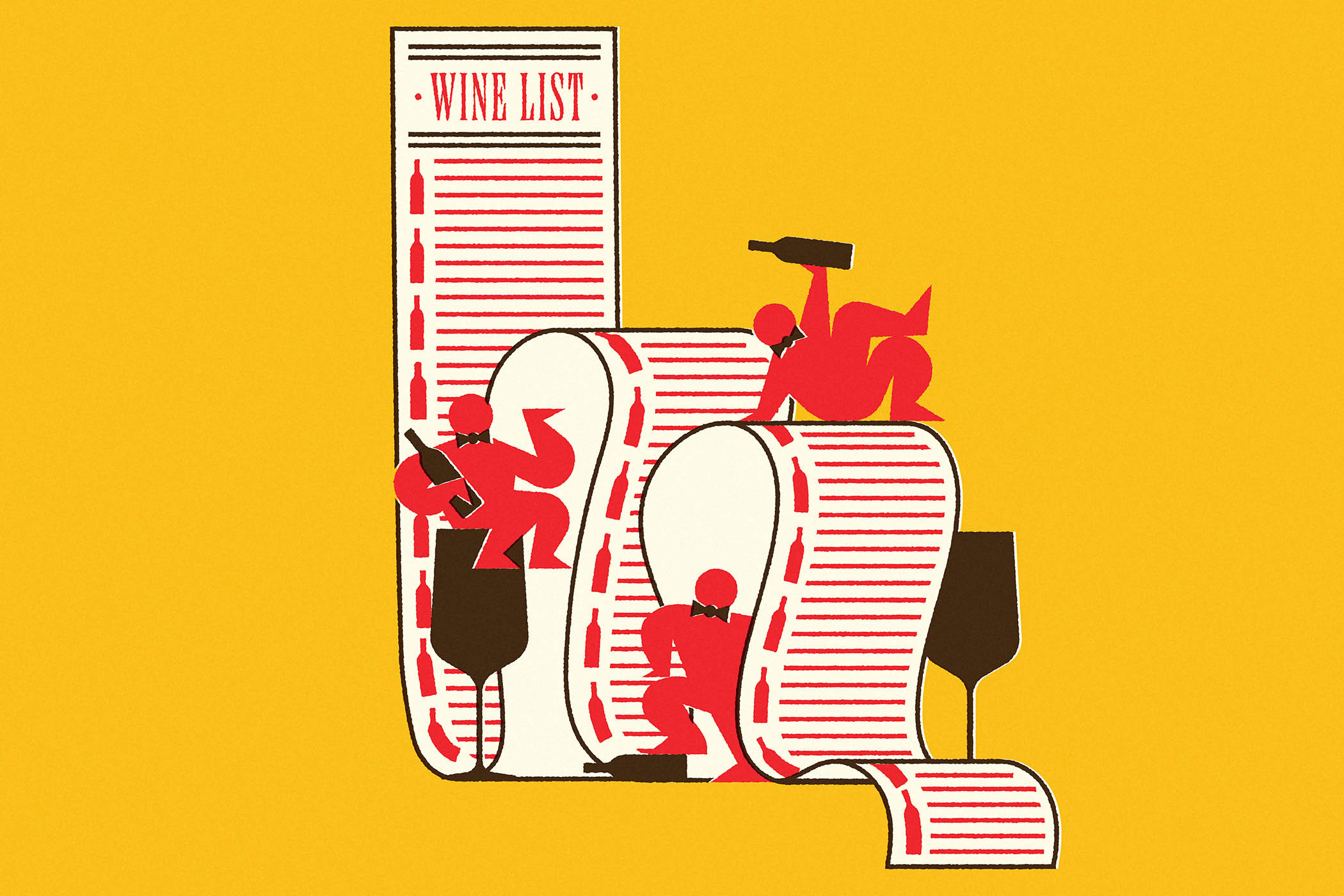
Many people find the prospect of being handed a long wine list a terrifying one. When a sommelier appears, asking them to chose from, say 60 wines, what are they to do? But I’m here to provide a defence. It is not a sommelier’s job to judge. It is their job to explore the list with you, to match a perfect wine to your dinner choice. And as soon as you realise this, the pressure is off and flipping through the pages of an almightily long list becomes a precious thing. Consider its shape, its rhythm, the many, many choices of its author. Then ask the sommelier to help you drill down and find a diamond.
The Noble Rot wine list is seemingly effortless, though appearing effortless requires an immense amount of work
The Noble Rot wine list is seemingly effortless, though appearing effortless requires an immense amount of work
One restaurant I love this for is Noble Rot, whose wine list is very long and seemingly effortless, though of course appearing effortless requires an immense amount of work and accrued knowledge.
The last time I visited, for lunch at the Soho branch, I was so exhausted by Christmas (it was November) and so utterly entrusting to the Noble Rot empire, I didn’t even bother to look at the 51-page list when it was waggled in my direction. “I trust you!” I said to a sommelier, and as soon as the members of our party identified how much we were happy to pay, and the style of wine we wanted, she returned with a bottle of Arbois from Croix & Courbet – a collaboration between two esteemed winemakers applying Burgundian winemaking to the Jura, and a wine I’d never picked for myself.
The good people behind Noble Rot aren’t worried about putting people off with a large wine list, because they have faith in their team to sell from it. Noble Rot’s co-founder, Mark Andrew MW, told me that the relationship between the sommelier and the guest, fostered over the course of a lunch or an evening, is key to navigating their lists. He also believes in maintaining a little mystery in the list. Why not suggest wines a guest would normally ignore? “There is the potential to get lost in wine lists of the size we have,” he told me. “The mystery and romance may seem daunting at first, but it is what separates wine from other drinks. We never want the experience to feel intimidating – that’s where our staff come in. All our front-of-house team are sommeliers who are completely obsessed with helping our guests discover something new or reuniting them with an old favourite.”
Noble Rot’s lists are divided into colour and style, and regions are used to distinguish between sections. “The idea is to promote discovery,” Mark said. “A guest may have originally planned on drinking a Loire valley chenin blanc but decide instead to try an exciting equivalent from South Africa.”
This wouldn’t be possible with a limited list. Defence made.
Related articles:
Newsletters
Choose the newsletters you want to receive
View more
For information about how The Observer protects your data, read our Privacy Policy