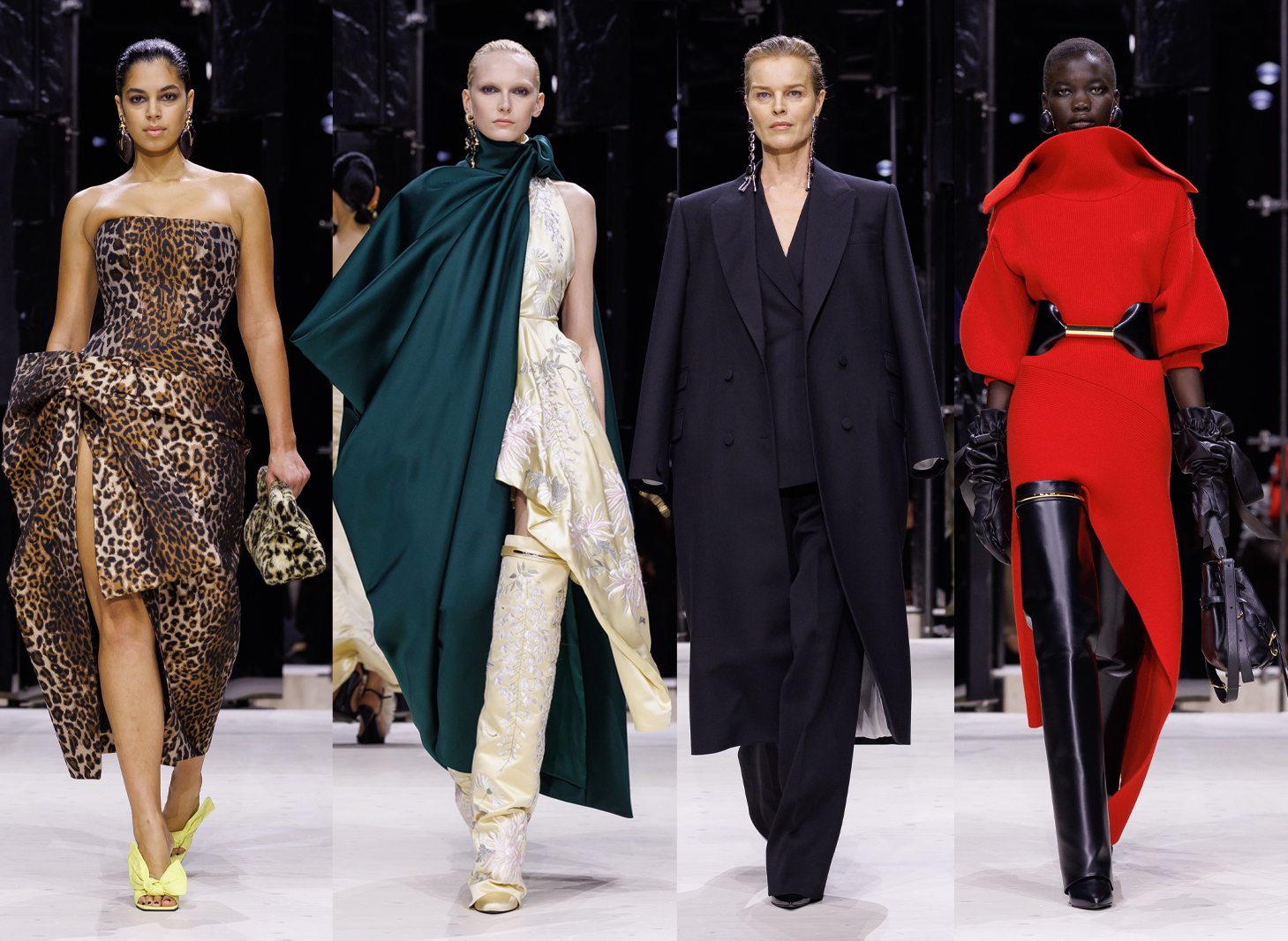
Givenchy
Sarah Burton's vision for her third Givenchy runway show became clear as soon as the first few models stepped onto the runway. The designer was in a confident and comfortable place at the house and had hit her stride. Opening with tailoring that evolved beyond hourglass silhouettes into exquisitely cut, androgynous, double-breasted trouser suits, Burton was laying down her codes for the house, at the top of which is her unwavering and intuitive vision of the Givenchy woman. This was evident in the show's diverse casting; she is not one type of woman, but rather all sorts of women. Within the collection, each silhouette had its own individual character. Strict sartorial precision gave way to fluid draping, with duchesse satin capes, a precision-cut velvet gown spliced to the hip, and waists cinched in with belts. Sculptural pieces added form – a lace dress with plunging necklines and stiff sculptured skirts, a head-turning, reversed red dress with a plunging back and a high collar that swept up at the front. Print introduced animal print and a 20s floral flapper dress. The silk headwraps, designed by Stephen Jones, drew inspiration from T-shirts pulled up over the head in haste.
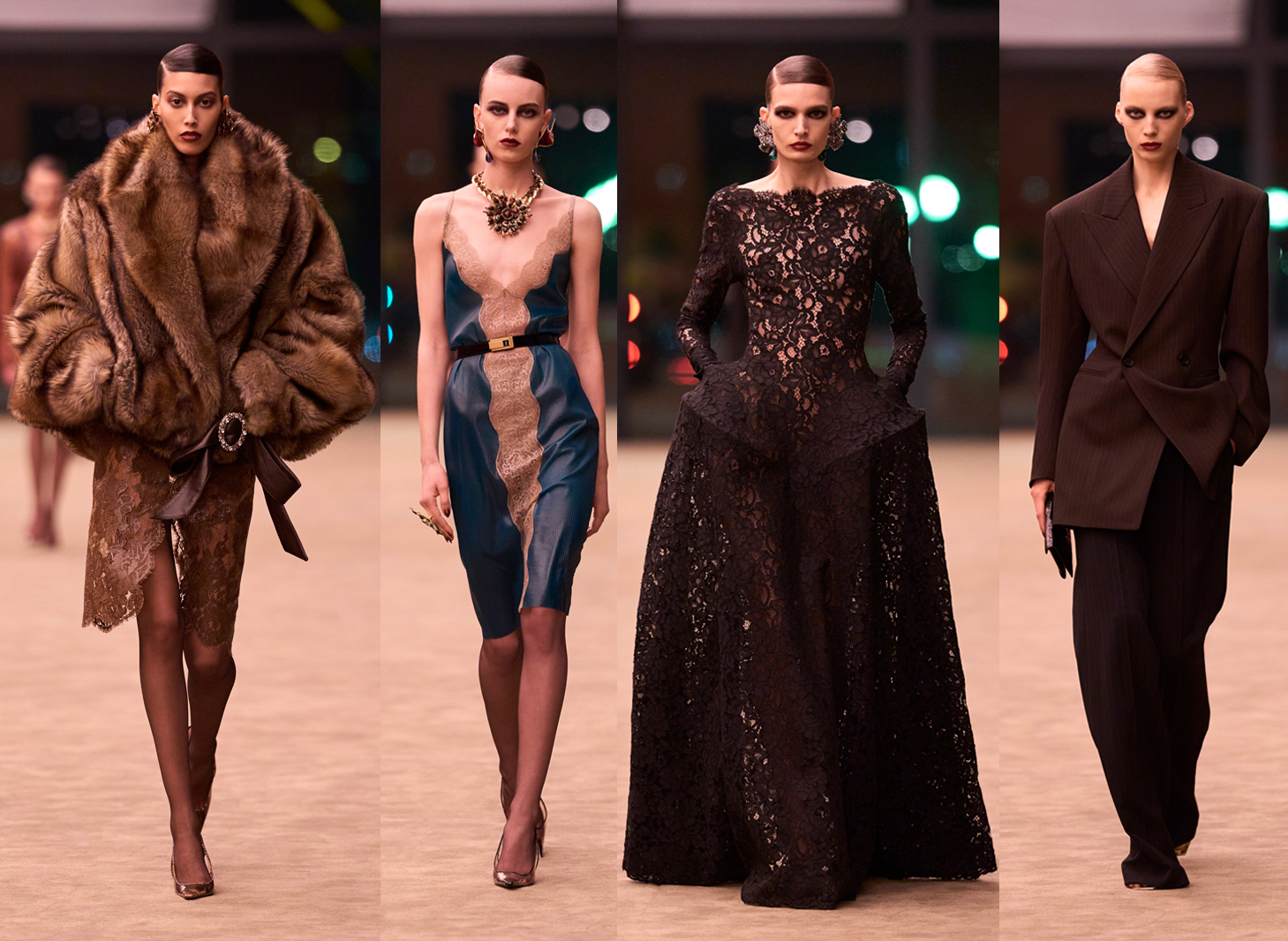
Saint Laurent by Anthony Vaccarello
Creative director Anthony Vaccarello’s AW26 collection paid tribute to the iconic Le Smoking suit, first debuted by Yves Saint Laurent 60 years ago. Saint Laurent is the hot ticket of Paris fashion week, this season saw Michelle Pfeiffer, Zoe Kravitz and Kate Moss seated in the front row. The show opened with eight exquisitely tailored versions of the tuxedo suit. The hair and make-up were reminiscent of Helmut Newton's famous 1975 image for French Vogue, which featured model Vibeke Knudsen, wearing Le Smoking, standing on a dimly lit Paris street with a crisp white cravat, cigarette and black stilettos. The second chapter introduced lingerie – sheer slips, bodies, camisoles and lace dresses that appeared light and delicate; however, on closer inspection, they revealed silicone coating. Some were constructed with delicate corseted boning, while others were worn with oversized faux fur-trimmed, drop-waisted coats cocooning the body. Statement jewellery was ever-present, featuring bird-shaped and oversized jellied earrings and exaggerated pointed stilettos. If Newton were alive we think he would approve of Vaccarello’s vision of Parisian glamour.
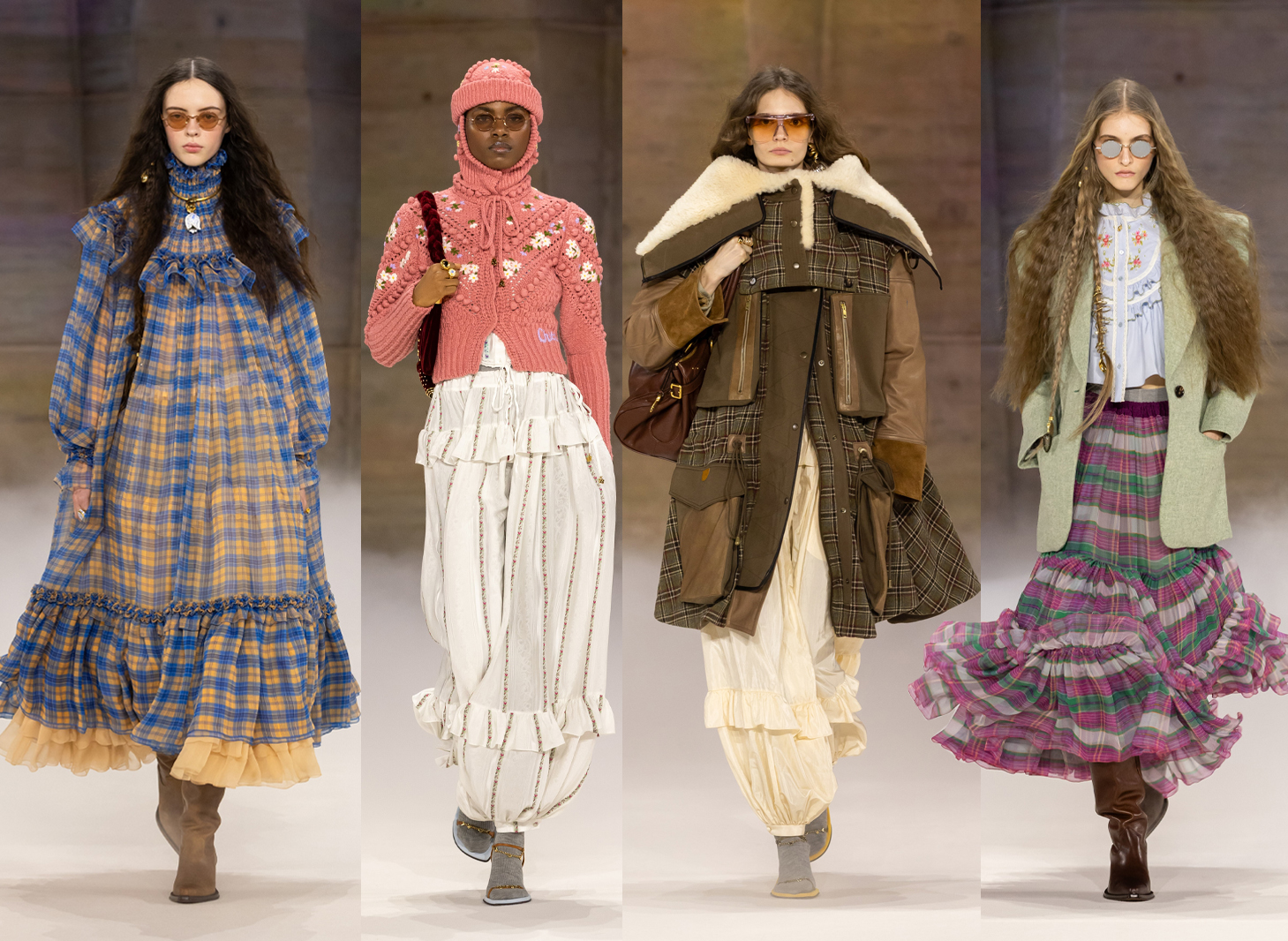
Chloe
Creative Director Chemena Kamali was inspired by the beauty of traditional folk costumes and the skill of the craftsmanship that goes into the garments. Exploring these ideals: handcrafted techniques, togetherness and her fascination with the community of artisans who create using traditional methods; the time, effort and devotion invested. Kamali cleverly merged the Chloe-girl free spirit with folksy looks that still retained the French cool-girl aesthetic. Hand-knitted and hand-embroidered blouses, along with hand-painted jewelry were evidence of the workmanship within the collection. Flouncy, tiered, ruffled mousseline skirts were teamed with the signature Chloe broderie anglaise breezy blouses, worn with hand-knit Tyrolean sweaters, each with its own charm and homespun appeal. Light trapeze-line dresses were voluminous and came in faded check and ditsy floral prints. The quilted prairie skirts and blanket coats featured trails of fringing, while the capes and oversized parkas will definitely find a home in the wardrobe of Chloe fans.
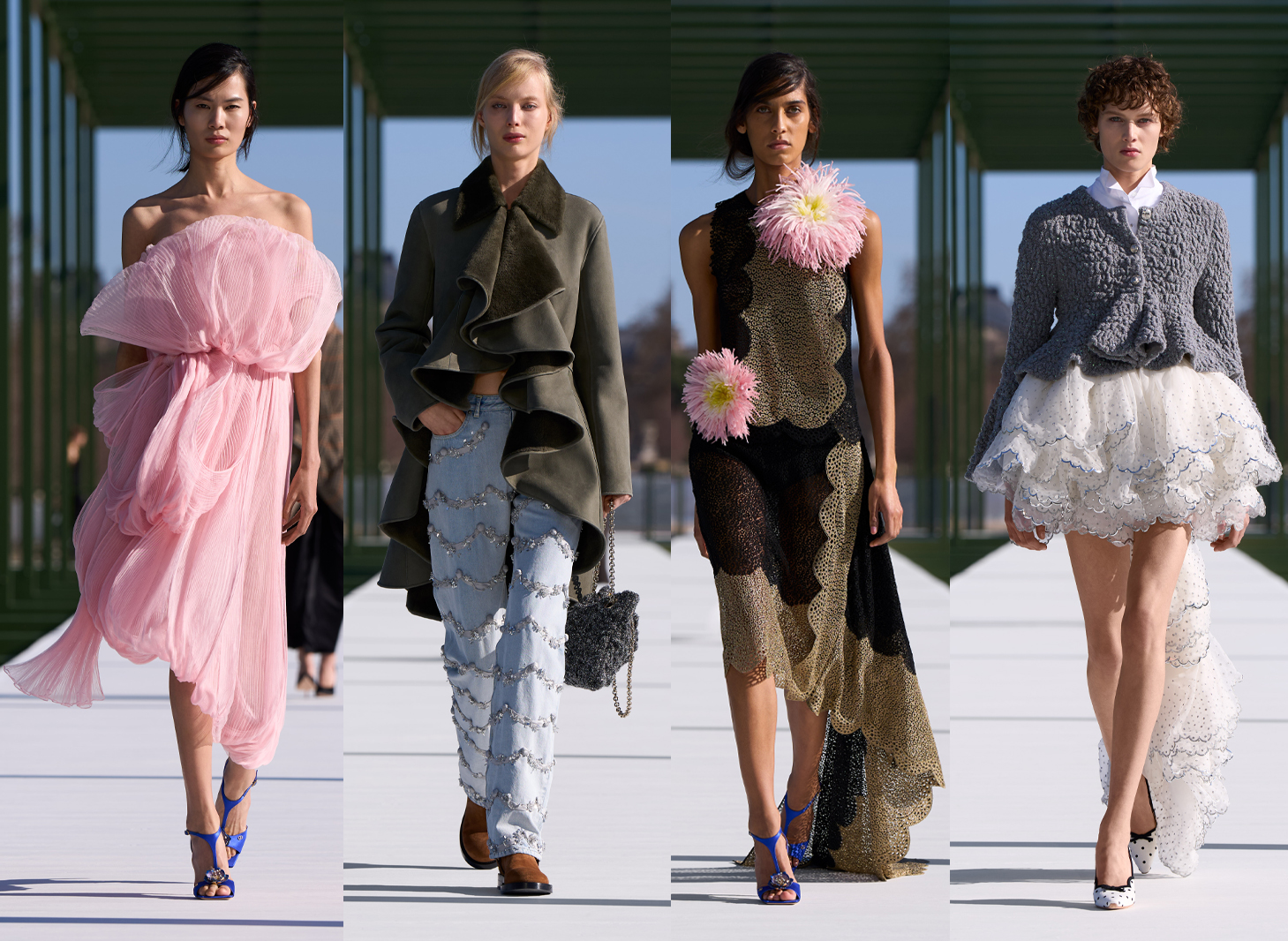
Dior
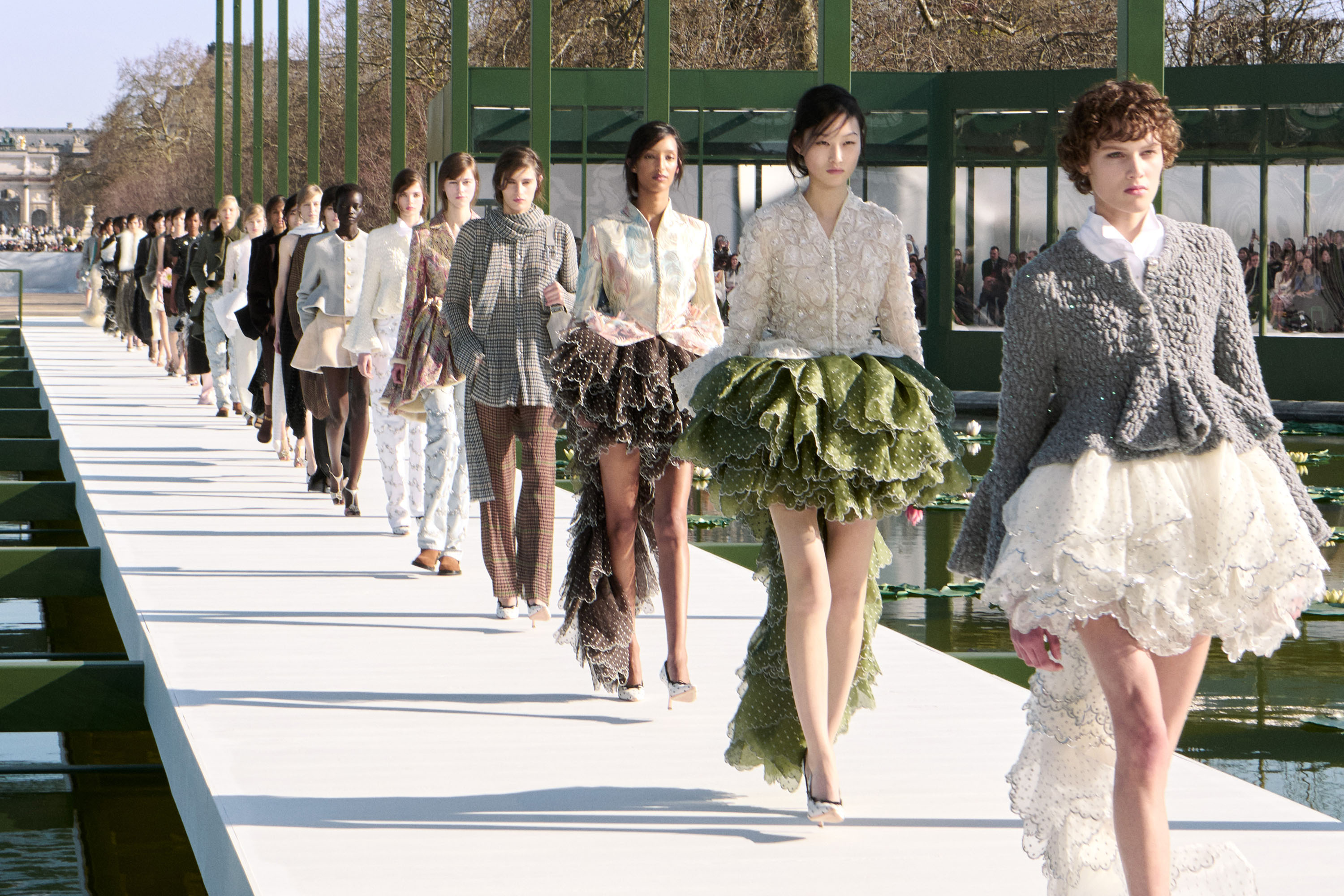
Jonathan Anderson turned the Dior show venue in the Jardin des Tuileries into a Parisian park promenade complete with lily pond. “I was interested in the idea of pleasure gardens, of dressing up and the idea of going to a garden to be seen,” said the designer. Anderson is the first creative director of both men’s and women's wear at Dior since its founder. A year in he has four collections under his belt; The latest outing crystallised his vision and raised the bar. Anderson’s desire was to break with the past and create something fresh. Opening looks were led by the Bar jacket, shrunken and cinched at the waist with scrolled peplums that sat precisely atop a tiered skirt, with layers and layers of frills trailing down the back. This was mastery at work, with fabrication at the forefront. A print jacket was handcrafted with a cluster of three-dimensional flowers; another, a skirt with a single flower motif swathed the body. Denim was peppered throughout the show edged with crystals or beaded and embellished. Flounces of chiffon burst from the hems of dresses and delicate tutu skirts were edged with silver sequins.
Loewe
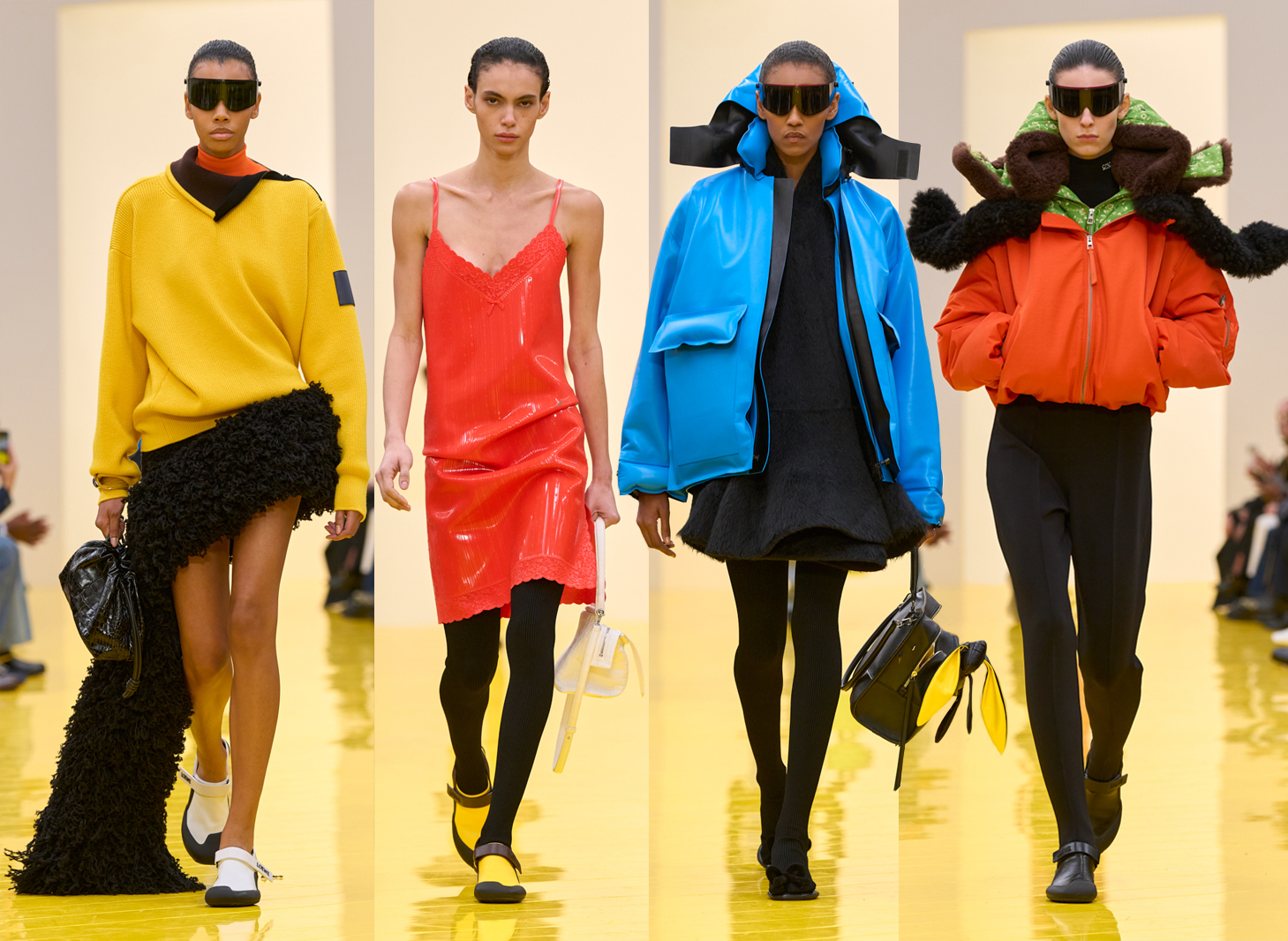
This was Jack McCollough and Lazaro Hernandez’s sophomore show for Loewe. This season was playful and full of punchy colour. Scattered amongst the seating were Cosima von Bonin, an artist the designers had long admired, and her giant sculptural animals –googly-eyed clams, a seated dolphin, a floppy-eared dog hinted at the show's playful mood. Craft is at the heart of the duo's designs; high-tech techniques and fabrication clearly show the direction the designers are taking the house. The show kicked off with slip dresses and pyjama tops accented with lace, reimagined using a 3D-printer and cast in latex. The same effect was applied to coats and detailing on sleeves, pockets and fastenings, moulded to create a trompe l’oeil effect in latex. Sporty parkas for men and women featured inflatable panels and exaggerated sou'wester-shaped hoods. Leather macs had inflatable pocket flaps and blow-up gingham skirts and scarves were worn with tailored coats. Leather string was knotted into a textural fringed coat while lengths of beaded rope formed looped dresses. Knitted mini-dresses with trailing textured trains and tailored wool coats were accessorised with fun inflatable scarves, finished off with Loewe wellies.
Dries Van Noten
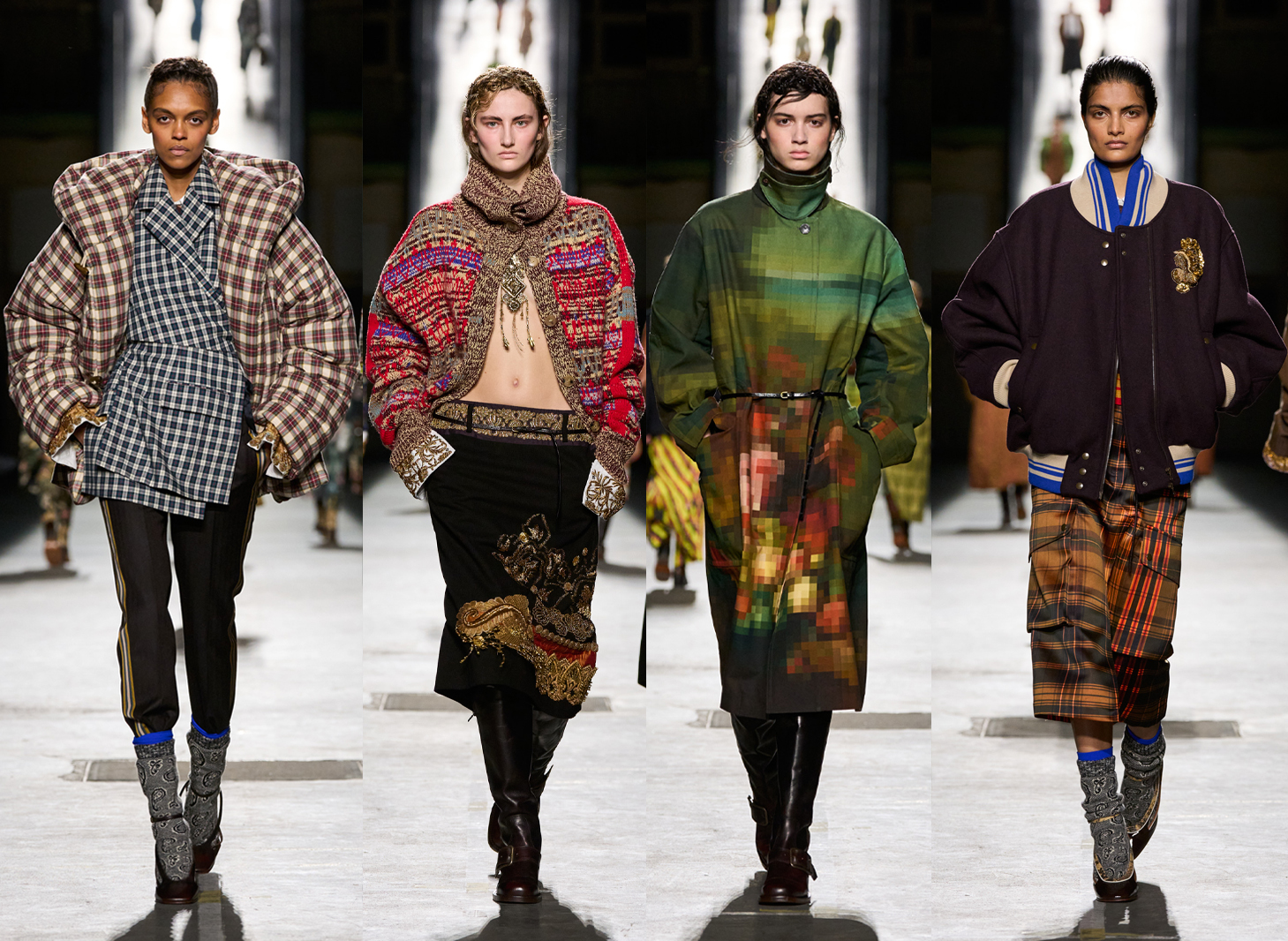
Julian Klausner took us back to high-school for AW26. After visiting the venue for his latest show the designer reminisced on the emotions of being a teenager in school: vulnerability and confidence. With this in mind he turned to the importance of how one dressed: “the clothes that shape you, clothes one feels good in, the embrace of a drape, the protection of a padded jacket, the confidence of a favourite pair of jeans,” read the show notes. The collection opened with a series of school uniform-inspired looks: a toggled duffel coat, a simple crested blazer another piped in contrasting trim, a white shirt and tie. The pace built with the introduction of punchy plaids and printed florals inspired by Flemish still-life paintings of butterflies, fruit, flowers and insects. Klausner took these references and blew them up into distorted and pixelated prints. Playground checks appeared on, coats and a puffer jacket worn over a contrasting shirt. Varsity jackets were teamed with a plaid and deconstructed denim gave an edge to florals while knitwear was layered over ruffled collars that peeked out from underneath, every look finished with a chunky heeled boot.
Issey Miyake
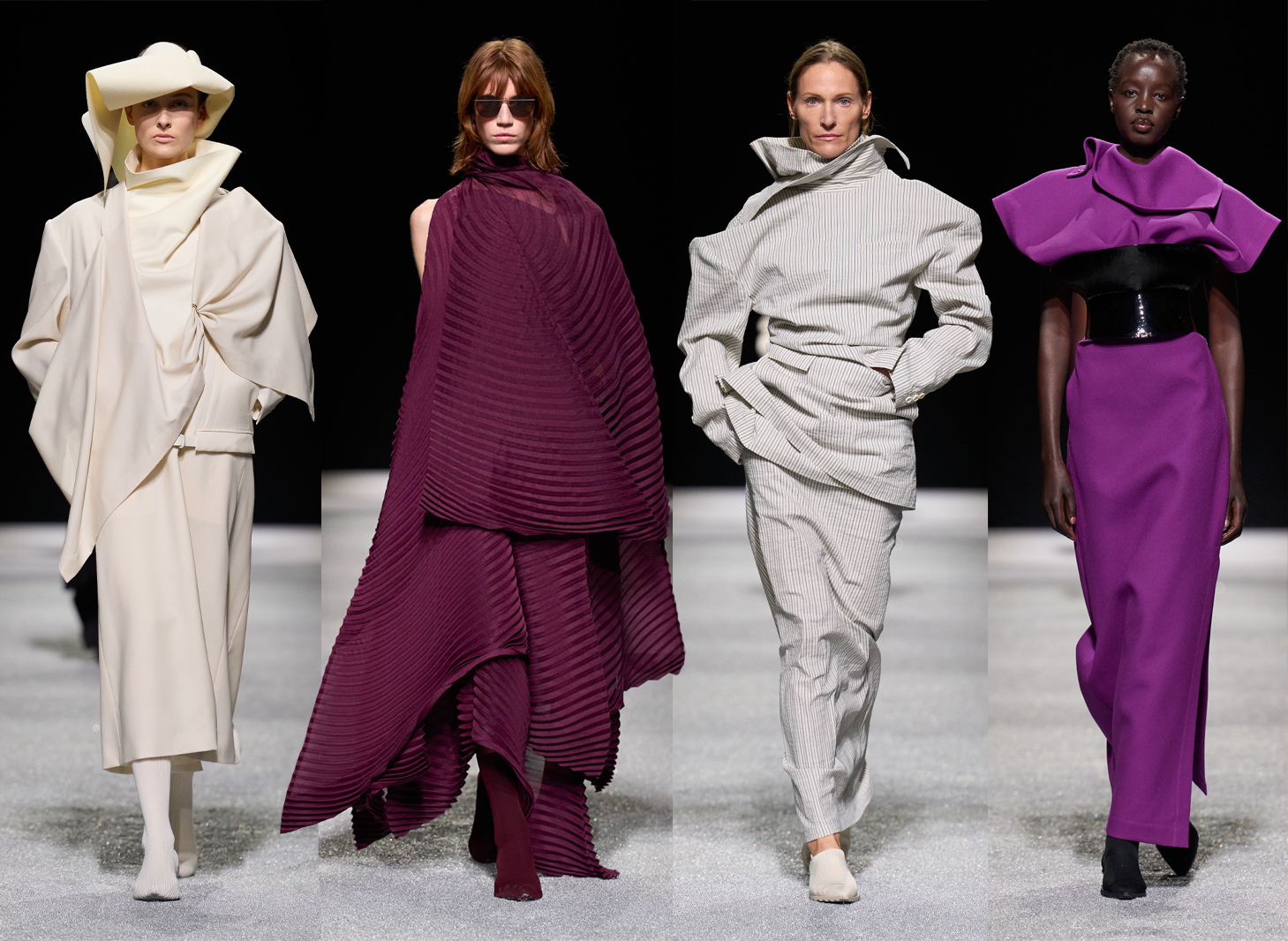
Satoshi Kondo’s collection, Creating, Allowing, investigated the question: “As designers, to what extent should we insist upon our intent to create? Or, is it perhaps the deliberate will to leave things open and unfinished that allows inherent beauty to reveal itself?” The womenswear collections have followed the relationship between the wearer’s body and the fabric. Kondo’s idea this season was to yield to the fabric's nature, scaling back his traditional design process and focusing on the textile itself. Opening looks in white, grey and black were broken up by pops of colour from lemon to dark orchid, fabrics came in knits, pleats and fine-crafted textures. Their shapes transformed and evolved, some streamlined forms opened into voluminous creations. An oversized pinstripe jacket swirled around over a long matching skirt, a V-neck, belted burgundy dress was cut from a rectangular cloth. Lacquered bustiers and a series of bodices by Japanese artisans using washi paper framed the body, allowing the softness of the fabrics placed around and within them to create the silhouette, appearing in some looks as if the fabric had been set free to follow it's own path.
Rabanne
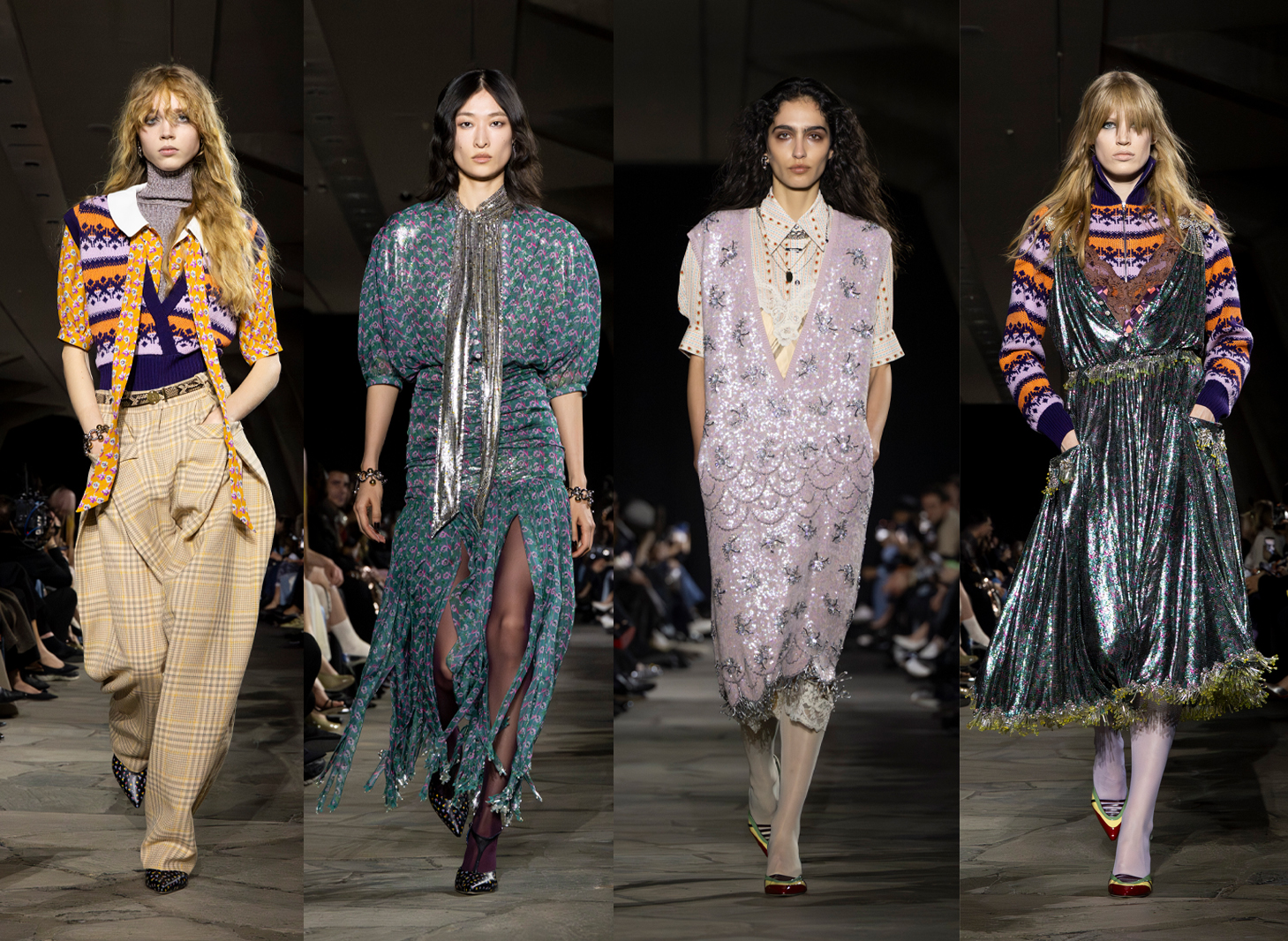
Rabanne's creative director, Julien Dossena, has a fondness for 1940s tea dresses; this season, the runway was peppered with vintage-look styles. They came decorated with sequins, dusted with crystals and layered over, or under joyful, brightly coloured Fair Isle knits. Shearling intarsia jackets, a bookish check suit with the blouse open, exposing an underslip. Dossena's Rabanne woman had a "tough femininity, not polished," portrayed by the speed and confidence with which the models walked the runway, hands thrust into pocket - one in men’s plaid trousers paired with a floral blouse and brightly coloured Fair Isle sweater vest. Another wore a draped flower-printed metal mesh top with a draped skirt of deconstructed, fringed jersey encircled with tiers of mini metallic tubes that jangled as it swept by. This was a lesson in layering, not just the garments but the decoration that showered the show, including one twinset fully embroidered and beaded with small flowers that was grounded by a pair of stylised cowboy boots, followed by a leather trench, T-bar pumps and contrasting tights teamed with a skirt that swished with each step. Cleverly, Dossena's layering was the perfect device for showing as many of the house’s offerings as possible.
Carven
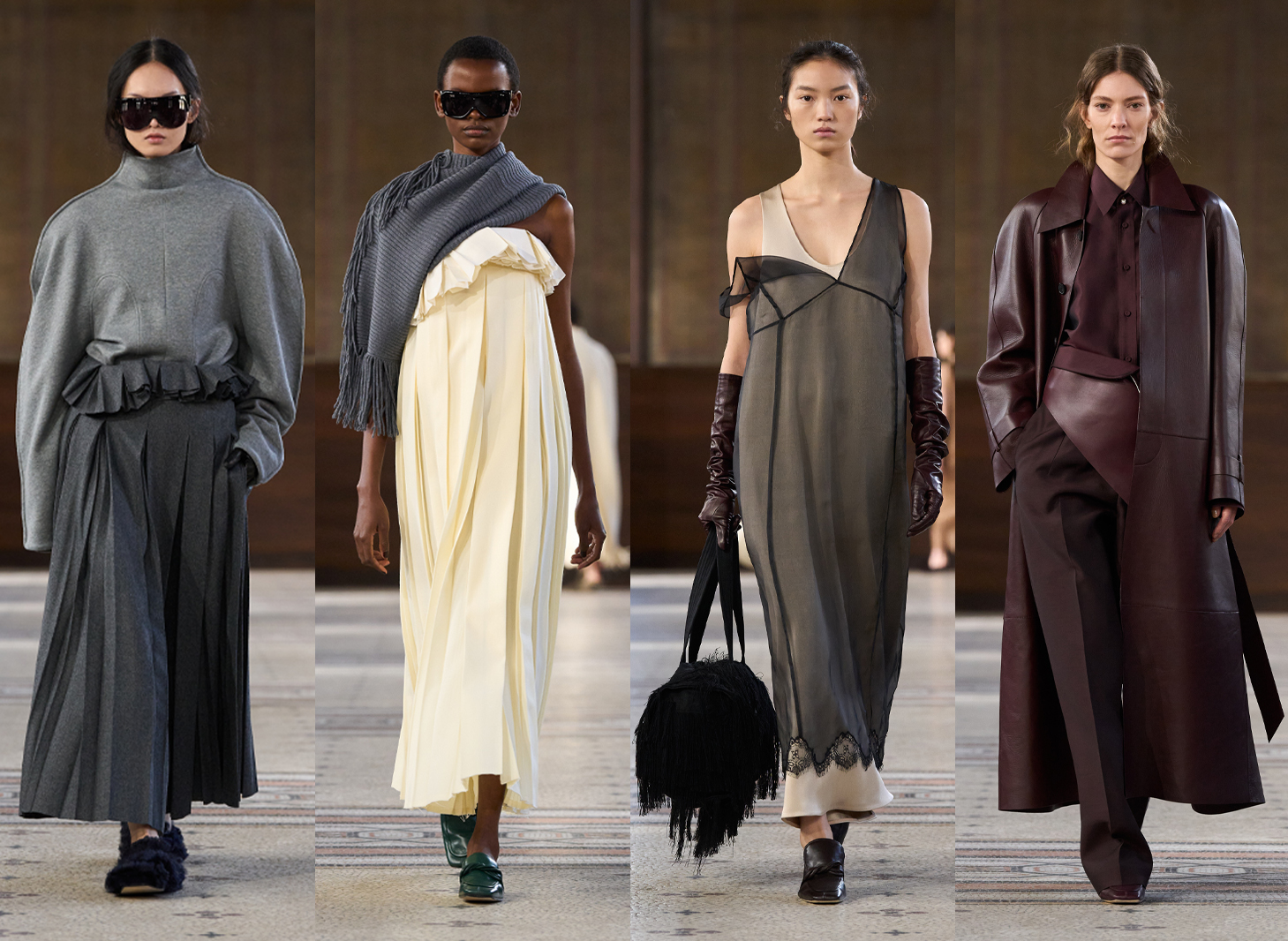
Mark Thomas’s sophomore show portrayed a self-assured woman, her wardrobe disciplined yet designed for confidence with a softness beneath the structure. Tailoring had a uniformity, cut with precision, utilitarian-inspired coats with defined shoulders were cinched with thin leather belts to create a disciplined silhouette. Thomas's softer looks came via referencing French interiors; the designs gave way to draping on dresses, fringing, tapis, and blankets that created a relaxed, lived-in elegance. Satin slips layered under sheer mesh ones, some slipping from a shoulder, and textured knits came with fluffy fringing, so did coats, alongside dresses and tops with rounded shoulders. Lighter still were the panelled dresses and blouses appearing with abstract petal shapes, deconstructing volumes and folds. The palette of muted tones ranged from wine and chocolate to pale grey, black and ecru. Fringed gloves swished from cuffs, while a closing dress and skirt, in paper-thin mille-feuille-like fabric, swayed gently with every step.
Lanvin
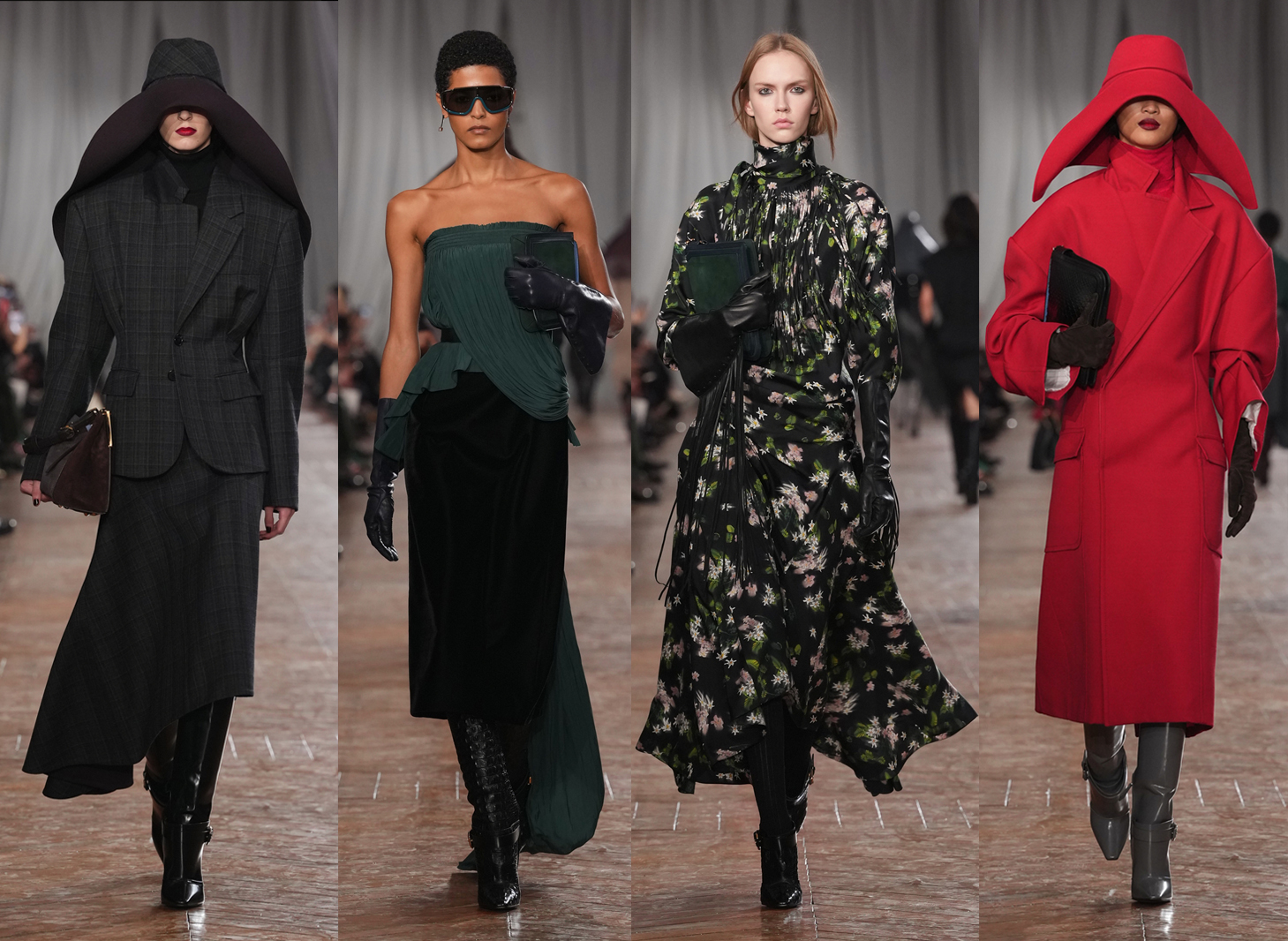
You could have mistakenly thought you had stepped back in time to Paris in the 1920's for Peter Copping's AW26 show. The venue was the Galerie de la Géologie et de la Minéralogie located in the Jardin des Plantes. Seated by old wooden cabinets housing artifacts surrounded by a library of books, models walked with a haughty air, reminiscent of a film noir cinematic scene – a coat held closed, collar rising high with the added elegance of a faux fur stole and gloves embracing a clutch bag. Copping's collection cut a linear silhouette with sculpted tailoring that followed the line of the body, designed in masculine suiting fabrics – crisp wools and flannel, layered over wool poplin or silk taffeta men’s shirts finished with a French cuff. Tailored coats were folded at the neck, adding a feminine softness. Dresses contrasted streamlined and moulded form with panes of floating fabric; their exposed seams added decoration, wrapped with a grosgrain ribbon belt on the waist. Leather pieces were inlaid with Art Deco motifs and topped with exaggerated cloche hats, finished with a rouge noir lip.
Rick Owens
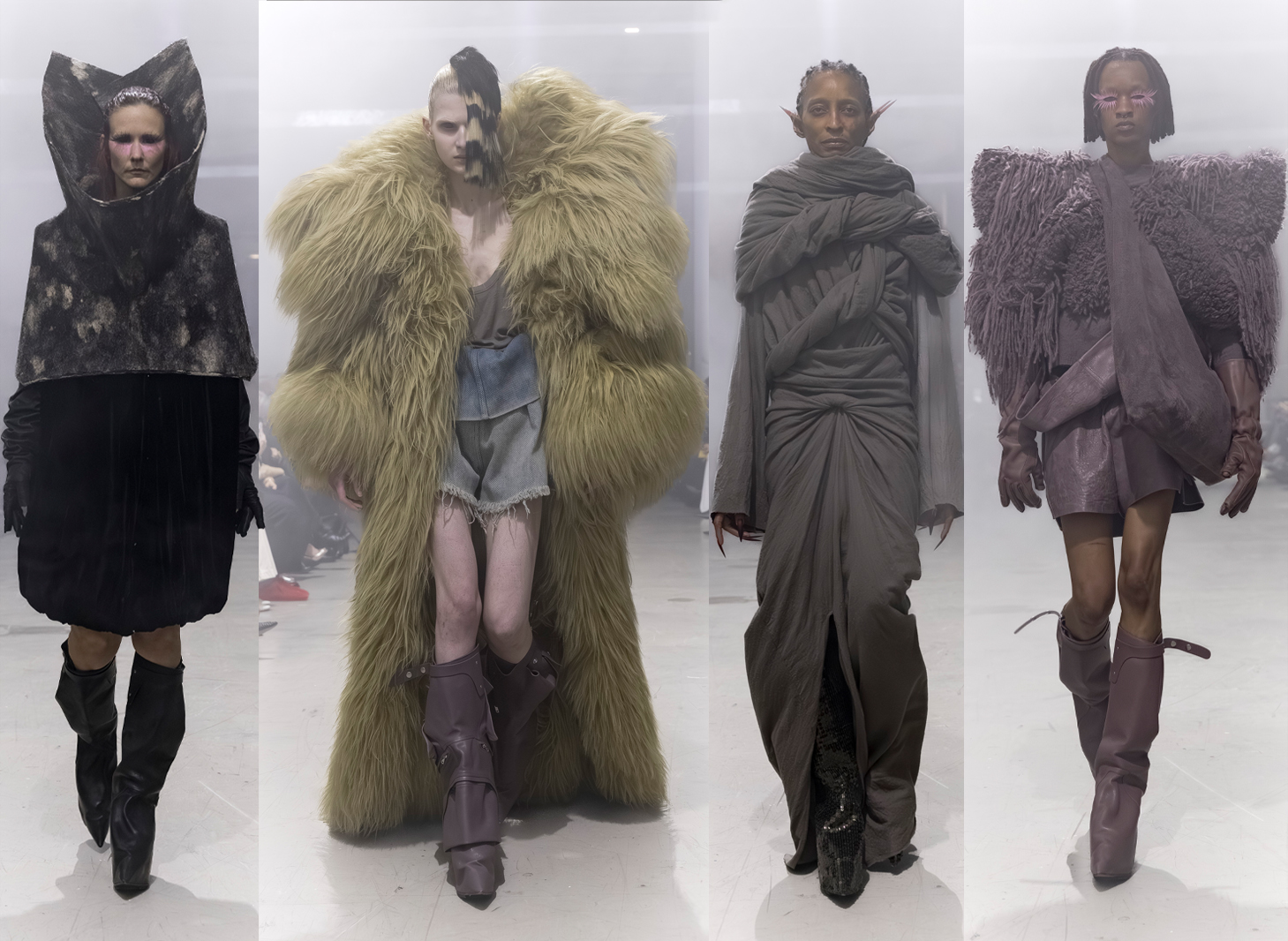
Rick Owens’ AW26 collection, titled “Tower”, drew inspiration from the prayer dedicated to love and hope: “Temple of love, tower of light.” The designer created a collection of towering looks, reflecting on the state of the world, with each look signifying a beacon of humanity. Elongated glossy leather strapless sheath dresses opened the show; others came in boiled wool and Kevlar, the protective fibre that’s five times stronger than steel and is used in body armour. Owens included the material in a direct response to the violence and war happening in the world. Tall proportions were created by layering cropped jackets – in waxy cowhide, fluffy alpaca and boiled wool – over long vests. Each model towered above the audience as they walked, balanced on pointed platforms. Quilted capelets with high funnel collars and leather jackets with powerful shoulders and draping that swathed around the body created strong silhouettes. Owens closed the show with a series of gigantic proportioned shaggy goat-hair coats that engulfed the body.
Main image: finale at Dior’s AW26 show by Adrien Dirand
Newsletters
Choose the newsletters you want to receive
View more
For information about how The Observer protects your data, read our Privacy Policy