
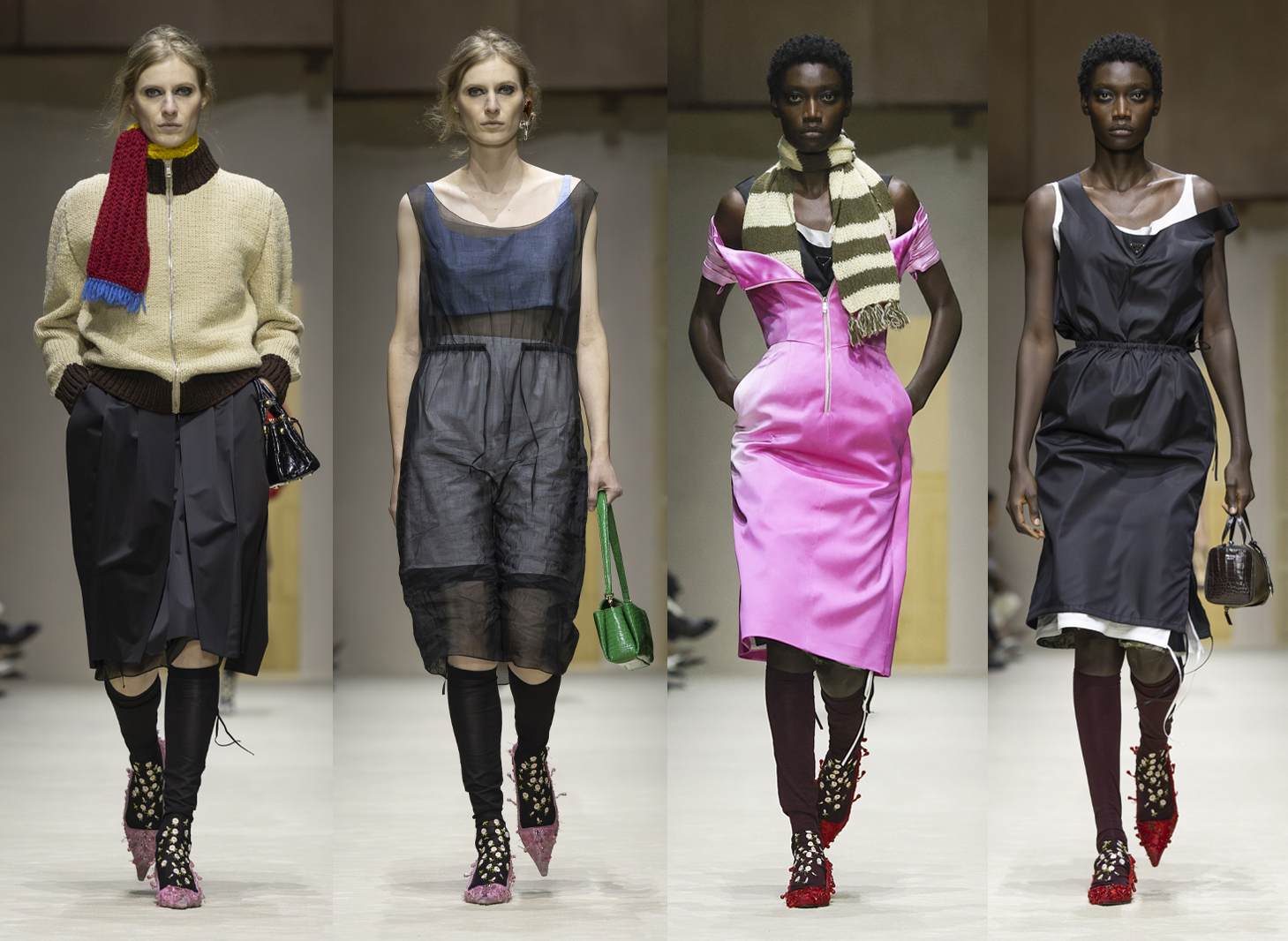
Prada
Co-creative directors Miuccia Prada and Raf Simons cast just 15 models, each wearing four layered looks, for a total of 60 exits, revealing a new layer on each catwalk lap like a matryoshka doll. Model Julia Nobis, opened the show in a long black coat with a striped hand-knit scarf casually draped around her neck. The next time she appeared the coat was gone and we saw her emerge in a chunky zip sweater, on her third exit the penny dropped with the confused audience; sweater-less with skirt in fact a black zip front dress, and on her fourth circuit the last layer revealed a diaphanous shift and modest bloomers. This was a show of wardrobe changes, Simons explained after the show, it was about how we relate to our clothes and how we put them together in ingenious ways. “It’s a lot about the freedom to be inspired and to bring things together that feel contemporary to us,” he said. Highlights included floral embroidered socks, a blue button-down shirt worn with a scarlet beaded slip and a black shift dress spliced to reveal a floral print from the archives.
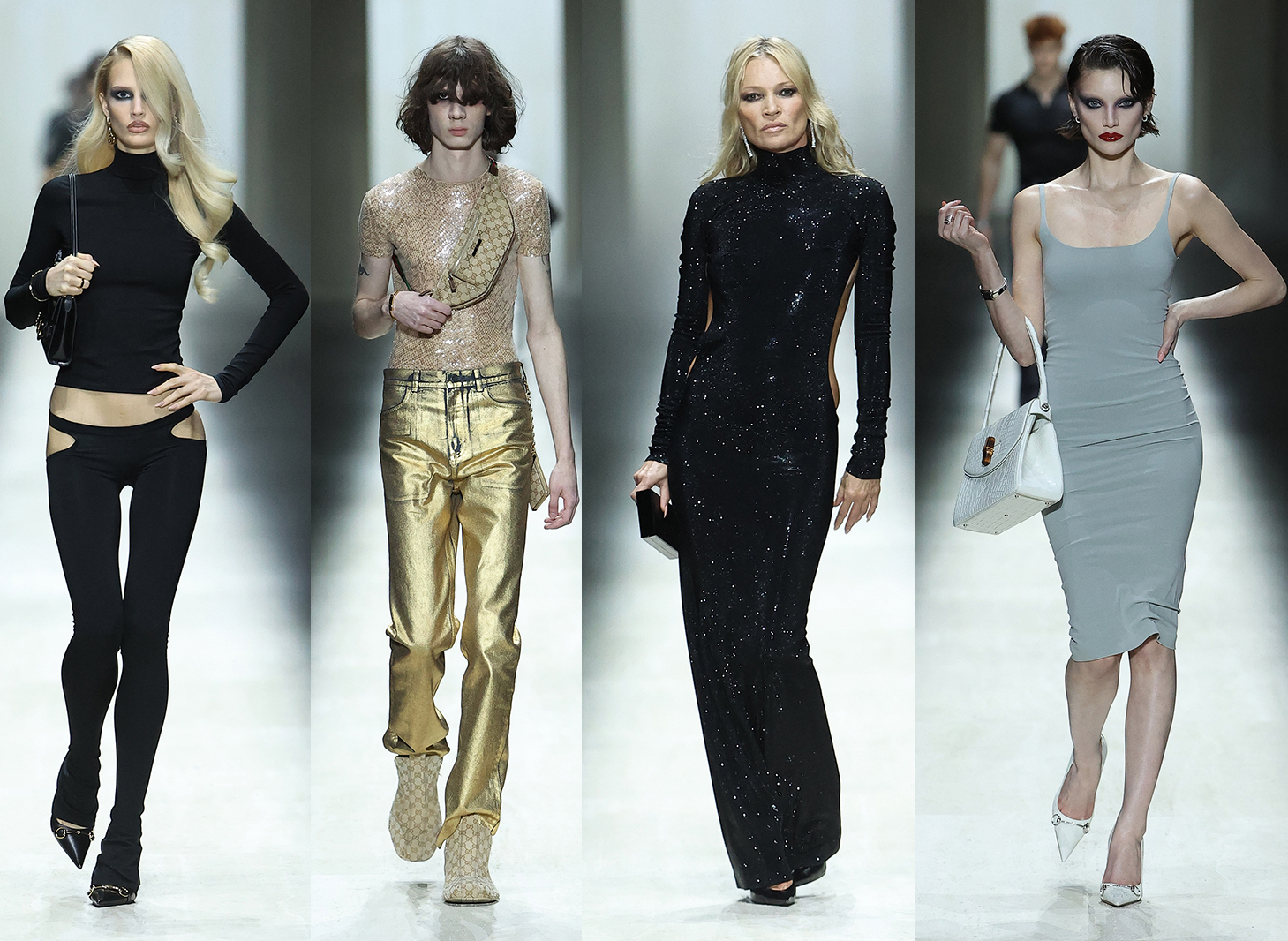
Gucci
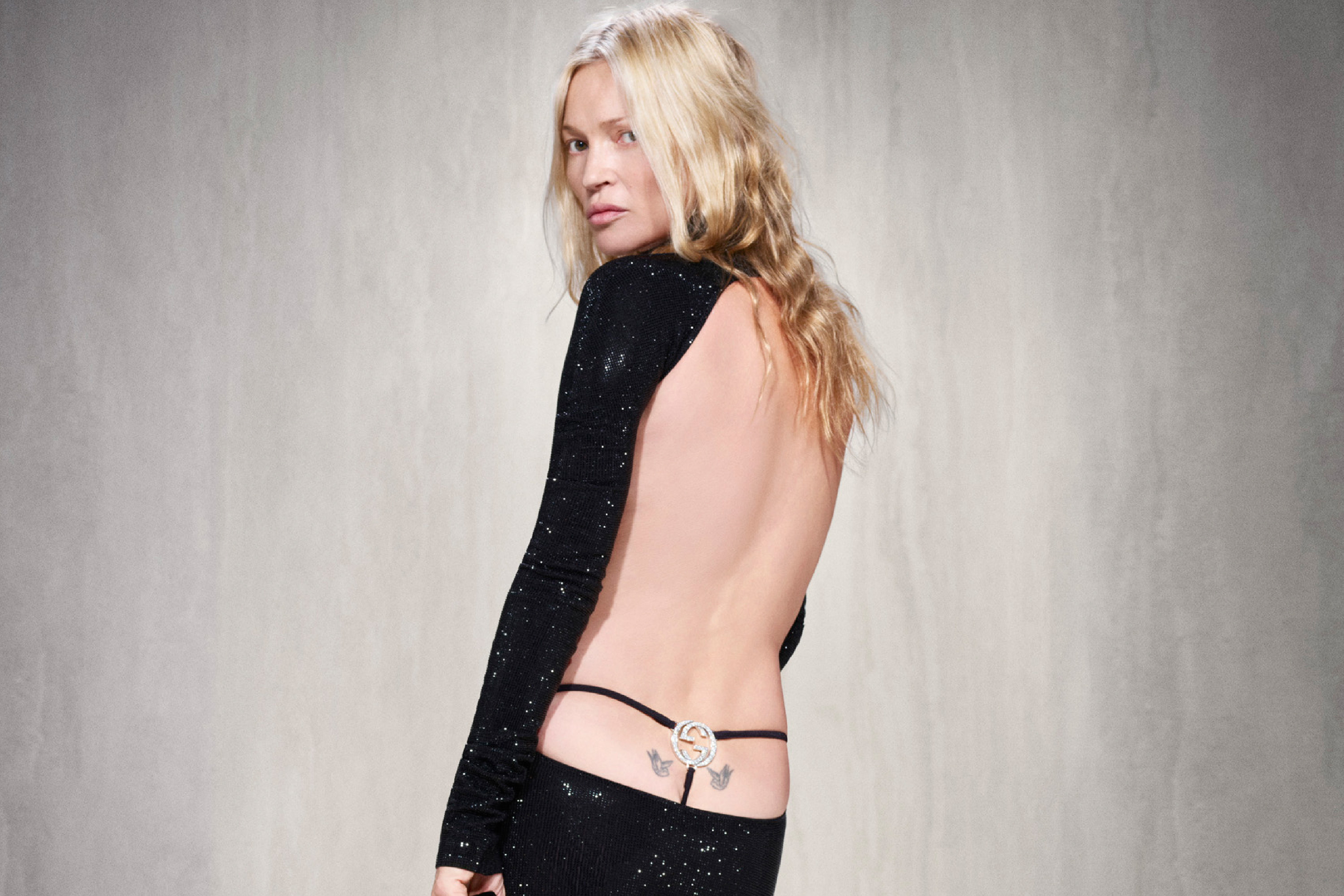
Demna’s much anticipated debut runway show at Gucci delivered a 90s-inspired collection with references to iconic moments from Tom Ford's tenure at Gucci. Last season the former Balenciaga designer hosted a film premiere to tease his debut La Famiglia collection instead of a traditional show. AW26 saw his first runway show, staged at the grand Palazzo delle Scintille in Milan, where the designer transformed the space into a museum filled with specially-made replicas of ancient sculptures. On the front row, Demi Moore and her chihuahua Pilaf were flanked by Donatella Versace (wearing a red coat with golden GG buttons) and former Gucci designer Alessandro Michele. Opening with gym boys in muscle tees, leather zip-up jackets and bottom hugging jeans, followed by hip swinging glossy-lipped Gucci femme fatales, Demna brought sexy back for a new era. Bodycon pencil skirt suits, mini dresses and skin-tight leggings with cutouts exposing the hips were accessorised with handbags shown off in the crook of their elbows, the men strutted in shrunken suits worn on the hips to expose their GG underwear. The temperature rose mid-show with shrunken bombers edged in shearling and drainpipe leather jeans worn with an oversized coat, finished with horsebit heels. Evening wear for men comprised of stretchy sequin co-ords, for women; slinky sequin gowns. More 90s nostalgia finished the show with Kate Moss giving everyone the meme moment of the week, exposing her GG thong in a bottom cheek-revealing, backless sequin gown.
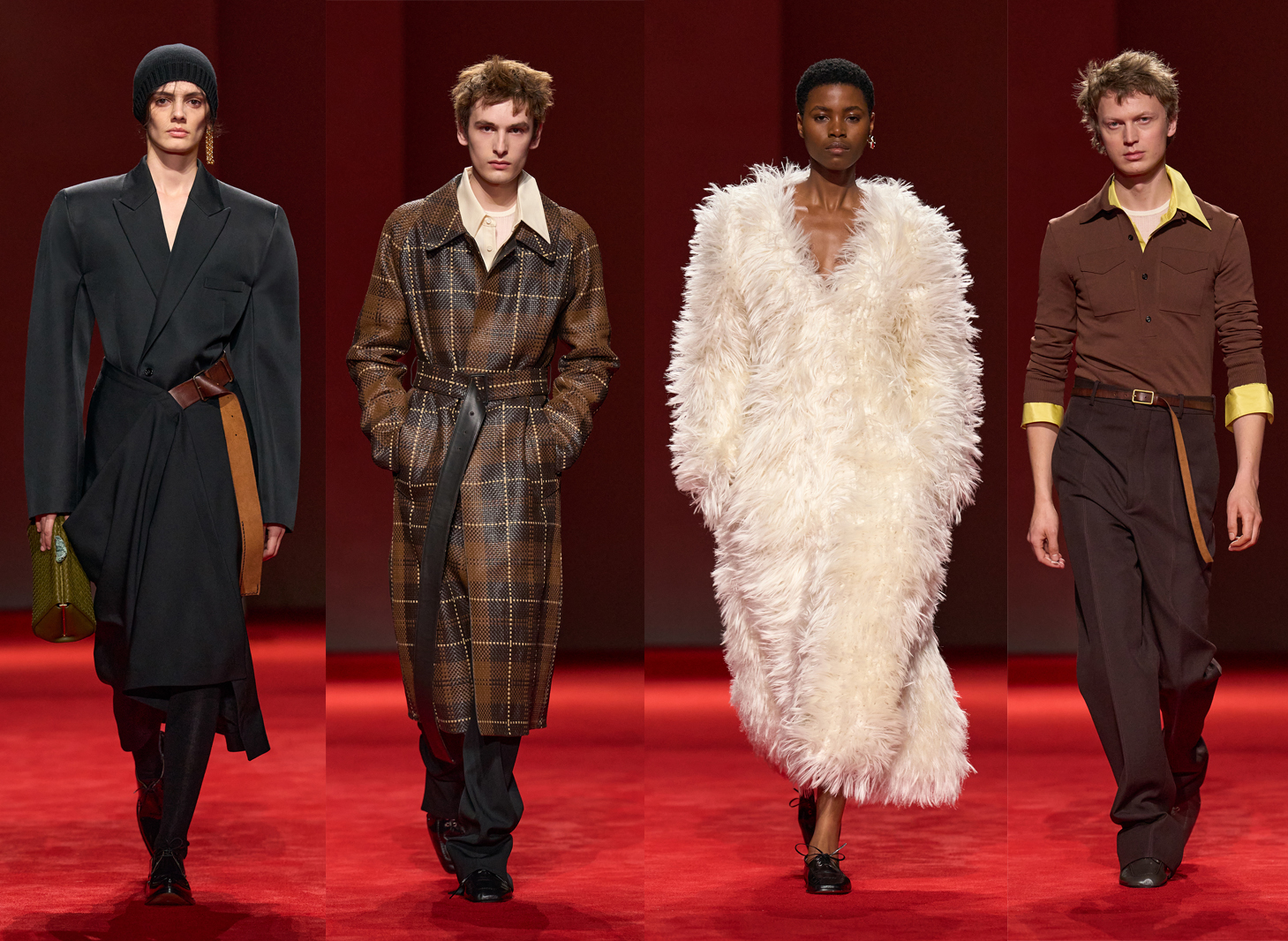
Bottega Veneta
Bottega Veneta creative director Louise Trotter is clearly feeling inspired by Milan. While she was vocal in her excitement and intrigue for the city that she adopted when she took on the top job at the Milan-based brand last year, her sophomore collection was entirely dedicated to the fashion capital and the dialogue it fosters “between brutalism and sensuality”. For this collection, the duality played out with contrasting proportions: at times silhouettes were shrunken and cinched, at others exaggerated and cocooning. The highly skilled and storied craft of intrecciato leather weaving for which the house is well known was explored in new dimensions, popping up on coat lapels and in a subtle tartan pattern, while the flamboyant fibreglass skirts of her first season became full-blown flouncy gowns. It was a mix of norm-core corporate and Teatro Scala Gala that in this city are usually two sides of the same coin.
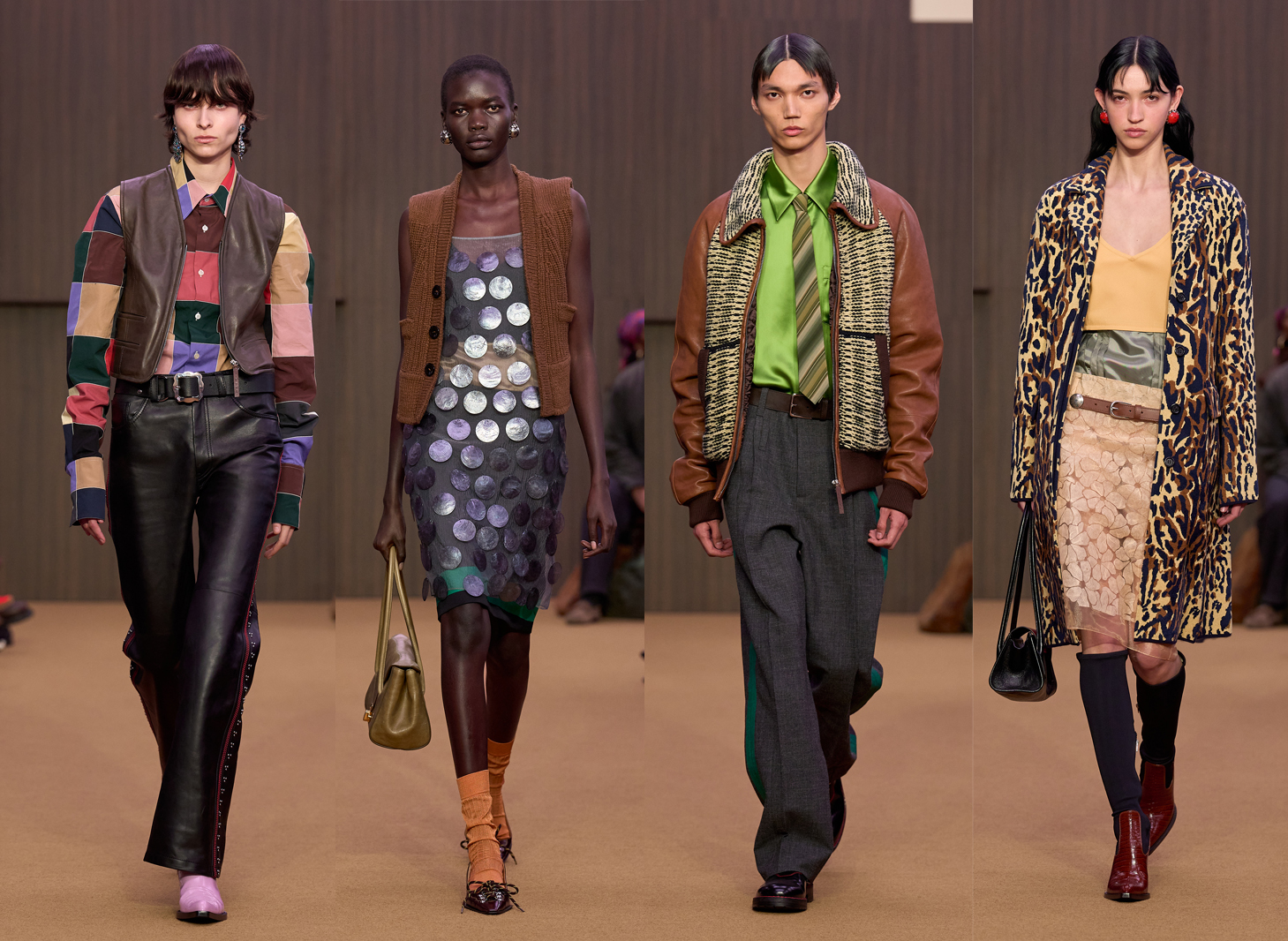
Marni
Meryll Rogge’s debut at Marni marked a return to the idiosyncrasies of its founder Consuelo Castiglioni this week. For much of the last decade, her successor Francesco Risso pushed the brand in a conceptual direction that culminated in collections leaning more towards artistic expression than wardrobe must-haves. Rogge, on the other hand, looks set on the latter. The pencil skirt, kitten heel with socks, and jaunty styling is synonymous with Milanese style and so it made sense that Marni, one of the fashion capital’s proudest exports, should own it once more. Dresses came with satin inserts in the midriff, while shifts jingle-jangled their way along the catwalk with mother-of-pearl paillettes attached. Knitwear was shrunken and denim was snug. Meanwhile, multiple looks featured snap-fastening detailing for aesthetic rather than functional value, imbuing a DIY early 2010s vibe. In a nod to the founder, Rogge had models wear necklaces she designed for the brand’s 2012 collaboration with H&M - the ultimate example of a moreish high-low mood, which this debut captured.
No 21
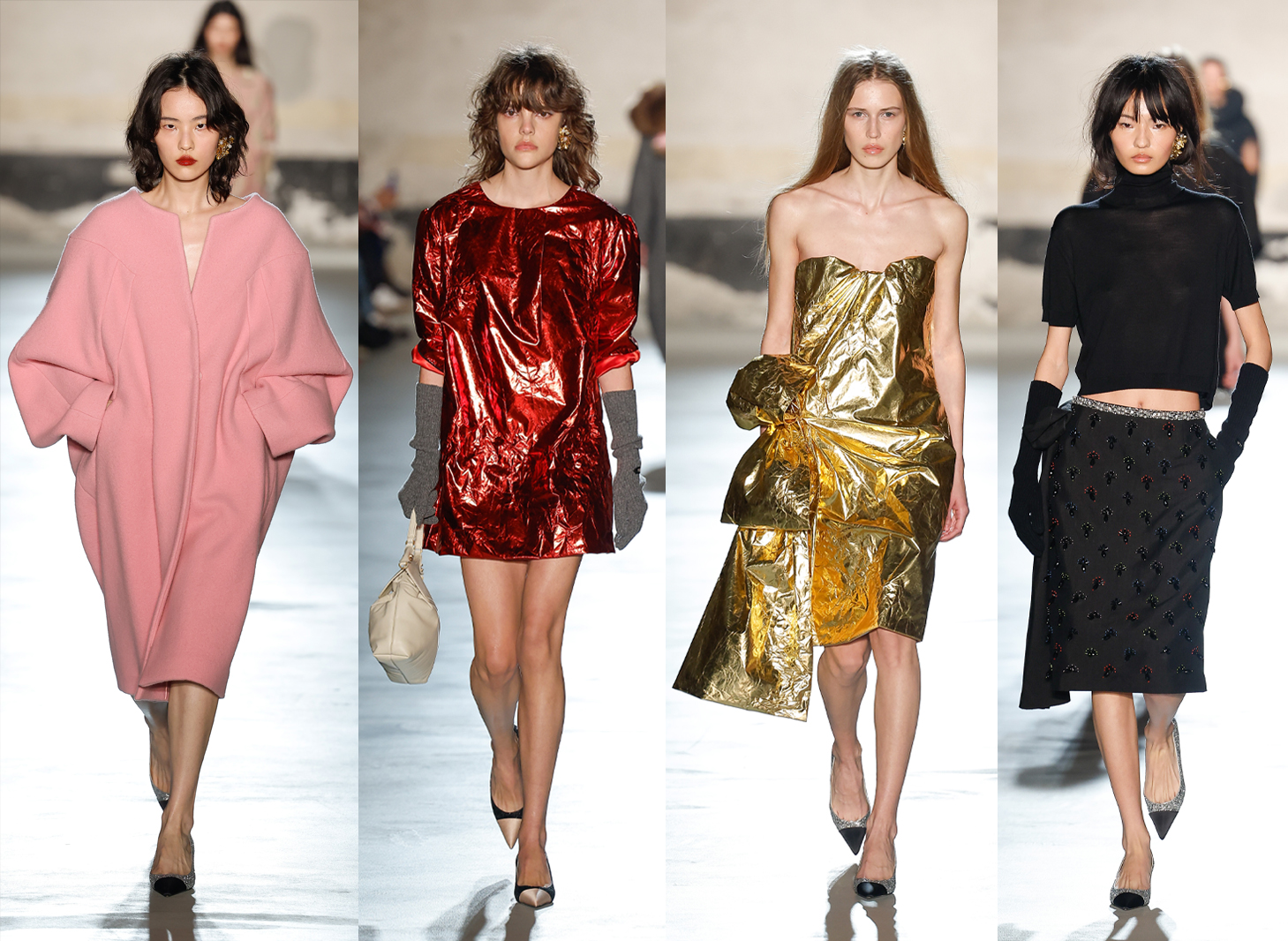
Alessandro Dell'Acqua flipped his AW26 show on its head by starting with the model parade finale, influenced by Federico Fellini's film 8 1⁄2, emphasising that endings can also signify new beginnings. He also drew from Sophie Calle's The Hotel, Room 47, where Calle analysed guests' lives through a voyeuristic lens. Spritzing their perfumes, sampling the contents of their makeup bags, and trying on their clothes became art. With this metaphor in mind, Dell’Acqua created a wardrobe that reflected femininity and the charm of keeping it real. The collection, brimming with highlights of a signature cool girl aesthetic, cast a spell that made you wish you owned every piece. Opening with 15 minimal black looks, they ranged from boyish trousers and a lace slip dress with a full chiffon lining to pencil skirts and strapless polka dot dresses. It culminated in kimono-style coats that cocooned the body, closing with a dazzling black glitter ball gown and a strapless liquid gold gown with an oversized bow tied at the side. Dell’Acqua’s skill is making every piece have real-wardrobe appeal – undeniably chic and attention-grabbing.
Max Mara
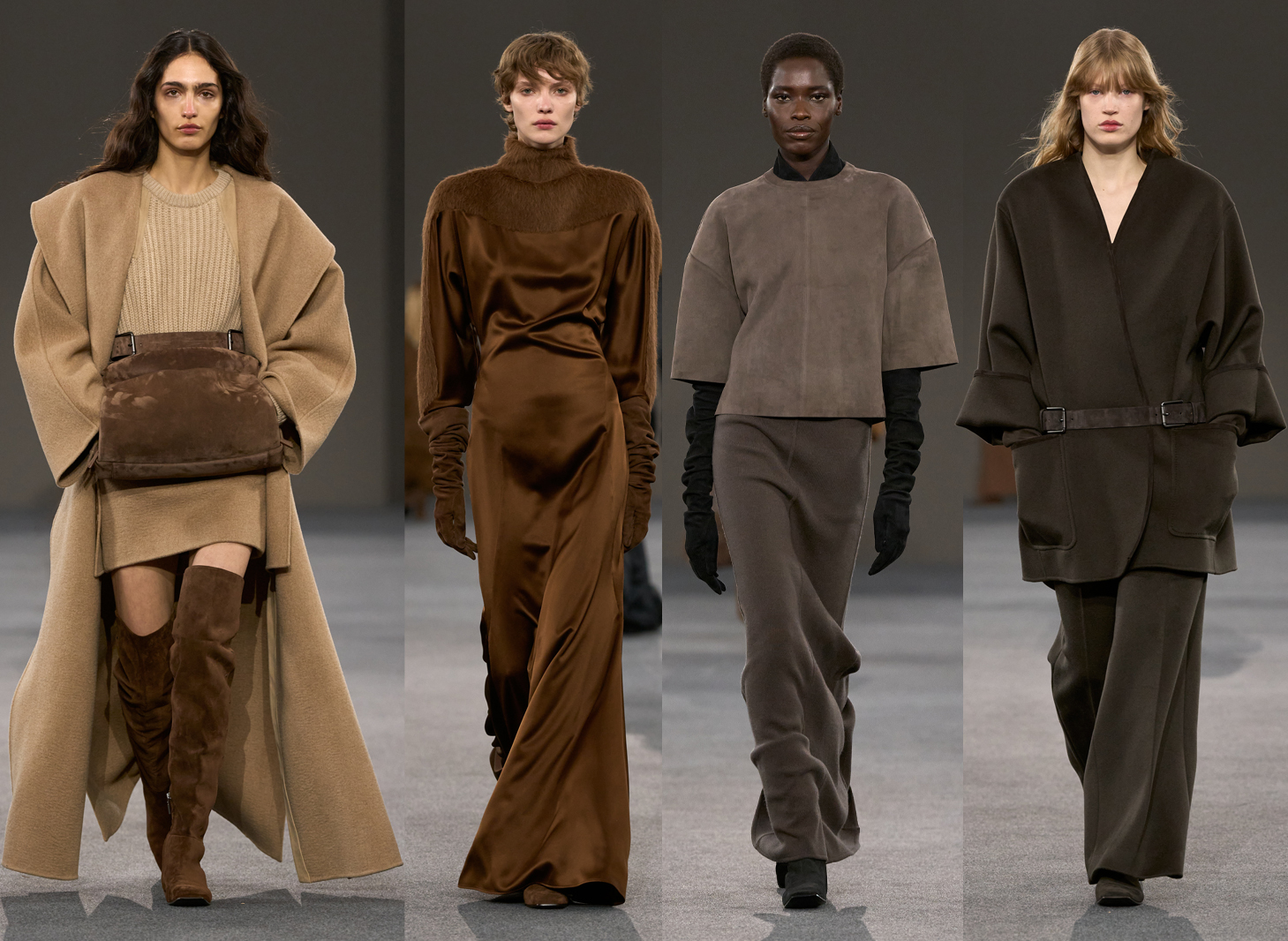
Creative director Ian Griffiths said the inspiration for AW26 came from a trip he took with a friend to Sutton Hoo, the Anglo Saxon burial site near his home in Suffolk. “I was struck by the beauty of artefacts made in the so-called Dark Ages,” he said backstage. “I was thinking about objects and artefacts that get more beautiful with time,” Griffiths explained, “which led me to Max Mara coats – life companions that also bear the signs of wear and hopefully, grow old with grace”. This led him to his other muse, Matilda of Canossa, an important female governing figure of the Italian Middle Ages. Griffiths translated this into a wardrobe built to last with historical references like capes and gauntlet gloves. The first exit featured a butter-soft suede top paired with a knitted maxi skirt. This was followed by variations on the coat, ranging from textural, floor-length double cashmere, alpaca, and mohair, to blanket-style and hooded cape silhouettes that wrapped the body. Jackets were softly tailored, wrapped and fastened at the side, or in collarless suede. The finale featured minimal bias-cut silk skirts and dresses: one fused with fine cashmere knit, the next a full cosy knitted gown.
Emporio Armani
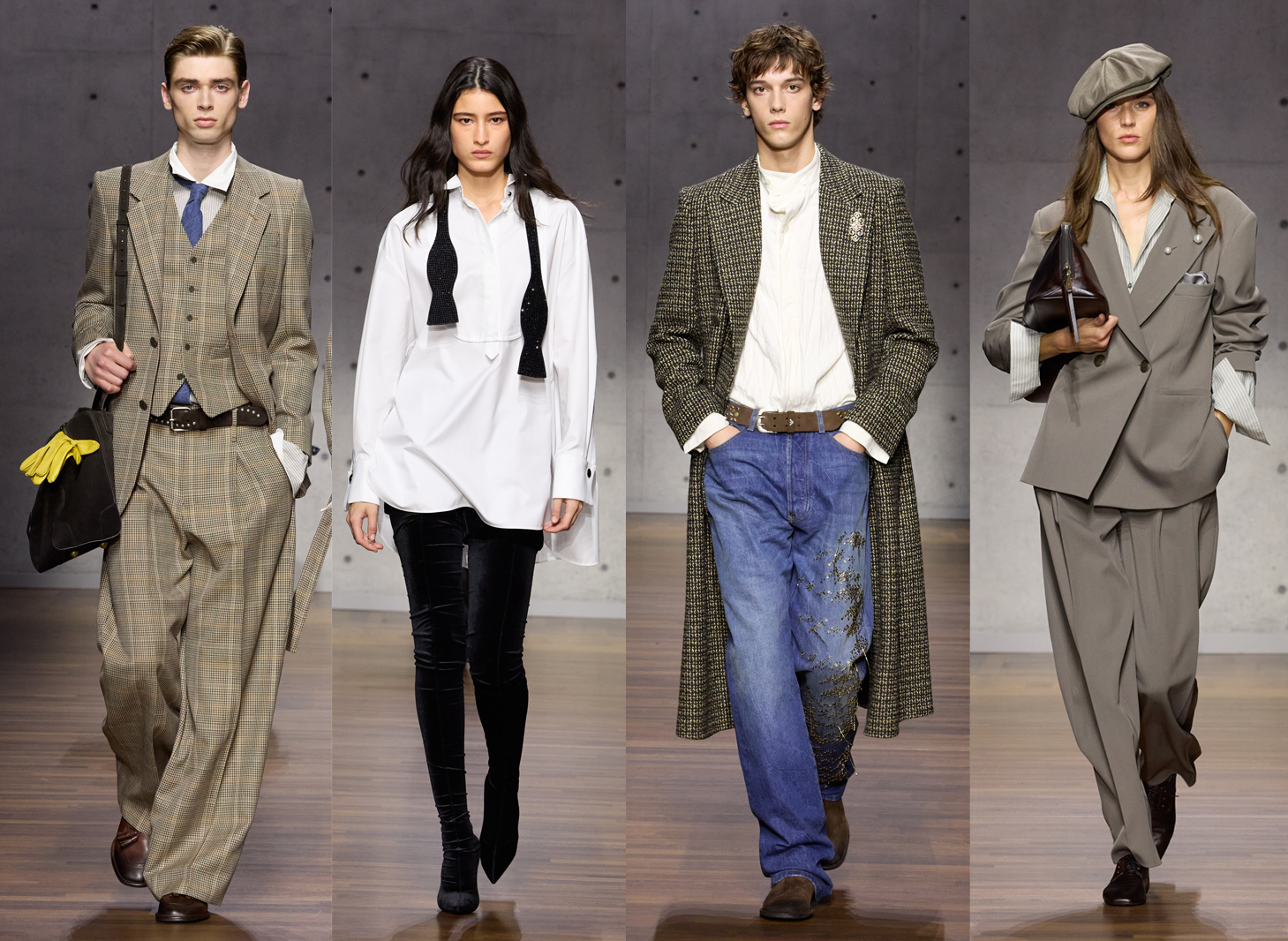
This season in Milan was a series of firsts for the Giorgio Armani group. Among them the first collections that the eponymous designer didn’t have a hand in creating, and therefore the first collections that his heirs Silvana Armani and Leo Dell'Orco put their name to. At Emporio Armani, it was also the first time that the menswear and womenswear collections were brought together, a decision that was underscored by the press notes for the show stating that it was “a style proposition in which the dialogue between masculine and feminine… reveals itself in the most spontaneous way.” This is the newly positioned designers’ chance to do things their way, after working closely with the late Armani himself for decades. While they’re not re-writing the rulebook, there was a fresh approach to familiar codes. Here, a newfound lightness prevailed through perfect white shirting and relaxed tuxedo suits that had a “done-undone” feel across both men’s and women’s, while the styling (all popped collars, undone bow ties and turned-up cuffs) infused the entire show with a timely spirit and a subtle but noticeable gear-shift.
Ferragamo
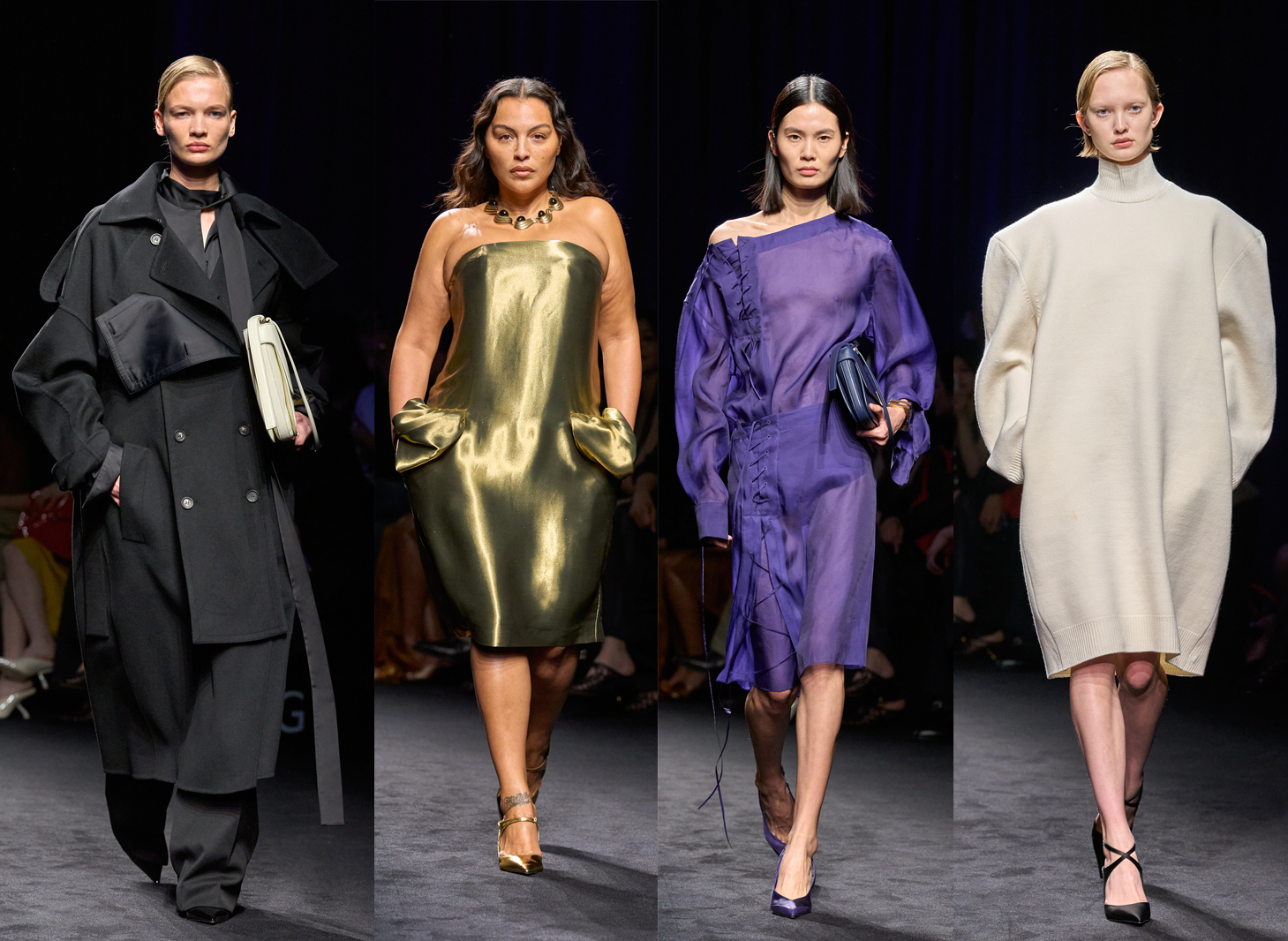
Maximilian Davis looked to maritime codes for inspiration this season - specifically mining the 1920s - a particularly favourite era for the British designer. Safe to say that the result was decidedly more Cunard than Captain Birdseye. Starting out with thick and sumptuous navy peacoats that had deconstructed collars lined in off-white satin, ribbed fisherman knit sweaters came with wide square sailor collars that draped decadently on the models’ backs followed, and whipstitch detailing featured on satin and sheer shift dresses, each exuding comfort on a ridiculously luxurious level. Later in the show, a series of evening gowns clearly destined for the top table wowed in silk that looked like an apparition in liquid gold and velvet devoré slips resembling modern heirlooms. In between was a collection that cemented the designer’s reputation as one of the most talented of his generation - four years into his tenure, it’s full-steam ahead.
Fendi
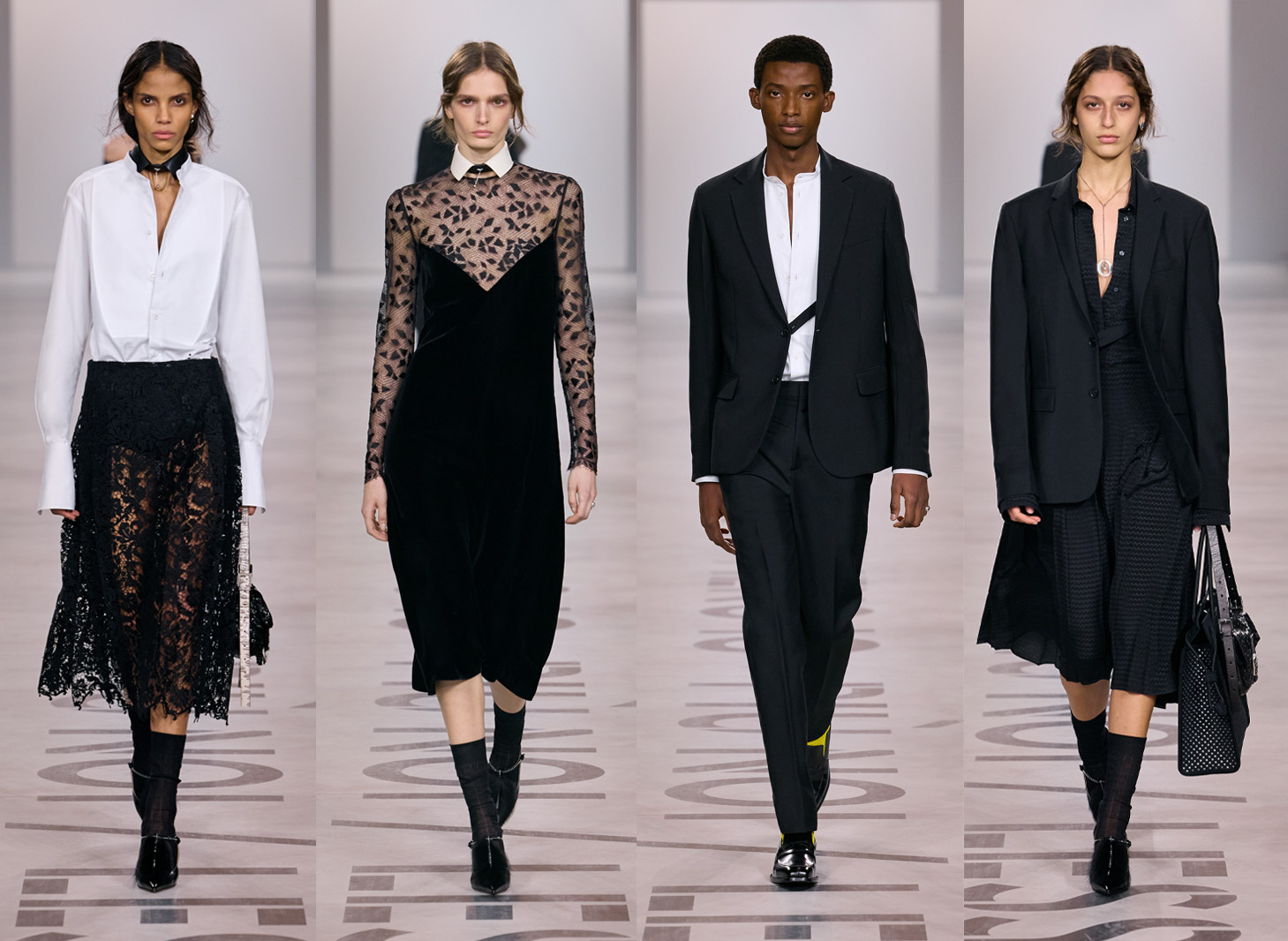
“Less I, more Us” was the message from Maria Grazia Chiuri for her debut runway show as Fendi’s new chief creative officer. The mantra was stenciled on the runway and across bag straps, and very much led the designer’s thought process. Pre-show, she spoke of utilising the house's skilled teams of craftsmen. This was Chiuri’s return to the brand of five sisters who elevated their artisanal family label to the global stage. In her first job at the label in the 90s, Chiuri was part of the accessories team that developed the baguette bag, made famous by its appearance in Sex and the City. The opening looks showed the designer’s intentions: a silk shirt dress and blazer, both in black, tailoring cut for both men and women as part of her shared wardrobe approach, a black skirt spliced with lace worn with a simple white shirt - all signalled a pared-back, elegant collection. There followed a nod to Lagerfeld with detached white cotton collars worn with many looks, reminiscent of Karl’s own wardrobe of bespoke shirting and black jackets. Transparent lace dresses and blouses in breezy silhouettes were peppered with dresses featuring elongated volume. Addressing the controversial use of fur by the brand (many other fashion houses are now fur free). Chiuri used only archival fur on the catwalk and has introduced a new atelier where clients can bring vintage furs to be repurposed.
Dolce & Gabbana
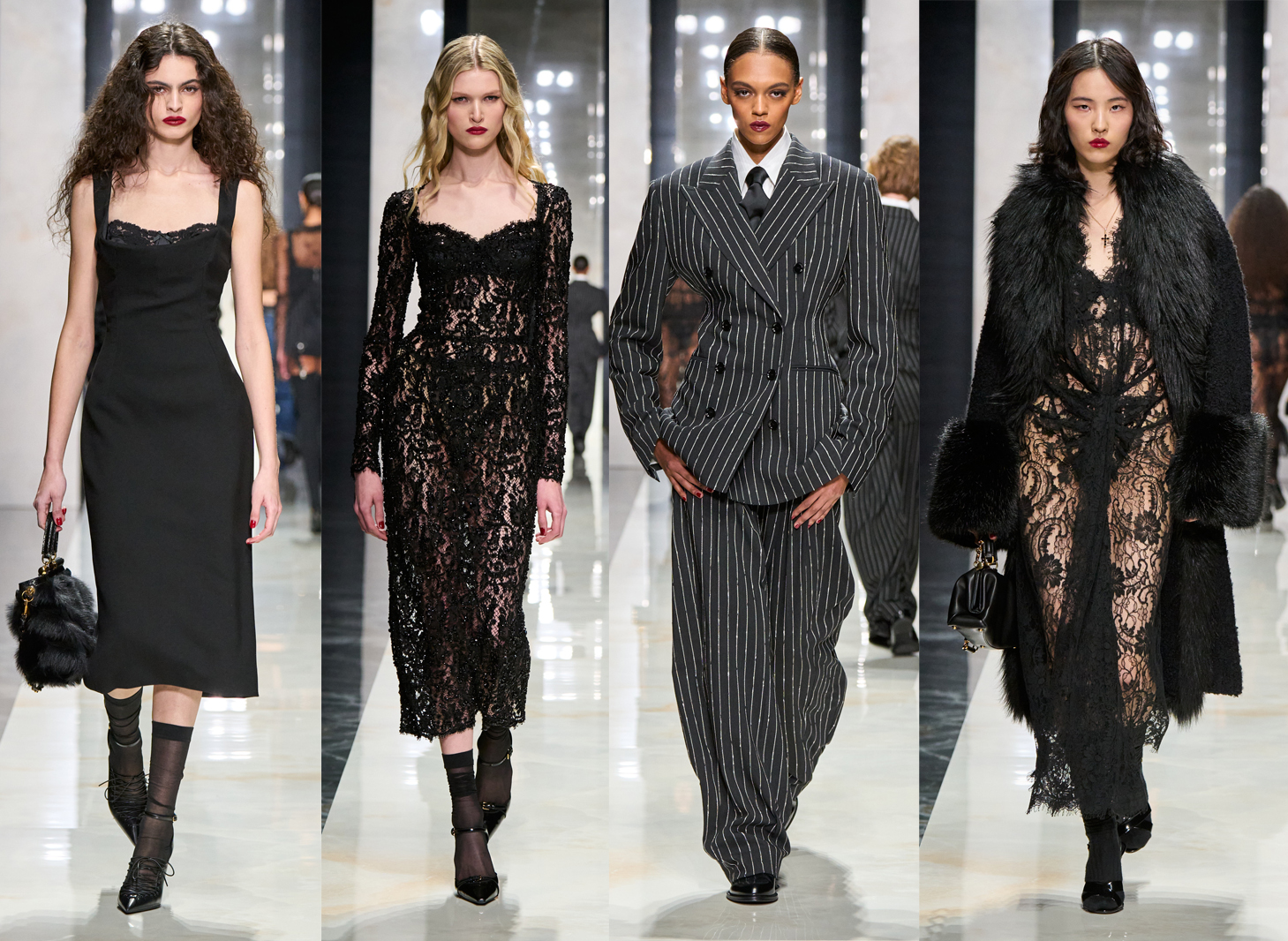
At 67 years old, few people have the star power or invoke the same otherworldly awe quite like Madonna. As it turns out, it’s quite hard to concentrate on the catwalk when the Queen of Pop is sitting front row. Following the frenzy that ensued when the Material Girl took her seat next to Anna Wintour at the invite of designers Domenico Dolce and Stefano Gabbana on Saturday afternoon, a collection that was classic Dolce & Gabbana with a twist played out in front of her. Along with the signature bodices, sheer lace dresses and tuxedo tailoring in this hit-heavy lineup were nods to Madonna’s own iconic wardrobe over the years, such as the pinstripe suits and braces that she wore on tour in 1993 (which were conversely designed by Jean Paul Gaultier). Elsewhere the introduction of crocheted shawls and flat lace-up brogues introduced more cosy-meets-practical accents to a brand that is not particularly known for either. Clearly not wanting to be perceived as a label living in the past, the designers made a point on the contrary in their show notes: “This is not nostalgia. It is presence. A language built on roots that are still alive,” they said.
Diesel
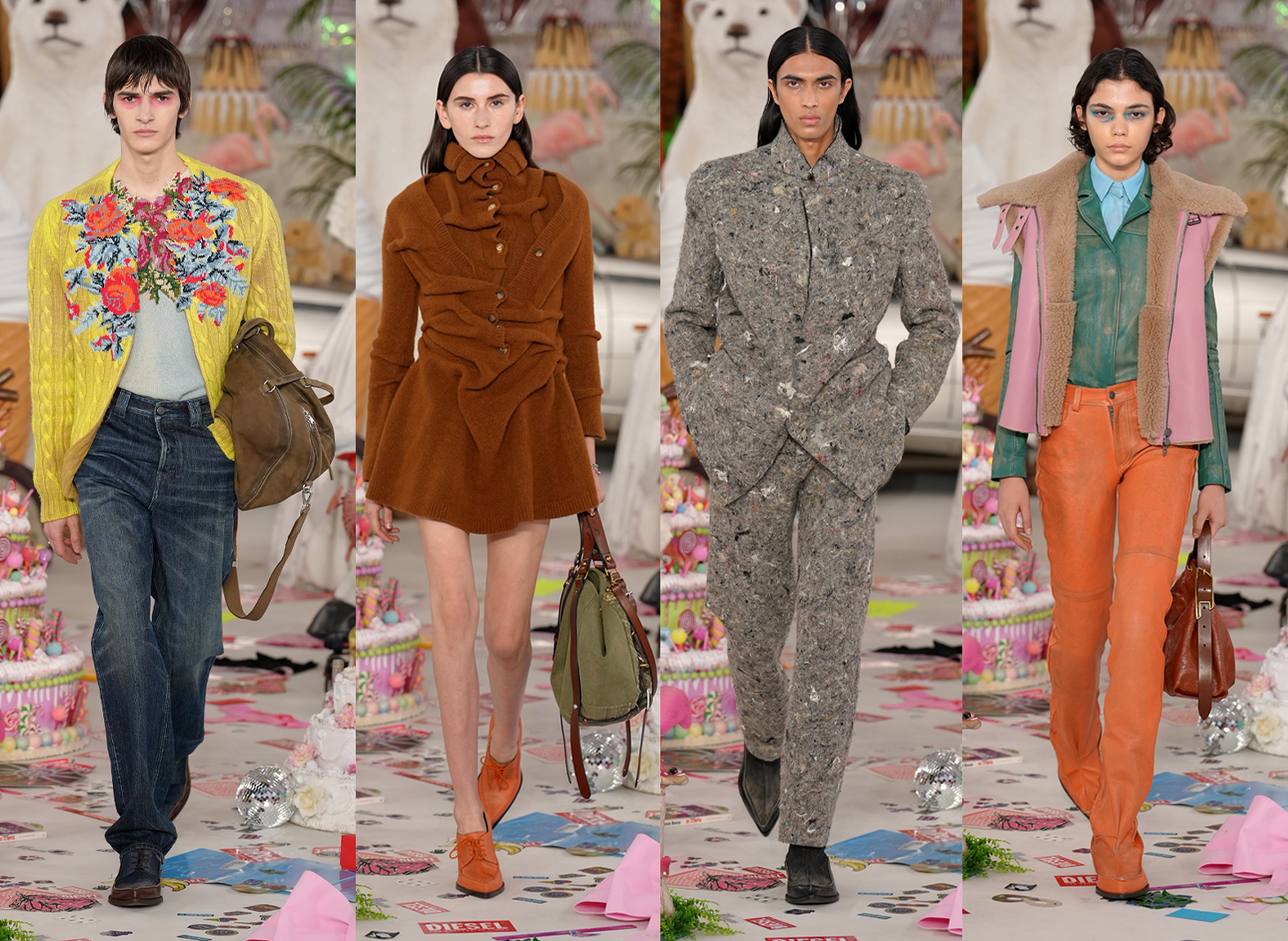
Bunnies! Basketballs! Bondage gear! Pizza Boxes! The Diesel AW26 show set saw around 50,000 pieces of archival memorabilia from throughout its 48-year history artfully arranged across the sprawling expanse of a warehouse show space. The car-boot-sale meets messy-bedroom meets curiosity-museum scene formed the heartbeat of the catwalk representing a collection that celebrated the details that define individuality. Creative Director Glenn Martens is one of fashion's true original thinkers, and for this season, he said it was a collection "about waking up in a place, with no idea what happened last night, and you are the most glorious person ever. When you sneak away from the hotel room of the person who you don’t even know, you are truly at your best." Artful dishevelment aside, he presented a truly glorious collection of twisted - often coated - denim, shrunken intarsia knits, felted tailoring, and vintage Diesel band tees, many of which were created using recycled materials as a part of the brand's sustainability programme, Successful Living. Accessories, meanwhile, made every look pop: hairclips gripped the handle of the new Noughties-tastic D-One bag, wrists dripped in charm bracelets, and hair was clamped down under wraparound eyewear. "These are super-wearable pieces for successful living, the essence of Diesel,” said Martens.
Main image: Kate Moss wears Gucci AW26 by Demna
Newsletters
Choose the newsletters you want to receive
View more
For information about how The Observer protects your data, read our Privacy Policy