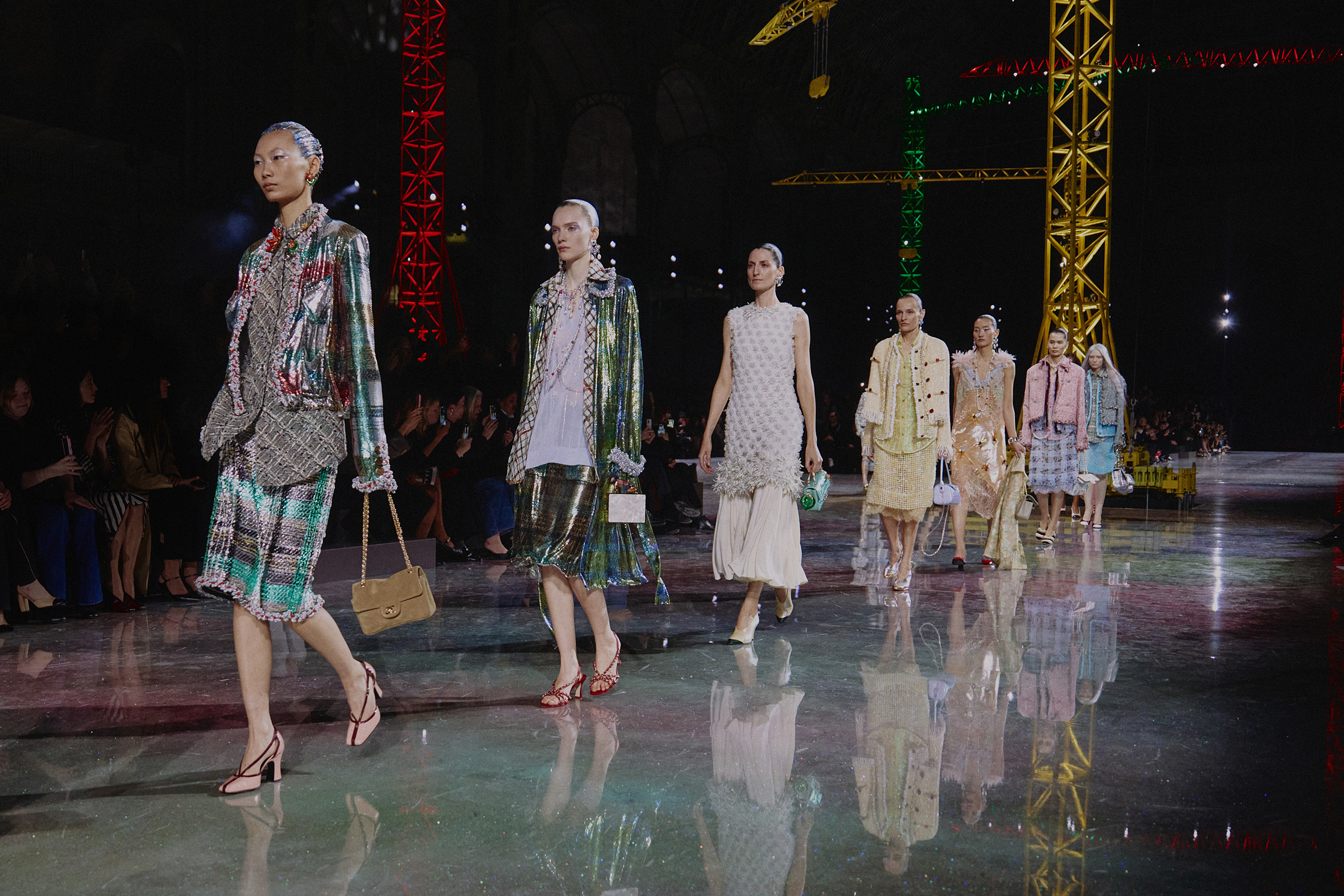
Walking into the Grand Palais in Paris on Monday evening, guests were greeted with Chanel’s spin on a construction site: 15 brightly coloured cranes stretched up to the glass-domed roof. Artistic director Matthieu Blazy is only just approaching his one-year anniversary in the top job at Chanel, but this set was a lifetime on the moodboard, he revealed. Inspired by his childhood toys, this was his metaphor for progress and transformation, symbolising a future in the making. The French-Belgium designer was appointed at the French powerhouse in December 2024 and started work in April last year. In October he showed his debut ready-to-wear collection which was closely followed by his first couture outing in January, both of which were drenched in critical acclaim.
Much like haute couture, real construction in Paris operates within strict guidelines. In 2023 the city reimposed strict building laws in response to the 180-metre-high Tour Triangle tower designed by Swiss studio Herzog & de Meuron, meaning that newbuilds are now limited to a height of 37 metres or 12 storeys. As a result, you have to study the city skyline carefully to detect any change – which chimes with Blazy's new-era collections for Chanel that remain familiar in their codes but leave a fresh impression.
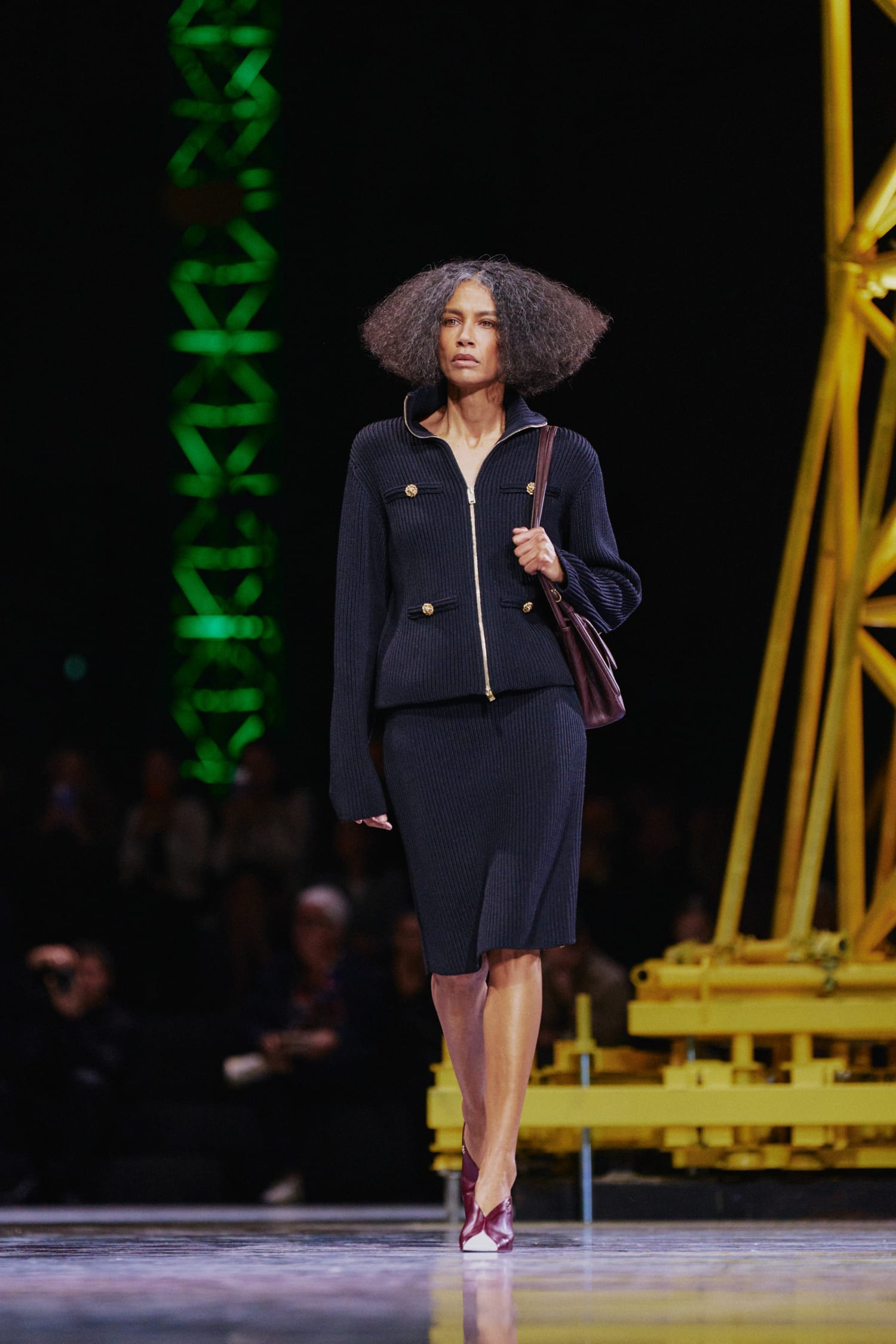
The iconic Chanel skirt suit was Blazy's tool of choice this season. The opening look, worn by 50-year-old Italian model Stephanie Cavalli, was a ribbed-knit zip-up take on a Chanel jacket with a matching pencil skirt, designed for movement and function. The suit served as the central canvas to the collection, presented in classic tweeds but reworked using intricate fabrics, including a gauzy style splattered with silicone that was inspired by a Jackson Pollock painting. The casting of Cavalli signalled that Blazy's vision for Chanel is age-inclusive. “I wish to create a canvas for women to be unapologetically who they are and who they want to be,” he said in his notes. Celebrity guests and ambassadors at the show included Oprah, Kylie, Margot Robbie and Olivia Dean on the front row. In a full circle moment Blazy also extended an invitation to Claudie Haigneré, the first French woman in space in 1985, who inspired his graduate collection in 2006.
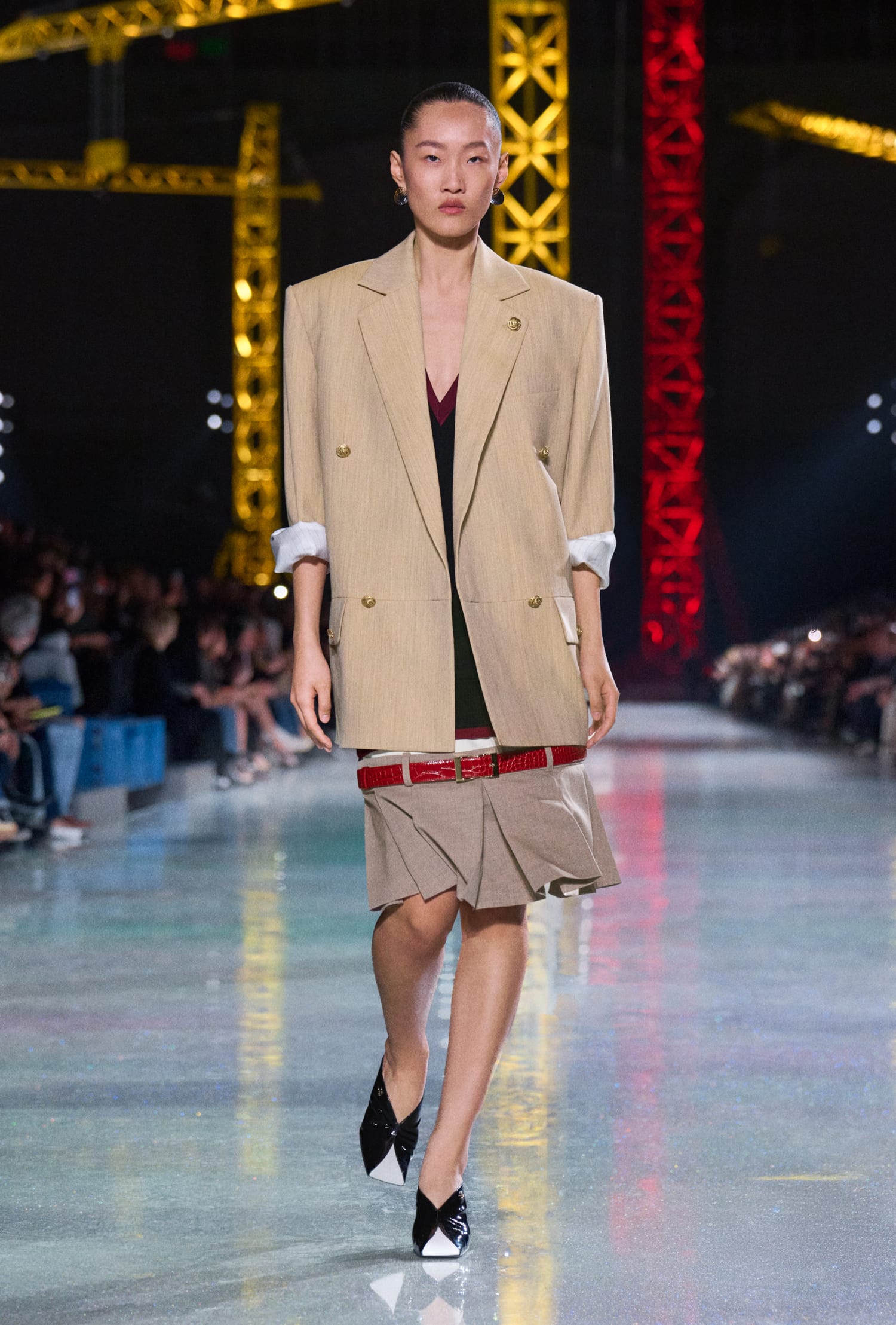
In leaning into comfort, Blazy remained loyal to one of Chanel's founding pillars. In her designs, Gabrielle “Coco” Chanel, borrowed regularly from menswear to free women from restrictive clothing, famously stating that “fashion is both caterpillar and butterfly... we need dresses that crawl and dresses that fly.” Blazy answered this with a wardrobe that ran from caterpillar daywear skirt suits through to butterfly party mode dresses. For daywear, the skirt suit was a key motif, while trompe l'oeil skirts with pleated hems gave the illusion of a dropped waist mini skirt but actually sat on the waist hidden under a blazer or an overshirt. Blazy is a big advocate for the overshirt, presenting multiple iterations in luxe fabrications and heralding the return of the “shacket”.
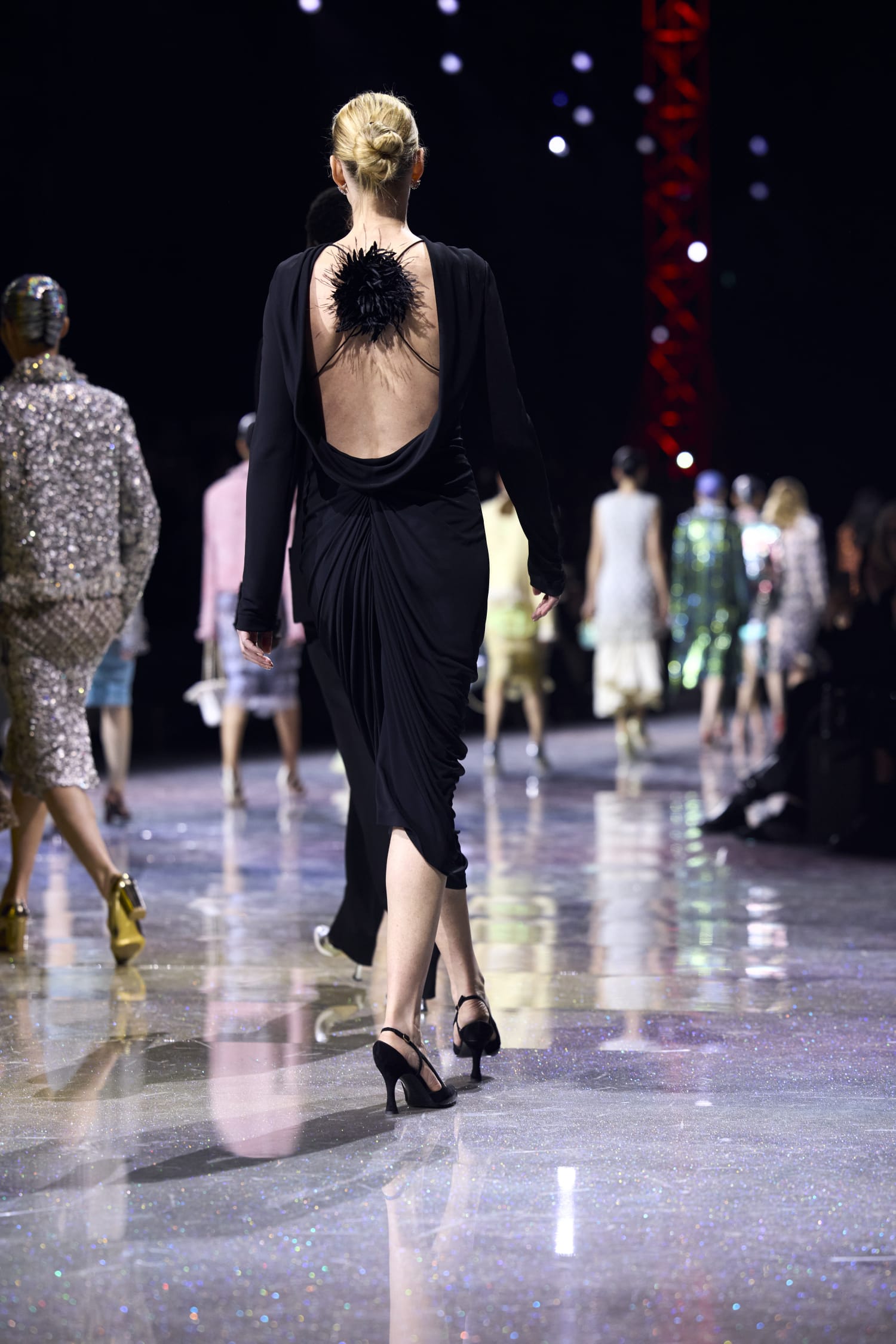
For his grand finale, iridescent pastel metallics in the lightest chainmail fabric that resembled exotic moths and butterflies were countered by the classic LBD complete with a surprise black camelia corsage suspended in the middle of the deep cowl back. Accessories included a pomegranate minaudière bag and charms featuring flowers, chicks and leaves adorning jewellery and bags. The show coincided with Blazy's first collection hitting the shelves in Paris and cemented predictions that his vision for Chanel would be a commercial hit as many styles already sold out immediately (A cropped shirt from SS26 retails at £3040 and the newest edition of the iconic 2:55 bag at £10,700). Chanel's revenues were down 4.3% to £16.9 billion in 2024 (2025 figures are yet to be released) but if the pandemonium at the rue Cambon flagship store is a bellwether for sales, the forecast on the Chanel skyline looks bright.
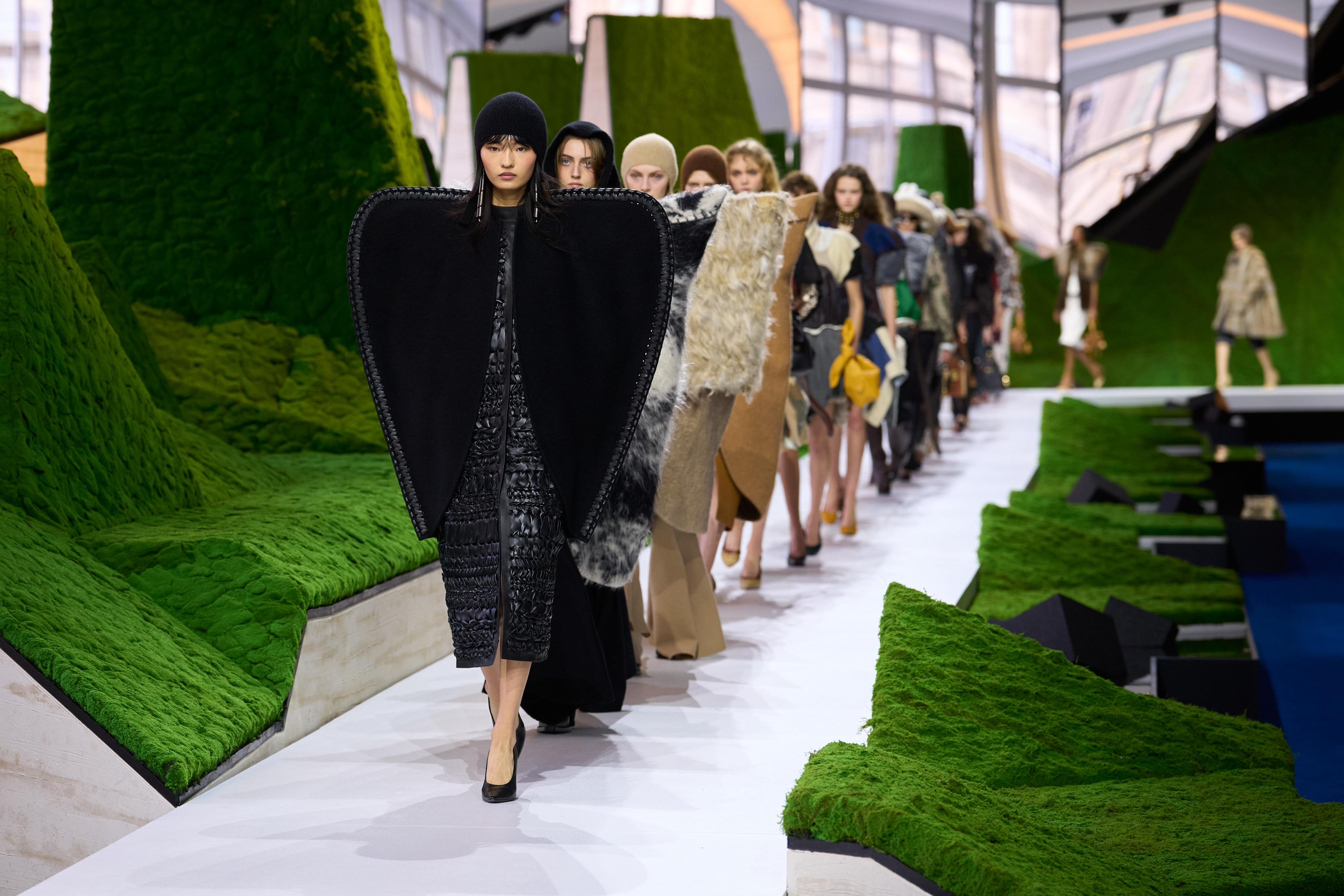
On the last day of Paris fashion week Louis Vuitton erected a pastoral tableau, dubbed a “neo-landscape”, in the rear courtyard of the Louvre. Inspired by the lush valleys of the Jura mountains, a 360 km sub-alpine range stretching along the French-Swiss border, and the birthplace of founder Louis Vuitton. The jutting and angular hills of the set were the work of Emmy award winning production designer Jeremy Hindle, known for his work on Apple TV’s Severance. (Verdant runways are a Paris trend this season with Hermès and Miu Miu both adopting the nature theme with moss carpeted show venues.) In his show notes creative director Nicolas Ghesquière stated “nature was the greatest fashion designer… Clothes evolve in response to our climate and surroundings – for endurance and protection.” The French designer described the collection as “a new folklore, for the future.” Opening silhouettes of hemp-based faux fur capes with exaggerated shoulders and extreme volumes took inspiration from shepherds and nomadic dress. Covetable cropped leather jackets with shaggy faux-fur collars were more transferable to city life.
Early collection teasers released on Instagram showed the work of Ukrainian artist Nazar Strelyaev-Nazarko whose pastoral scene artworks of lambs appeared on a wool mini skirt and the back of a mohair plaid shirt. Patchwork dresses were classic Ghesquière while a leather woven stiff cape ensemble showcased the technical ability of the atelier. Since no journey is complete without luggage, certainly not a Louis Vuitton one, models carried wooden shepherd’s staffs with a knotted handle bag swinging from it like a knapsack. Noé bucket bags, originally designed in the 1930s to carry champagne, were carried like backpacks.
Newsletters
Choose the newsletters you want to receive
View more
For information about how The Observer protects your data, read our Privacy Policy