San Francisco, California. It’s 9pm. People in designer clothes hopscotch human waste on their way to expensive noodle bars. America has come careening down the big slide and turned everybody mad.
A middle-aged man in rags forages between the paving stones for something, possibly nothing. At the corner of Fulton Street, an emaciated teenager stumbles forward, catches himself, stumbles backwards, catches himself again, and on and on like a pendulum, never stopping. Hurry along and more of them appear, creased over – the “fentanyl fold” – bent into weird shapes. Someone’s stuffed into a crevice like a spider, reading an encyclopedia upside down. You will see old wheelchairs and the dispossessed, poor to the point of absurdity, a bare outstretched leg, white as chalk and cracked, with no blood in it.
A $150,000 self-driving Waymo car silently turns up the road from a side alley. The vehicle meticulously maps the homeless bodies, predicting their movements and reducing their lives to “dynamic objects”, then carries on carefully towards Nob Hill.
______________________________
America’s “manifest destiny” began with an 1845 article by John O’Sullivan that appeared in the United States Magazine and Democratic Review after the annexation of Texas that heralded the Mexican-American war. Five unchecked years later, the state of California was founded. I wonder what O’Sullivan would make of the Rosewood hotel in Menlo Park.
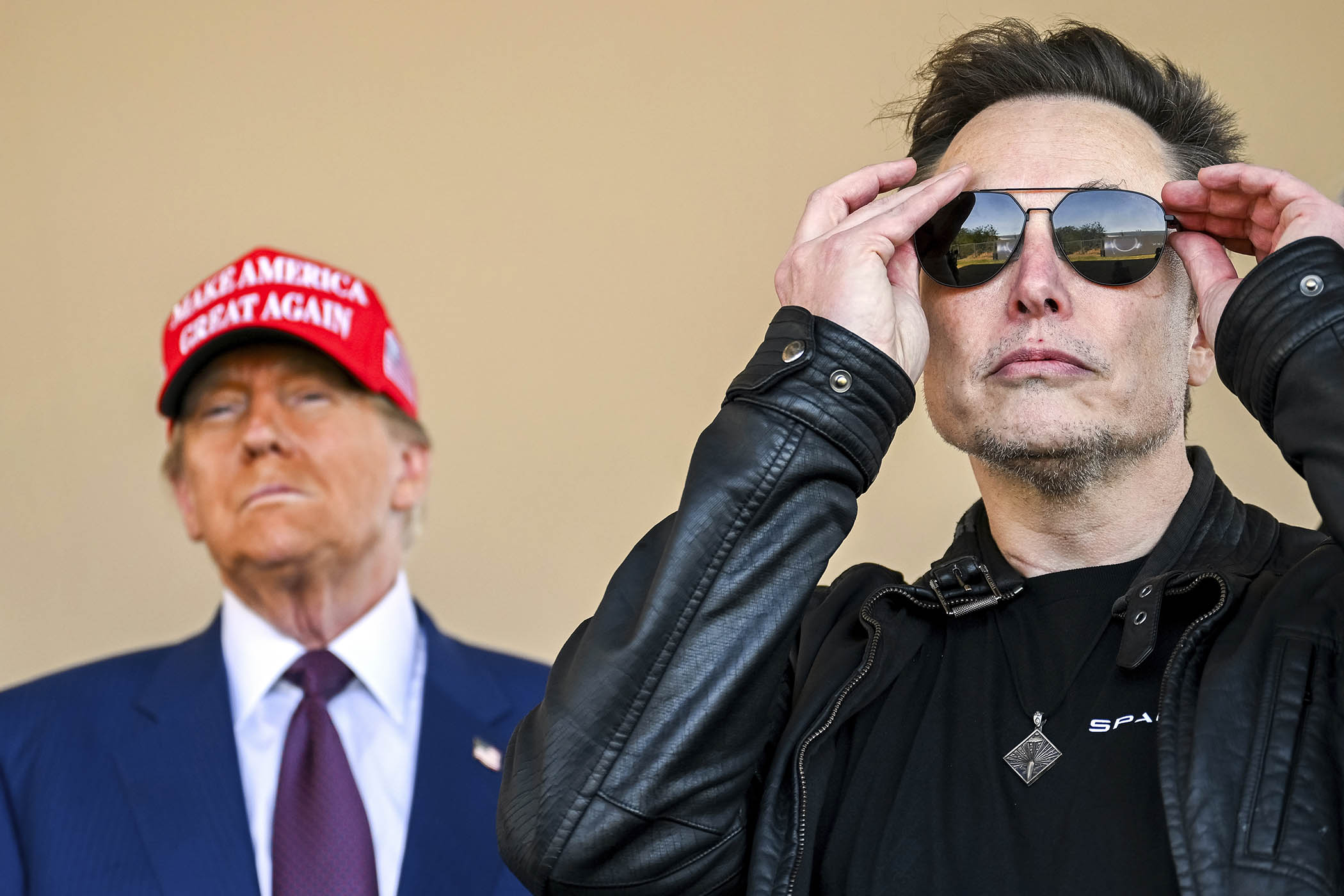
This is where venture capitalists (VCs) meet with budding tech entrepreneurs and engineers. In 2015, Elon Musk and Sam Altman reportedly booked a table at the restaurant to discuss the “Manhattan Project” of artificial intelligence. In terms of Silicon Valley, the Rosewood is where the future begins. It’s lifeless. The air is vaguely scented. The decor resembles a business-class lounge at an airport – any airport. Its restaurant, Madera, serves golden reserve caviar for $180 and $21 sides of truffle fries – the sort of food that exists to be written down, not eaten.
A gaggle of private equity guys with lanyards wander towards the bar while, outside in the garden, Theo Baker and I look towards the rolling green hills at Westridge and the low cloud.
So, I say, how do you rule the world?
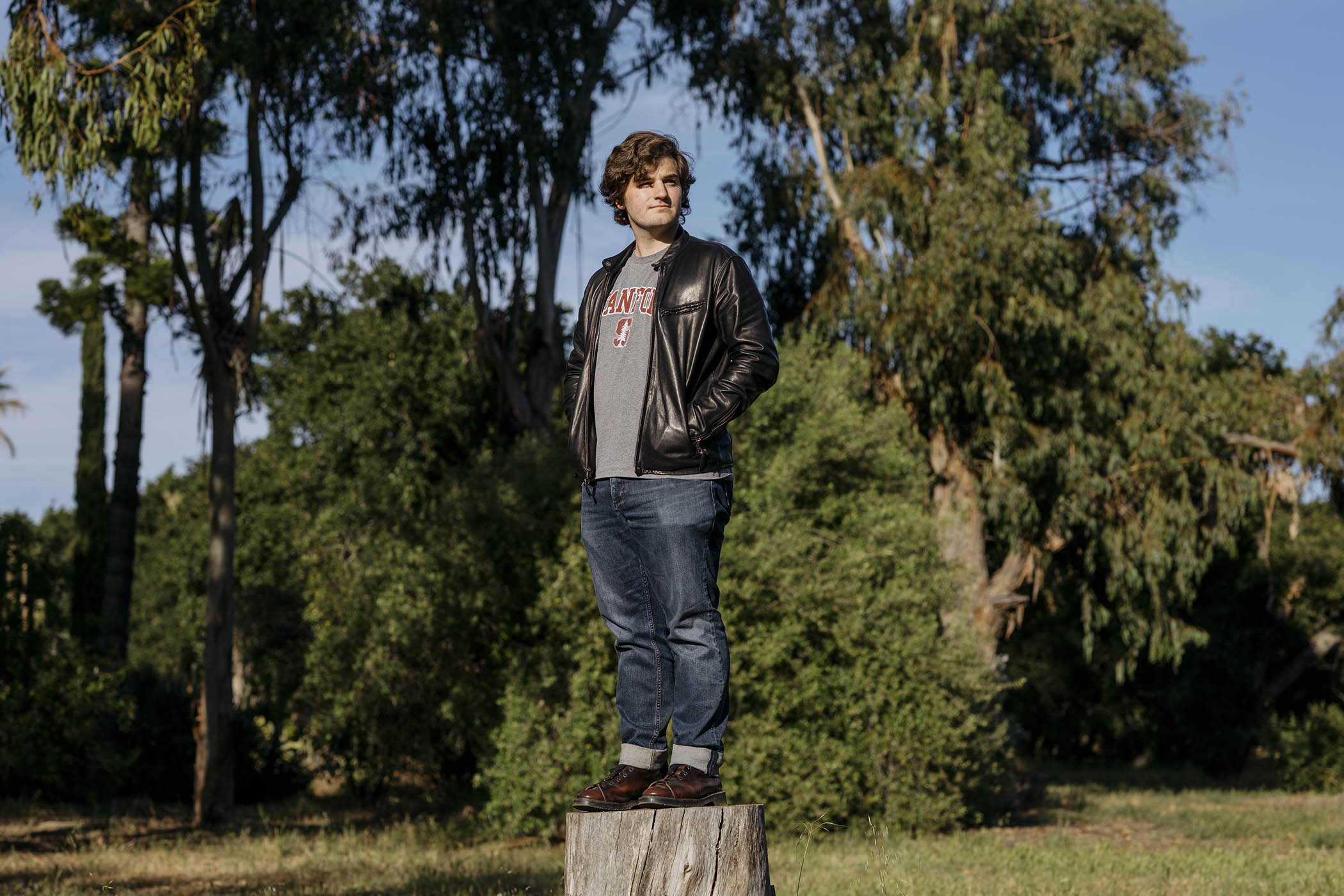
Baker, who has wavy brown hair and a singsong east-coast lilt and, at 21, still carries the all-too-recent trauma of being stuffed inside a locker at school, considers the question.
“Well,” he says, “you extract value from those around you. And you exceed the limits of your conceivable ambition. That’s what Justin says … It’s not a doctrine, though. It’s all vibes. It’s all nebulous. It’s all fake.”
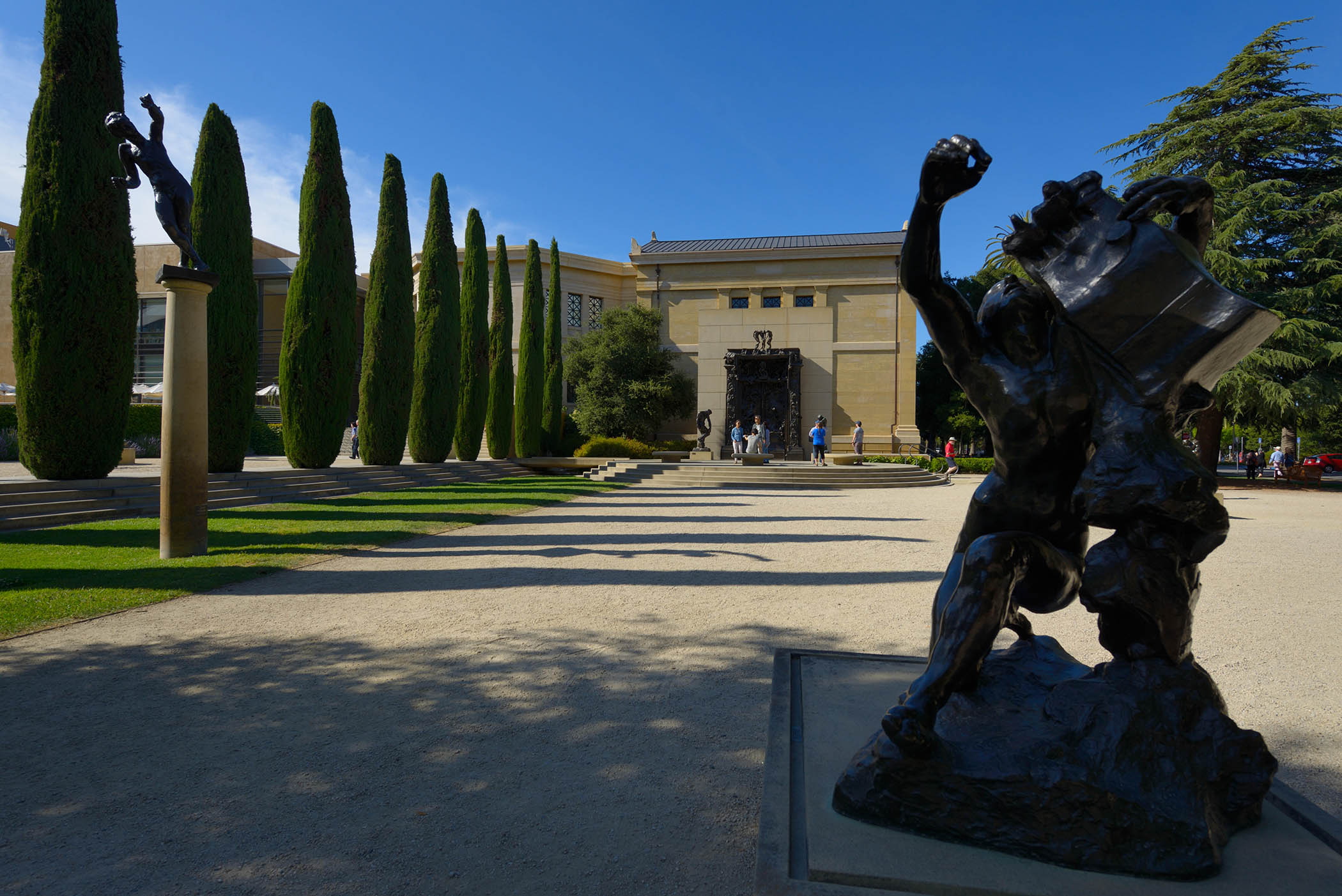
The Auguste Rodin sculpture garden at Stanford University
Baker met Justin (a mysterious fixer known only by his first name) at Stanford University, from which Baker is still yet to graduate. Justin had attempted to recruit Baker into an elite Stanford club called How to Rule the World – a title Baker has borrowed for his forthcoming book with Allen Lane. It is a kind of primer in the outrageous fortune of Silicon Valley.
At Stanford, we learn how VCs circle the campus like carrion birds. It’s not uncommon for students to be offered something called “pre-seed funding” after signing a “simple agreement for future equity” (Safe) check, which guarantees the VC the right to buy a stake in a startup down the line and doesn’t have to be repaid if the company fails. Sometimes, these Safe agreements were for hundreds of thousands of dollars. Occasionally, millions.
Baker writes in his book how “the newest thing by the time I showed up at Stanford was something called pre-idea funding. Yup, if you have the right pedigree, the VCs will offer you money without so much as a glimmering of a possible startup in mind. Some Stanford insiders are emailed term sheets by VCs to start whatever company they might want to start – despite never having pitched the investors. (I later received a similar offer myself with an implied seven-figure commitment, but did not pursue it.)”
Baker did not join the How to Rule the World club. Justin, unsurprisingly, turned out to be a moral freak, possibly even a psychopath. But his psychopathy is explicable when viewed in the context of California, the state that began in the promise of riches and terrible hunger.
Rewind to 24 January 1848. That’s the day the gold rush began. Back then, the state wasn’t even a state, populated by about 150,000 Native Americans and between 6,000 and 12,000 “Californios” — descendants from Spanish and Mexican settlers. It was a hired hand called James Wilson Marshall who first discovered the precious metal glistening in the water channel of a mill he was building. Soon, San Francisco – then not much larger than your average coastal village – was echoing with the discovery.
Those echoes grew so loud that they carried across the US then out over the ocean. Armed young men descended on the state from all sides. They came over the mountains from the east coast, up from Mexico; tin miners came from Cornwall, the Irish too. The Chinese and Japanese docked from the Pacific, along with Australians. By the end of the rush in 1855, there were more than 350,000 people in California. In less than 10 years, they had filled the rivers with mercury, detonated the hills and auctioned the Indigenous population into servitude. But it was worth it; the US economy swelled – a twentyfold increase in gold coinage.
The gold rush taught humanity many lessons. We made great strides in metallurgy and geology. We also learned economics, chiefly that the best way to make money from gold is to sell shovels. Leland Stanford figured this out in real time and became one of the wealthiest men in the US, graduating from dry goods to railway lines. He hoped to be succeeded by his son, Leland Jr, but the boy caught typhoid and died aged 15.
The Stanfords were distraught. Too old to bear more children, they founded a university in Leland Jr’s name. “The children of California shall be our children,” Stanford Sr proclaimed in his grief. “It is our hope to secure a university where all may have a chance to secure an education such as we intended our son to have.” His son’s body was immured in a mausoleum on campus, flanked by stone sphinxes. Around it, California flourished and the rush returned in a second, immeasurably larger rupture 150 years later.
Silicon Valley came into being after the second world war, fostered by a marriage of Stem research, deregulation, venture capital and defence spending. So far, it has concentrated more wealth than a 19th-century industrialist could possibly comprehend. Leland Stanford’s university has been essential to this; a never-ending conveyor belt of smart teenagers from across the world. As Leland Jr’s remains gradually degrade, the value of public companies in their vicinity has climbed to $14.3tn. Buildings have sprung up, conjured out of the ground by billionaires and named after them. The conversation changes – websites, apps, virtual reality, crypto, non-fungible tokens, AI – but the money never stops.
Theo Baker wanted to go to Stanford from the age of seven. The day the Ivy League and other prestigious universities release their admittance decisions is a significant date in the US calendar. One senior in Baker’s prestigious Massachusetts school, Andover, took his own life on “Ivy day”; another tried later in the week. But Baker got into Stanford in 2022 and quickly made a name for himself.
First, he was accepted into the group that runs TreeHacks, the oldest hackathon in Stanford, where more than 1,000 of the “world’s brightest builders and innovators” are flown in to compete for almost $200,000 in prizes. TreeHacks is awash with money, and hundreds of students apply to join the small team that runs it – known as “saplings”. From his TreeHacks perch, Baker was able to get privileged entry to what he calls in his book “the Stanford inside Stanford … an exclusive world of excess and access afforded to those identified as ‘high agency’ – those special super-geniuses who will reshape the world in their image”.
It’s vital for the Silicon Valley machine that the “Stanford inside Stanford” exists, so people know where to look in order to find the most promising and sharp-elbowed students – circles such as Justin’s serve this purpose. Likewise, Stanford needs Silicon Valley for its endowments and research, so engaging with people such as Justin is encouraged. It’s a reciprocal relationship.
Alongside his ascent in the university machine, Baker had taken up student journalism at the Stanford Daily, the student-run newspaper. He was good at reporting, and uncovered what many journalists would consider the scoop of a lifetime when he was still in his freshman year. Baker received a tipoff linking to a blog alleging that the then president of Stanford, Marc Tessier-Lavigne, a world-renowned neuroscientist, had used altered images in four neurobiology papers he co-authored between 2001 and 2008. The allegations turned out to be true, and Baker’s work sparked an internal investigation, followed by Tessier-Lavigne’s resignation.
The latter didn’t come easily. The academic is one of many ultra-wealthy members of the faculty (Stanford has the world’s richest professoriat, who often acquire their wealth through investing early in students) and marshalled his influence against the Daily.
Baker and his editor were attacked by powerful lawyers and mediated by a gold-plated crisis communications company. Nevertheless, by the end of his first 12 months at the university, Baker had gained a unique insight into the heart of tech power and broken what became a national story. His efforts made him the youngest recipient of a George Polk award for investigative reporting, and he’s about to go on tour with his new book, which chronicles that year.
A couple of weeks ago, I met Baker in Palo Alto to talk about this strange year, and about his insider’s understanding of the tech bro factory – Stanford’s conveyor belt of digital gold. Palo Alto predates Stanford, but has been subsumed by it. The city feels like a mall. “Store policy,” one sign reads. “Cold/hot water is available only with a drink purchase. Refills are limited.” Baker arrives at the Peninsula Fountain Grill, a retro American diner that smells like a children’s birthday party, just as I’ve decided to give up on what I assumed when I ordered it would be a normal-size blueberry muffin. Looking down at my notebook, I’ve scrawled the words “this place is evil” without realising.
Baker, a history major, is cerebral, switched on – the kind of person who’s good at passing exams. We speak for a while about the massive disparity of wealth you see out of the window of the Caltrain on the way south from San Francisco, passing car dealerships and dilapidated recreational vehicles, then reflective glass and the Roblox Corporation’s headquarters, and Atherton – until last year, the most expensive zip code (94027) in the US. Then I ask Baker about philosophy and whether Silicon Valley actually has one.
“Well, sure, Silicon Valley has always had these different philosophies,” Baker says cheerfully. “When I came in as a freshman, effective altruism was really big.”
Effective altruism is a weird twist on utilitarianism. It’s the systematic calculation of the greatest good deployed to maximise positive impact, which tends to translate to getting rich so you can help people. Effective altruists included Sam Bankman-Fried, who ended up in jail after the collapse of his multibillion-dollar FTX crypto empire in 2022. After that, Baker explains, effective altruism lost its allure.
“Now the philosophy is a little bit less formalised,” he continues. “A lot of it is this sort of high-agency mentality that you see chronicled throughout the book; that, effectively, these ubermenschen can supersede the traditional rules … there’s [also] a lot of ways of applying gloss to what you’re doing. Google’s original motto was ‘Don’t be evil’, and now it’s the second most valuable company in the world.”
Does he think Google has succeeded in that original goal?
“I’m not sure that’s for me to say, but certainly their record leaves holes that one could reasonably be upset with.”
This kind of response, I come to realise, is fairly typical of Baker. He doesn’t like the idea of making broad moral judgments. I try to break this fortification and end up getting a bit frustrated.
“Come on, Theo!” I hear myself half-shouting after he declines to give a stark-enough judgment on Palantir co-founder Peter Thiel. A member of what Silicon Valley calls the “PayPal mafia”, Thiel is credited with the rise of the US vice-president, JD Vance, and has recently taken to hosting closed-door lectures on who the antichrist might be.
“It’s not my job to say whether people are good or bad. It’s to say: ‘Here’s what they’ve done and here’s what its effects are,’” Baker says. “I really believe that.”
Newsletters
Choose the newsletters you want to receive
View more
For information about how The Observer protects your data, read our Privacy Policy
A few hours ago, this year’s Thiel fellows were announced. Recipients get $250,000 over two years, provided they drop out of college to pursue startups or research. Baker knows two of them. He describes Thiel as a “provocateur”, “an interesting influence” and a “complicated guy”.
Eventually, having been pressed, Baker does deliver a meter reading on the tech oligarchy and its concentrated influence. “I think that people in Silicon Valley have accrued monstrous and unfathomable amounts of wealth,” he says. “Often by exploiting others in ways that most people in the world would view as clearly outside of the bounds of regular or acceptable behaviour, and clearly our guardrails have failed in protecting us against behaviour that puts profit over people.”
Fair play. We move on. Next: why is everyone in the Silicon Valley ecosystem so unbearably uncool?
I’m not sure whether Baker can see how intensely this uncoolness shines through in the book. There were multiple moments where I had to put the world Baker depicts down and pace around the room to avoid dying of cringe. How to Rule the World features engineers who listen to the soundtrack from The Social Network (2010) while they code and “Buddhists” who think wealth should be a requirement for politicians. Baker encounters people who order helicopter sushi takeaways, scramble for an autograph from the Nvidia co-founder Jensen Huang and complain about the lack of french toast on their private island.
Baker, who has very bravely undertaken a memoir before graduating, is willingly self-deprecating. The book contains a fairly excruciating account of the night he lost his virginity and the first time he gets “lit” at college, surrounded by “branded corporate Patagonias” and slurred conversations “focused on math olympiads, research grants, and successful company exits”.
At school, the year before he was locked in a locker, Baker was “stuffed in a garbage can and shoved down the stairs”. This sounds horrible, and Baker has almost certainly already achieved far more than his tormentors ever will. However, when it comes to Silicon Valley, it’s sometimes hard to assess whether people would benefit from less bullying from an early age or more.
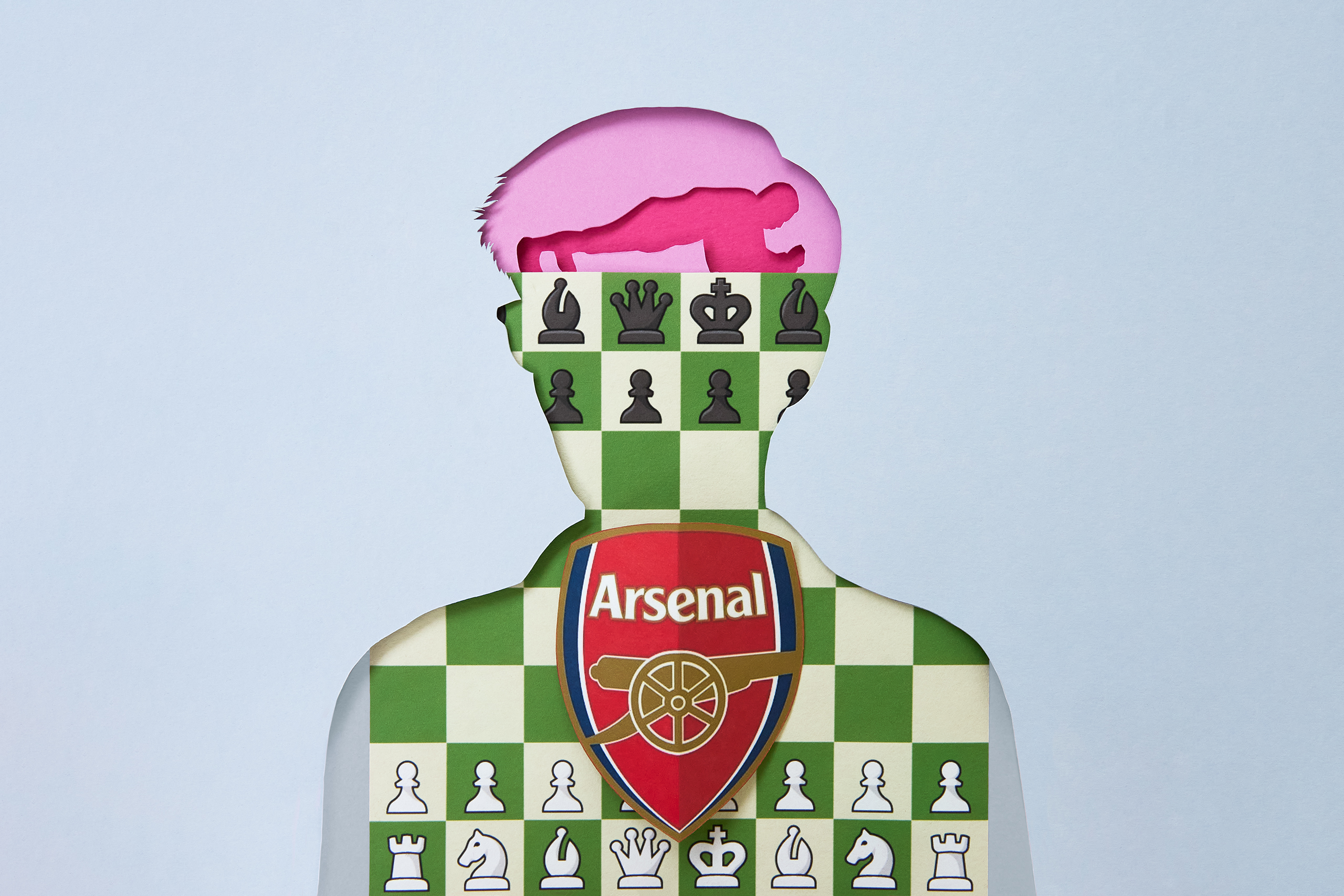
“Well, the inability to understand how other people perceive Silicon Valley is one trait that I find sort of delicious,” Baker says, citing the board members of Kalshi, the prediction market platform, who have been known to finalise meetings by traipsing on to the pavement outside the office and doing push-ups.
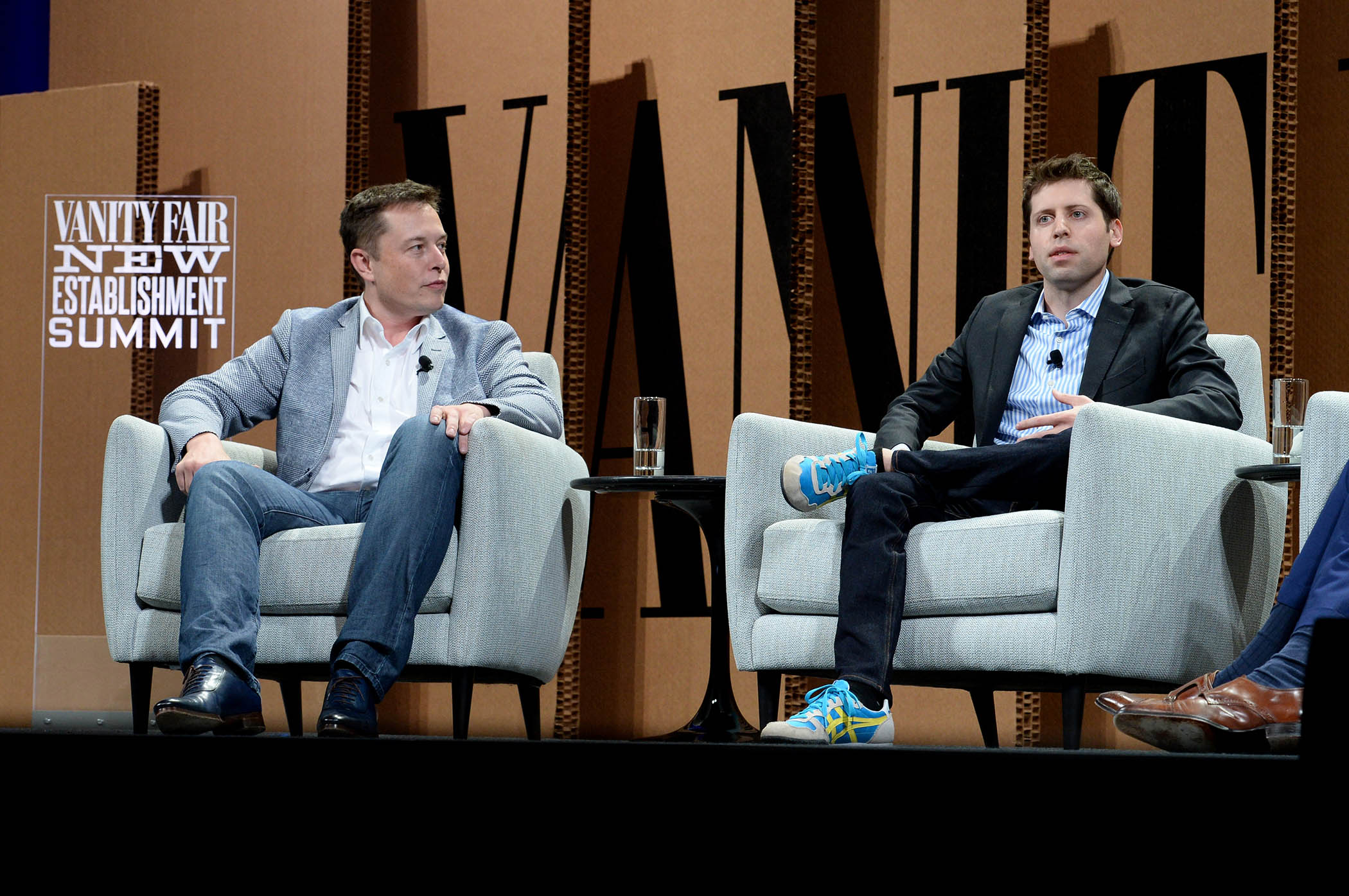
Elon Musk reportedly met Sam Altman at Stanford in 2015 to discuss AI
Baker has always loved tech. He was the kind of child who’d try to build a basic machine-learning model from scratch in his bedroom. This helped propel him into Stanford. But he also grew up with other influences. He was born into a journalistic household. His father is Peter Baker, the chief White House correspondent for the New York Times. His mother is Susan Glasser, a staff writer for the New Yorker and founding editor of online magazine Politico. “I have vivid early memories of lying on my mother’s lap in bed as she edited articles and asked me about headlines,” Baker writes. “My dad would sit me down in the old rocking chair … and tell me stories about the Iran-Contra scandal or Rutherford B Hayes’s 1876 contested election.”
“I grew up with privilege, absolutely,” Baker says. “I wouldn’t want to deny that … I don’t know if this is a stupid comparison but there are a lot of pre-meds here whose parents were doctors, and engineers whose parents are technically inclined. I had a leg-up because I was immersed in this [media] environment. But what I’ve done with it is try to report stories I think are important.” Baker is emphatic that his parents did not assist with his investigation into Tessier-Lavigne.
The bill comes to $62 for a “California burger”, a coffee, a muffin and one of the driest, largest turkey clubs I’ve ever attempted to eat. As the waiter leaves with my card, I ask Baker what he wants people to take from his book, which details, among other things, how the future “masters of the universe” are being trained.
“At its most simple, I want people to know how it works and that it exists. I want people to see this talent extraction pipeline, where a junior [undergraduate] might be too old because they haven’t got in by the time they’re 18 or 19.” He also has a broader critique. “The problem isn’t the bad apples; the problem is that it’s a mentality and a formalised system that exists and has been developed here with clearly deficient methods of control and ethics. I’m not the first person to say that about Silicon Valley. I won’t be the last.”
And, with that, we go to college.
Stanford goes on for ever. The campus is 3,380 hectares (about 8,350 acres) and runs across seven governmental jurisdictions. In his cramped Toyota Spyder, Baker takes me up Palm Drive and on to the main quad. “Stanford is many things,” Baker explains, showing me the university’s Rodin sculpture garden. “It’s not just its administration or its institution, but also the people, the land. It’s a name and an idea. And the ‘Stanford inside Stanford’ is this very particular corner of it that wields so much influence.”
True to Silicon Valley, this particular corner is often located in bogglingly mundane physical spaces. Most prominent in the book are the Coupa Cafés, one of which is outside the Green Library which hosts what Baker calls “the Coupa circuit”, an interlocking “network of students, investors, scouts”, who float through on their way up in the world. To most, the cafe would look like just another walk-in-the-park-style coffee shop.
“Billions of dollars in deals have been made here,” Baker says, without exaggeration. “I’m pretty sure Elizabeth Holmes said this was her favourite place on campus to hang out. Though I’d have to factcheck that.” He’s referring to another tech Icarus, the former billionaire chief executive of blood-testing company Theranos, who was convicted of fraud in 2022, sentenced to 11 years in federal prison and ordered to pay $452m in compensation to her victims.
So do people know you around here?
“Yeah.”
Because of your journalism?
“Yeah.”
Baker’s quest for truth has not always translated to popularity. At least not on campus. In 2024, he wrote a piece for the Atlantic about how the Gaza protests had turned Stanford into a “factory of unreason”. Baker suffered a stress-induced seizure while writing it. He knew the backlash would be intense, which it was: he had to leave campus for a while after it came out. He also got into an online spat with a member of the faculty after they took issue with something his dad had written. He regrets that.
“He insulted my dad on Twitter,” Baker explains, a little embarrassed. “And then I sent the snippy email that I shouldn’t have, which was wrong and poorly worded … it was a mistake – I need to learn how to not run my mouth.”
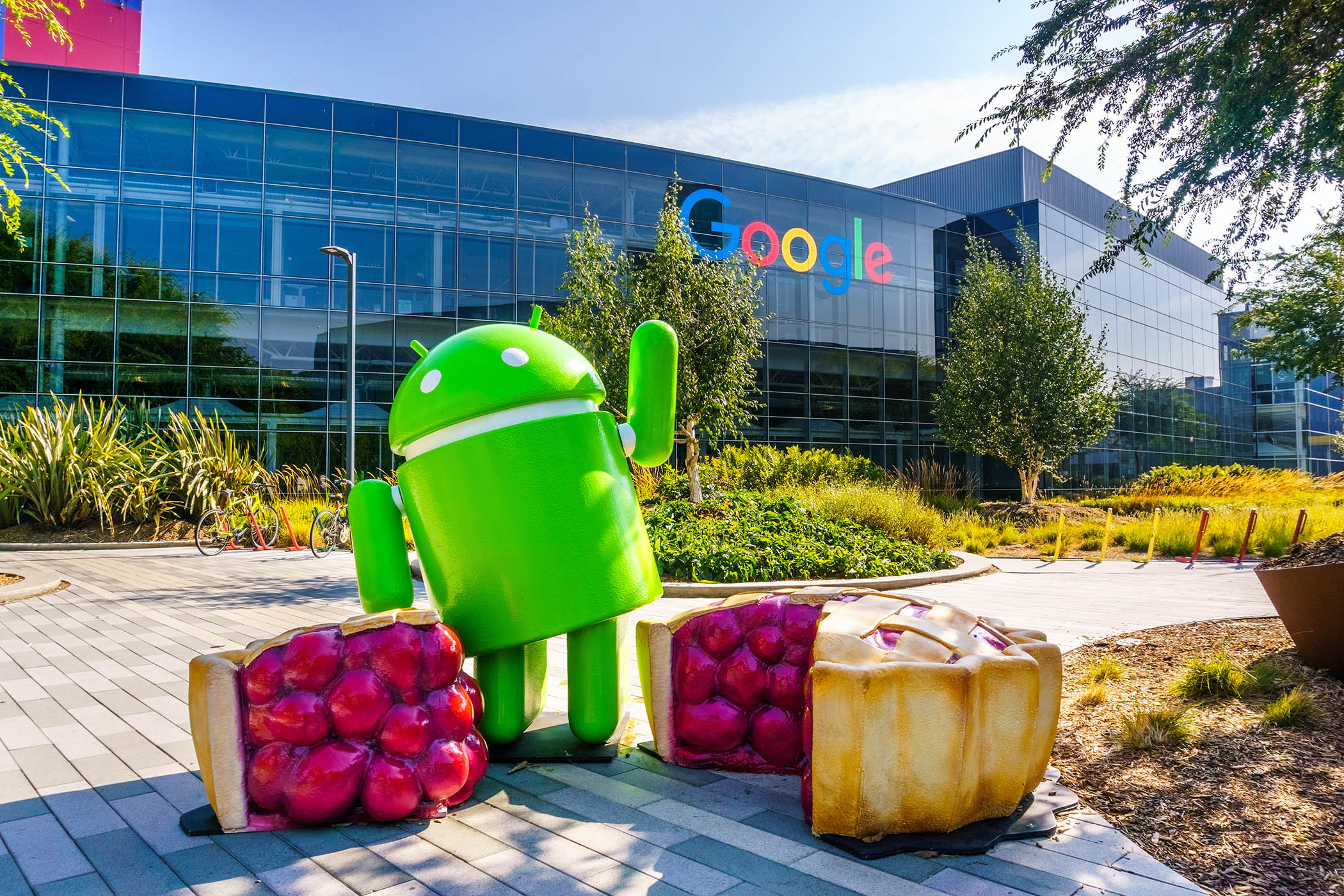
Google’s California headquarters is a 10-minute drive from Stanford
It’s raining heavily and the rain is washing Stanford’s wide green spaces and silver glass structures. Baker tells me about AI and how he’s sure the bubble will burst. Apple, Meta and possibly Nvidia, he thinks, will be fine. But the whole ecosystem below them – of companies that have glommed on to the AI rush, acquired massive offices but lack revenue, product, technical edge and a clear path to profitability – will “come burning down”. Baker predicts that three years will be ample time for most of these companies to disappear.
But that doesn’t matter now at Stanford or in Silicon Valley, where the unofficial motto is: “All AI, all the time.” Worldwide spending on AI is reportedly forecast to total $2.5tn in 2026, a significant portion of which will be spent here.
Baker takes me into the bowels of the Jensen Huang Engineering Center, an 11,705 sq metre (126,000 sq ft) building that houses the Nvidia auditorium and a replica of the garage where graduates William Hewlett and David Packard began their startup, Hewlett-Packard. As we talk, I notice a pair of students, working on a project together.
What are you working on?
“This is for a class,” one of them explains. “We have to build something with the least amount of mass possible to withstand very high levels of vertical upward force.”
So far, they’ve managed to reduce the mass of their structure by 20 grams, but it’s not enough and the calculations need to be optimised. I ask what they want to do after they graduate. “Well, I’d say either semiconductors or defence,” one of them replies.
Is money a big motivator for you?
“Yeah,” he laughs. “Yeah, it is.”
And why is that?
He buffers. The silence stretches on for an awkward 10 seconds or so.
“Is it weird that I don’t have a concrete answer to this?” he wonders aloud. I say nothing. And eventually he mutters something about providing for his kids, but his heart’s not in it. You can tell.
Baker takes me on a final drive through Silicon Valley. We pass by a string of unassuming buildings that turn out to be the headquarters of some of the biggest investment companies in the world: Lightspeed, Accel-KKR and others. Even out here in Menlo Park, we’re still technically on Stanford land. As we drive, Baker – who, of course, has only recently surfaced from the tumult of adolescence – talks about how he’s always wrestled to define himself.
“I think everyone is very uncertain as they grow up,” he says. “What is your identity? What do you care about? … A lot of hormones. I struggled with that a lot.”
With the hormones?
“With identity,” he replies. “Who are you? What were you put here to do?”
You struggled with this as a teenager, I ask?
“For a long time … I wouldn’t say that I have a fully resolved sense of myself at this point, either … I don’t really know exactly what I am or who I am.”
At a later juncture, there’s a lull in the conversation and all that can be heard is the rain and the faint sound of the radio. Then Baker confides in me.
“So do you think it’s a good idea?”
What?
“Hmm,” he shrugs, looking suddenly vulnerable, even worried. “[the] book … writing … being a journalist…”
For a long time during this interview, I’ve been wanting to hear from the undergraduate beneath the award-winning reporting and the forthcoming book tour and the tech savant. I tell him that being a journalist is great and can make for a fun career if you can swing it. Regarding the book, I worry slightly that writing a personal memoir at such a young age may backfire.
Baker hopes the book isn’t received as a memoir and that, despite its autobiographical qualities, people can read his character as one facet in a broader story. But then he sighs forlornly. “Whatever,” he says. “I can’t really control how people perceive it.”
Do you worry about that?
“I worry about everything…”
Later, he drops me back at the Caltrain and I take my seat among a herd of drunk San Francisco Giants baseball fans. They eat sunflower seeds and drink beer, and barely even notice the change in gravity as it bends around the little valley that rules the world.
How to Rule the World: An Education in Power at Stanford University is published on 19 May by Allen Lane (£25). Order a copy at The Observer Shop for £21.25 (15% off RRP). Delivery charges may apply