

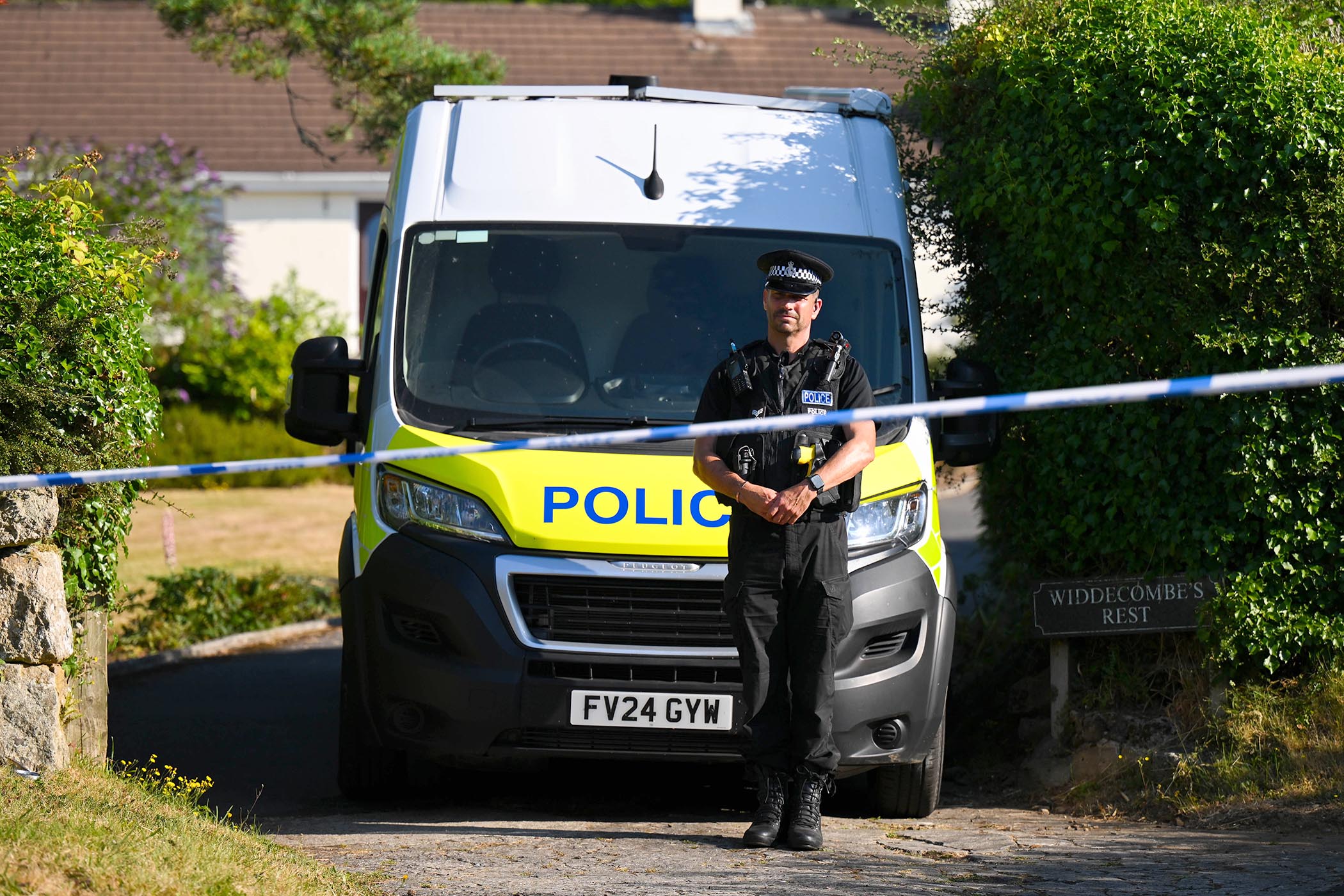
Just after half-past-five on 3 February 2018, a woman named Eleanor walked into a Yorkshire police station with her brother and sister. Their mother had recently died and during the long and emotional process of emptying her house, a small newbuild a few minutes south of rolling woodland, they discovered a box in a cupboard under the stairs. Inside they found what appeared to be a collection of old clothes. And when they unwrapped the bundle, they discovered the skeletal remains of a child.
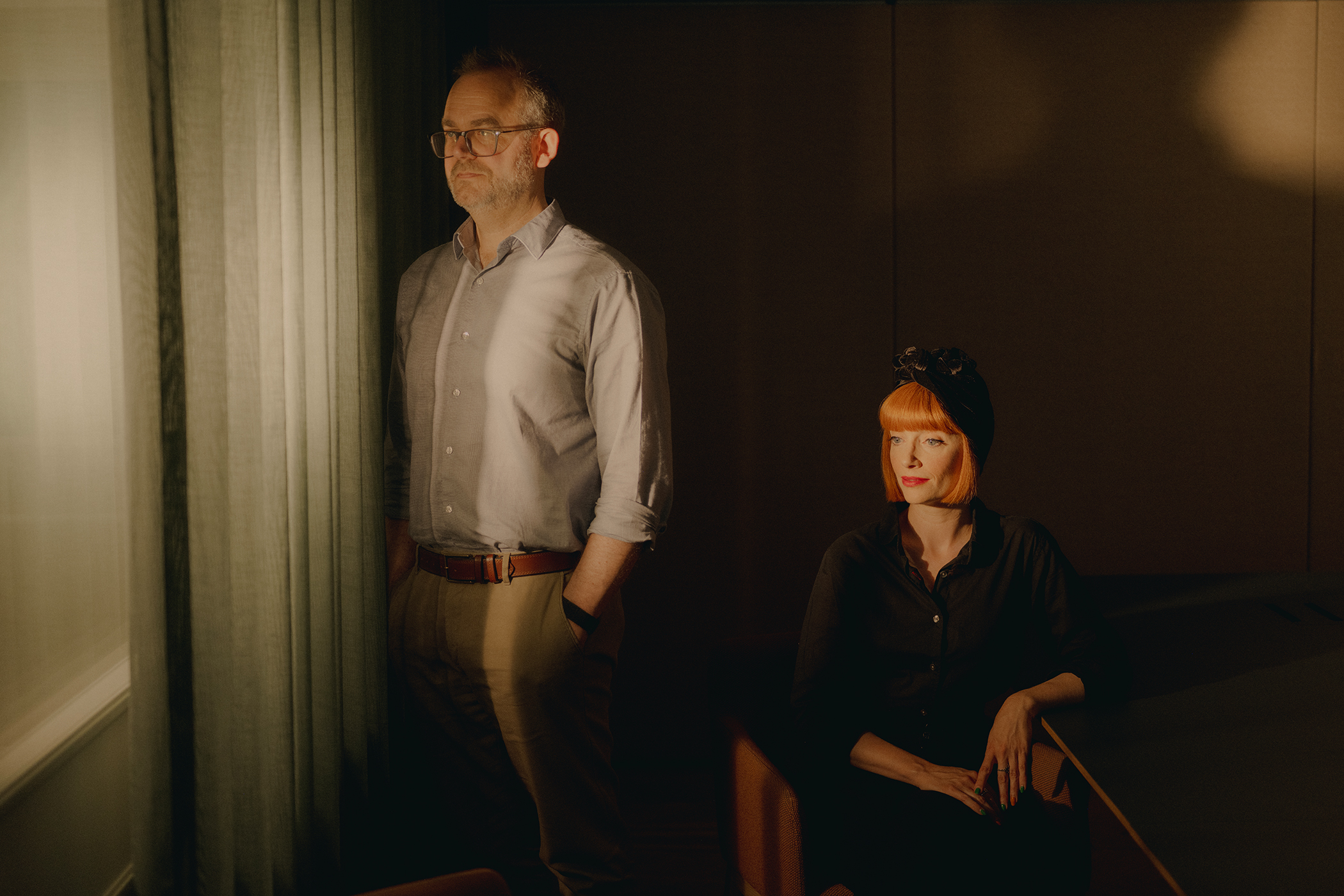
Six weeks later, Amber Butchart was at home in Margate. The flat she shares with her partner overlooks the sea and the weather is extreme: the windows whistle when there’s a storm; at sunset, the rooms, which they have decorated in shades of 1960s Victoriana, swell with a pinkish glow. Butchart, a curator of fashion and textiles, was working at her desk when she received an email from the forensic archaeologist Dr Karl Harrison.
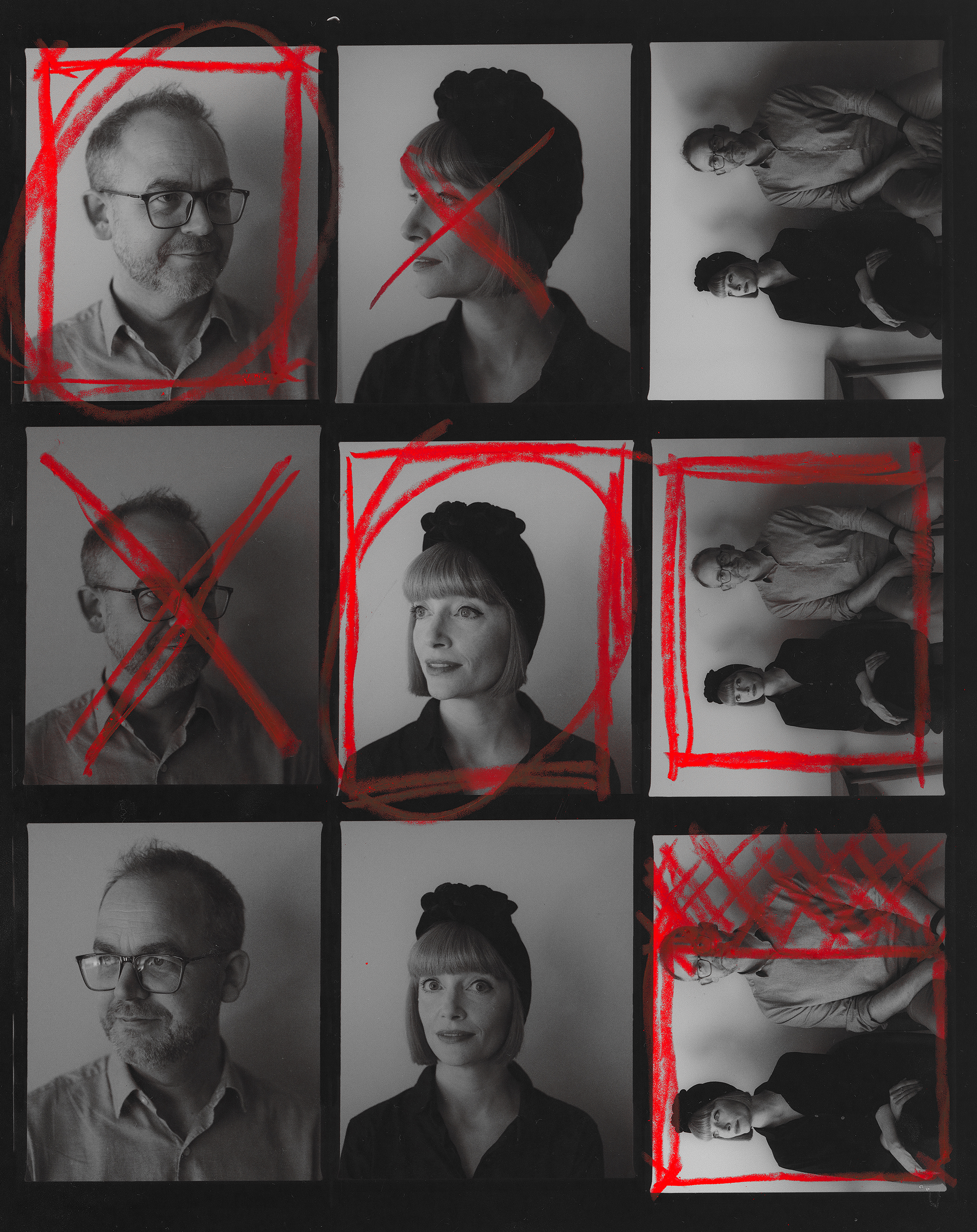
Forensic archaeology is an arm of forensic science that applies archaeological methods and processes to criminal cases, often to find and investigate buried and concealed human remains, record the evidence for court and recover them in a dignified and respectful manner. Harrison is one of the best in the world, commended recently for his work on Grenfell. The pair had known each other for a year, since Harrison heard Butchart on the radio talking about fisherman’s jumpers. He had been impressed by her expertise and the way she explained what we communicate through what we wear. Soon after, he employed her as a consultant forensic garment analyst, to help him work with clothes found at crime scenes and teach investigators how to understand fabrics, fastenings and the importance of how to describe them precisely, for the record. The tendency at a death scene is to focus solely on the body, but the stuff that surrounds it, including the clothes, tells important stories, too. And so it was that in April, he invited her to a lab in Teddington to look inside the box.
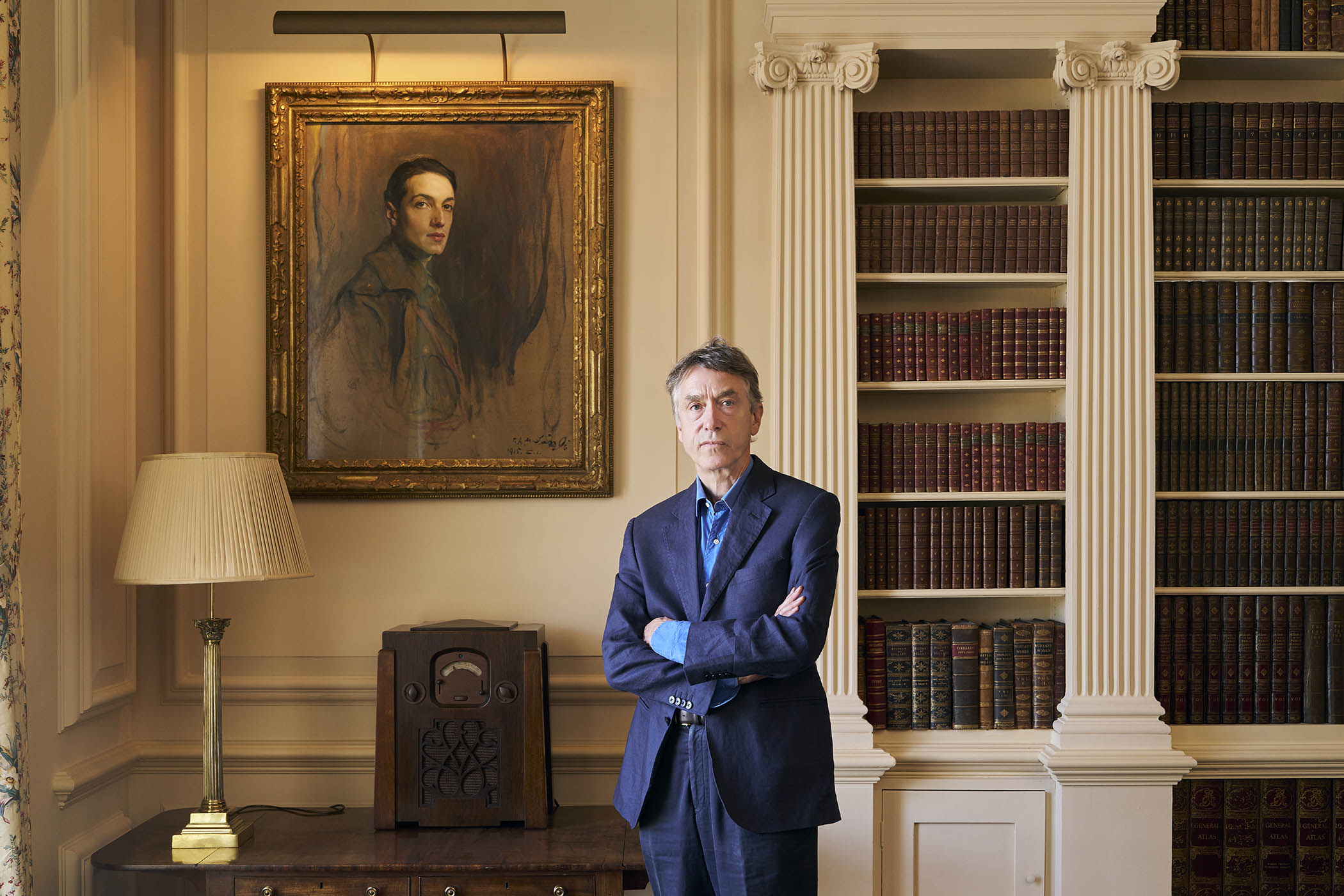
I first interviewed Harrison and Butchart in 2019, soon after she had told me about this new arm to her career and, while our wintry day together among police dogs and CSIs was fascinating, it was their brief mention of the baby in the box that stayed with me, and led me to return to their story years later. I had found myself idly researching concealed pregnancies and births in the meantime, with varying degrees of distress. While they were once fairly commonplace, details of their prevalence today are a source of speculation – an 11-year study in South Wales from 2006 found an incidence rate of 1 in 2,500 deliveries. An Irish study based on data from 2004-05 found a rate of 1 in 403 births at a rural hospital and 1 in 625 at a Dublin hospital.
Though such incidents have become a rarity, now that babies born outside marriage are generally accepted, a number of women have been taken to court in recent years for concealing the birth, and death, of their children. In 2016, a 14-year old schoolgirl in Manchester hid the dead body of a newborn baby in a drawer after she secretly gave birth. Later, the court heard she went to school the next day. In West Yorkshire in 2018, the mother of a 19-year old discovered the corpse of a baby in a shoebox beneath her daughter’s bed. In 2024, a Malaysian student in Coventry who, according to the Crown Prosecution Service, “killed her newborn baby by placing her in a cereal box shortly after birth and concealing the box in a suitcase”, was sentenced to life imprisonment.
Harrison tells me he’d worked on similar cases to this concealed baby before. We’re meeting for breakfast near his current offices in Whitehall, at the Ministry of Defence and, while ordering a series of coffees, he remembers “a recovery in a large urban cemetery. A family had picked a location just off a path and made a shallow, informal burial under a tree for the child.” Three generations of women, the very young mother, her mother and her grandmother, had buried the body. Years earlier in Swindon, following an elderly woman’s death, one of Harrison’s colleagues had discovered, in an old suitcase stored for years on top of a wardrobe, a child’s body. “And I suspect very similar stories of infant death, concealment and retention over long periods of time probably sit within every crime and investigation office across the country,” he tells me.
The emotiveness of child death plays into the complexity of these investigations. Not least because, “It’s not unusual for us to search for the remains of infants, neonates and not find anything,” Harrison says. “They can be very ephemeral in a buried context.” People tend to see monsters in absence and shadows like this, believing bodies have been stolen – horrors upon horrors. “It seems to spark something in people that has little bearing on the science of it, but which creates a really challenging environment for an investigator trying to protect and elicit information from grieving parents and find out something that comes close to the truth.”
Sipping his coffee, Harrison tells me about a conversation with another forensic archaeologist that had shaken him. He discovered that each of them had encountered different cases in different parts of the country that began when an adult went into a police station and told officers that, as a child, they had watched from their bedroom window as a man, often their father, buried a baby in the garden. “Between us, we had three or four examples of it. They have a general idea of what age they would have been when they were standing there, and a very clear memory of what the back garden looked like, and they would then take you directly to the spot where they saw the man bury the body. And, while there may yet come a time where we find one, thus far, there’s never anything in those locations.” This could mean the remains have completely broken down, but it could also point at a recurring delusion. “It seems to be a relatively common phantom memory from childhood that’s linked to one’s bedroom space and the back garden, and fears about parents, fears about child mortality…” He tails off.
Harrison sometimes frets about the fact that investigators increasingly rely on DNA techniques for their speed and accuracy, ignoring other forensic disciplines such as garment analysis, which give more qualitative results. “Biologists frequently look at items of clothing to look for body fluids and sometimes they’ll do garment-damage analysis,” which might involve, for instance, noting a stab wound in a shirt. “But they won’t give any opinion on the nature or the date of clothing, or where in the world it might have come from.” Butchart can, and when Harrison calls, she does.
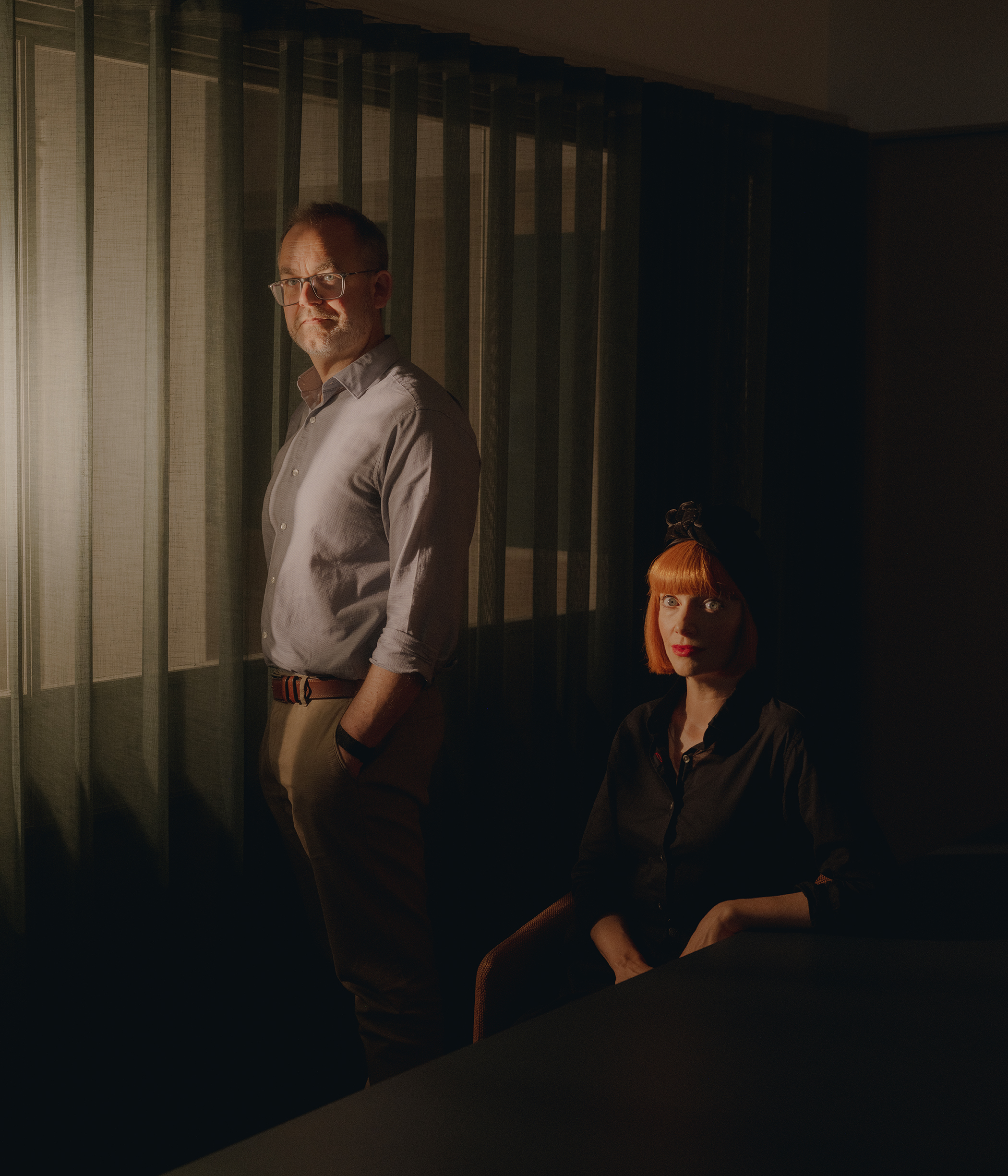
People, Butchart has found, struggle to take fashion seriously. This was mirrored in her early forays into forensics, where she met a level of polite blankness when discussing fabrics, labels, the shape, perhaps, of a collar. “That’s why Karl got me in to do the training sessions with CSIs, for just that idea of taking clothes seriously as evidence.”
The sessions often started awkwardly. She’d gather with the investigators in a municipal classroom, a whiteboard, paper cups of coffee. “Everyone is in their uniform polyester polo tees. I come in wearing a turban and there’s a slight clash of worlds that you can sense immediately.” She starts with an exercise where she asks the class to read her through what she’s wearing. What’s her favourite film? What music does she listen to? Where does she live? “People always think I’m a vegan for some reason.” And though it starts off slowly, by the end of the session everyone is engaged – one CSI told her enthusiastically all about his Hawaiian shirt collection. “Everyone thinks this doesn’t apply to them until they realise everyone’s wearing clothes. There is always an unexpected revelation.” She teaches them how to recognise fastenings, how to describe clothes and fabrics, especially non-western dress, how to develop and work from a standardised language. A skirt is never just a skirt. One person’s “jumper” is another’s “sweater”. There is always a reminder, she says, that clothes keep the secrets and tell the stories of the people who wear them, or wore them once, then wrapped them carefully away in a box.
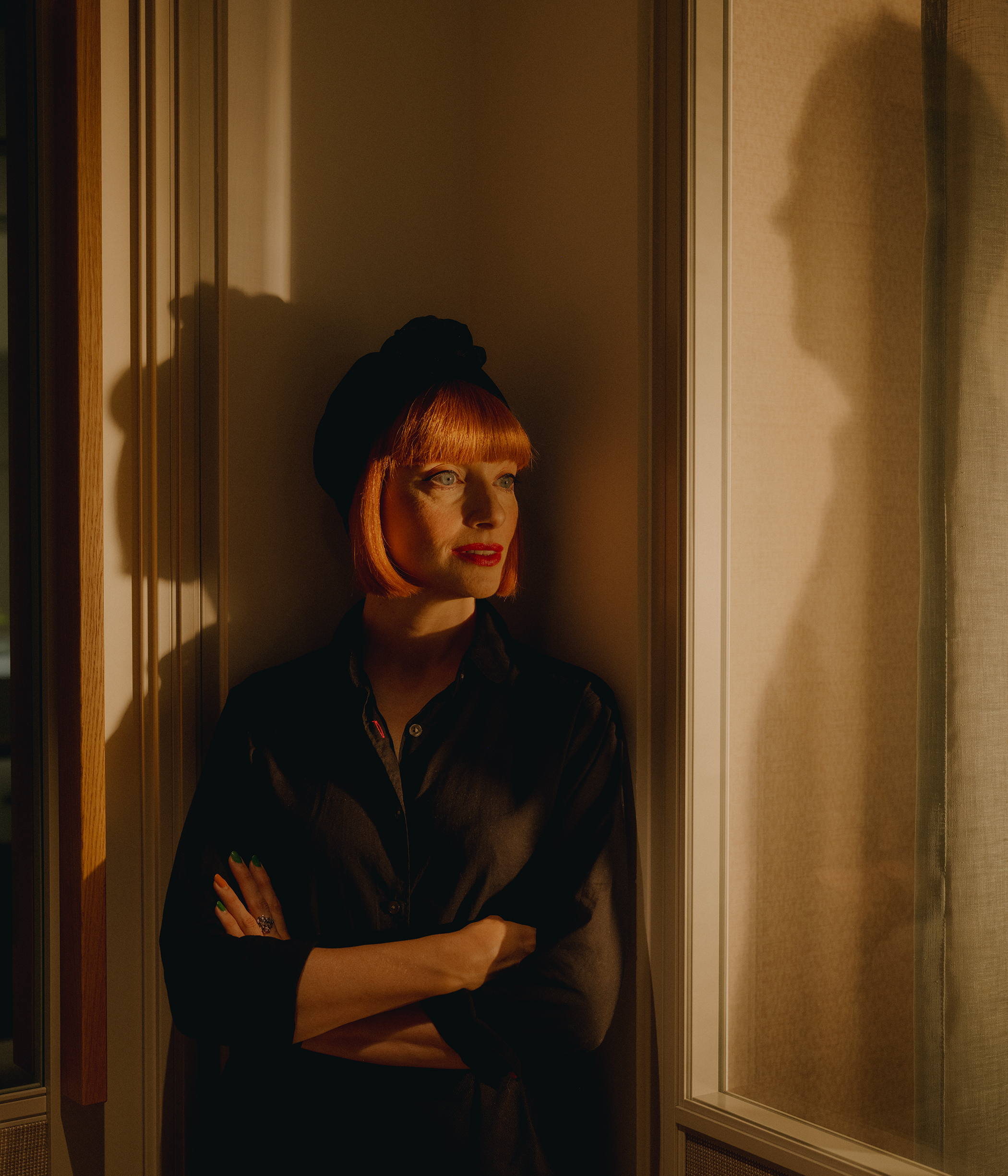
“It was a sunny day,” Butchart says, recalling her arrival at the lab in Teddington, “all quite bright, which seemed at odds with what I was there to do.” She and Harrison wore scrubs and masks, but beneath all that, Harrison remembers, “Amber was dressed with the level of sartorial elegance that you would expect.” The first time I met Butchart, when we were in our early 20s, she was DJ-ing at a nightclub in a satin Pierrot costume, a poetic clown with a sharp pointed bob. In the early 2000s, she was head buyer for vintage store Beyond Retro, and as well as studying history, she dressed impeccably, each day an opportunity for a costume. Harrison, in contrast, favours a button-down shirt and practical trainers.
In the lab he was careful about how much information to share with her. “We talk about ‘sequential revealing’,” he tells me. “You might give an expert the barest minimum context that they need in order to answer a question in the first instance. And then after their first consideration of an exhibit, you give them further contextual information.” It sounds a bit like a game, although it “isn’t designed to make traps for them, but to ensure that their answers are as balanced as possible.” All Butchart knew was that these clothes were associated with the remains of a deceased child. She was nervous. “As someone who doesn’t have a specific forensics background or training in any of those kinds of worlds, it’s still impossible for me not to connect the human story to it,” she says. In a café in Teddington before they entered the lab, she remembers Harrison explaining how people tend to deal with the emotional side of the work informally, through chats and jokes, rather than through counselling or training. “I was surprised at how casually things are discussed that are just absolutely horrific to hear about out of that world,” she says. “For me that was what took more getting used to than the process of going into labs. Everything there is so professional and clinical – even if you’re looking at something that has very clearly had tissue decomposition, you don’t mind that at all.” With a scalpel, Butchart started to unstick the fabric.
The clothing they were inspecting had clearly been in the box for a long time, but the garments that had wrapped this body were tricky to date. This was Butchart’s job. She wanted to assess when the woman had worn these clothes, in order to work out how long the body had been there. “One of the items was a bullet bra, clearly traceable to the late 1950s or early 1960s, and it had a love heart on the label – it said the ‘Lovable Brassiere Company’.” She knew she could use this label to research its date of manufacture, using archives and old magazine adverts. The other pieces of clothing were in worse condition. At first glance, they looked like “a burnt bundle of rags”. On closer inspection, there was a polyester blouse that had been adjusted and repaired, and a light-blue denim skirt, homemade for maternity wear, “with blackened areas where flesh had decomposed into it over decades. It had gone ragged where the fabric had rotted, which made it look smoke blackened.”
The adjustments to the skirt’s waistband were interesting to Butchart, because they implied planning – the mother, it suggested, knew she was pregnant. Harrison says the “decomposition staining” showed these garments had wrapped the body as “the infant’s remains were going through soft-tissue decomposition, because that’s the only point at which the liquefied soft-tissue products of decomposition would have leaked into the clothing.” And that’s where they had stayed ever since, “because they were still hardened and gathered around the remains when they were ultimately found.” Using the magazine ads and her knowledge of fashion history, Butchart dated the clothes to the mid-to-late 1960s, suggesting that this was when the box had been concealed.
When I checked on Google Maps where Eleanor’s mother had lived and the box was found, I learned the house had been built in the 1990s. It didn’t mean much to me at the time, but later it occurred to me that this meant she had likely transported the box carefully through house moves, concealing it again each time. Rather than burying the baby, she’d looked after its body for the rest of her life.
Butchart remembers feeling a certain remoteness as she measured, photographed, re-bagged each item. “When you’re in the lab it’s really easy to detach because there are all of those markers of professionalism, whether it’s a white coat or the hazmat-style suit.” This clothing carries meaning, too. While initially nervous, putting on the uniform of a scientist allowed Butchart to unhook herself from her everyday life as if stepping into a costume. “If you’re wearing a white coat, people will give you the respect the white coat deserves. Other people recognise your role and confer that respect on you. But you also feel like you’re inhabiting that role.” Once back in her own clothes, however, the emotion returned.
“I remember thinking about the case a lot before I went to sleep,” she says. The “lovable” label, juxtaposed with the baby’s body, “had the unintentional consequence, all these decades later, of adding an emotional poignancy to what I was doing.” Plus, “You feel a real weight of responsibility thinking what had actually happened, the circumstances, the extent of the tragedy. It hits you after the fact, in quiet moments.”
Butchart noted that the clothing was made of dense fabric and had been made stiffer still by “decomposition fluids that had then taken on almost a brittle texture,” Harrison recalls. It required a lot of pulling apart to examine each item. With every movement, new acrid depths of smell were released. “Musty,” Harrison recalls. “Sharp. It doesn’t hit you in the face in the way that recent decomposition does, but it does slowly percolate into you if you’re spending time looking at it. I’ve had a number of instances in my life where I’ve had to walk out of shops, normally because the cleaning fluid that has been used must be the same brand used in mortuaries.”
They were battling with “the worst kind of shoe-cupboard smell,” Harrison says. “The smell of human presence.” Butchart was attempting to flatten the creased and folded fabrics, in order to measure them. The baby’s remains had been removed, with less complication than other examples they’d worked on. “There was a case Amber and I worked on where you’ve got adult clothed remains that have decomposed in the open air, where you get root growth and vegetation passing through it, and you get these complex masses of human remains, clothing and vegetation that binds it all together. That becomes really difficult to do without damaging the clothing at the same time.” In this instance however, “the clothing was quite robust.” Everything was photographed, and weighed, and noted, the clothes unfolded for the first time since the baby’s birth.
This case, Butchart said, “stayed with me, especially when Karl said it used to be fairly common. The cases I’ve worked on that have stayed with me most are the ones like this, that touch on wider women’s narratives,” she says. “Getting an insight into those structures that can continue so easily to fail women is really upsetting. And for someone who’s not in that world all the time, it’s a bit of a peek behind the curtain.” Thinking about this reminded her, too, of the way fashion has typically been denigrated for its seemingly feminine and frivolous nature. And yet all clothes tell a story, a personal archaeology of wealth, bodies, memory, work and the intimate secrets of strangers.
Butchart filed her report, describing the polyester blouse with its fine blue-and-white stripes, and the bullet bra that dated to the late 1950s, and the 1960s skirt, with evidence of repair. She had created a portrait of a woman at a moment of distress. Harrison added it to the police files. In November 2018, the coroner published his findings, but they were slim and inconclusive, beyond the fact that a baby boy had been born full-term, and died around the year 1968, judging by the clothing he was wrapped in, and that neither the siblings nor their father had any idea he’d existed. He added that in 25 years, this had been the “most distressing” case he’d seen. And, “Despite everyone’s best efforts,” he added. “This little boy, we do not know.”
Newsletters
Choose the newsletters you want to receive
View more
For information about how The Observer protects your data, read our Privacy Policy