
In the 1990s I lived with a friend in London’s West End, in a beautiful old flat with high ceilings and huge windows. It was above an off-license, opposite the seminal nightclub The End, and my rent was £180 per month. I didn’t take for granted how lucky I was – to live in that flat, but also to live in that Soho. The noise, the chaos, the people, the possibilities. The weirdness of it all.
My friends and I worked at record labels (Mo’ Wax) and on magazines (i-D, Dazed & Confused) whose offices were all central. We’d go drinking after work at bars like Riki Tiks. Afterwards we’d spill back to our flat and carry on the party there. Britpop happened, and then Cool Britannia, and Labour won the general election after 20 years of stultifying Tory rule. You could feel the positive energy humming in the grotty city air, you could feel the creativity. Bjork was in London then – I would discover her skanking on dancefloors. Goldie came to my girlfriend’s birthday party. Friends had a barbecue in Islington and Chloe Sevigny turned up. I watched Beth Orton sing nervously, eyes closed, to 20 people in a pub on Dean Street. I was worse for wear after a big Edward Enninful party. I once celebrated New Year’s Eve at Donna-from-Elastica’s house in King’s Cross. Jarvis Cocker wore a Darth Vader mask while compering a game of charades and Supergrass stood in the hallway looking lost. All these incredible people milling around in our orbit, our lives overlapping, their talent seemingly created for this particular moment in time.
Throughout this time I carried a camera with me, catching fleeting moments for posterity: the editor Katie Grand squeeze-hugging Kate Moss, the designer Giles Deacon downing a beer. In 2015 I found a box of the photos I’d taken and created an Instagram account, where I posted the pictures along with any anecdotes I could remember. For 10 years the account remained small: nominal follower count, a community of people I knew from back then, the odd celebrity. It was nostalgia. It was a way to stay connected to a gilded youth.
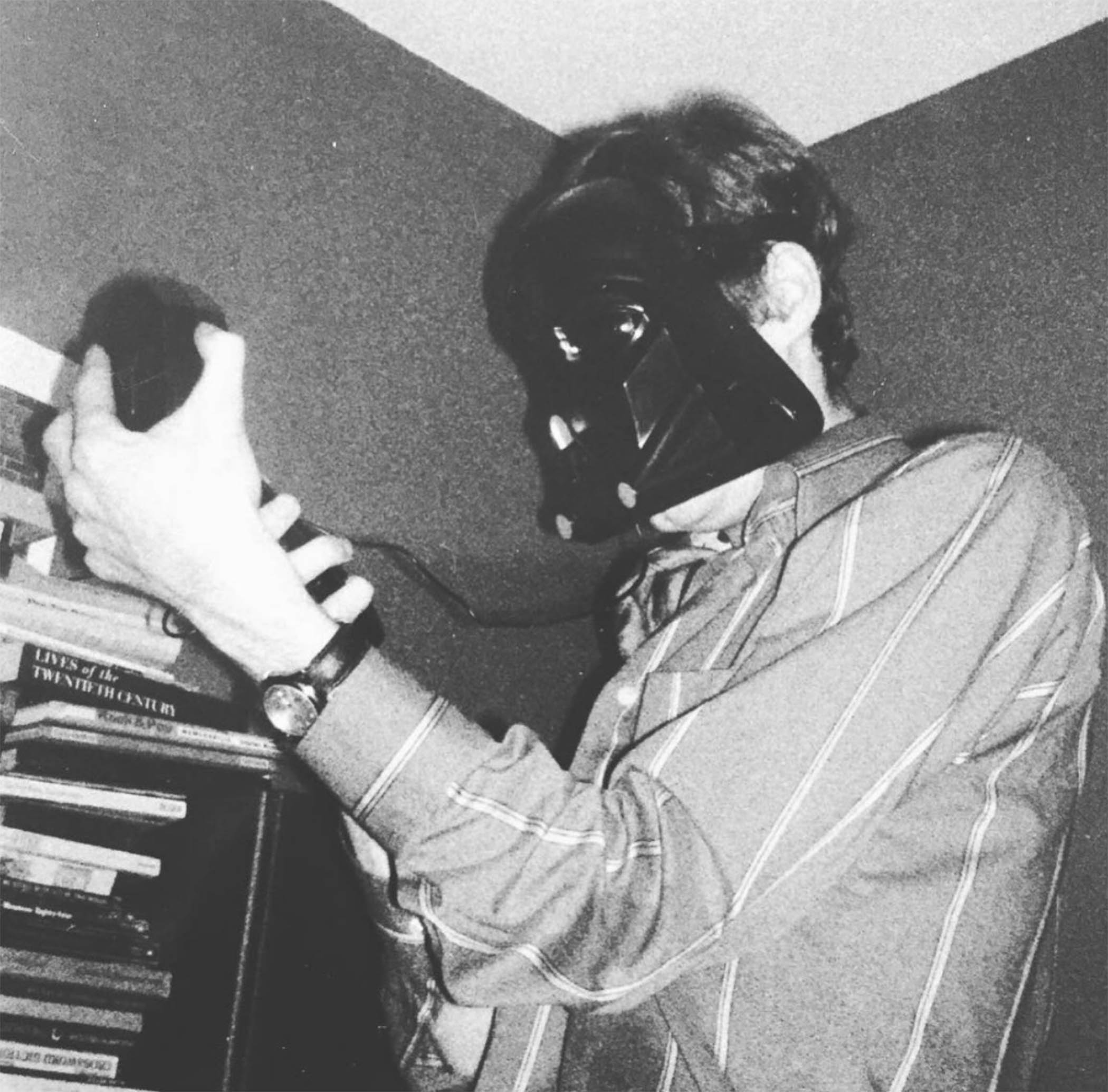
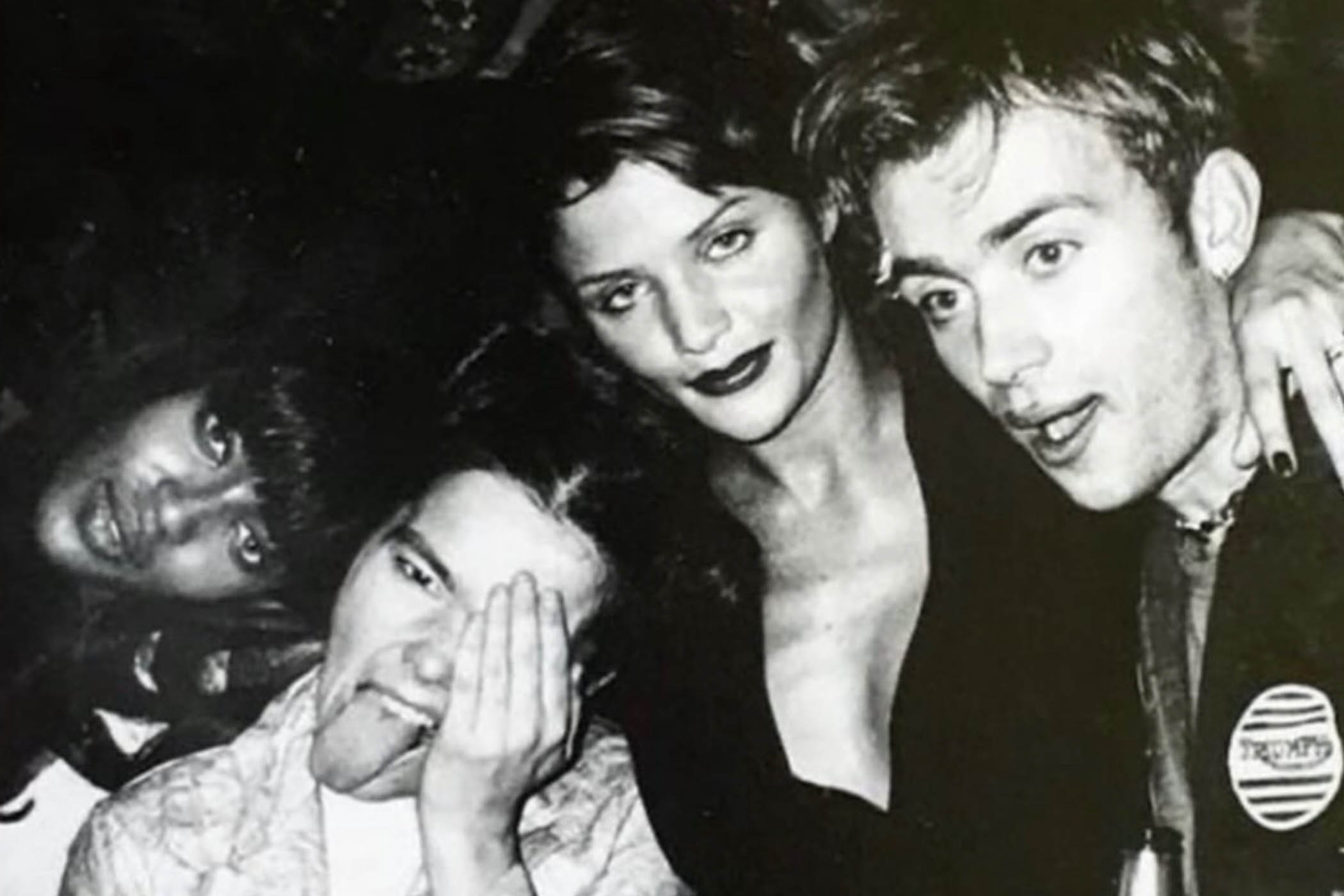
Jarvis Cocker in a Darth Vadar mask at a New Year’s Eve party. Top picture: Naomi Campbell, Bjork, Helena Christensen and Damon Albarn at a Massive Attack gig in London, 1994
Last month, a random, slightly faded memory surfaced: an image of a huge, four-storey pleasure palace in the West End, where you could illegally buy and smoke cannabis. There was a bar, pool tables, a dancefloor. Often hundreds of people crammed inside, just yards from the hustle and bustle of London’s Theatreland.
I found an image of the place on Google Streetview and posted it to my account.
“Tell me your stories about this building,” I wrote. “I’ll go first.”
I wasn’t expecting much of a reaction – a few likes maybe. But the post was viewed hundreds of thousands of times. My follower count doubled. And people started commenting:
“It was like a youth club… but dodgy.”
“The person that handed you the weed wore surgical gloves.”
“My colleagues went there on lunch breaks.”
“I would score before work.”
“No one believed it existed when we told them.”
“Are you writing this from prison?”
Most of the comments included some version of the sentiment “I miss that London” and were faintly odoured with a happy 90s yearning that over the past decade or so has affected so many people across the country. One or two followers reminded me of the venue’s name: The Backbeat Club. And then other details started to drift back.
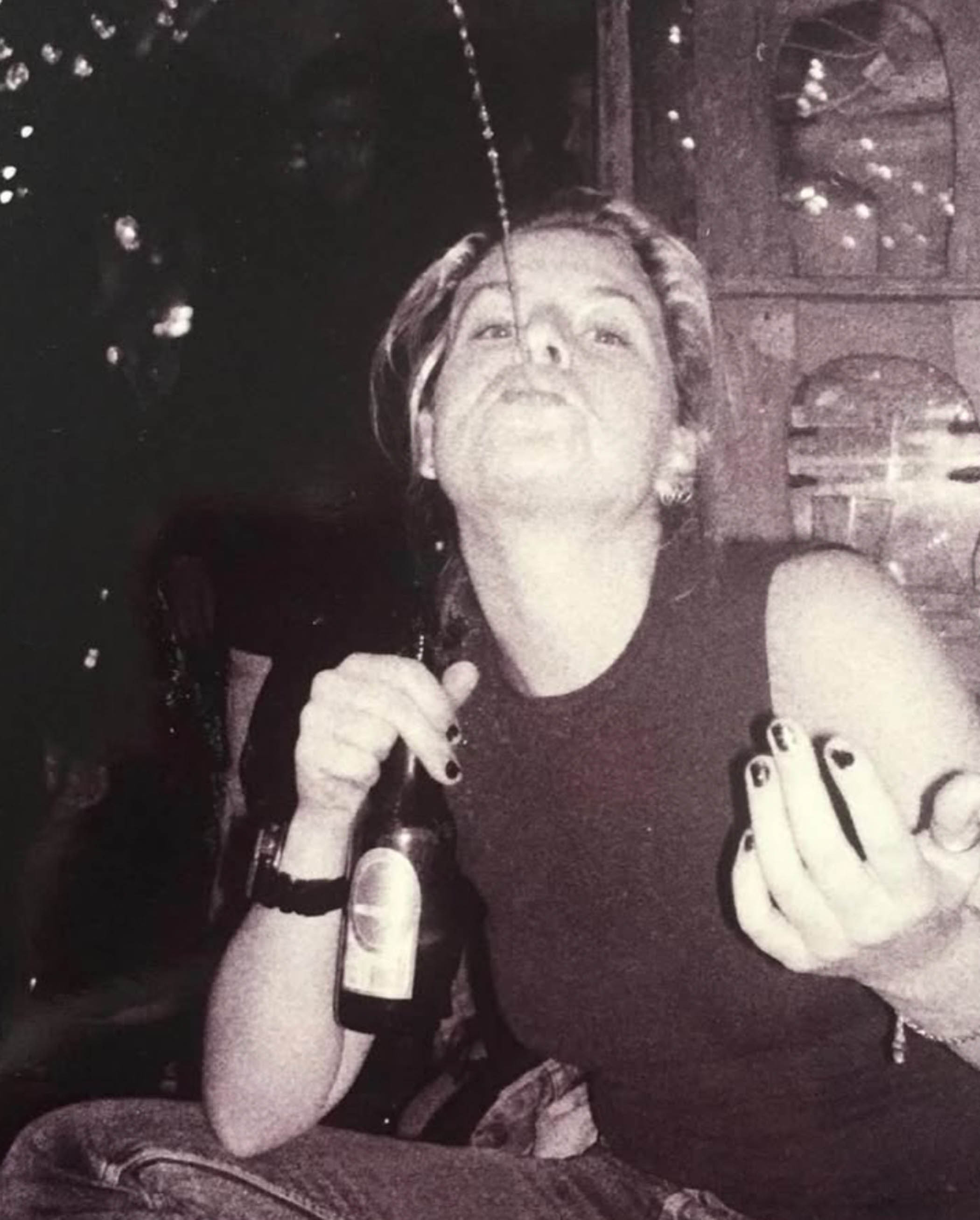
Talent agent Tanya Paice at a party in 1995
This story starts in 1996, shortly after my 24th birthday. I’d recently launched my own production company and, meetings aside, I could do whatever I wanted, whenever I wanted. When I wasn’t working, or after a long night of clubbing, or just while I was sitting at home, I liked to smoke weed. I used to score off this chatty guy on Old Compton Street who I knew to be loosely affiliated with an illegal Soho drinking den that my friends occasionally frequented. His weed was good and cheap, and reaching him at his usual spot involved a pleasant five-minute walk from my flat.
One day, before I could make my standard order, he asked me to follow him.
“I want to show you something,” he said.
He sauntered left onto Charing Cross Road, then darted down Flitcroft Street. We reached a dilapidated four-storey building with a huge, metal gate that looked like it had once been painted red but had since faded to pink.
What we stepped into was the remnants of an abandoned building site: cavernous, empty, dark, damp, with old bags of cement lying around. He pulled a bag of weed from his pocket, took my £10, then handed me a kind of membership card: pale blue, with “Social Club” printed on the front in black lettering, surrounded by a graphic of spinning records. From now on I should come here to score, he told me. So long as I showed the card, whoever was on the door would let me in.
Sure enough, when I returned the following week the gate opened immediately. Inside, two men I’d never seen before were sitting on plastic chairs behind a trestle table, as though they were selling cakes at a jumble sale. The weed was now purchasable on the building’s top floor, in yet another deserted space. To one side was an unpainted plasterboard wall with a hole roughly hacked into it. When I walked towards it, a surgically gloved hand appeared through the hole. I dropped my sweaty £10 note onto the disembodied palm and it vanished, only to reappear seconds later holding a bag of weed. The hole was large enough that I could see through it: three men with their backs to me. Convivial murmuring. Low voices. Between them was a table, on which sat the biggest bale of weed I’d ever seen in my life. I watched for a moment, hypnotised, as they broke off the buds and dropped them into plastic bags.
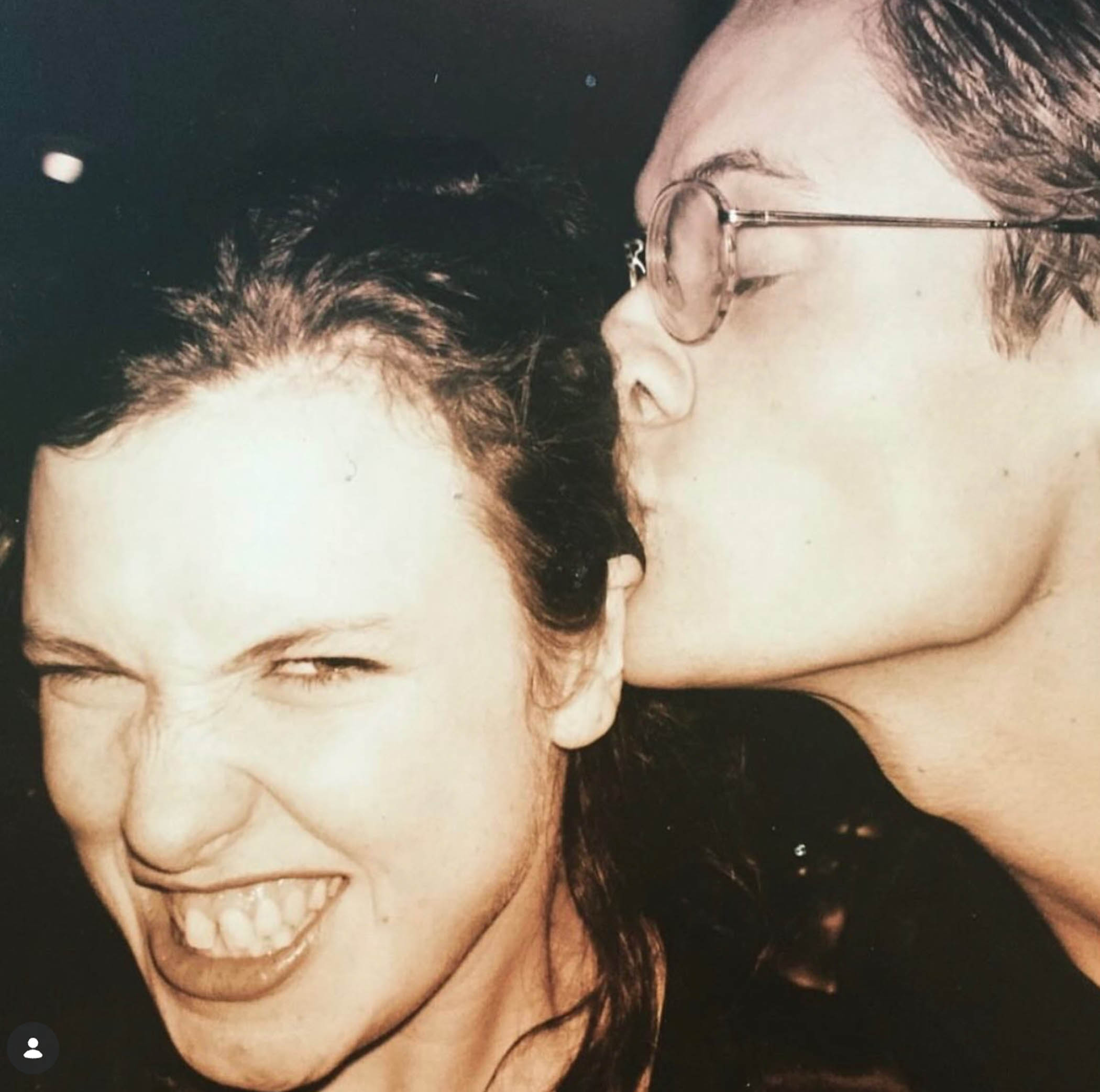
Katie Grand with the designer Giles Deacon
Perhaps I should have been shocked. Perhaps I should have run. But I recall none of this fazing me. Soho was dotted with illegal bars back then, all of them legendary in their own ways. This was a London of low rents, of affordable food, of visible vice, of creative chaos, of a raw, anything-goes energy. No franchises. No big chain coffee shops. The city had yet to be cleaned up; the city was great. It was hedonism. It was “breaking the rules”.
It would have been weirder if there hadn’t been a weed emporium in our neighbourhood…
Still, I couldn’t wait to tell my friends, and as soon as I left the building I started making calls. In the pub, on photo shoots, everywhere I went I rhapsodised about this magical place. Obviously I became a regular. Every week I’d nip in to score, and every time I returned it looked more like a respectable establishment – still illegal, of course, but professionally illegal. Within a month a bar had been constructed on the third floor, with a couple of staff members serving beer. How they managed to get pool tables up the stairs is a mystery, but two suddenly appeared on the second floor. Black lights made the newly neon-painted walls glow. A thumping sound system played reggae, trip-hop and hip-hop.
Soon the building filled with hundreds of punters. People drank, snogged, swayed to the Sneaker Pimps, to Massive Attack, to Missy Elliott. Smoke hung in the air. There was often a queue outside, and another that ran the length of the top staircase. It took five minutes to get from the bottom step to the top, at which point you’d hand your £10 through the hole in the wall. Who were these people? Given what was going on around us, small talk between patrons was minimal. At least half were backpackers from Europe, recognisable by their accents and wide-eyed stares. One told me he’d been stopped while wandering through Camden Market and given a membership card and directions. The other half were people like me: West End professionals and drinkers wanting a smoke and a beer before they jumped on the tube home.
“Even during the day it was busy,” one commenter reminded me.
“Tins of Red Stripe.”
“Late night pool on a Friday.”
“Students. Clubbers. City types in suits.”
“So good I remember nothing.”
In 1997 I moved from Soho to Marylebone. The Backbeat Club wasn’t as convenient any more, so I stopped going. Then in 1998 I moved to New York to work for a fashion photographer, which involved shooting on location all over the world. In December of that year we flew from New York to LA to Paris to Anguilla to Berlin, and on the job in Berlin the hairstylist, who was from London, told me a story about something strange he’d witnessed the previous week that stopped me in my tracks.
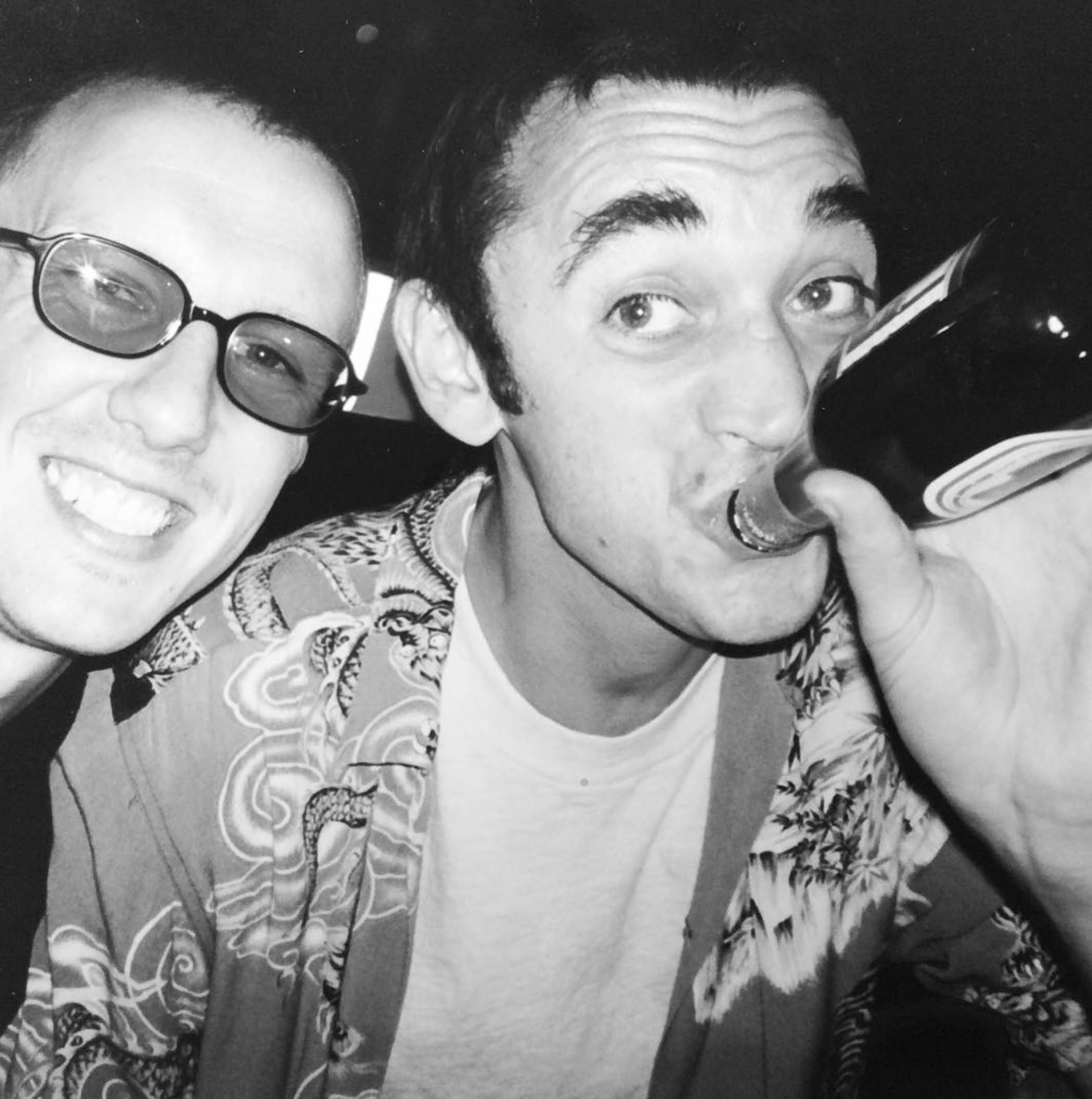
Photographer Jethro Marshall and hair stylist Eugene Souliman
It went like this: the hairstylist was walking through the West End one evening when all hell broke loose. What seemed like hundreds of armed police suddenly cascaded out of at least one articulated lorry parked outside a Soho building. Another unit swooped down from the roof and kicked through the upper-floor windows, SAS-style. Helicopters hovered overhead. It was like a scene from an action movie, he said. He had no idea what was happening until it was all over the news the next day.
My friends and I didn’t know it at the time, but the Backbeat Club was established by a former solicitor who had pivoted to a “highly organised mass market in drugs.” She had hired a personal army of gun-toting foot soldiers who called her “mum”. The venue took £35k on a good night; profits regularly ran at £100k per month. The founder’s ambitions soon outgrew the Flitcroft Street premises, and so she moved the entire operation – the bar, the pool tables, the plasterboard with the hole – to a larger building slightly north, on Denmark Street, in the record label EMI’s old recording studios.
It was reported that the police had been tipped off about the club months earlier by journalists, and were subsequently dumbstruck to learn that approximately 50kg of cannabis was being sold on its premises every week. More than £120,000 had been spent to outfit the building, which included a sizable investment in a sports bar with big-screen TVs that showed live football matches. Internal signage was written in four different languages, to cater for the club’s continental clientele. I’d never seen violence at Flitcroft Street, but apparently things had changed, and the staff, who carried not just guns but also machetes, would sometimes use electric cattle prods to tame unruly customers. The cops couldn’t not act.
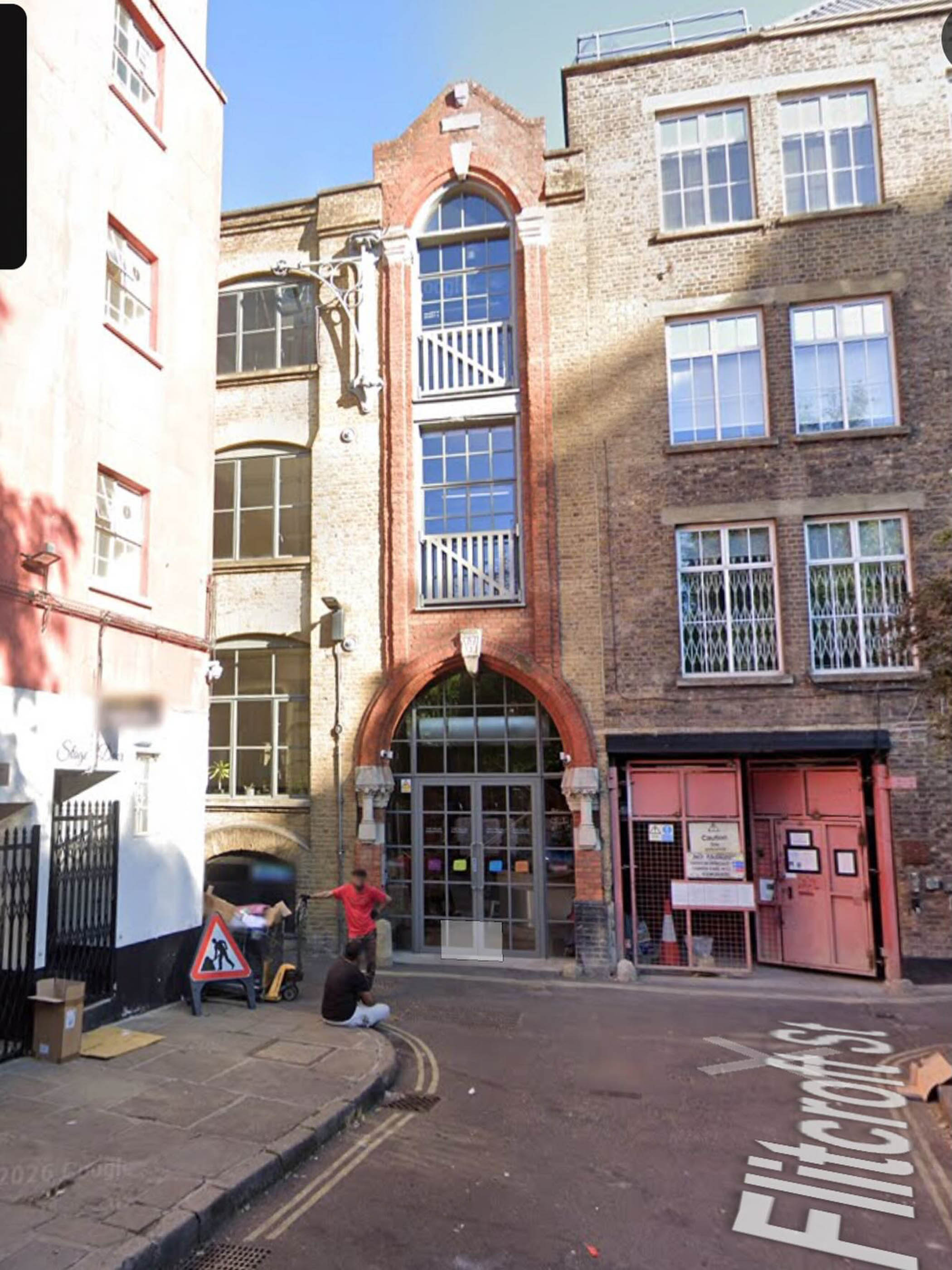
The warehouse building’s exterior, with its metal gates
After five months of surveillance, during which time undercover officers infiltrated the club by becoming members themselves, the police prepared to move in, using the moniker Operation Legrand. They had no idea whether the club’s armed employees would fight back, and they’d learned the building was now a fortress of steel shutters, concrete blocks and CCTV, so they decided to go in large and loud. At the time, it was the biggest armed police raid ever mounted in the UK. A total of 500 officers stormed the building from every angle. Snipers were placed on adjacent rooftops for cover. Club workers and customers were rounded up by officers holding submachine guns. Explosions from stun grenades, which were thrown into the rooms guarded by henchmen, shook the street.
Miraculously, it was all over in three minutes. Not a single shot was fired. The club’s founder, who wasn’t at the venue at the time, was arrested at home shortly afterwards and later sentenced to five years in prison. “A hundred people had been detained,” said a news report. “Samurai swords, machetes and £125,000 in cash were among 2,000 items confiscated” and “more than “90,000 bags of drugs were found.” Operation Legrand marked the inevitable and inevitably dramatic end of a unique establishment. Luckily for us, folklore exists.
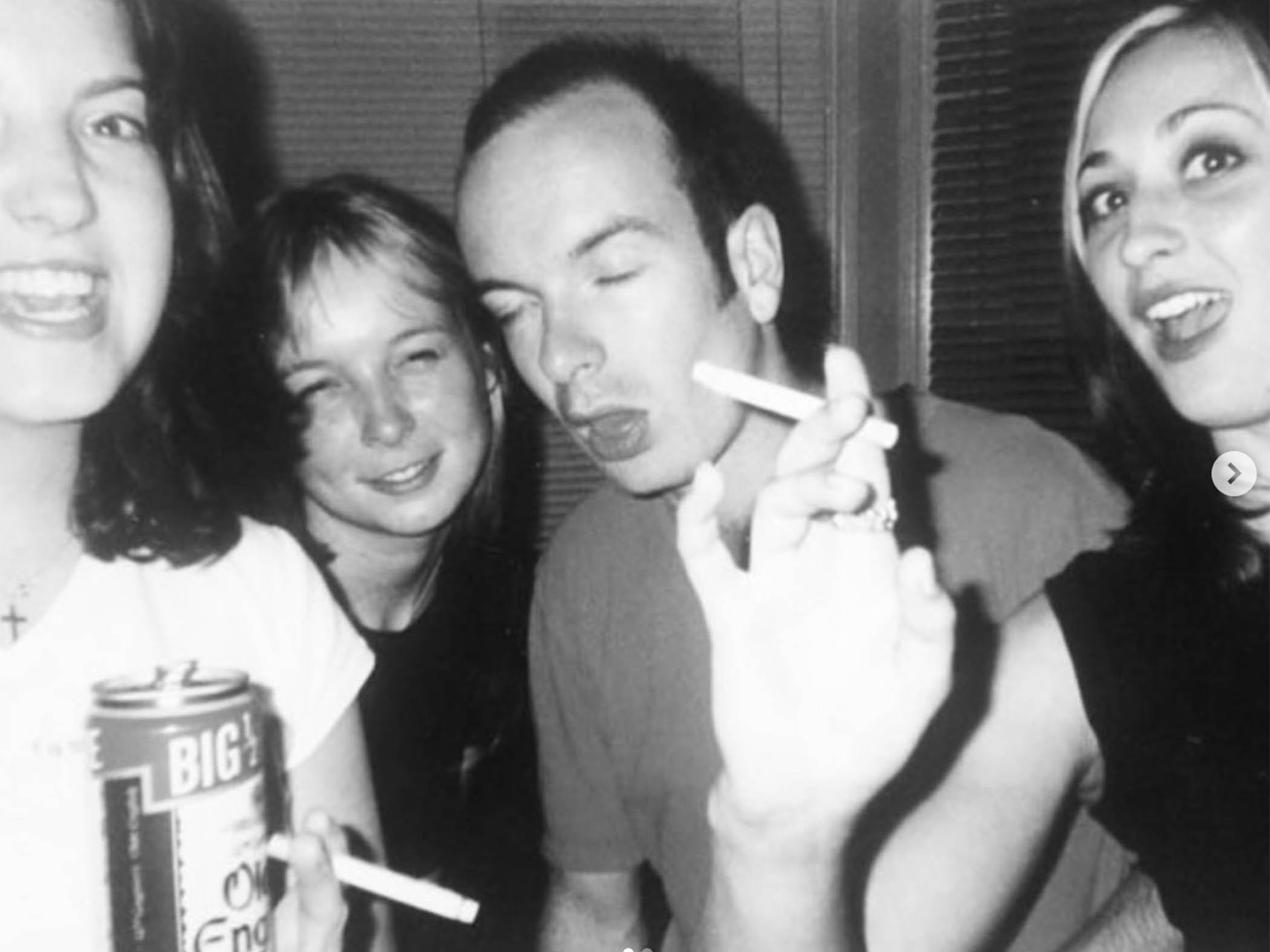
Tomo Delaney (centre) with stylist friends Lucie McCullin and Rachael Zilli
On my Instagram account, the comments kept coming, each slightly exaggerated, in the way that nostalgia so often is.
“I was on my way the night it was raided.”
“Ten lorries filled with police. Roads closed. Weird misty night.”
“I remember the police abseiling through the windows.”
“Armed police swarming everywhere.”
“... And dogs.”
“The final battle.”
“So the story goes…”
I often wonder why this story has resonated. Why people are so keen to look back at those heady days; to think of the 90s as a better time; to recall the fun, the excitement, the chaos, the creativity, the politics, as positively distinct from our terrible now… I don’t have an answer, really. I can’t remember what I was doing five minutes ago – I often don’t even know why I just came into the kitchen. But my memories of London between 1991 and 1998 are almost crystal clear. Specific songs I danced to on the night of the Leftfield album launch party. Now-billionaire makeup artists showing me their first test shoots. Kate Moss jumping off a bus on the Kings Road and pinning me against a wall to demand I return her purse. The Backbeat Club on Flitcroft Street.
Was it a better time?
In any case, I remember it all.
Images: Tomo Delaney; Tanya Paice, Kevin Cummins/Getty
Newsletters
Choose the newsletters you want to receive
View more
For information about how The Observer protects your data, read our Privacy Policy