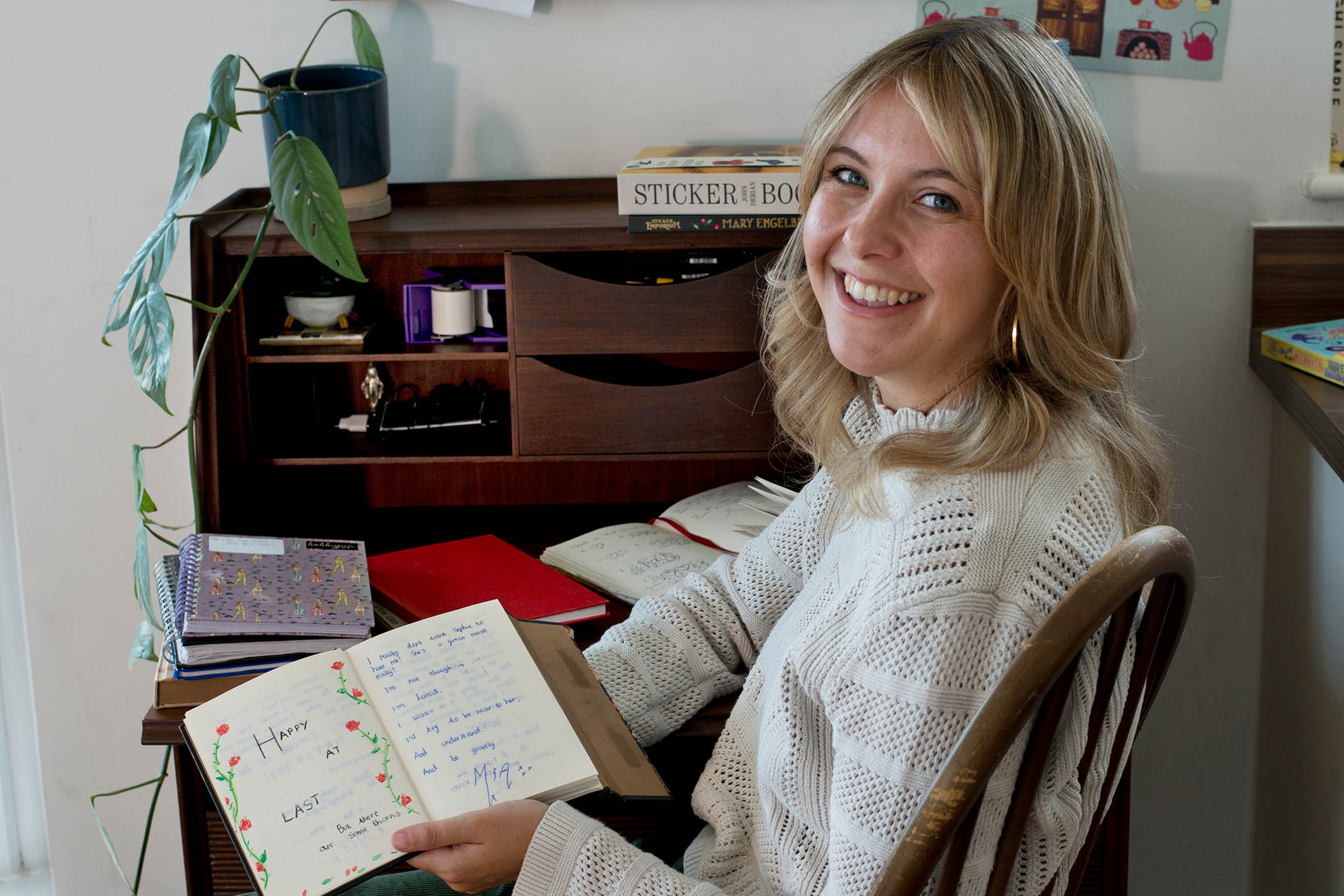

Photographs by Sophia Evans for The Observer
Flipping through the 400-year-old homework, I started to fear the past really was a foreign country. “I will shew you what is comly for a virgin,” wrote Lady Rachel Fane in her exercise book in the 1620s, before going on to endorse “modestie, silence, shamefastness” and “chastitie”. After reading godly page after godly page, I couldn’t have felt further from the 17th-century Kentish teenager if I’d tried. But then I kept pressing the button on the microform reader, turning over the last few digitised pages – and I gasped.
There was a woman. Doodled in pen and ink, with fluttery-looking eyelashes and her hair braided in a coronet. Next to her were sketches of some Celtic knots. I kept clicking. There was a list of instructions entitled: “To make almond butter a cheap way.” Another read: “To make a diet drinke.”
One adage was replaced with another in my head: the more things change, the more they stay the same. I had no idea almond butter was that old; I had feared diets were. One recipe that Fane copied down promised to make you purge.
For the past two years, I have been reading adolescent scribblings such as Fane’s to research my debut children’s book, Lily Tripp: Diary of an Accidental Time Traveller. By looking at the writings of Rachels, Annes and Janes through the ages, I hoped to shed light on what ordinary, daily life was like for girls in the past. While much of what I found was alien and alienating, I was awed every time I found parallels with my own teenage journals. I too wanted to be thinner; I also enjoyed drawing women with hairstyles I could never hope to achieve.
Often we read the diaries of the past for the history they contain. Samuel Pepys documented both the great plague and the Great Fire of London, and Anne Frank’s diary is one of the most profound and enduring records of the Holocaust. And yet, sometimes it is the everyday life in these diaries that enthrals us. Pepys liked it when his wife wore black patches on her face, not unlike our modern star-shaped spot stickers; Frank tried to understand her vagina much like any other teenage girl. The more diaries I studied, the more I realised young people have always been young people.
“I was at Queen Elizabeth’s death 13 years old and two months,” begin the journals of Lady Anne Clifford, a Yorkshire-born peeress. The teen started recording her memories of the momentous 1603, when Elizabeth I died and James I of England took the throne. But my favourite of all her diary entries comes years later, on 6 June 1617: “We went in the coach to Goodwife Sislye’s and ate so much cheese there that it made me very sick.”
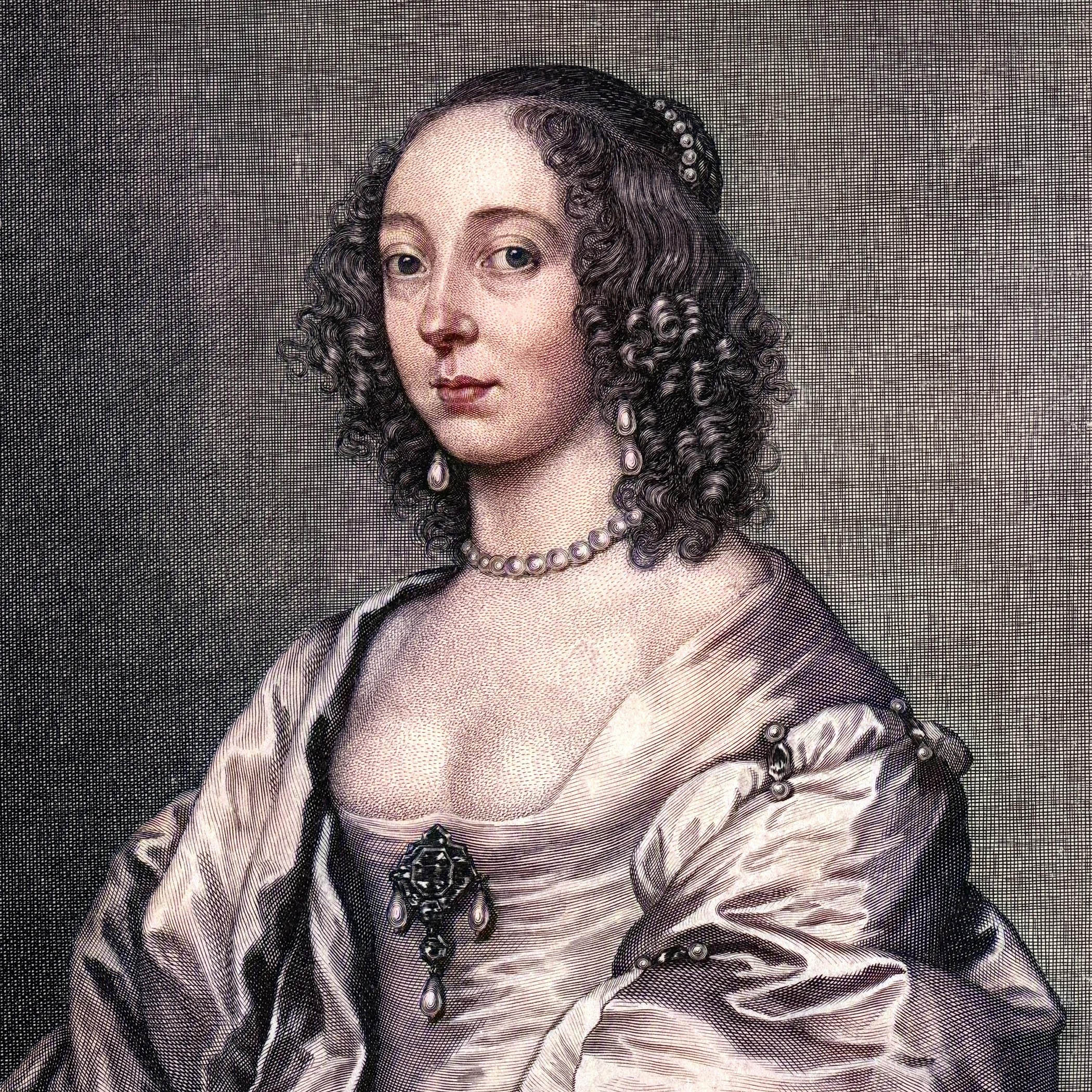
Lady Rachel Fane
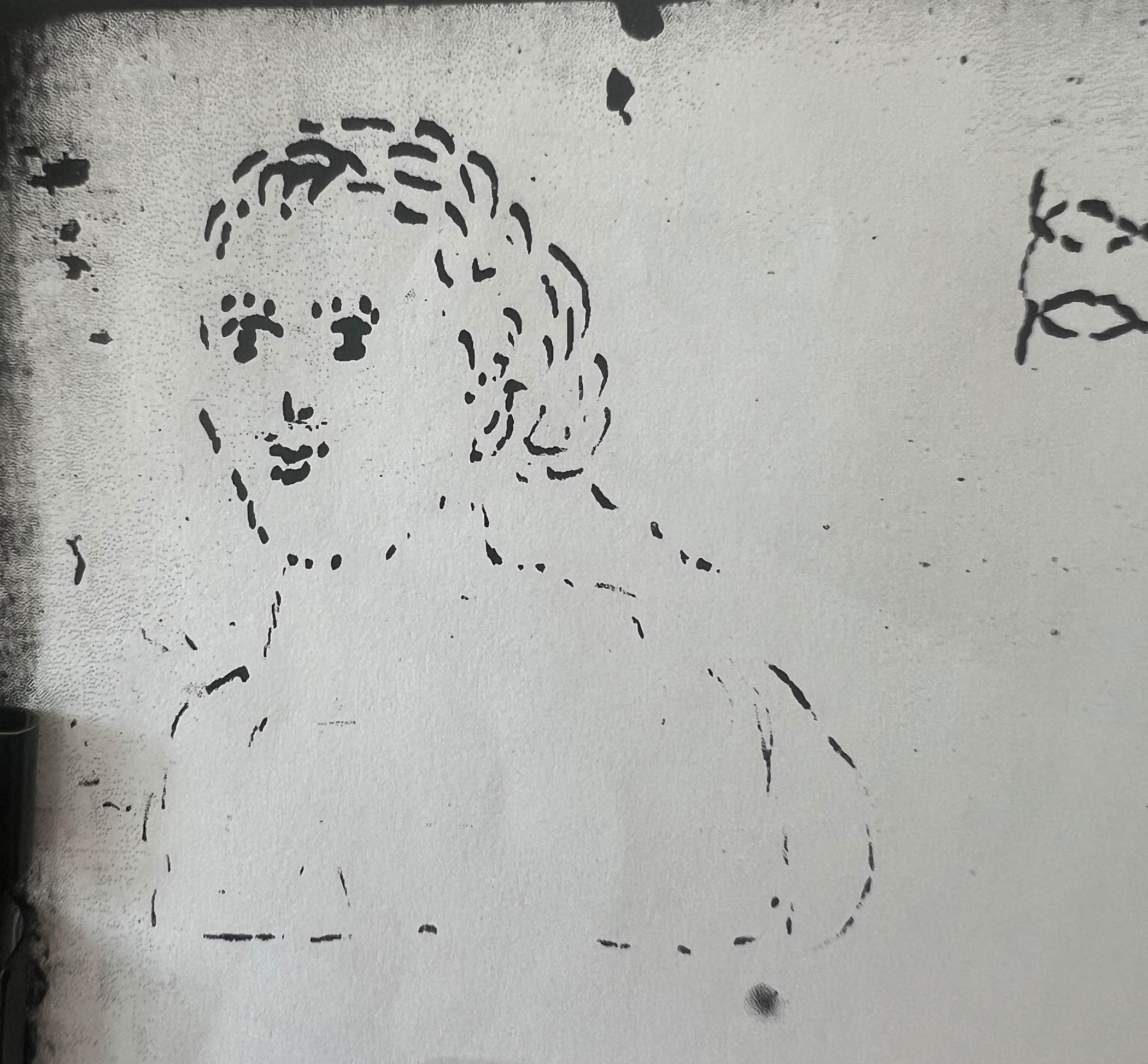
Fane’s sketch of a woman with her hair braided in a coronet
Naturally, this wasn’t the only time Clifford was unwell. When she was 13, she experienced regular bouts of “green sickness” – possibly anaemia, which physicians at the time linked to a lack of menstruation. Clifford, though, blamed herself for eating too many pear pies. Her medical ignorance reminded of a line I wrote in my own diary at her age: “Okay! My periods have been lasting a while and all symptoms point to acute leukaemia!”
I’ll admit, I could relate to Clifford a bit less when she recorded that she and her mother had killed three horses by working them too hard in the heat. And yet, when her mum later told off 13-year-old Clifford for going riding with one Mr Menerell, the past became oddly familiar yet again.
“My mother in her anger commanded that I should lie in a chamber alone,” Clifford wrote, following it up with some age-old histrionics: “which I could not endure.” Thankfully, Clifford’s cousin Frances sneaked the key to her bedroom and lay with her. “I loved her so very well.”
Newsletters
Choose the newsletters you want to receive
View more
For information about how The Observer protects your data, read our Privacy Policy
(If I’m being honest, things rapidly became less relatable again when Menerell died of the plague the very next day.)
Clifford’s portrait of feminine friendship reminded me of another diary entry, written about 300 years later. The sociologist Julia Brannen discovered the 1920s diaries of her aunt Jo after she died and shared them in an academic paper in 2024.
Jo was a middle-class schoolgirl living in north London. The language in her diary is vastly different from Clifford’s – “the fire dog played with fire”, is how Clifford described a meteor shower, whereas Jo was partial to a “spiffing” and a “ripping”, not to mention a “top-hole”. But a diary entry about a dance on 27 January 1928 ached with the complicated intimacy of female friendship.
An 18-year-old Jo was dancing with her friend, “J”, when another friend, “L”, yelled out: “Tell Jo I hate her.” Instantly, I was transported to the scene: the jealousy, the hurt, the rivalry and the confusion. “Afterwards however,” Jo writes, L came and found her alone in the cloakroom. L popped a peppermint in Jo’s mouth and gave her a kiss. With apparent pride, Jo goes on to write that L, “asked me to go and dress in the Prefects’ cloakroom with her – a privilege which I duly appreciated”. The ambiguous blend of the sapphic and the schoolgirlish is a striking reminder of what it means to be young, excited and confused.
“Ha ha right whatever,” is what my best friend replied when I was 14 and texted to tell her my crush Dan had just kissed me on the cheek. “He would never do that.” I called her a bitch and she didn’t even give me a peppermint.
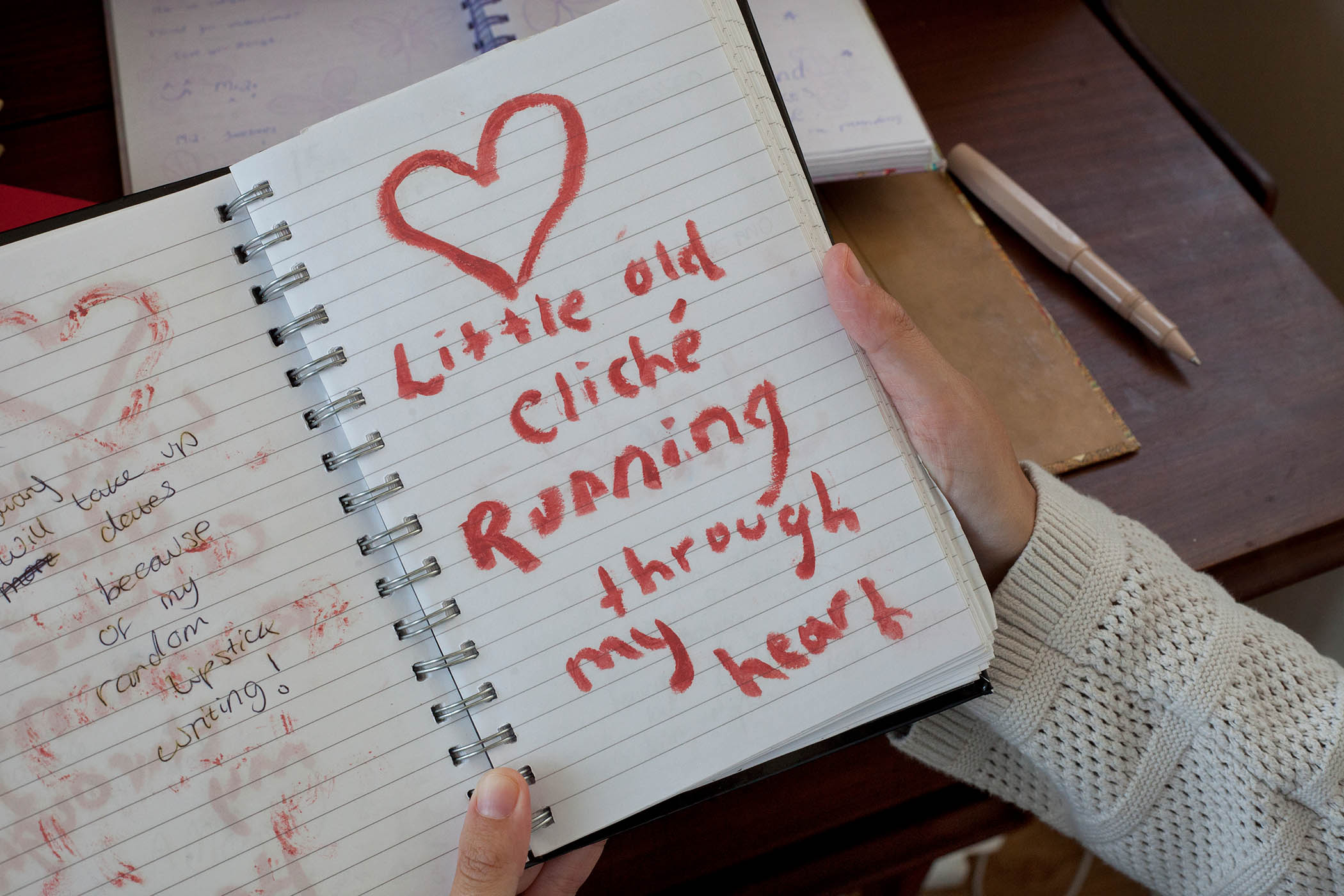
An entry in Amelia Tait’s teenage diary
Mostly, though, my diaries don’t discuss friendship; the nine notebooks I wrote from the ages of 13 to 18 are filled to the brim with my crushes. In this regard, I have much in common with Alice Catherine Miles, a Victorian debutante, whose diaries span from 1868 to 1870. When she recounts being introduced to an attractive man, she writes: “I believe if we had both followed our natural instinct, we would have shaken hands on the spot.” But, of course: “Such a breach of decorum was not to be dreamt of.”
Miles’s observations were so witty and so astoundingly neat that I had to check, halfway through reading, that I wasn’t flicking through a work of fiction. At one point she wrote: “I consider it every girl’s duty to marry £80,000 a year,” which was so deliberately osten–(and Austen–)tatious that I realised many of us play a part even in our own diaries. Though she doesn’t mention it, it’s possible that Miles had read Jane Austen and was imitating some of her characters – or maybe I’m just projecting. I adored The Princess Diaries books growing up and, at times, wrote my real teen diary as though I was an adult author crafting a kooky character.
“Scared about Sports Day tomorrow — mixed relay. Jeez, they should rename it embarrassing day!” I wrote. There are lists (“Reasons why Dan and I are like Ross and Rachel” — weirdly, I was Ross) and an abundance of dramatic ellipses.
Miles, who was 18 to 20 at the time of writing, often seems so very grown up: she flirts fearlessly with both eligibles and “detrimentals” (attractive men who were unsuitable as husbands because they were either poor or playboys). You would think these juicy entries would make for the most exciting reading, but I preferred it when, out of nowhere, Miles inadvertently revealed that a teenager is still very much a child.
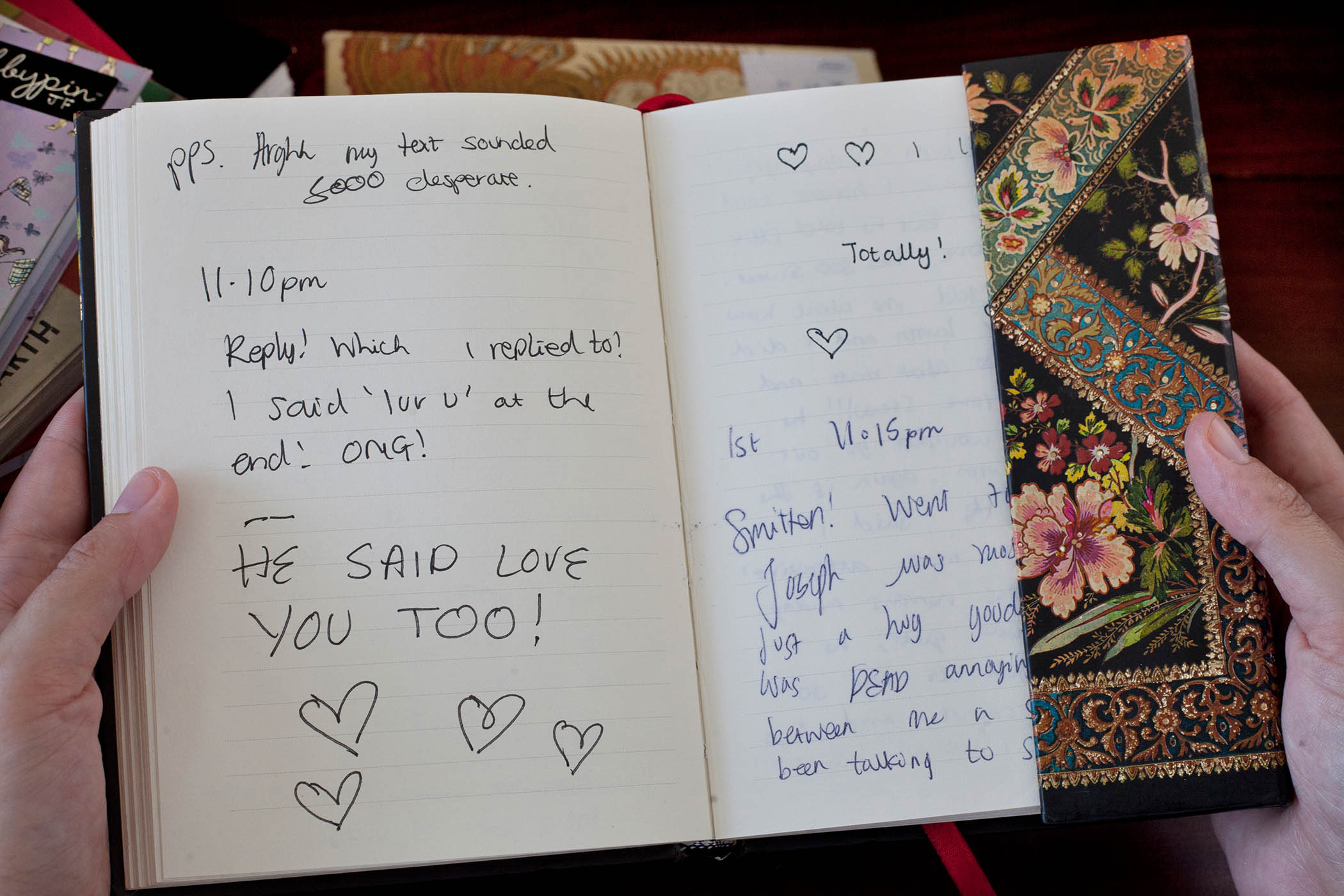
Another page from Tait’s diary
“There is a legend here, almost too absurd to mention,” she wrote at the beginning of 1869: “If you give something to the first beggar of the male sex who applies to you for assistance on New Year’s Day, one of his names will bear the same initial as the husband Fate reserves you.” (In her case, the beggar was named Louis Berthold.) It reminded me so viscerally of being a child twiddling the stalk of my apple and reciting the alphabet – the letter the stalk snapped off at would be the initial of my true love.
When 14-year-old, Cumberland-born Mary Browne went to France on holiday in 1821, her complaints were as familiar as modern Tripadvisor reviews. “I was very much disappointed in the pictures; there were such a number that I could hardly distinguish them,” she wrote of the Louvre. And surely many of us can relate to expecting a trip with a “fine climate”, “excellent fruit” and “lively people” and being disappointed by cold weather and bad fruit. Although, come to think of it: “French babies are dull, heavy and stupid,” is perhaps not how we would put things today.
Clifford was strict with herself during Lent in 1616 – she ate nothing at all that contained butter. In the mornings, she took her prayer book to the garden and beseeched God for his mercy. She and Fane undoubtedly have much more in common with each other than I have with either of them but, for a moment, while sitting in front of the microform reader, the centuries between us melted away. On one page of her workbooks, a clearly bored Fane scribbled a swirly letter “s” over and again – four centuries later, we carved the same letter on our secondary school desks. Before I left the archives, I printed out Fane’s doodled woman and now have it Blu-Tacked above my desk. Sometimes, the past is not so foreign after all.
Lily Tripp: Diary of an Accidental Time Traveller by Amelia Tait is published by Starboard (£8.99). Order a copy from The Observer Shop for £8.09, 10% of RRP. Delivery charges may apply.
Additional photographs by Chroma Collection / Alamy, Cumbria Archives