

Related articles:
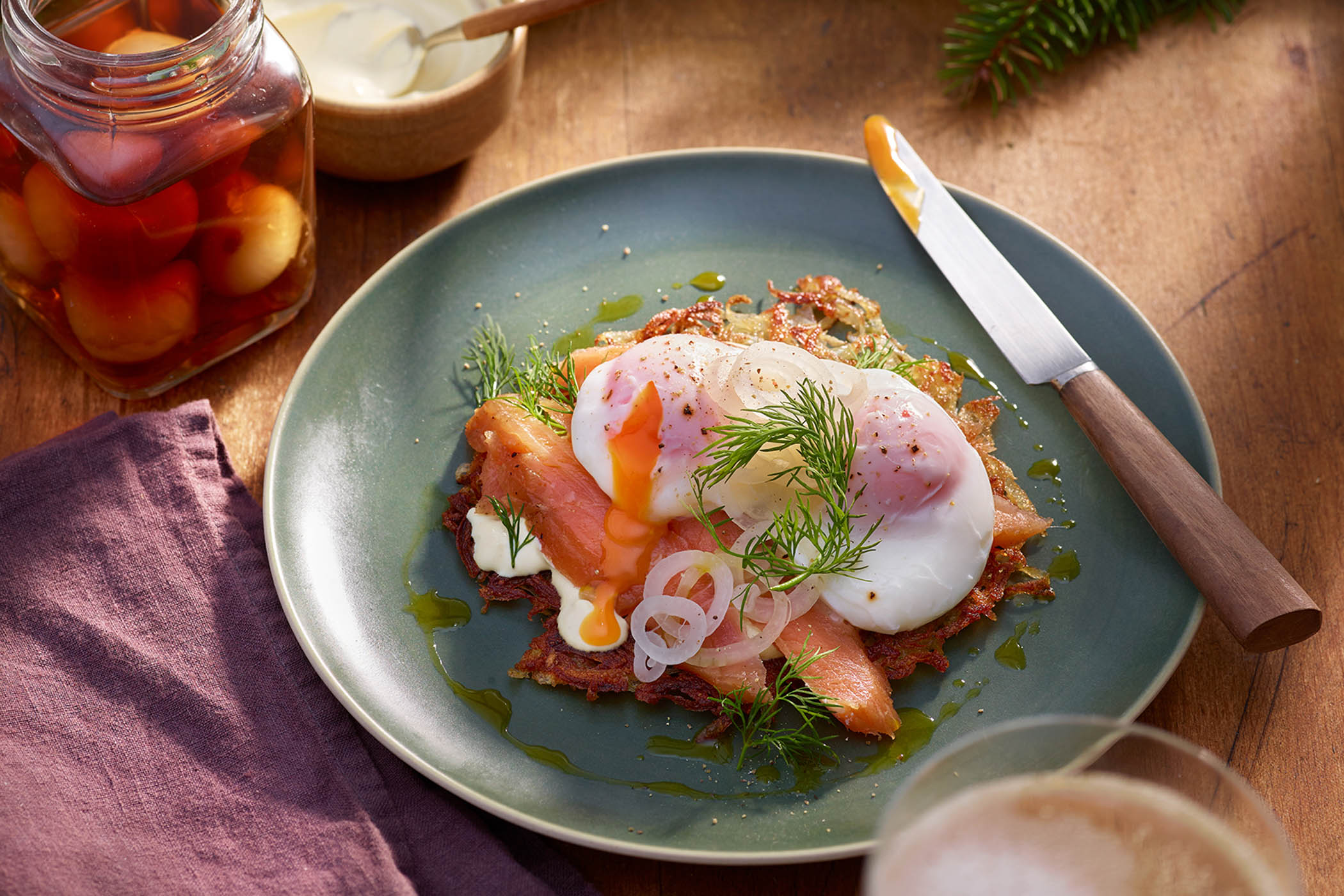
PASTRAMI TROUT, POTATO ROSTI, POACHED EGGS
AND MUSTARD
By Patrick Powell
Pastrami trout, where you give trout the same treatment as you would traditionally give beef, is a great thing to have around at Christmas time. This recipe uses it in a brunch-style dish but it can be used in many ways. A few slices with a potato salad when you feel lazy and want an easy dinner. Diced and served on top of deep-fried rosti to make an amazing canape. You can even bake the trout and serve with some pot-roast cabbage for a more substantial meal.
A little patience is required through the curing process but it is worth it. The trout will keep for a few days in the fridge and also freezes well.
Serves 4
eggs 8 (the fresher the eggs, the better they will poach)
white wine vinegar 100ml
Related articles:
dill and pickled onions to serve
Newsletters
Choose the newsletters you want to receive
View more
For information about how The Observer protects your data, read our Privacy Policy
For the trout pastrami
sea salt flakes 100g
brown sugar 65g
smoked paprika 6g
ground ginger 2g
coriander seeds 12g, toasted and lightly ground
freshly ground black pepper 12g
large trout 1 side, about 800g (skin on)
For the potato rosti
floury potatoes 3 large (desiree or maris piper work well)
salt and black pepper
clarified butter or ghee 100g
sunflower or vegetable oil 50ml
For the mustard creme fraiche
creme fraiche 200g
dijon mustard 50g
For the trout pastrami, mix all the dry ingredients. Generously sprinkle all over the flesh side of the trout on a tray. Gently cover with clingfilm. Leave in the fridge for 36 hours to cure.
Once cured, scrape off the spices and salt. Give a gentle wash under the tap and pat dry with a clean towel (little bits of spices left on the trout are absolutely fine). Place back in the fridge on a wire rack for another 12 hours before serving.
For the potato rosti, grate the potatoes coarsely on to a clean, thin tea towel. Wrap the towel around the grated potatoes and squeeze as hard as you can to remove as much water as possible. Place the potatoes in a bowl and break up. Season with salt and pepper.
Heat a large frying pan to a medium heat and add the clarified butter and oil. Divide the potatoes into 4-6 equal-sized balls, not too tightly clumped. Shape into cakes about 1cm high and 10-12cm wide.
Fry the rostis one at a time (or two if you have a larger pan) for 4-5 minutes on each side until crisp and golden brown. You need to be very careful with the heat of the pan during this process as it can get too hot and burn the potato. Once the potatoes go in, keep the pan heat medium-low.
Remove from the pan when cooked through and drain carefully on a paper towel before transferring to a wire rack. The rostis can be made a couple of hours in advance but no longer.
For the creme fraiche, mix both ingredients in a bowl and store in the fridge until ready to use.
To poach the eggs, fill a large saucepan with water and bring to a gentle rolling boil. Add the vinegar.
Crack the eggs into small bowls. Carefully slide the eggs into the water, allowing the white to coat the yolk. Make sure the water is not boiling aggressively; cook no more than 4 eggs at a time.
Cook for 3-4 minutes and then remove the eggs with a slotted spoon and place in a bowl of ice water to stop the cooking process. Once completely chilled, remove from the ice water and trim off any surplus bits of egg white to get a nice shape. The eggs can be cooked a few hours in advance and reheated when needed. (If using straight away, do not chill in ice water.)
To assemble, carefully remove the skin from the trout with a sharp knife and cut into 16 slices, each about 5mm thick. Place the rostis in a hot oven for 2 minutes to reheat. Drop the eggs into a pot of hot water to reheat. Spread some mustard creme fraiche on each rosti. Top with 4 slices of trout and 2 poached eggs. Season with salt and pepper and, if you like, garnish with sprigs of dill and thin slices of pickled onions.
Patrick Powell is executive chef of One Club Row, London E1
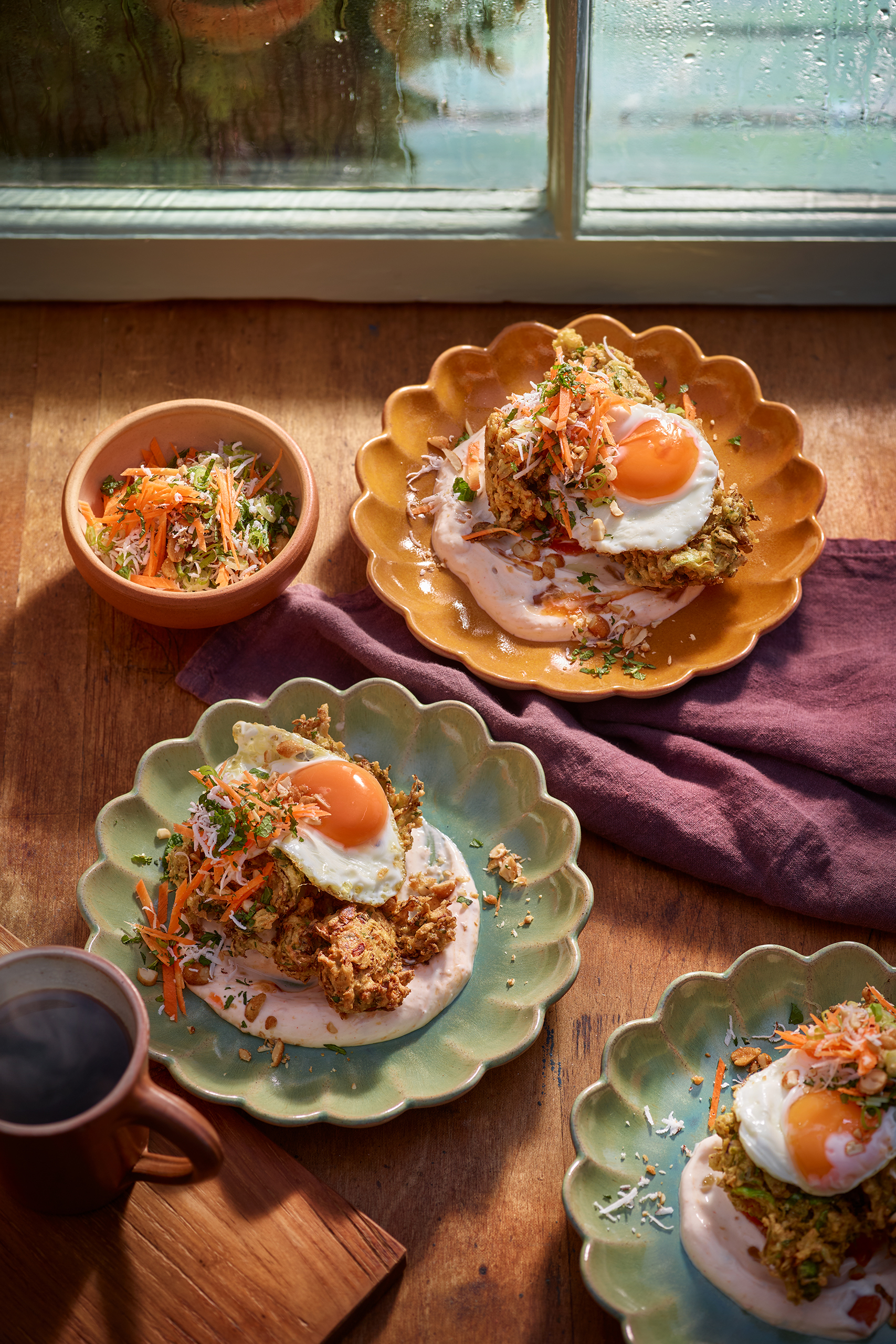
BRUSSELS SPROUT PAKORAS
By Jess Murphy
Move over turkey and ham sandwich, this is your new leftover go-to. This recipe is for everyone but especially you, the cook. It gives you time to chill in the kitchen, put on some tunes and escape the in-laws (self care: you’re welcome, guys).The recipe makes enough for four hearty eaters but double it if you have a crowd. You will need to deep fry the pakoras, so preheat your oven to keep them warm, and make them in batches, before adorning with a beautiful fried egg, hot mango pickle yoghurt and a fresh peanut and carrot chutney.
The recipe makes enough for fourhearty eaters but double it if you have a crowd. You will need to deep fry the pakoras, so preheat your oven to keep them warm, and make them in batches, before adorning with a fried egg, hot mango pickle yoghurt and a fresh peanut and carrot chutney.
Serves 4
vegetable oil for frying
brussels sprouts 200g, thinly sliced
red onion 1, finely chopped
fresh ginger 1 tsp, minced
garlic 1 tsp, minced
green chilli 1, finely chopped
fresh coriander 20g, leaves picked and roughly chopped
gram flour 200g
rice flour 25g
baking powder 1 tsp
Kashmiri chilli powder 1 tsp
ground cumin 1 tsp
garam masala 1 tsp
sea salt 1 tsp, to taste
salted butter 20g
eggs 4 large
sea salt and white pepper
For the peanut and carrot chutney
carrot 100g, grated
roasted peanuts 100g, roughly chopped
fresh coconut 30g, grated
spring onions 30g, chopped
fresh mint leaves 1 handful, roughly chopped
sea salt and white pepper to taste
For the yoghurt dressing
thick Greek yoghurt 100g
hot mango chutney 3 tsp
Preheat your oven to 170C fan/gas mark 5 and set your deep fryer to the same temperature.
In a bowl, season your brussels sprouts with a tiny sprinkle of sea salt and set aside for about 20 minutes. Add the onion, ginger, garlic, green chilli and coriander.
In a separate bowl, mix all the dry ingredients, then slowly add the brussels sprout mix. If it looks a little dry, add a wee bit of water until you have a thick fritter consistency.
Scoop out tablespoon-sized blobs and carefully deep fry until golden brown. Place on greaseproof paper and keep hot in the oven.
To make your chutney, stir all the ingredients together in a small bowl and set aside.
Make your yoghurt dressing by combining the ingredients.
For your eggs, melt the butter in a large frying pan, add the eggs and fry sunny-side up. Season with sea salt and white pepper.
These pakoras are great served on a massive platter. Spoon the hot mango yoghurt all over the platter, place the pakoras on it, top with fried eggs and then sprinkle the fresh chutney generously over. Have everyone help themselves before getting back to Die Hard and putting your feet up.
Jess Murphy is chef-patron of Kai Restaurant, Galway
BOSTOCKS
By Phil Khoury
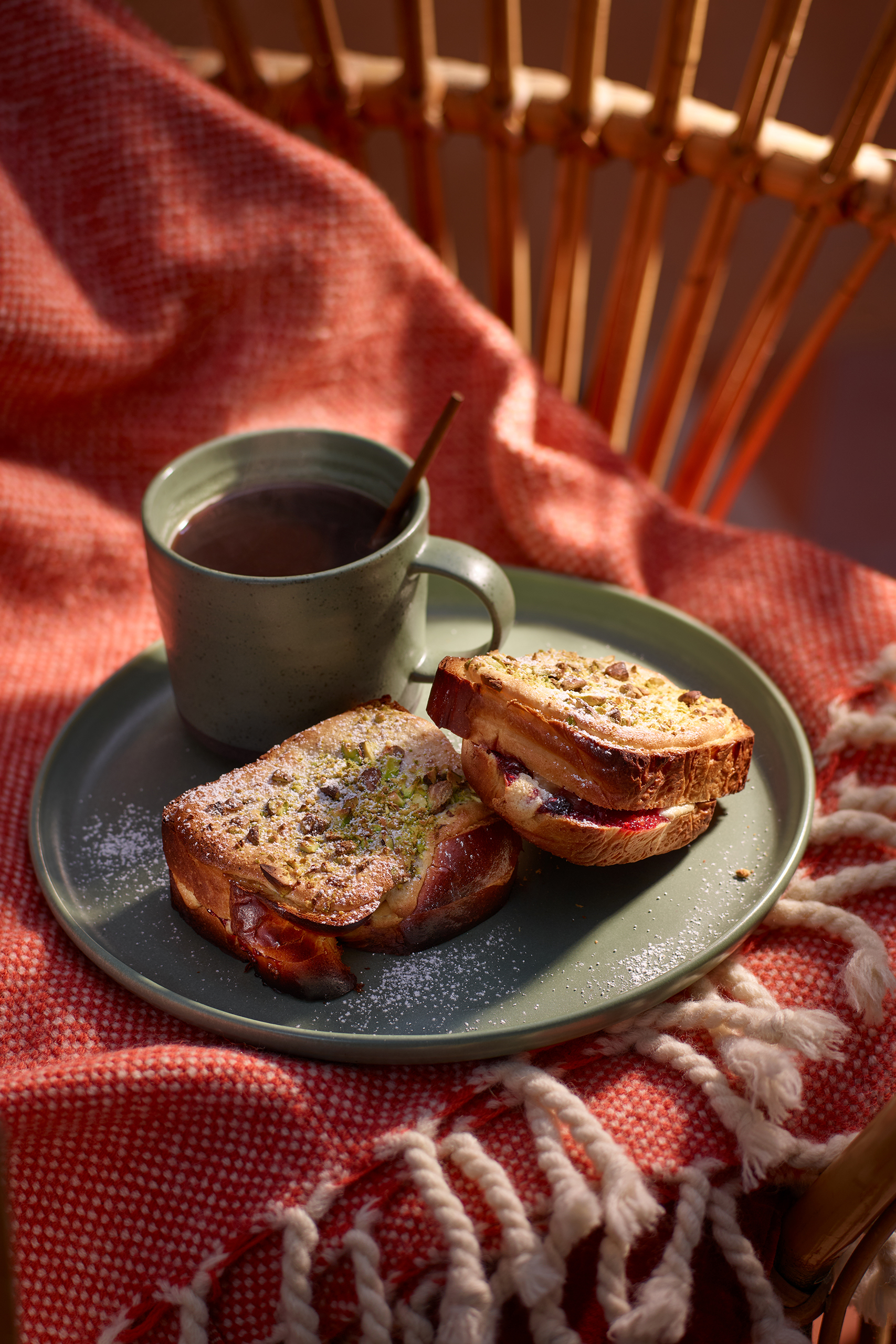
The bostock is a slice of brioche revived with a soak in syrup, spread with frangipane and baked until golden. This festive version takes the same idea but makes use of leftover buns, slices or rolls of soft brioche, dipped in a fragrant vanilla-rum syrup, spread with jam or leftover mincemeat and topped with an easy nut cream. Scatter over more nuts and bake until golden. Think of it as the effortless cousin of an almond croissant – I almost prefer these. Serve warm with custard, if you like.
Makes 4-6
brioche 4-6 rolls or slices (preferably a day old)
jam or leftover mincemeat 2-3 tbsp
chopped pistachios (or flaked almonds) 50g
icing sugar for dusting
For the vanilla and rum syrup
hot water 100ml
caster sugar 50g
vanilla bean paste ½ tsp
dark rum 10ml (optional)
For the frangipane
raw almonds 100g
caster sugar 65g
cornflour 15g
plant-based milk 50ml
extra virgin olive oil 1½ tsp
bitter almond extract ⅛ tsp (optional)
To make the syrup, combine all the ingredients in a bowl big enough to dip a slice or bun. Stir until the sugar dissolves.
To make the frangipane, pulse the nuts, sugar and cornflour in a high-powered blender until fine. Add the milk, oil and almond extract (if using), and blend to a thick, creamy consistency. Set aside.
Preheat the oven to 160C fan/gas mark 4 and line a baking tray with parchment.
Slice the brioche in half horizontally, if using rolls. Dip each cut or flat side briefly into the syrup. Spread a thin layer of jam or fruit mince on the base, then spoon over a generous tablespoon of frangipane.
Replace the tops, if using rolls, spread another spoonful of frangipane on top and press into the nuts. Arrange on the tray and bake for 10-15 minutes, until puffed and golden.
Cool slightly, dust with icing sugar, and serve warm. Store in an airtight container for up to 2 days.
Philip Khoury is a pastry chef. His latest book is Beyond Baking (Quadrille, £30)
FENG-SPICED MEAT
By Mandy Yin
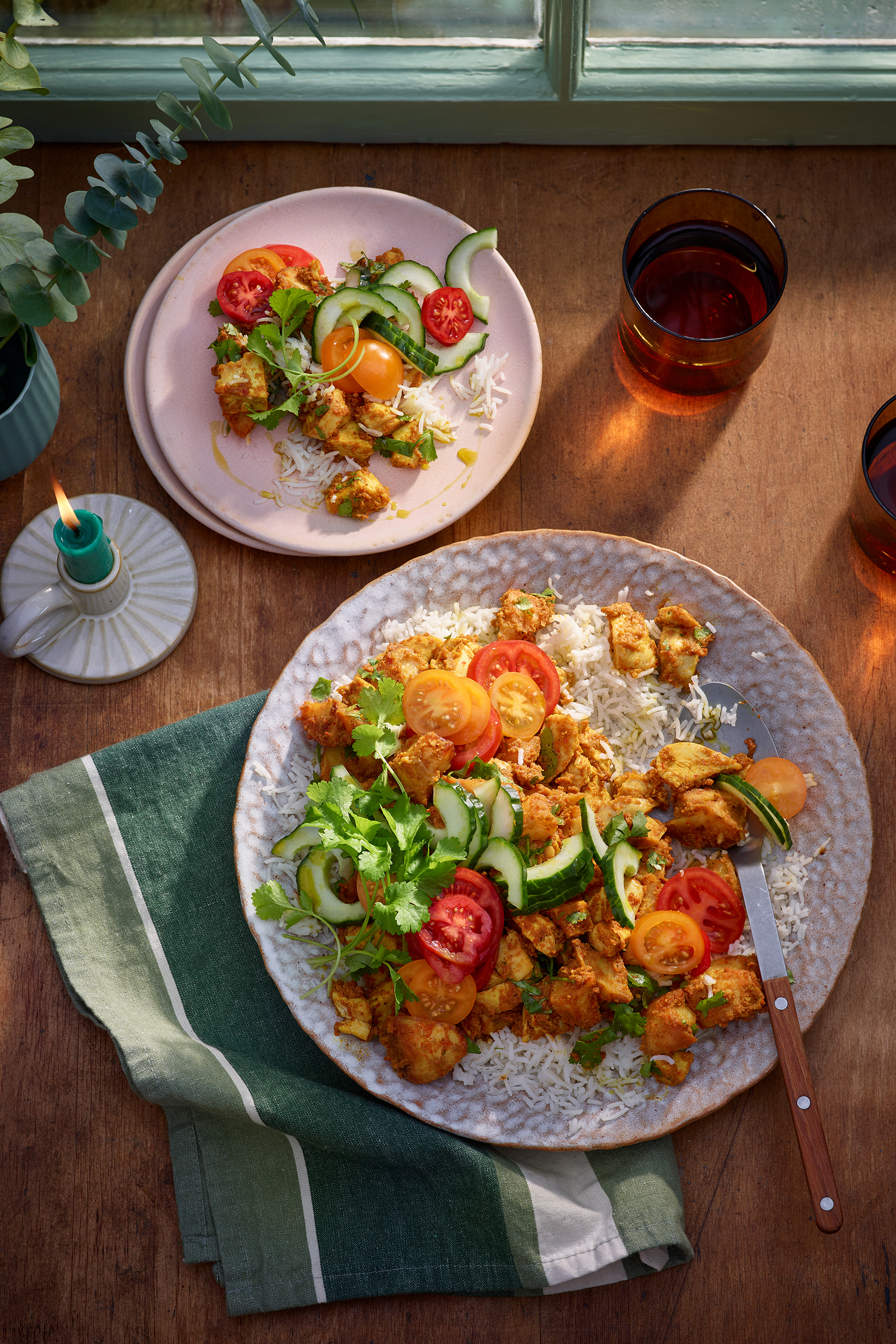
This is a wonderful dish inspired by the Kristang Eurasians of Malacca. The Kristang are of Portuguese and Malay descent, with a large Christian majority. The original idea behind the feng preparation was to repurpose Christmas leftovers and it works with any roast meat. I’ve used leftover turkey breast here as well as leftover roast potatoes.
Think of this as a dry curried hash with a decent chilli kick to wake up your senses. Eat it with plenty of rice. Sliced cucumber and tomatoes are great with it, too.
Serves 4
vegetable oil 3 tbsp
fine salt 1 tsp
white sugar 2 tsp
white rice vinegar 2 tsp
leftover roast turkey 360g, cut into bite-sized pieces (or any other roast meat)
leftover roast potatoes 320g, cut into bite-sized pieces
fresh coriander 15g, finely chopped stems and all (optional)
rice, cucumber and cherry tomatoes to serve
For the spice paste
dried chilli flakes 10g, soaked in 70ml just-boiled hot water for at least 30 minutes
onion ½ medium, peeled and roughly chopped
garlic 4 cloves
ground turmeric 1 tsp
ground black pepper ⅛ tsp
ground coriander 1½ tbsp
fennel seeds ½ tbsp
ground cumin ½ tbsp
Blitz the spice paste ingredients, including the chilli water, into a fine purée, using a handheld stick blender or a high-speed blender.
In a large saucepan over medium heat, warm up the oil, then stir-fry the spice paste, salt and sugar for 5 minutes.
Add the vinegar and leftover meat and potatoes to the saucepan. Stir to thoroughly combine and cover for 3 minutes to reheat the meat and potatoes.
Add the coriander if using and give it one final stir before serving.
Mandy Yin is the chef-patron of Sambal Shiok, London
ATAYEF WITH TAHINI MOUSSE
By Imad Alarnab
The first time I served atayef with tahini mousse for brunch, I was trying to impress my guests with something distinctly Middle Eastern after the Christmas period. I had spent an afternoon perfecting the little pancakes; as the recipe derives from Syria, it was important to get them right. They are soft, golden and a little thicker than a crepe. When I put them on the table, there was a joyful silence as our guests devoured the atayef with spoonfuls of tahini mousse. It was rewarding to see. This is a delicious alternative dish to have over Christmas – it’s sweet and decadent, and totally Middle Eastern.
Serves 5
For the atayef starter (makes up to 30 pancakes)
plain flour 250g
caster sugar 6g
dry yeast 6g
warm water 480ml
For the rest of the atayef mix
plain flour 250g
fine semolina 170g
salt 2g
caster sugar 15g
bicarbonate of soda 6g
water 390ml
butter for frying
For the tahini mousse
double cream 60ml
icing sugar 10g
full-fat cream cheese 30g
tahini paste 8g
honey and toasted sesame seeds to serve
For the atayef, first make the starter. Place the flour, sugar and yeast in a bowl and whisk. Add the warm water and mix well.
Cover the mix with clingfilm and leave it at room temperature for about 40 minutes or until bubbles form on top.
To make the tahini mousse, place the double cream and icing sugar in a bowl and whisk well until it thickens to the consistency of a chantilly cream.
In a separate bowl, mix the cream cheese with the tahini, then gently fold in the cream until it is nice and smooth. Chill until needed.
Place the ingredients for the rest of the atayef mix with the starter in a bowl and whisk well. Do not pour in all the water at once as you might not need the full amount.
Heat a knob of butter in a non-stick pan. Over a medium heat, ladle in a large spoonful of the mixture for each pancake, cooking them one at a time. You can stuff the pancakes with tahini mousse at this stage, in which case you should cook only one side, so it stays soft. If serving with the mousse on top, cook the pancakes on both sides.
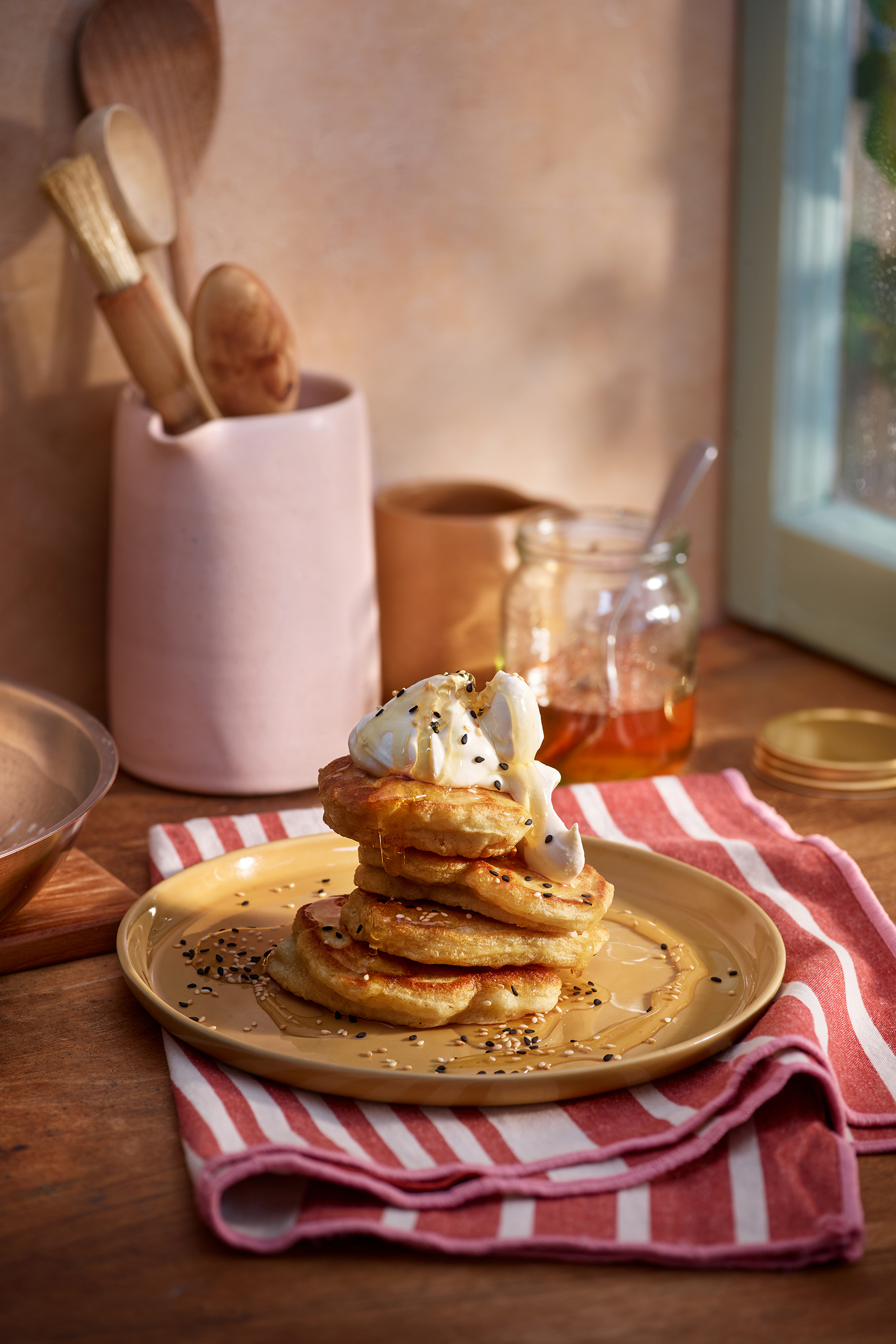
If you have cooked the pancakes on both sides, serve by stacking them with a dollop of tahini mousse on top. If they are stuffed with the mousse, serve them one next to the other.
Serve drizzled with honey and sprinkled with sesame seeds.
Imad Alarnab is the chef-patron at Aram and Imad's Syrian Kitchen in London