
Any of the views looking out from Elena Accornero’s apartment, not far from the Parc Monceau in Paris, could be the closing shot in an old movie. Each window in the master bedroom, for example, offers a direct vantage point on to a blockbuster landmark, meaning you have thoughts like, “Wow, the Sacré-Coeur”, “Blimey, the Eiffel Tower” and “Gosh, the church of Saint-Augustin” over and over.
When not gazing outwards there is still plenty to look at, but you tend to imagine you aren’t in Paris at all but a sun-drenched corner of Italy. This isn’t about sombre floorboards, white walls and “tasteful” furniture, but florid explosions of colour and Mediterranean features. “I wanted to feel welcome,” Accornero told me when I visited. “If I don’t have colour, I don’t feel welcome.” She has lived here, with her husband and two children, since 2023.
The apartment is at the top of a building on a pretty street close to the luxury stores and commercial galleries of the avenue Matignon. Its 2,600sqft of floor space are split over two levels, the upper of which, in the building’s old chambre de bonne (an attic room that would have once been occupied by domestic servants), was acquired following the initial purchase.
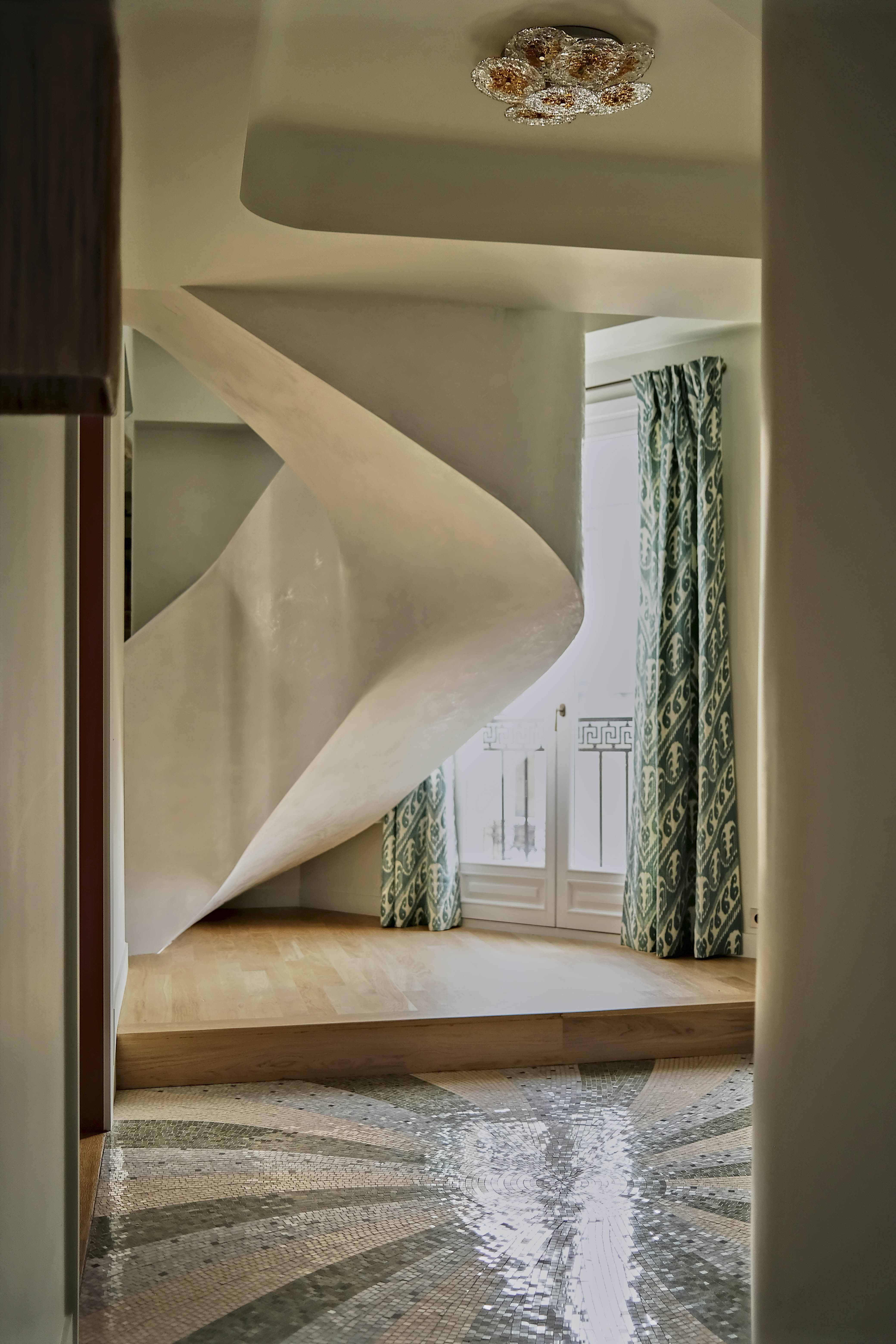
The entrance with its stunning, Italian-style mosaic floor
I was greeted outside by Lucas Madani, of the interior design firm Hauvette & Madani, with whom Accornero worked on reinventing the apartment. He gestured at the domed corner at the top of the building, a flourish that means that certain rooms within have unusual curved walls. This detail also places the building in the post-Haussmannian era, right after Baron Haussmann’s famously comprehensive reinvention of the city in the 19th century.
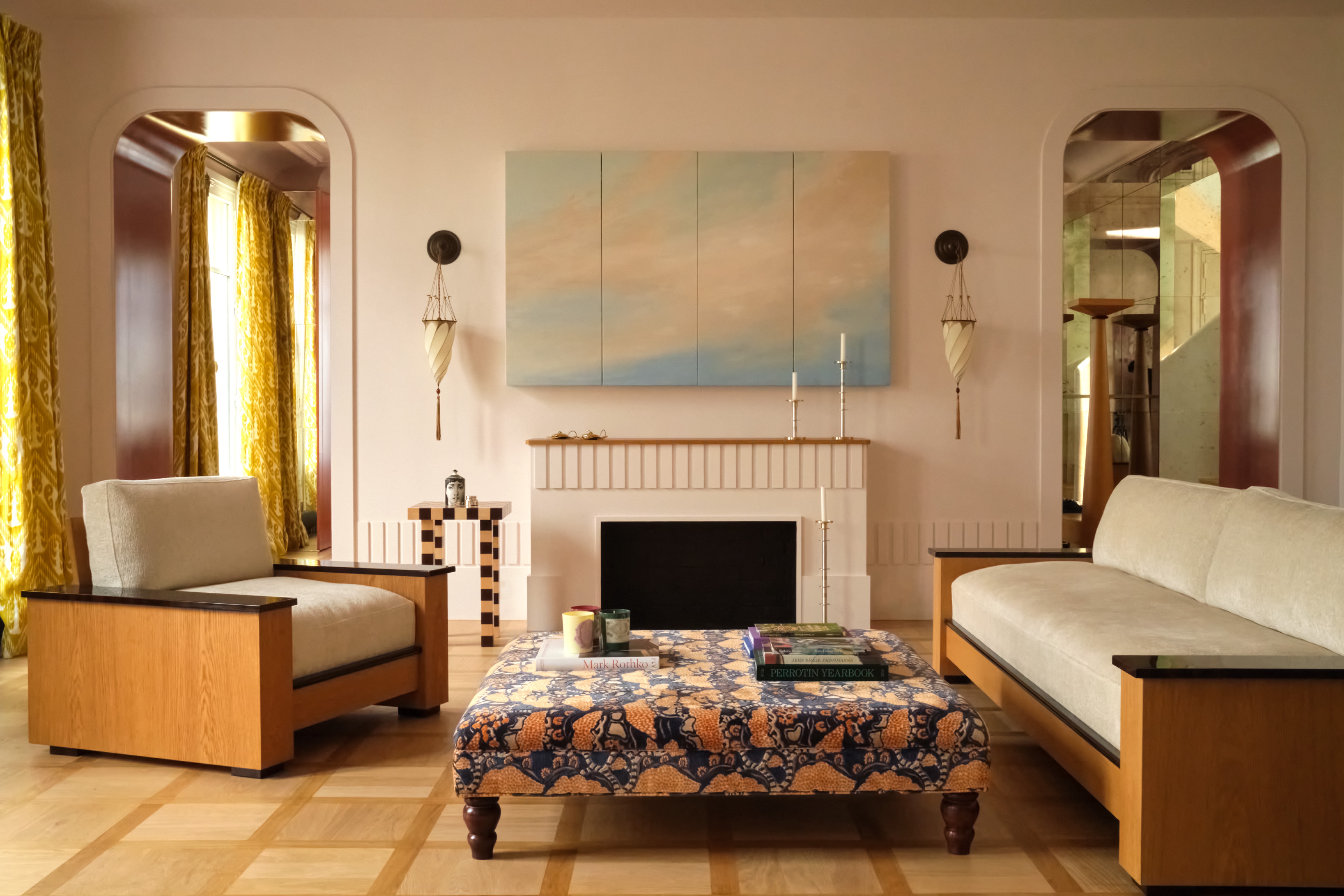
Entering the apartment we were greeted by an Italian-style mosaic floor in green pastel colours, its pattern resembling the rays of the sun. A commission from the mosaic artist Pierre Mesguich, whose tiling then flows into the corridor and kitchen, it was conceived to echo the entrances found in old buildings in Venice. The grand siècle parquet flooring in the dining room and living areas, by contrast, is a very French style, rooted in the Napoleonic era. The success of the apartment, Madani explained, lies in its balance between Parisian and Italian elements. “This belongs to the Paris layer,” he said, pointing to the parquet. “But then we can add some fun, some poetry, some light, some joy.”
Maximalist, eye-catching textiles are 'catnip to a post-Covid world'
Accornero is the chief financial officer of Milanese home textile brand Lisa Corti. Known for ultra-colourful fabrics and summer-centric fashion, the brand, founded in 1963, has experienced rocketing popularity of late. This is in part thanks to how its warm, eye-catching textiles are catnip to a post-Covid world that’s fallen back in love with maximalist interiors.
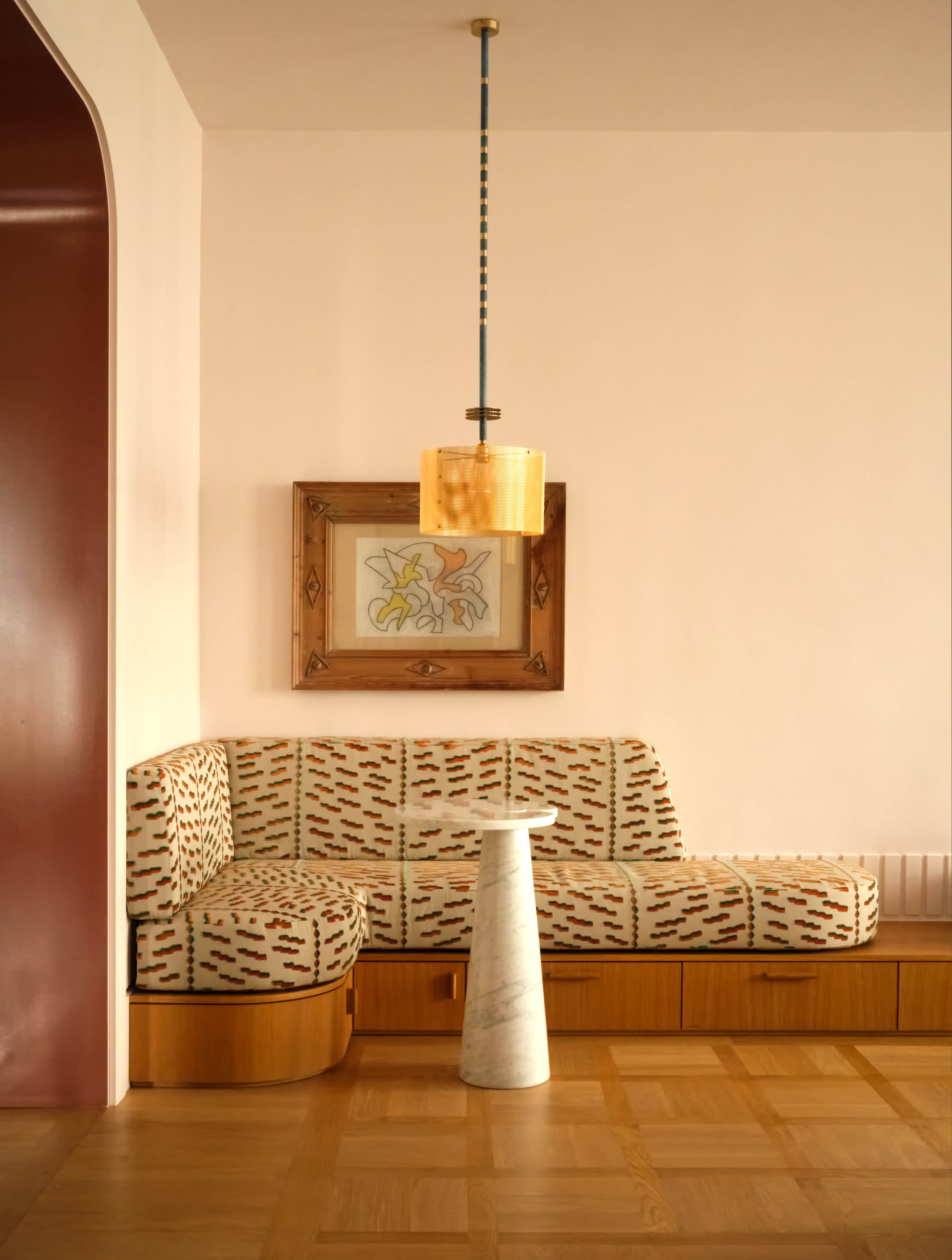
The guest room is an unapologetic showcase for the brand’s products, from a vertically striped wallpaper and quilt to a bench and headboard in the brand’s “Nizam flower” design to a cotton pillow with a pattern inspired by Frida Kahlo. Elsewhere, the connection is detectable but less literal, resting not so much on any off-the-shelf vision than Accornero’s Italian upbringing. Her aunt, the painter Giovanna Poli – whose work is on the living-room wall – and her partner, Marco Comolli, had an architecture and interior design practice in Milan. “I grew up with their sense of style,” Accornero said. “Marco was influenced by Mies van der Rohe, these very square buildings, but my aunt put a lot of femininity into his designs. She added soft materials, light wood, round edges, and everything was painted in different colours. The style really meant home for me.”
'My aunt put a lot of femininity into the designs. She added soft materials, light wood, round edges… the style meant home for me'
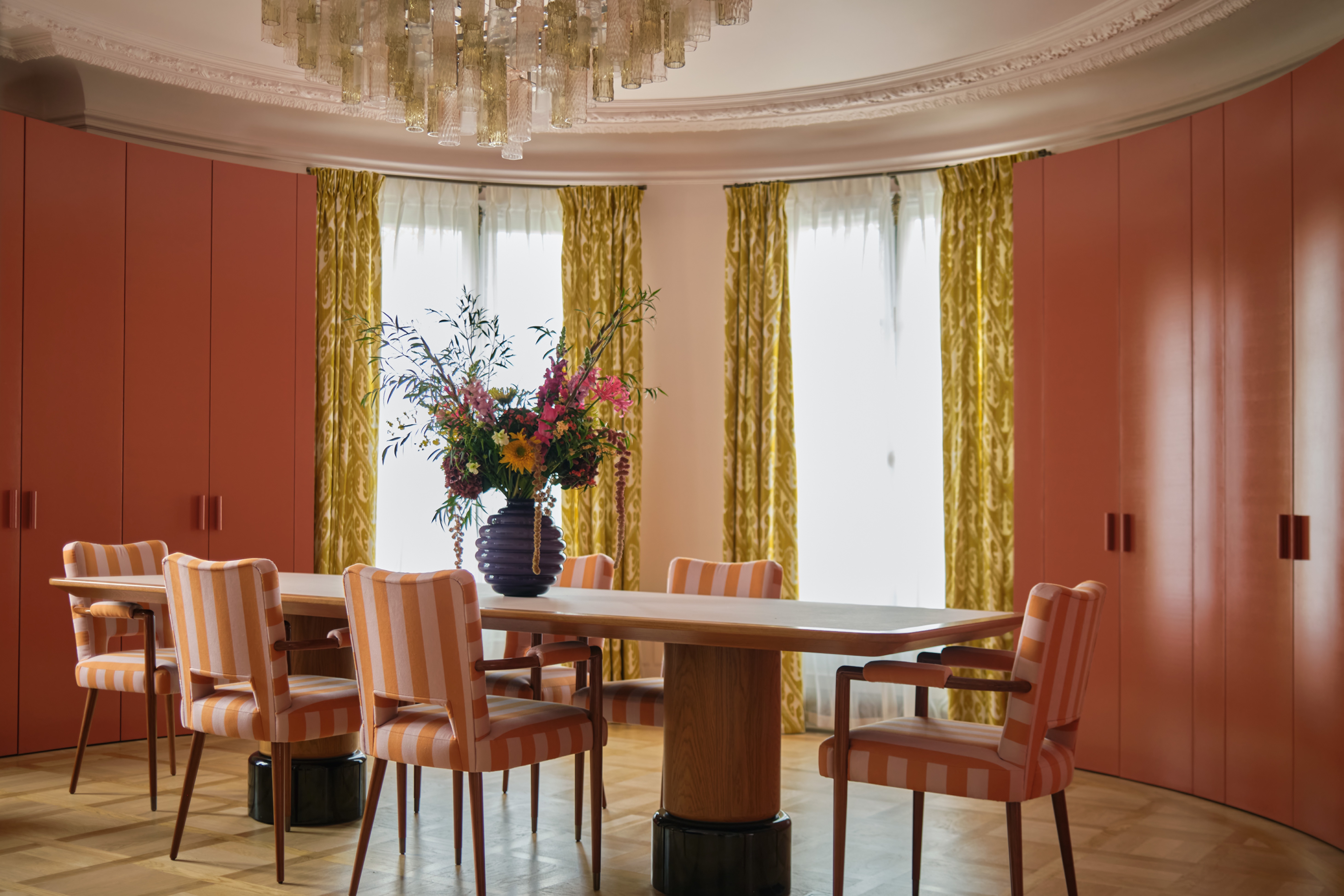
Accornero had enlisted Poli and Comolli’s help when she bought her first studio apartment in Paris. Although they’ve since passed away, she has channelled her own interpretation of their aesthetic for the current place. It blends with the approach of Hauvette & Madani, whose bespoke furniture – tables, chairs, floor lamps – is also peppered throughout. “The unusual use of colour is completely Giovanna and Marco. But I’ve added a layer of comfort as well,” Accornero said. We wandered through the living room, kitchen and bathroom on the first level, where certain motifs bring a sense of unity. To walk around this apartment was like entering a movie where every frame had been given a slightly coral-pink tint – even the seemingly white walls. Once again, it was a choice rooted in personal memory. “Everything feels lighter in life when you add a touch of pink,” said Accornero. “When I was little, my grandma would tell me: ‘When you choose an umbrella, choose a red one, because it will give a lightly pink colour to your face. Even if it’s a grey day, you will have a nicer look.’”
The dining room: 'Everything feels lighter in life when you add a touch of pink'
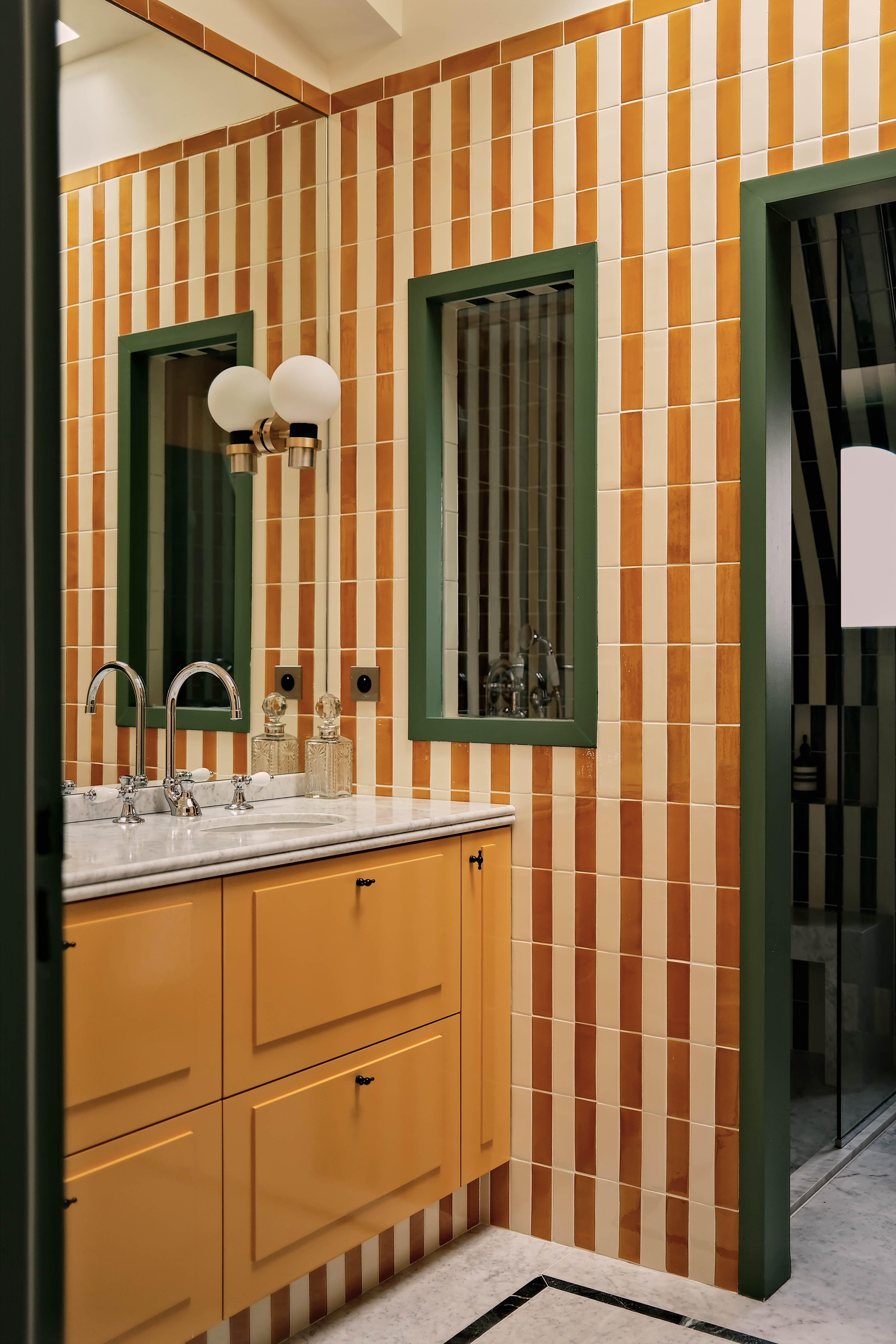
Another constant is the coloured stripes found everywhere, from dining chairs to bathroom walls to light fittings, an idea inspired by a similar scheme at the Pelicano Hotel in Porto Ercole, a coastal town in Tuscany. “I love how they instantly give character without being too imposing,” Accornero explained.
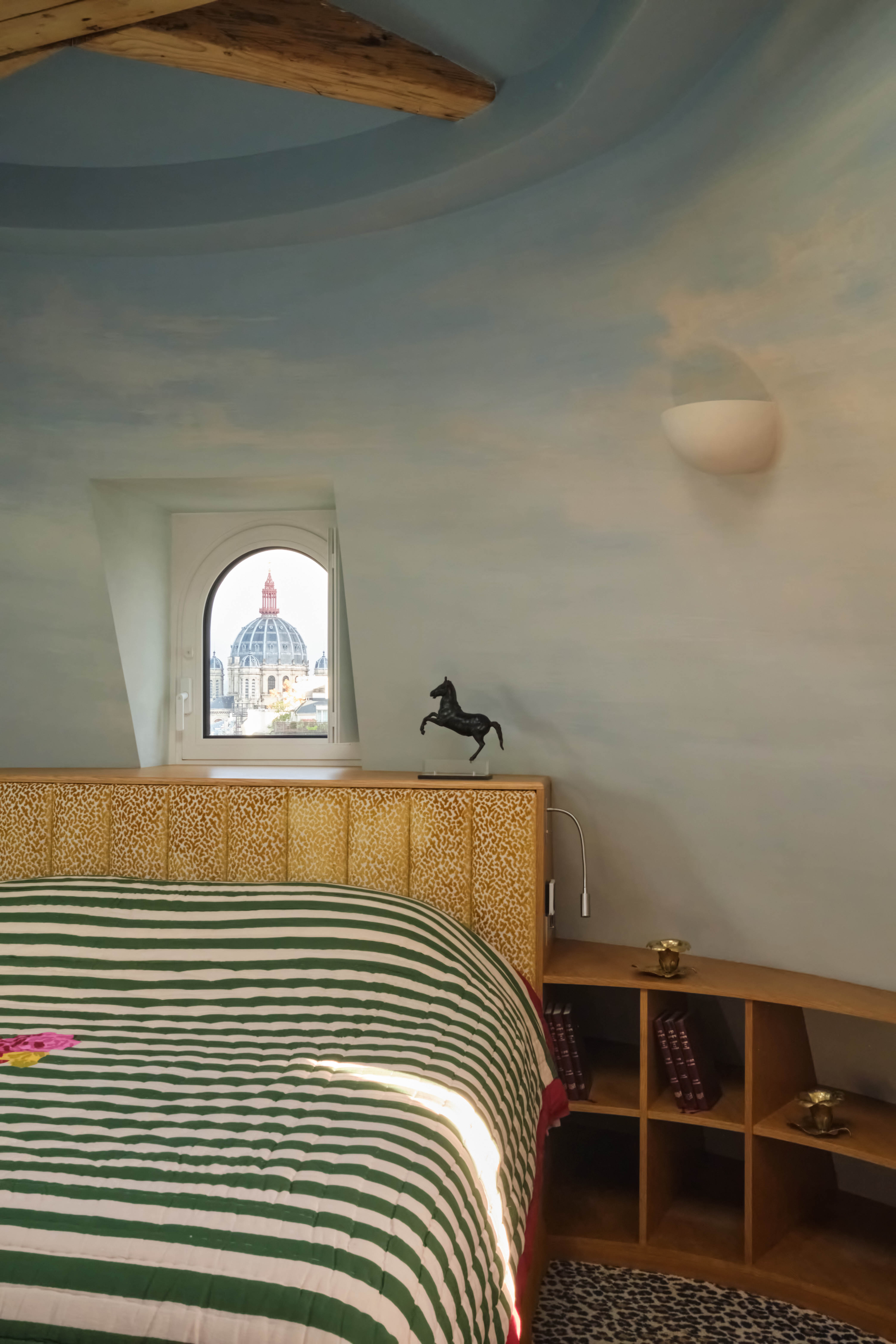
Madani led us next to the master suite. The family’s sleeping quarters are on the second level, reached by a spiral staircase crafted from white plaster. If you look carefully you can see, and feel, the hand marks of the artisans who made it (they deliberately skipped the smoothing out stage that would normally complete such a feature). The master bedroom, inside its own rotunda, was at the more dreamlike end of the cosiness spectrum. Underfoot was a leopard-print carpet by the French designer Marion Collard (“My aunt definitely wouldn’t have approved,” Accornero noted). Then, on the curved walls and domed ceiling was a sky painting by the artist Mathias Kiss, offering a sort of contemporary artist’s rendering of a fresco in an Italian church (no cherubs here, though).
Newsletters
Choose the newsletters you want to receive
View more
For information about how The Observer protects your data, read our Privacy Policy
The master bedroom, in the rotunda, with its painted sky ceiling
The main event, of course, was that trio of windows, which, besides those iconic Parisian landmarks, offered a view of silver-grey roofs, wisps of steam emanating from chimneys, and the crisp blue of the autumn sky.
Accornero admitted she was anxious before they moved in. “I felt a lot of pressure. I had been so involved in the project, but I didn’t have the advice of my aunt and Marco any more. I was afraid that it was becoming something really vulgar,” she said. “But when we got into the apartment, I was so relieved. It was so elegant. I loved it.”