


Small rooms discipline the mind, large ones distract it,” as Leonardo da Vinci is supposed to have said, while arguing that artists should plump for cosier workspaces. You feel he would have liked modern London. Our cities are forever becoming more crowded, space forever more in demand. While the average home in the UK grew in the decade from 2013, flats bucked the trend, with floor plans shrinking to an average of just over 60 square metres, according to the Nationwide Building Society.
Despite the fact that urban living spaces are becoming increasingly compact, developers often aren’t being particularly imaginative with apartment layouts. This is the contention of Colin Chee, the founder of Never Too Small, a Melbourne-based media company that showcases design solutions for small-format living.
“Folding doors and partitions that can be opened and rearranged are so much more practical in a small apartment,” he says, but developers too often stick to a rigid layout. Nonetheless, there is a cohort of architects who are thinking more creatively about what to do with smaller spaces and pocket plots. Here, we head to Tokyo, Naples and London to meet the designers and residents pushing the limits of what can be done.
London: a small flat channels big-city ingenuity
Photographs by Jakob Powell
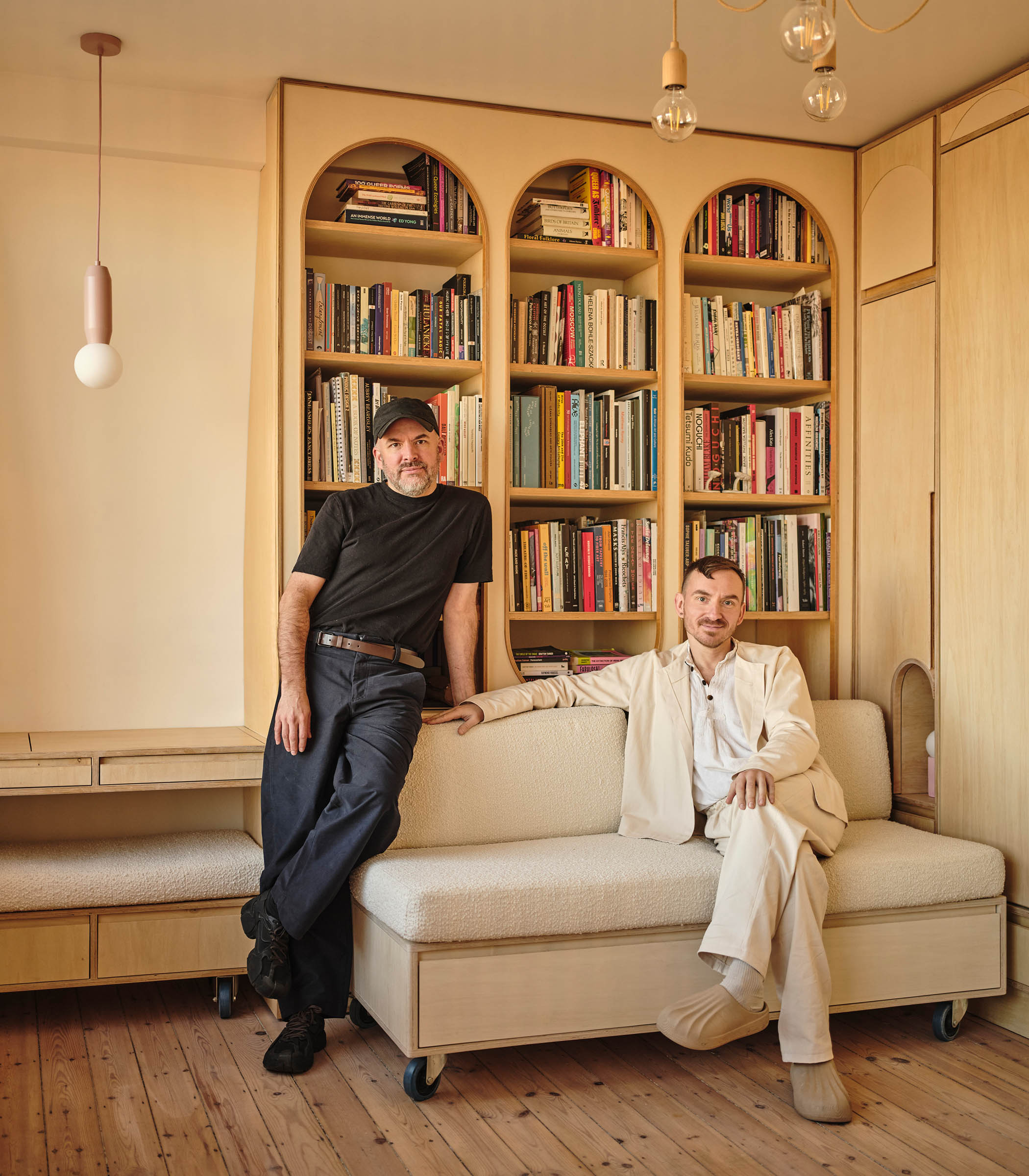
Watching Jonathan Baldock and Rafał Zajko carry out their nightly bedtime ritual, I’m put in mind of stagehands setting up a scene. They each know their role, working in silence and with practised precision. First, the dining table is dismantled into three parts and stashed into a purpose-made storage space; the cream bouclé sofa (on wheels) is rolled back; and their dining stools are tucked close to the wall. Finally, Zajko reaches up, hooks a finger into a hidden groove and pulls a large Murphy bed down from the wall, revealing a mattress, a library’s worth of books and two lamps. “There’s something about books,” says Baldock. “I never feel guilty buying more.”
The retractable bed is just one of many ingenious space-saving tricks that make this tiny 24-square-metre flat in central London feel genuinely roomy. “It’s a bit like Tetris,” Baldock says, with a laugh, pointing out how every millimetre of space has been used.
The flat is on the ninth floor of Florin Court, a 1930s Art Deco block next to the Barbican that was made famous as the exterior of Hercule Poirot’s fictional Whitehaven Mansions in the ITV series Poirot. (Die-hard fans can apparently be found on Charterhouse Square in front of the building, presumably waiting for David Suchet to totter out.) The block’s age gives you a clue as to why the flat is so small. It was built for merchants based at Smithfield market round the corner – the large front apartments were for the middle-class merchants, the smaller rooms at the back (where Baldock and Zajko’s flat is today) were for the butlers and staff.
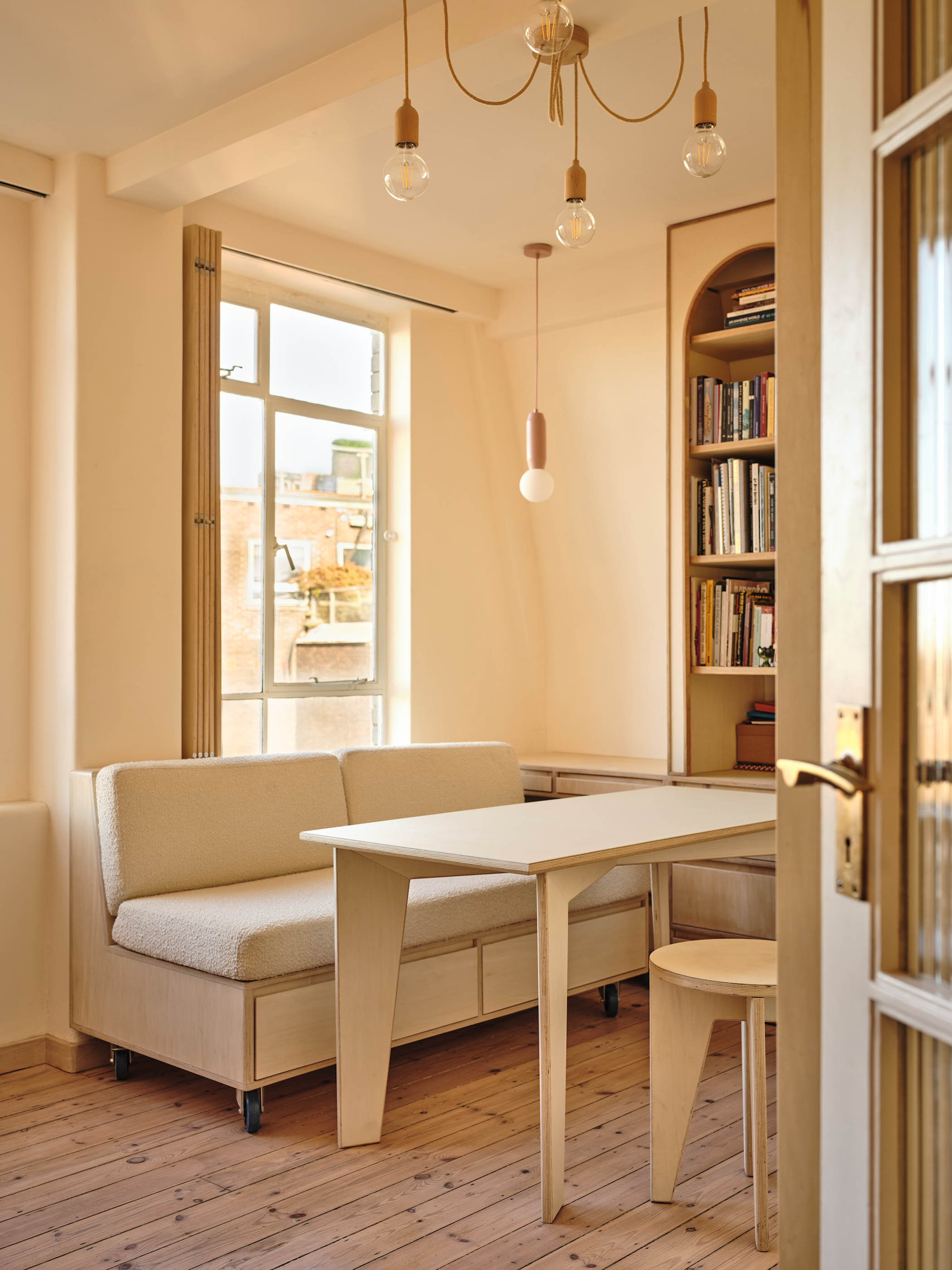
The couple, both artists, initially rented this property from friends; then in 2021, when their friends decided to sell, bought it for themselves. Having already lived here for a few years, they knew exactly what they wanted to change, so went looking for an architect. That’s when they came across a flat in the Barbican Estate, a 36-square-metre space that had been cleverly redesigned by Intervention Architecture, a Birmingham-based practice founded by Anna Parker. Parker was up for the challenge. “The Barbican flat was for one person and had a bigger floor area,” she says, “whereas this was smaller and for two.” When she first visited, “it was quite overwhelming, because everything was on show. There was a lack of organisation”.
Parker and her team redesigned the flat with adaptability in mind. “Traditional homes can be quite cellular: this is the living room, this is the dining room, this is the workspace,” she says. “Actually, there can be fluidity within a smaller space to create those zones through changeable joinery.” The Murphy bed is the most obvious example of this – when it’s up in the wall, the main room is a dining-cum-living space; when it’s down, it’s transformed into a cosy bedroom. But other elements also make the room multifunctional, such as the sketching desk that lifts up from a sideboard.
Because of the constraints of the space, Intervention Architecture adopted an unusual technique for the build. All the storage units and furniture were designed for the flat, and the constituent parts were cut out off-site with a CNC machine and transported to the building in flat-pack form. (Florin Court’s titchy Art Deco lift made this approach doubly necessary.) The artist and fabricator Ian Brown, a friend of Baldock and Zajko, then assembled and built everything inside the apartment. “This technique reduced the cost,” says Parker, “but also the amount of material use, so we could get every millimetre out of the timber we were usingd.”
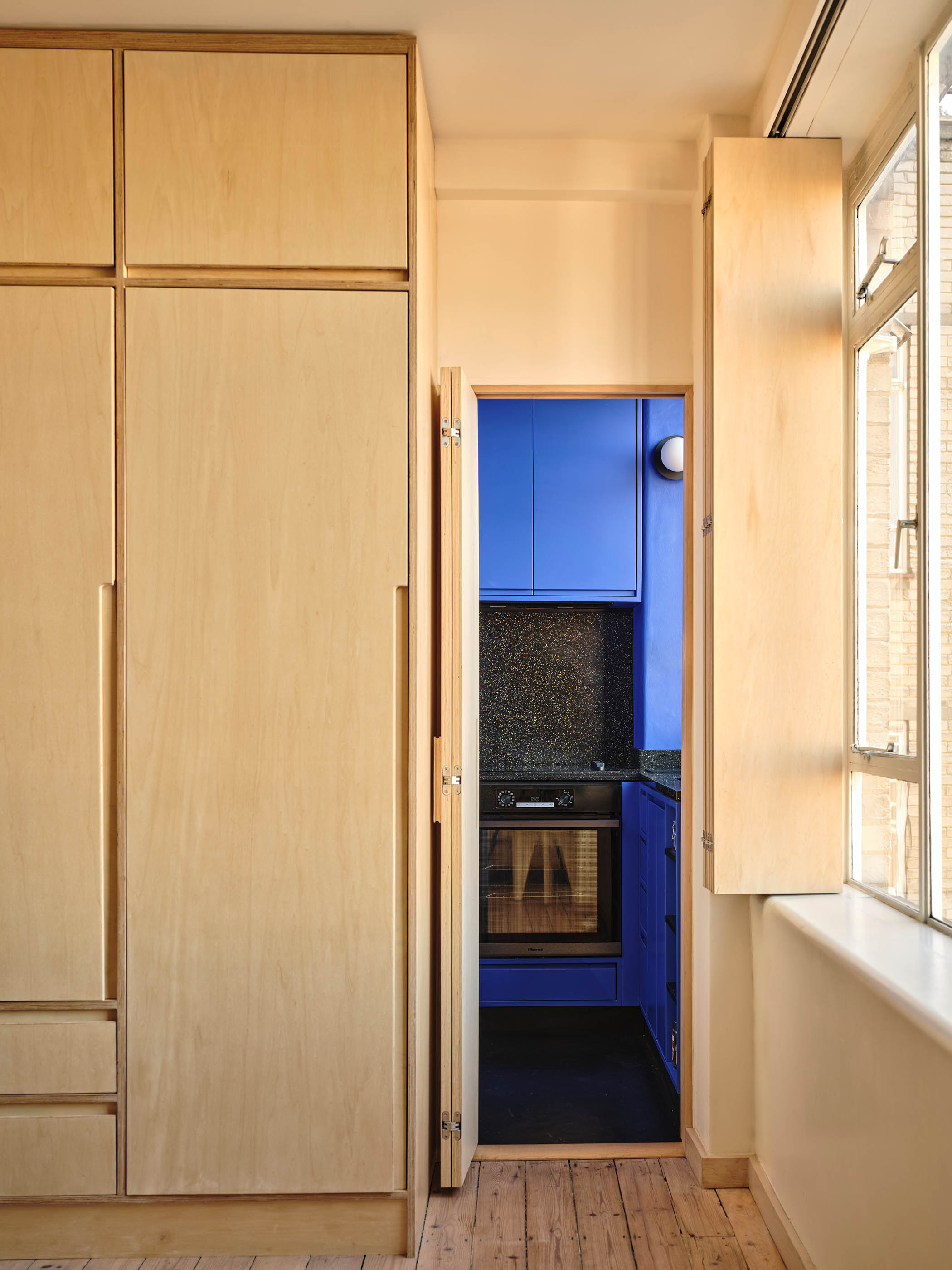
The joinery in the main room was all made from maple wood with a blond finish, which gives the room a bright but quite plain effect. This was intentional. “We are around our own art all the time and we both use a lot of colour in our work,” says Zajko. “So we wanted this space to be quite neutral.” Plus, says Baldock, “it focuses your attention on the view.” And it must be said, the view from the 9th floor is stunning, taking in Charterhouse Square, all the way to Alexandra Palace in the distance.
While the main room is relatively neutral, Parker made sure to add some fun flourishes. The bookshelf fronts incorporate curved shapes, a nod to the building’s Art Deco history. Meanwhile, the kitchen and bathroom are bursts of vivid colour: Yves Klein blue and blush pink, respectively. “I was really keen to have a drenching of colour and saturation in those spaces, a contrasting pop,” she says.
This is the second small flat that Parker has designed in London and she believes more architects should embrace small spaces, rather than dismissing them as awkward and limiting. “Having constraints is where creativity thrives,” she says. “You can have fun with it. There should be joy in small spaces.”
Tokyo: a home the size of a single garage is a sanctuary
Photograph by Koji Fujii
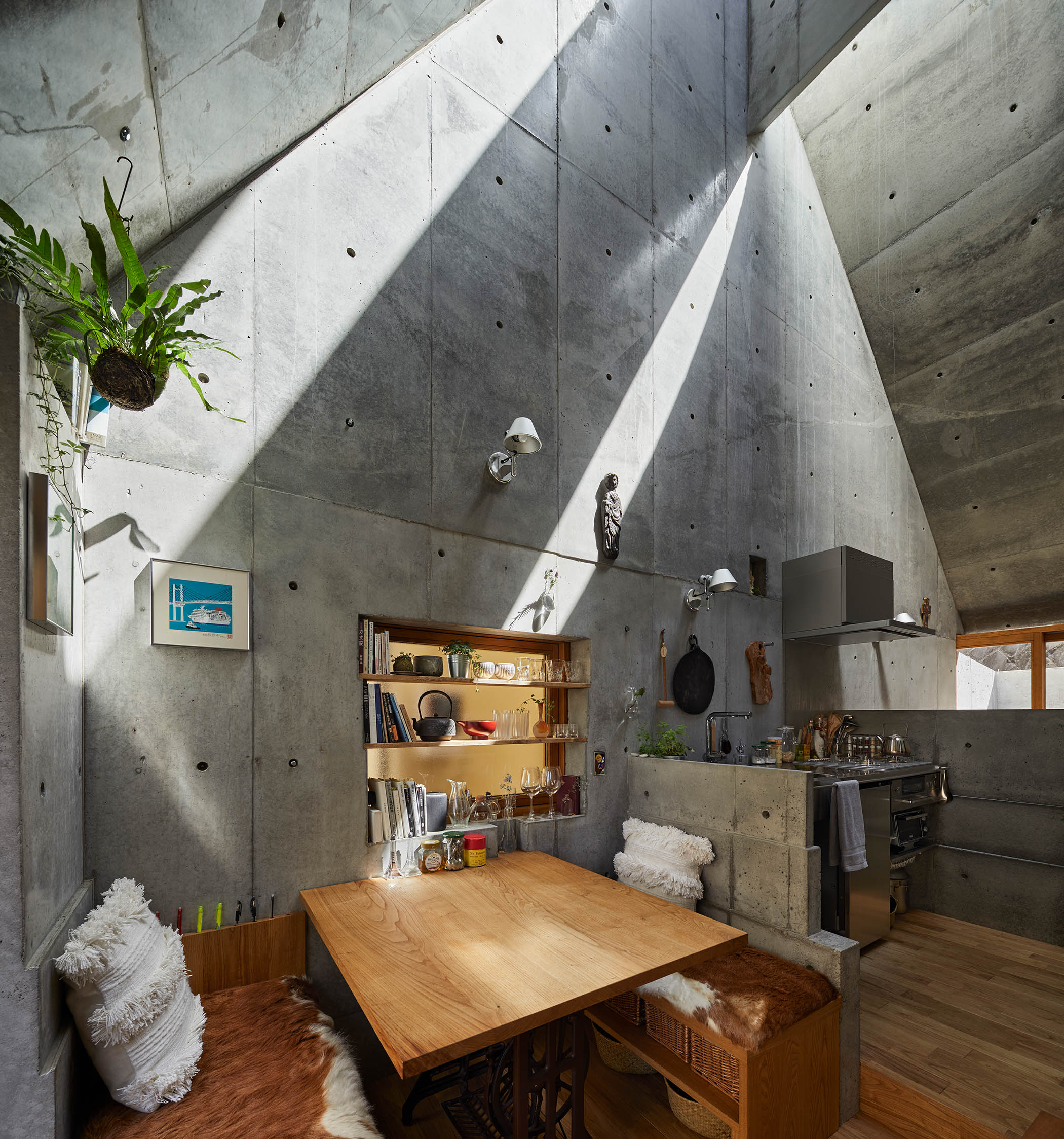
It’s never occurred to Takeshi and Megumi Hosaka that they might need to declutter. At their home in central Tokyo, they have 300 records that they play on McIntosh and JBL hi-fi equipment. Stacks of small dishes and bowls teeter on a shelf above the washing machine, while glass and ceramic cups compete for space on shelves built into a window frame. There are books on more shelves built into an alcove, souvenirs from trips overseas scattered about – ornate glass bottles, a truffle shaver, sea salt from France.
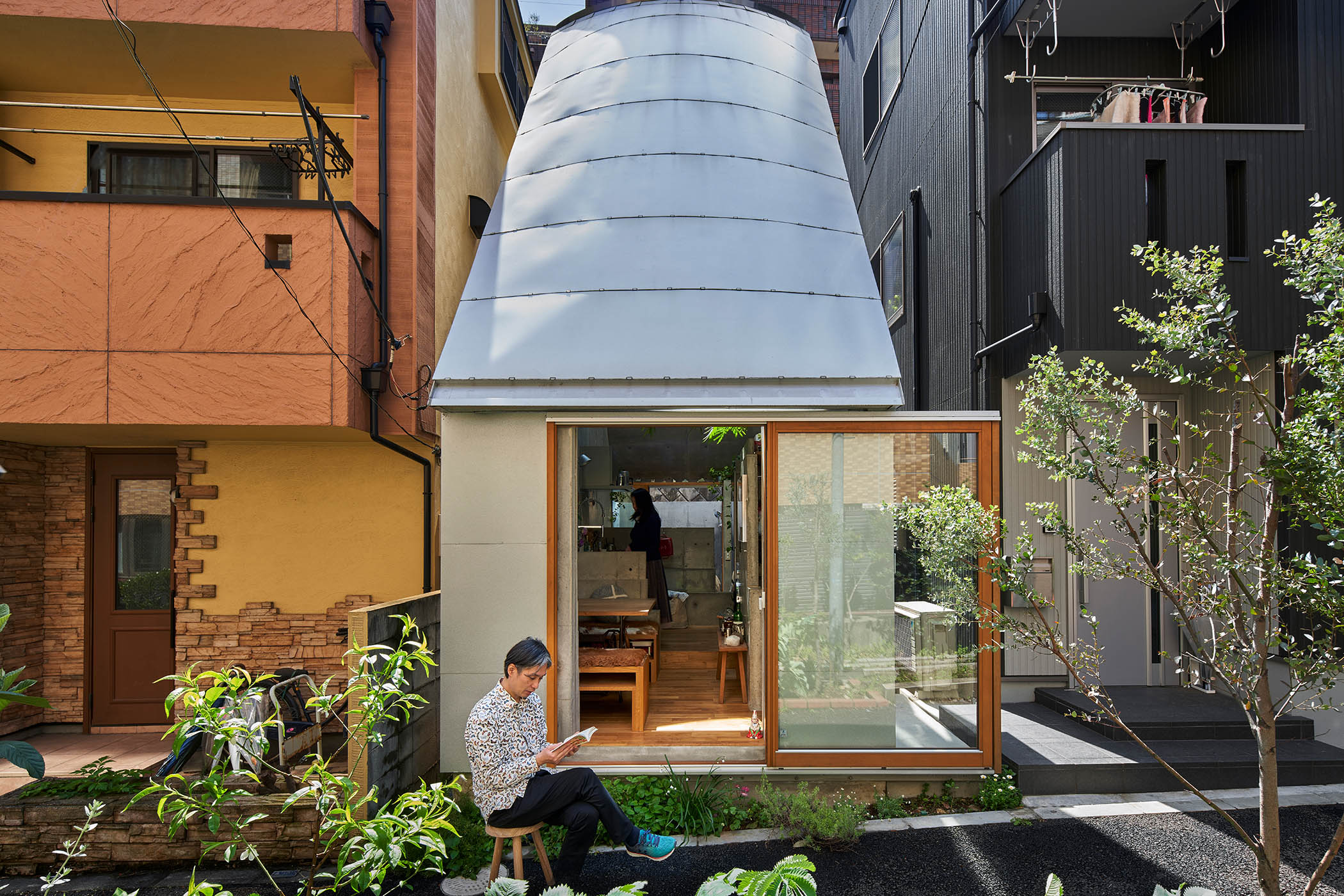
But the Hosakas can’t just keep on collecting more stuff. Their single-storey concrete house in the city’s Bunkyo ward is just 19 square metres. Designed by Hosaka in 2017, the Love² House (“Love Love House”) is roughly the size of a one-car garage. It’s small even by Japanese standards: the average home in Tokyo is three times bigger.
Hosaka, the founder of Takeshi Hosaka Architects in Tokyo, spent 18 months mulling over 40 different versions of this design. At first he thought the building should have two floors. But he decided against it, even though it would limit their living space to half of their previous house, after reading a book describing the 10-square-metre home for a family of four during Japan’s Edo Period (1603-1868) and the Hojoki, the 12th-century poet Kamo no Chomei’s account of living in a nine-square-metre mountain hut. “I had anxiety about the decision before we moved in,” he says. “But we have never felt we don’t have enough room.”
From the narrow footpath outside, the house looks like a metal box with a steeply angled metal-clad roof. Inside, the vaulted ceiling rises seven metres to a split skylight that lets in natural light even in winter when the house gets no direct sunlight. The sliding, wood-framed picture window on the front of the building gives the Hosakas a view of their grape vine and fig tree in the miniature garden on the footpath. When the window is open, like it is today, the couple can hear birdsong and watch dog-walkers and schoolchildren go by.
In Tokyo, compact homes are nothing new. Over the years, they’ve been given many names – usagi goya (rabbit hutches), penshirubiru (pencil buildings), kyosho jutaku (micro homes). These tiny dwellings are a unique solution to the high property prices and small, odd-shaped lots that are part of living in a densely populated metropolis of more than 14 million people. Lately, there’s been a surge of demand for micro homes, particularly among younger workers who are eager to find an affordable place in the city centre so they can avoid long commutes in the famously packed trains.
Hosaka’s Love² House has attracted attention for showing that living small doesn’t have to come with huge sacrifices. Every few weeks architects, students and tourists from overseas turn up at the house to admire its construction and ask for a peek inside.
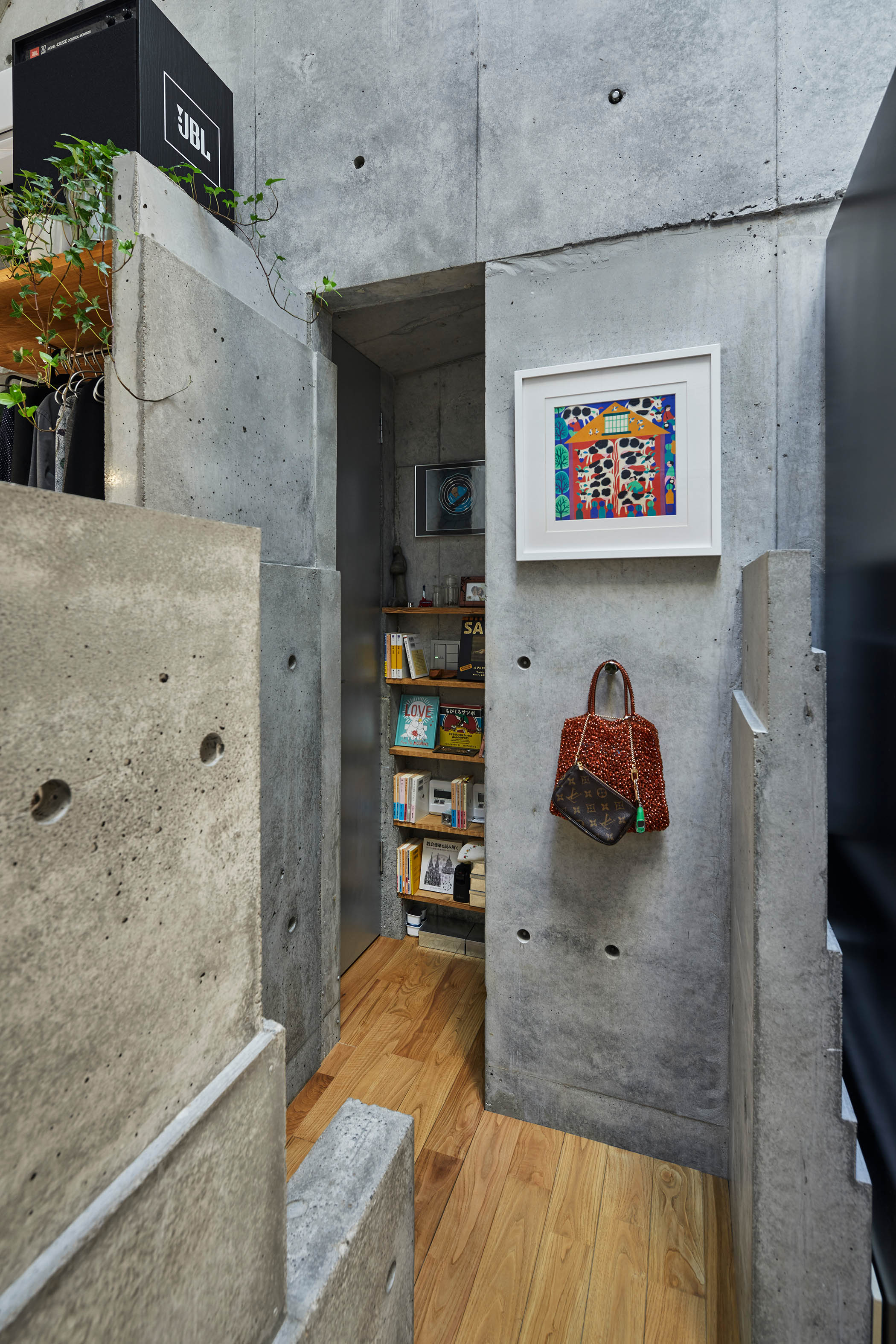
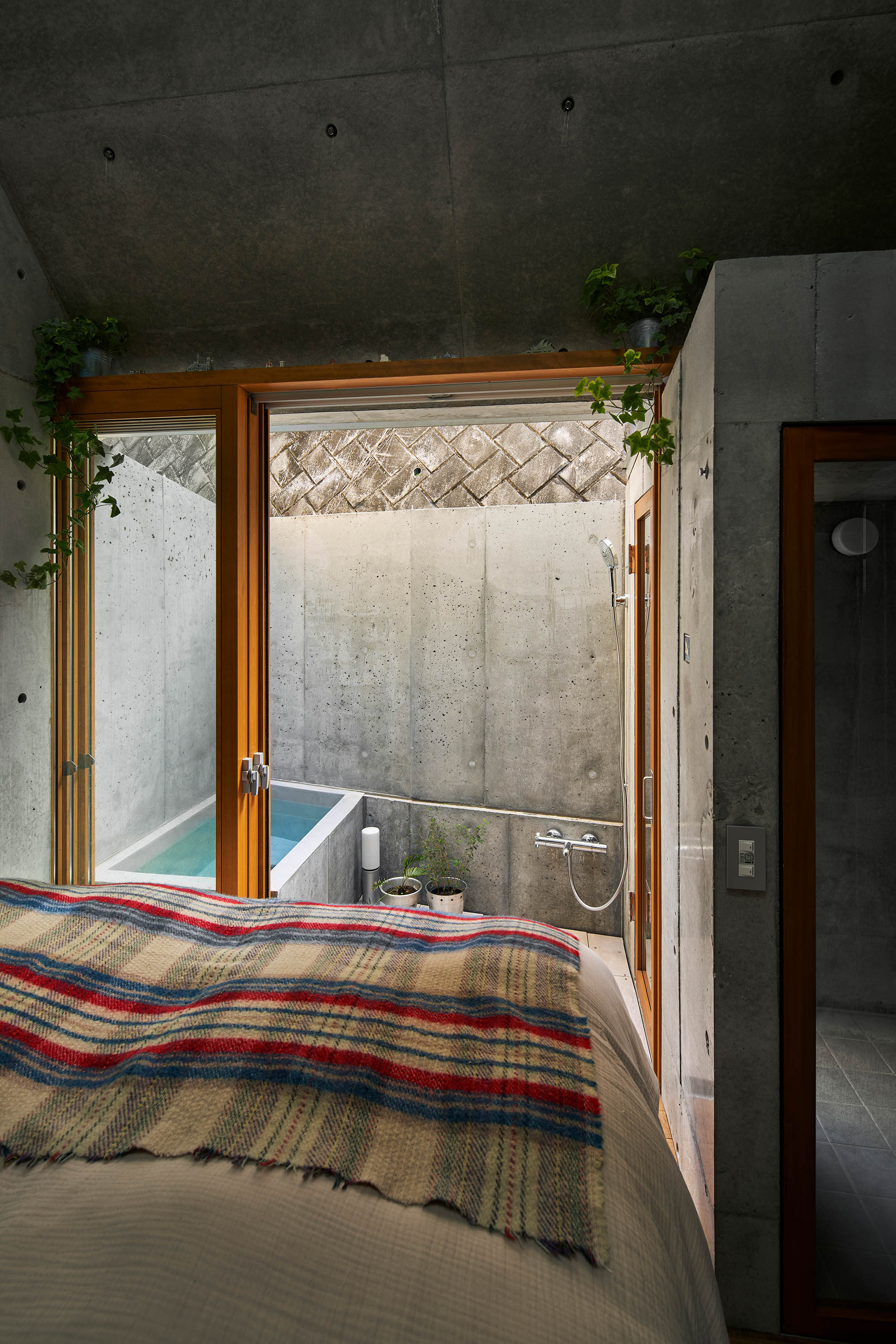
Those who do get a tour are treated to a glimpse of Hosaka’s unique layout. He packed in a lot of what an ordinary house would have: a full-size refrigerator, dishwasher, washing machine and a queen-sized bed. All of the shelves around the house rest on narrow ledges that are part of the concrete structure. To save on space, Hosaka has no cabinets, drawers or closet doors anywhere. Holes left from pouring in the concrete structure double as anchors for hanging art and religious artefacts. Because the bathtub didn’t fit indoors, it sits outside on the back porch, open to the sky and behind a wall for privacy.
You would think that entertaining is out of the question in such tight quarters, but in a couple of hours Megumi will serve lunch for six. “We have a lot of people over for meals,” says Hosaka. One young couple who visited recently asked him to design a micro house for them.
At the wooden dining table that doubles as his night-time work desk, Hosaka spreads out a T-shirt from a few years ago bearing a sketch he did of the “basic elements of the natural world” that appear in the book of Genesis. There’s a sun, moon and stars, plants and fruit trees, birds and animals. Creating a connection to these elements from inside a building has become a hallmark of every project Hosaka works on.
Love² House accomplished this shortly after the Hosakas moved in. On the first morning when Megumi awoke in the house, she saw clouds drifting by overhead through the skylight, and shook her slumbering husband. “It was so beautiful,” she says. “I told him, ‘I’m so glad we moved here.’”
Naples: High ceilings make for lofty designs
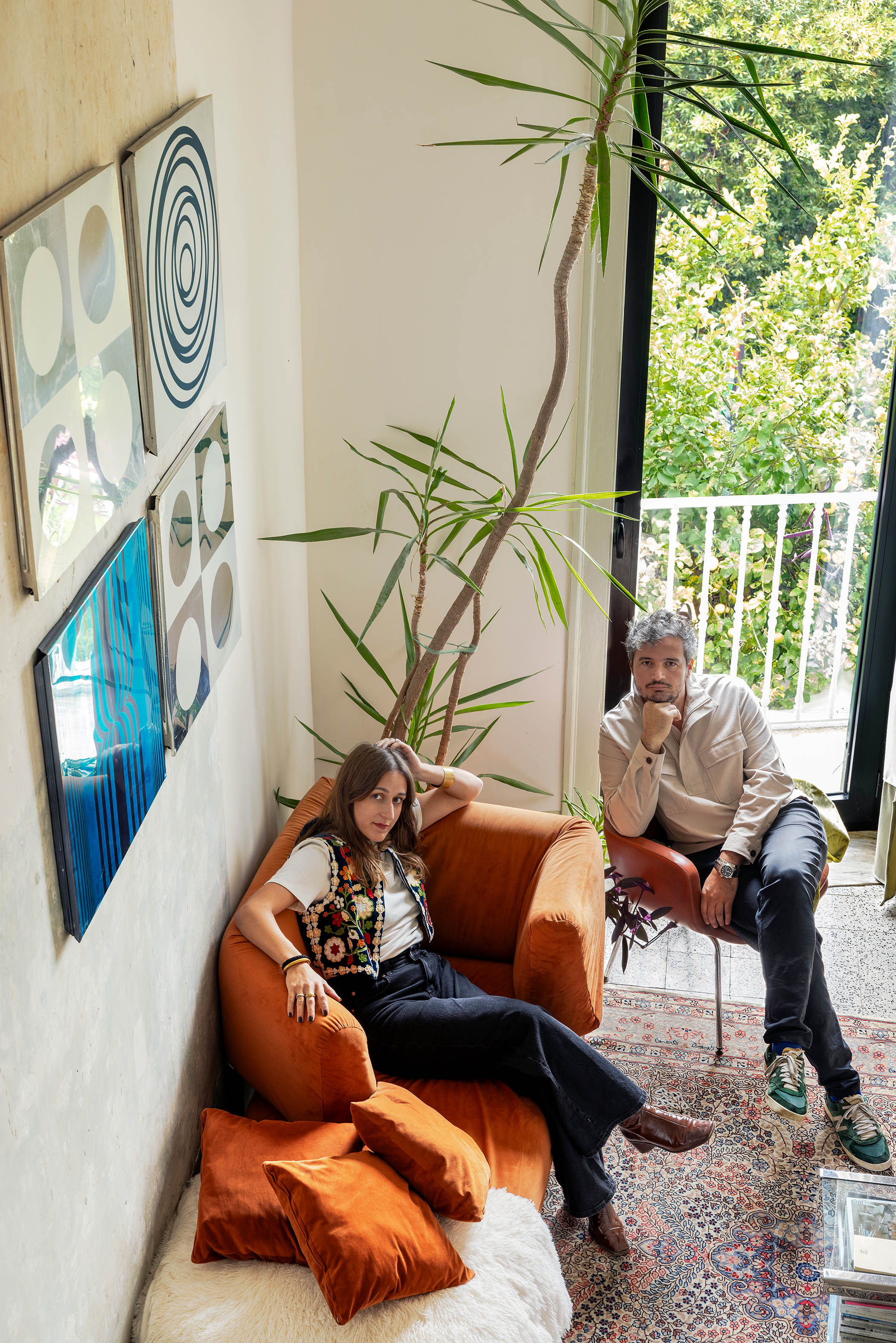
Photographs Helenio Barbetta
Entering Julie Nebout and Giuseppe Punzo’s apartment feels like discovering the seemingly impossible in Naples – a calm pocket in a city famed for its chaotic charm. That said, you have to find it first.
Nestled off a steep historic staircase that provided access to the Capodimonte Palace in the 18th century, their apartment is accessible only by foot (and by my count around 40 thigh-burning cobbled steps). It’s located in an enclave of properties surrounded by lemon groves once used by wealthy Neapolitans as their weekend retreats long before the city sprawl. Now, the area is home to a burgeoning creative community of artists, architects and designers and it is something of a secret leafy oasis. “It feels like being in a small countryside village, even though you’re right in the city centre,” says Nebout.
Such tranquillity was always the couple’s goal. Having met in Nebout’s native Paris, where they worked for the same architecture practice, they moved back to Punzo’s hometown of Naples after the first wave of the pandemic in 2021. Here they established their interior design studio La Fotosintesi, named after the feeling of regeneration they felt living back under sunny Italian skies.
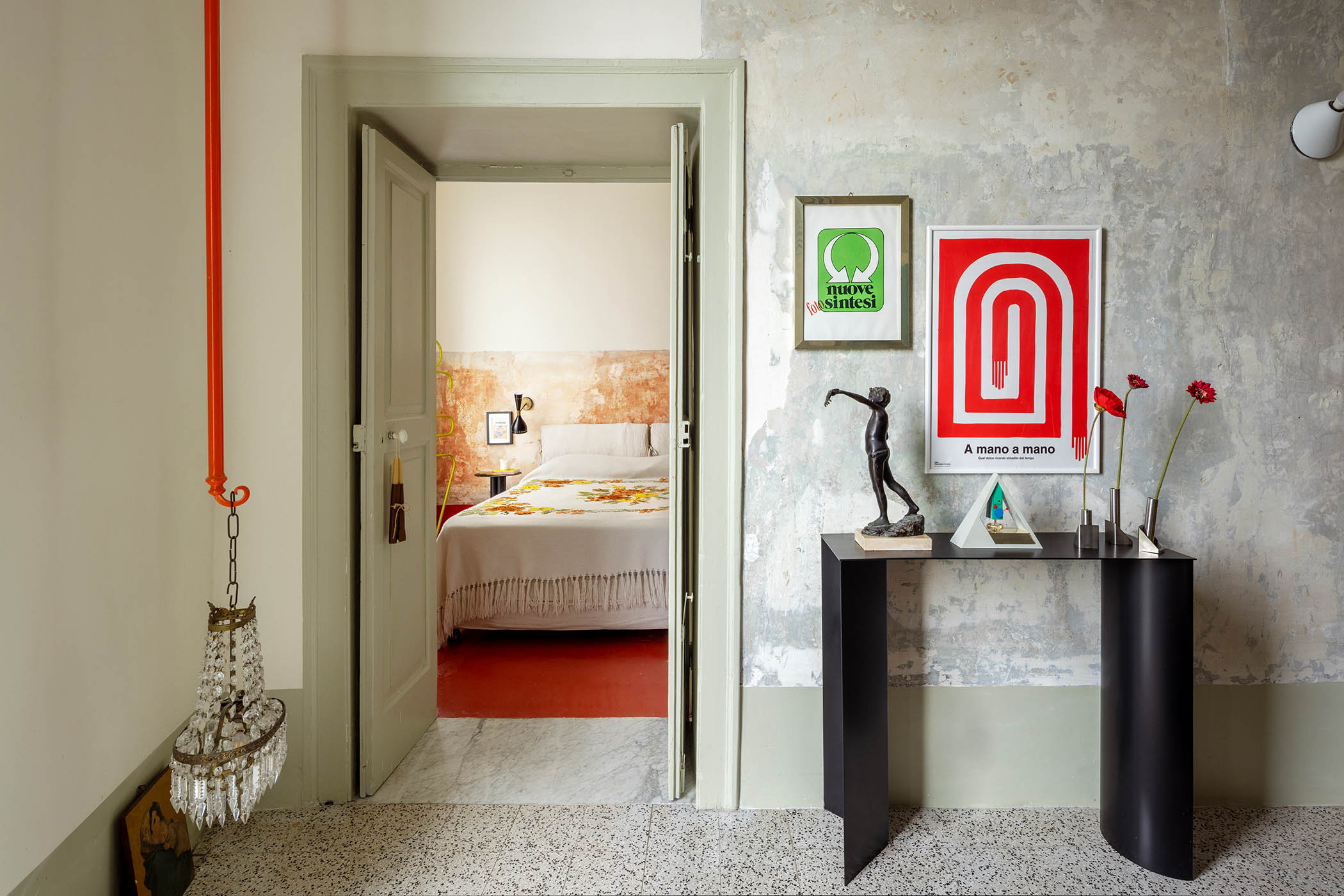
They found the apartment completely by chance when the self-confessed “property addicts” were looking around the area. Seeing the door open, curiosity drew them inside. “We immediately loved it, but it wasn’t for sale, so we left and forgot about it,” says Punzo. A couple of weeks later, they saw it pop up on an agency listing. “We booked a visit and made an offer the next day.”
With a €60,000 budget, the couple transformed the 60-square-metre flat from three dusty rooms with no bathroom into a lofty, light-filled dwelling. While the footprint may read pied-à-terre, the first thing you feel walking through the front door is a sense of space. That is in large part due to the couple’s insistence on having a generous entrance hall. “You should enhance the perception of space,” says Nebout. “We love having an entryway whenever possible to create a sequence of spaces.”
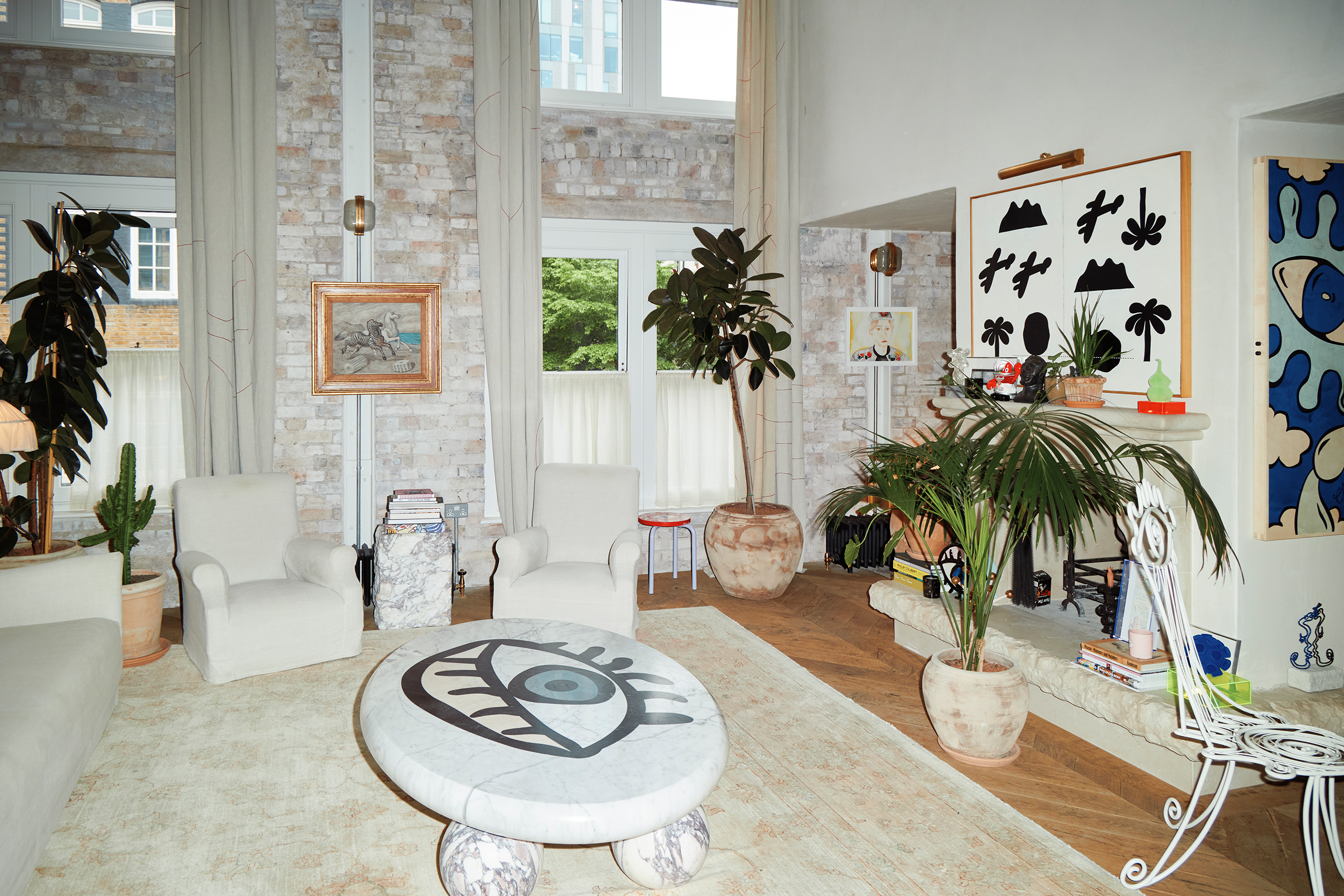
The couple also kept the original 30ft ceiling heights throughout while knocking out a structural wall to engineer a mezzanine level accessible by a bright-red steel staircase above the kitchen and bathroom. This now serves as an additional workspace. “Having different ceiling heights within the same room helps make the space feel more complex and larger,” says Nebout, “and it’s essential to organise both work and personal spaces carefully.”
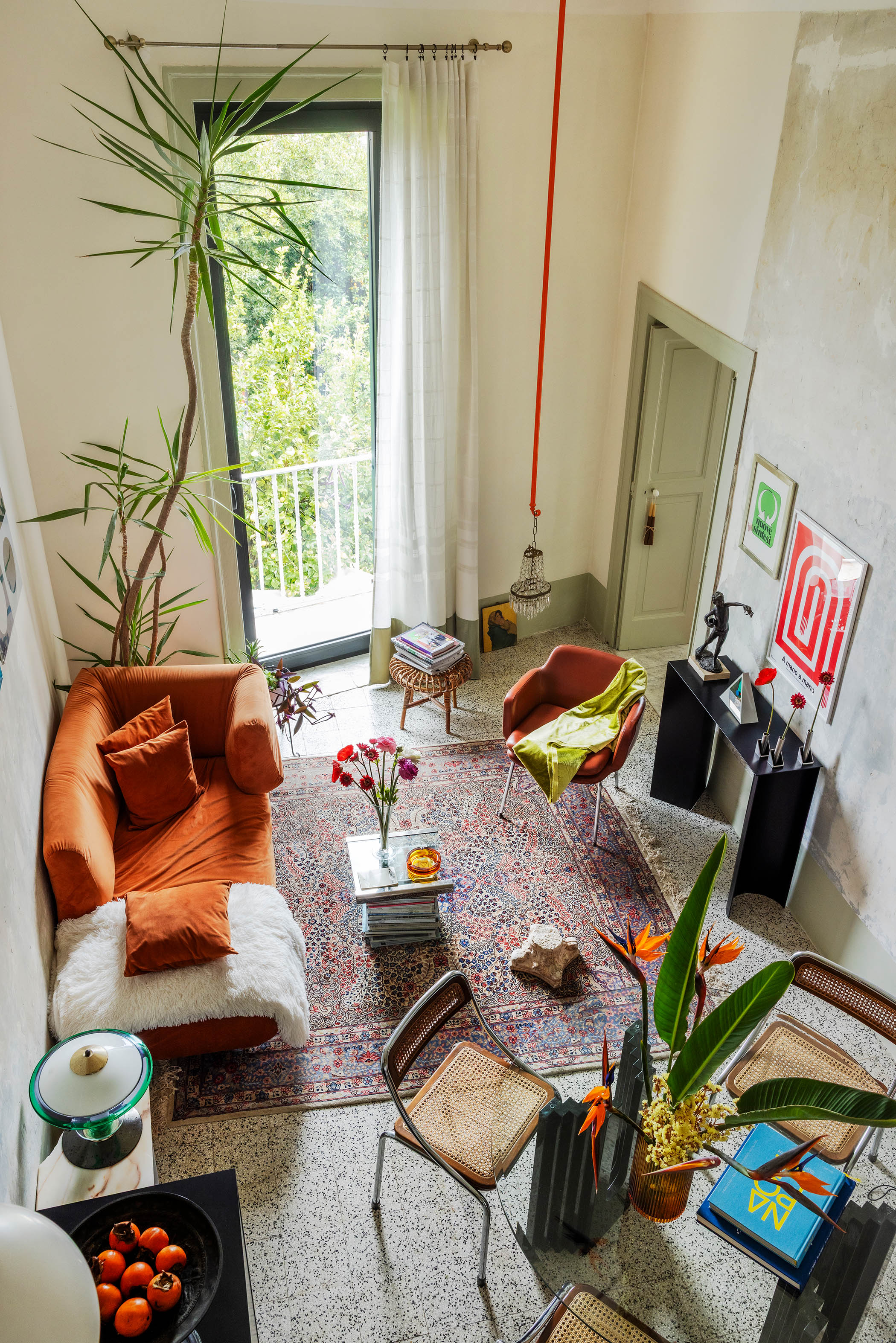
The dual-aspect doors in the bedroom, meanwhile, allow them to walk around the apartment “with no dead ends” and all-important hidden storage makes for essential easy living. “We designed it around circulation and smart storage so even though the apartment isn’t large, the way storage is integrated allows it to remain visually clean,” says Nebout. More built-in storage will be added when budget allows. “We have a little problem with clothes and shoes,” says Punzo with a smile.
The quiet design details are what create a feeling of cohesion here. When they removed the wallpaper, the couple uncovered the original painted walls (green and blue in the living room, red in the bedroom) and framed the best-preserved portions with fresh plaster. “It immediately became clear that these colours were an integral part of the project, so we adapted the entire mood of the space to these tones to allow them to communicate with one another,” says Punzo, pointing to the red resin floor they poured in the bedroom and the structural beam that divides the living space from the kitchen, which they painted green.
Contrary to common assumption, small spaces don’t demand small fixtures and furniture, says Nebout. In the bathroom, space is tight, but the shower is large; the bedroom features a kingsize bed by Flou; and the full-size dining table by Carlo Scarpa becomes a sculptural centre point. Some pieces of furniture – such as the console in the living room – were designed by the pair and made bespoke, while others were picked up at their beloved antique dealers around the city. “Small spaces often sacrifice narrative and non-functional design, but we managed to keep both and have pieces purely for pleasure,” says Nebout.
It is, however, what’s outside that makes their apartment unique. Having installed two floor-to-ceiling single-pane glass windows in the bedroom and living room and opened up access to their rooftop terrace, the pair enjoy sweeping views of Mount Vesuvius to the left and the Amalfi Coast to the right. “The view makes the space feel much larger,” says Nebout. “Without it we wouldn’t have the same experience.”
It is, after all, Naples that has had the biggest influence on the pair, both professionally and personally, since their relocation. “The city is so intense, contrast-filled and passionate that it becomes almost impossible to disconnect your architectural practice from your own identity,” says Nebout. It does, she adds, lead to “creating spaces that feel alive and vibrant, just like Naples” – and every inch worth the step count.
Newsletters
Choose the newsletters you want to receive
View more
For information about how The Observer protects your data, read our Privacy Policy