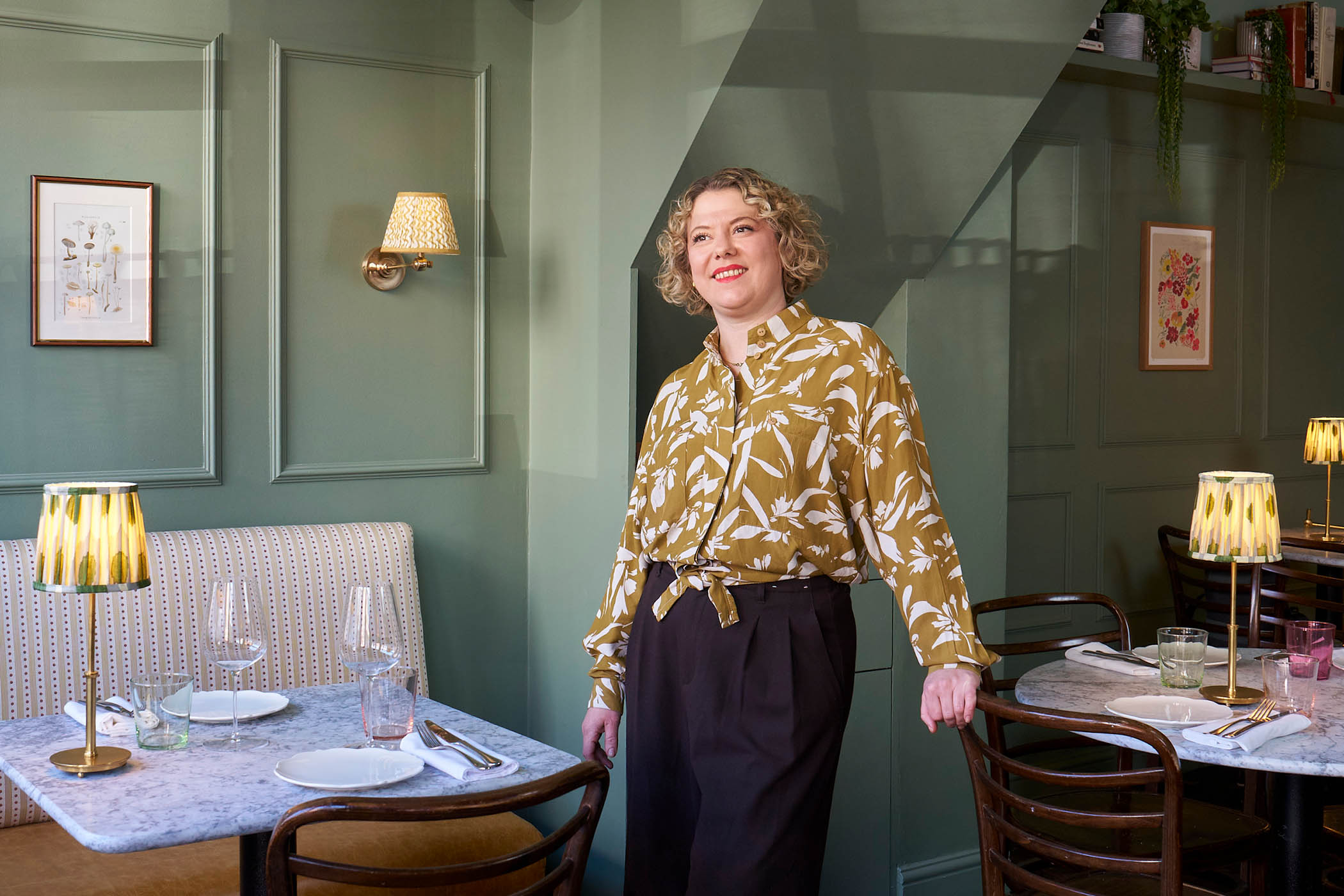



We’ve turned this around in four weeks,” says the chef Sally Abé in the dining room of Teal, her first standalone restaurant. Readying the space, which is on a quaint Hackney street next to an independent deli, a bottle shop and an antiques studio, has been a family effort. Her sister designed the interior. Her mum jetwashed and varnished the outdoor decking. “She’s doing the flower boxes next,” Abé says. “We’ve tried to make it luxurious and comfortable. People come to restaurants for the food. They come back for the way it makes them feel.”
Abé has been making diners feel good for more than 20 years, at restaurants such as the Savoy and Claridge’s under the stewardship of Gordon Ramsay, and the Harwood Arms, which remains the only gastropub in London to hold a Michelin star.
She is also well known amongst viewers of the BBC’s Great British Menu, in which she has competed three times. When Abé recently posted a picture of Teal’s menu on Instagram, a commenter asked if one of the starters – an onion and seaweed broth, with barley brioche and Marmite butter – was a variation on a dish called “Nursed Back to Health”, which she served in the 2025 series. (She responded: ‘it absolutely is!’) The dish was inspired by Florence Nightingale, and had been awarded a perfect score in the competition. When the comedian and judge Ed Gamble tasted it, he said he’d be “absolutely delighted to fight in the Crimean War if this is what they were serving”.
The rest of the menu at Teal pays similar homage to Britain’s history, ingredients and seasons. “One of the things I find exciting is delving into cook books from the past few hundred years – most of which were written by women – and modernising them,” Abé says. “Back then the food was quite stodgy and heavy, so it’s about lightening the elements, and bringing the recipes back to life.”
So it is that there are revived Victorian dishes including Locket’s savoury (a sort of Welsh rarebit made with blue cheese, pickled pear and watercress), angels on horseback (oysters deep-fried in bacon-flecked batter) and a penny lick, a tiny scoop of ice-cream traditionally offered by street vendors in the 19th century. “British food has a bad rap,” she says, “but I want to remind people that we do have a culinary history.”
Abé knows that some of Teal’s guests will be fans of Great British Menu, though connecting with the Hackney community is just as important to her. She has already introduced herself to the neighbours, and is trying to keep the menu accessible and as affordable as possible.
Was she thinking about Michelin when she was creating the menu? “A star would be amazing, but I think it’s self-absorbed to aim for one,” she says. “There are more important things in life, like a happy team, happy guests and a happy community. If accolades come from that, great.”
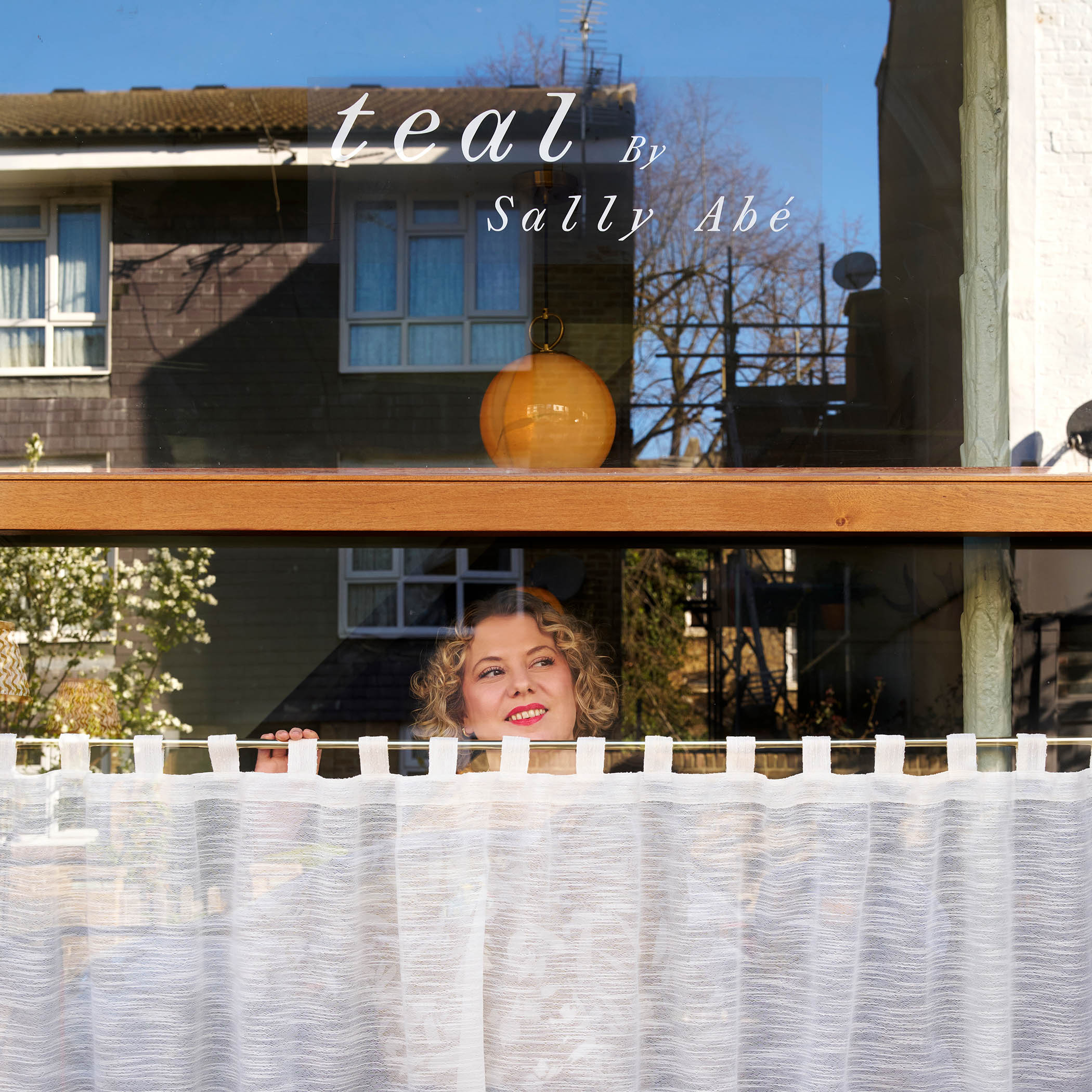
‘British food has a bad rap, but I want to remind people that we do have a culinary history’: Sally Abé
A happy team is a priority for Abé. In 2024 she released a memoir, A Woman’s Place is in the Kitchen, in which she detailed patterns of abusive, misogynistic behaviour at the hands of male chefs throughout her career. One gave her the nickname “tit rat”; another poured a pan of scalding oil over her hand. One bullied his staff so intensely that Abé hoped to be run over by a car so she wouldn’t have to go back. At one point, exhausted and burnt out by the long hours and intense pressure she was under, Ramsay intervened and encouraged her to get therapy.
There has been online speculation as to who the chefs were, but she has never revealed their identities. “The book was never meant to be a witch-hunt,” she tells me. “It was my lived experience, an example of how things can get better. I always say I’ll write anonymously one day about the really dirty, ugly stories.” Did she ever receive an apology from the chefs in question? She smiles tightly and shakes her head. “No. Definitely not.” Are they still operating? “Yeah. And a lot more, sadly.”
Last year, Abé spearheaded, along with Dara Klein of London restaurant Tiella, an open letter criticising the chef Jason Atherton’s comments in an interview with the Times, in which he denied seeing sexism in kitchens. Published in the Telegraph, the letter was co-signed by 70 women in the hospitality industry. When we met, the chef René Redzepi was facing allegations of physical and verbal abuse in Copenhagen’s Noma restaurant.
Of the news, Abé says, “It’s not shocking at all to anybody that’s worked in the industry as long as I have. I’m glad it’s being called out, but we need more vocal people to set their stall out and say: ‘I don’t stand for this.’”
Are things getting better? “Yes, but it’s nowhere near fixed. Nothing will change until the men become allies, because it’s not women standing on other women’s necks. Until they start driving it, it’ll never be equal.”
For now, Abé is grateful for male friends in the industry who have supported her, and for the 50-strong female members of the support group she set up on WhatsApp. “I wanted to encourage women to support each other in the same way the guys do,” she says. It’s a safe space in which to ask questions, post job opportunities and share their collective outrage at, for example, being asked to work for free at International Women’s Day events. (“Not really the point,” says Abé.)
‘People come to restaurants for the food. They come back for the way it makes them feel’
‘People come to restaurants for the food. They come back for the way it makes them feel’
In Teal’s small kitchen all three chefs are female, and she aims for an even split of men and women in her front-of-house team.
“Women gravitate towards me because they know it will be a safe, respectful environment,” she says. “Tempers do fray, and sometimes you have to bang on the pots and shout ‘let’s go!’, but there’s a big difference between riling people up and abusing them. Treating people as humans, and believing in them, goes a long way.”
“It’s weird, isn’t it? Be nice to people and they’ll want to work for you. Who’d have thought it!”
Newsletters
Choose the newsletters you want to receive
View more
For information about how The Observer protects your data, read our Privacy Policy