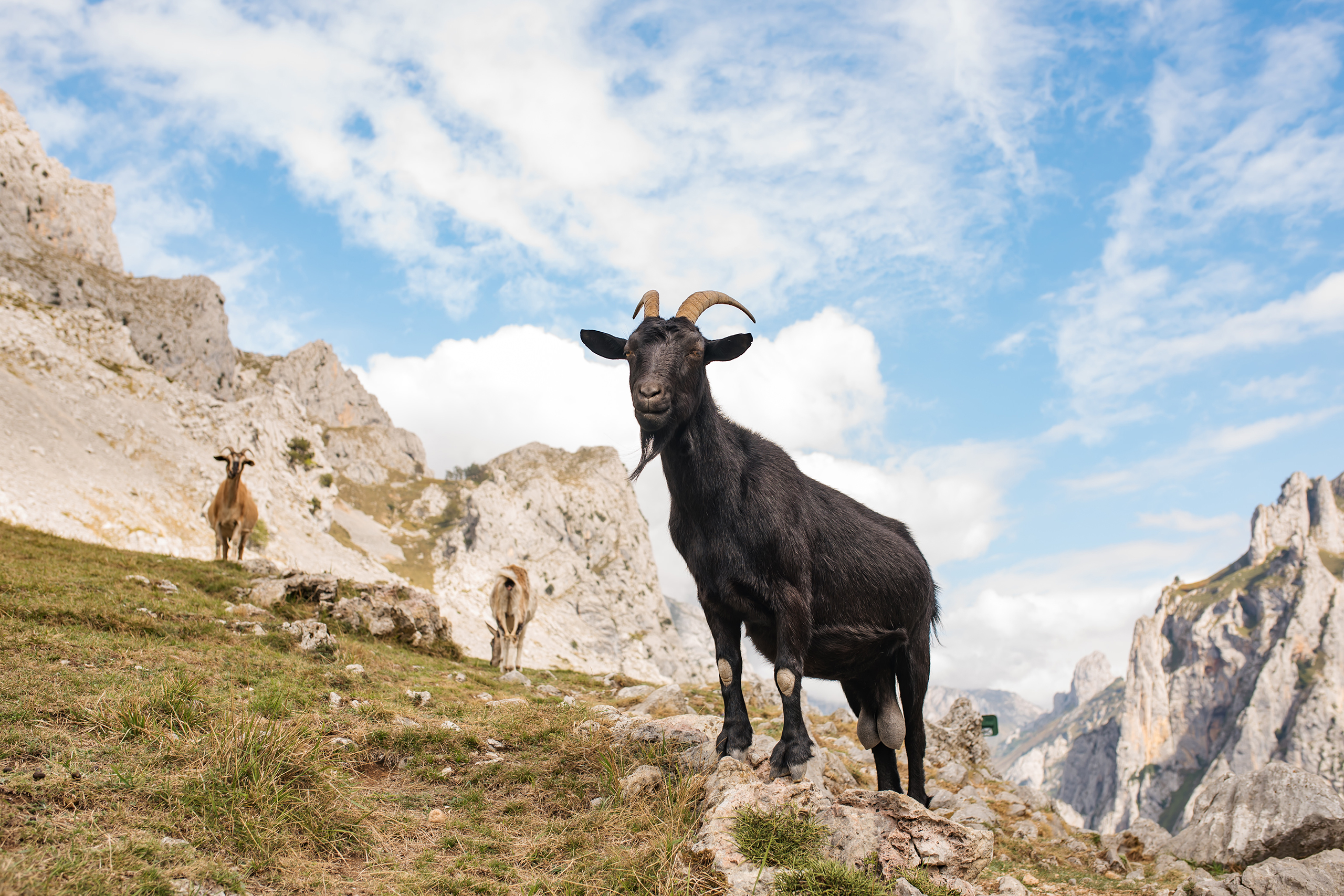

The Picos de Europa, three compact blocks of mountains sandwiched between the Bay of Biscay and the plains of Castile, in central Spain, rise to an altitude of 2,650 metres. Carved by glaciation and dissected by four rivers, these angular peaks are often overlooked in favour of Europe’s better known mountain ranges, but visitors are met by alpine scenes to rival anywhere in the world – even in spring, snowy peaks are mirrored in the twin glacial lakes of Enol and Ercina. I set out into the western massif, picking up part of the Anillo Vindio, a four-day circular route through the Picos, made possible thanks to a series of refuges that offer overnight lodgings for hikers and other passing visitors.
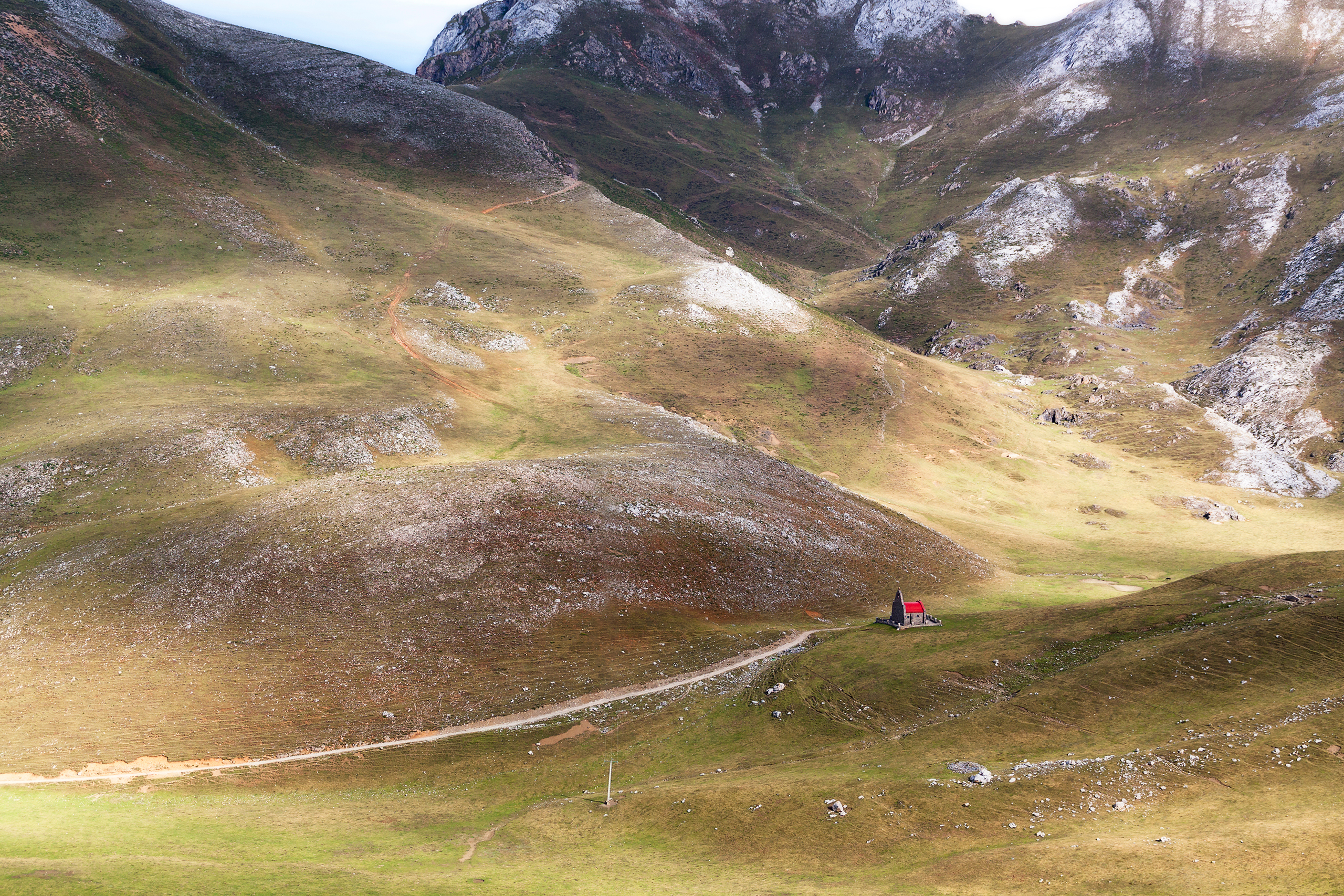
Big country: a mountain shelter
Early in my journey, I pass several majadas – low-slung cabins that still house shepherds, who bring their livestock to these pastures during the warmer months. Shepherds have done much to shape the region. The network of drove ways and trails they’ve carved into the mountains over time makes traversing the higher ground possible for less seasoned arrivals. The cheese they make – gamoneu, a blend of cow’s, sheep’s and goat’s milk, that is aged in limestone caves – is an Asturian staple. A scattering of local dairies have clocked up an impressive number of international awards.
With my altitude increasing, foothills and valleys punctuated by crocuses and orchids give way to rugged limestone karst. Paths weave between chasms. Rivers appear and disappear into sinkholes. Green lizards flash between rocks, and wild chamois hop from ridge to ridge. Previously distant peaks loom large ahead of me. Double-checking my bearings, I navigate jagged, uneven ground and trot slowly towards one of the Picos’ most spectacular viewpoints: the sudden knife-edge summit of Jultayu. I peer out over a sheer, vertical drop that plunges a kilometre down into the gorge below, where griffon vultures ride thermals far beneath me as a breathtaking panorama of the central massif rises on the other side.
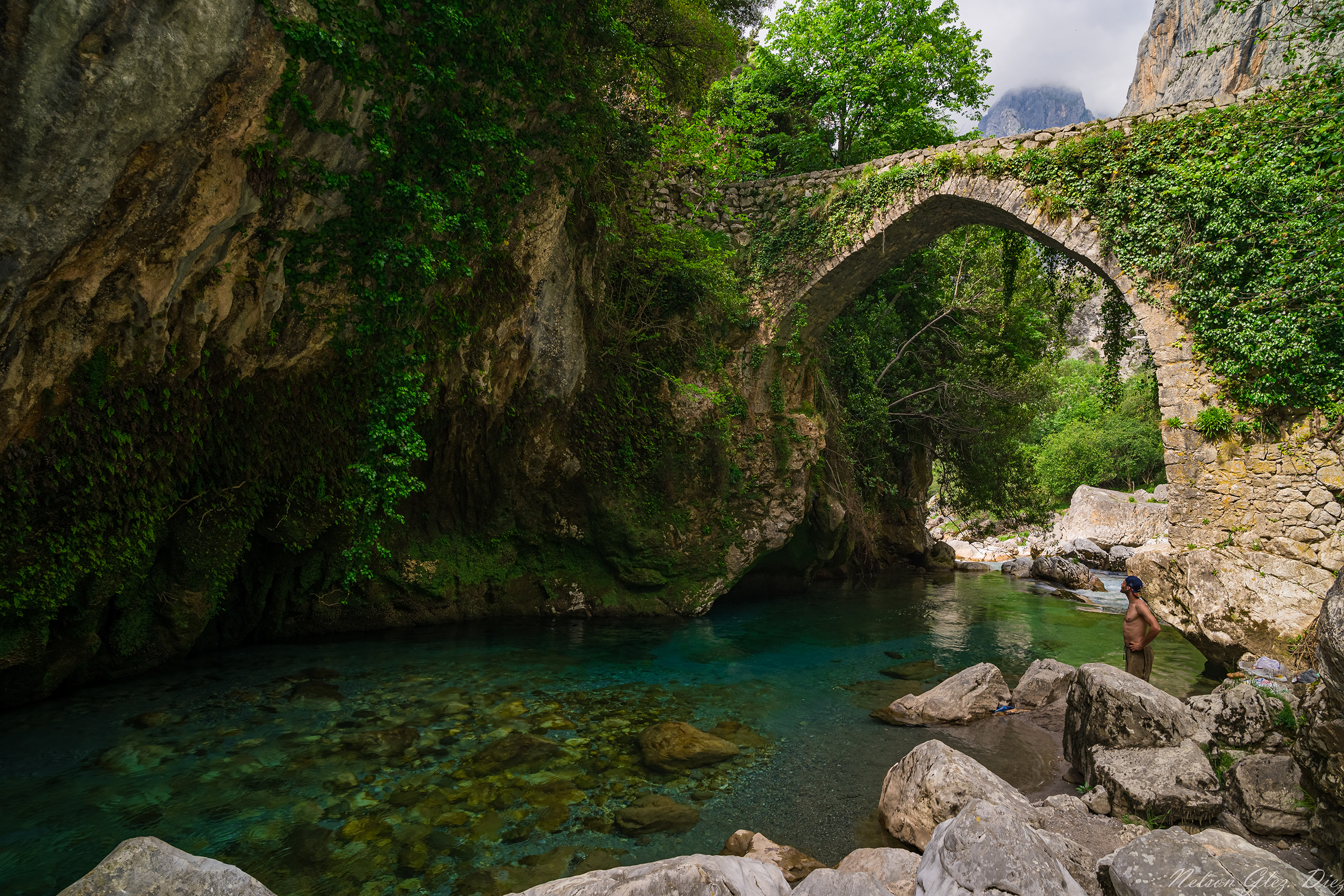
High water: a bridge on the Ruta del Cares
Following a wobbly descent, the sight of Refugio Vega de Ario ahead of me is a welcome one. As golden hour casts low light over this cosy stone cabin, an icy caña of Mahou beer is swiftly dispatched and Ignacio, a hardy Malaga native who’s headed up this refuge for 15 years, brings over a plate of local cheeses (gamoneu among them) sliced into wedges as rugged as the surroundings. New arrivals are welcomed with a swift debrief: Ignacio points out the water fountain, the upstairs dormitories and the wall of communal Crocs at the entrance, which feel like heaven once the hiking boots are kicked off.
At 8pm we descend into the dining room, filled with decades-old climbing memorabilia, where a communal meal of fabada asturiana, a stew of pork and beans ubiquitous across the region, is mopped up with crusty bread. Guests include a pair of trail runners seeking a change of scene from their native Pyrenees, army veterans on an annual jaunt, and couple from Bilbao in brand new gear. We swap stories over glasses of red wine. Before heading to my bunk, I wrap up and head outside, the mountainous skyline illuminated by a spectacular blanket of stars.
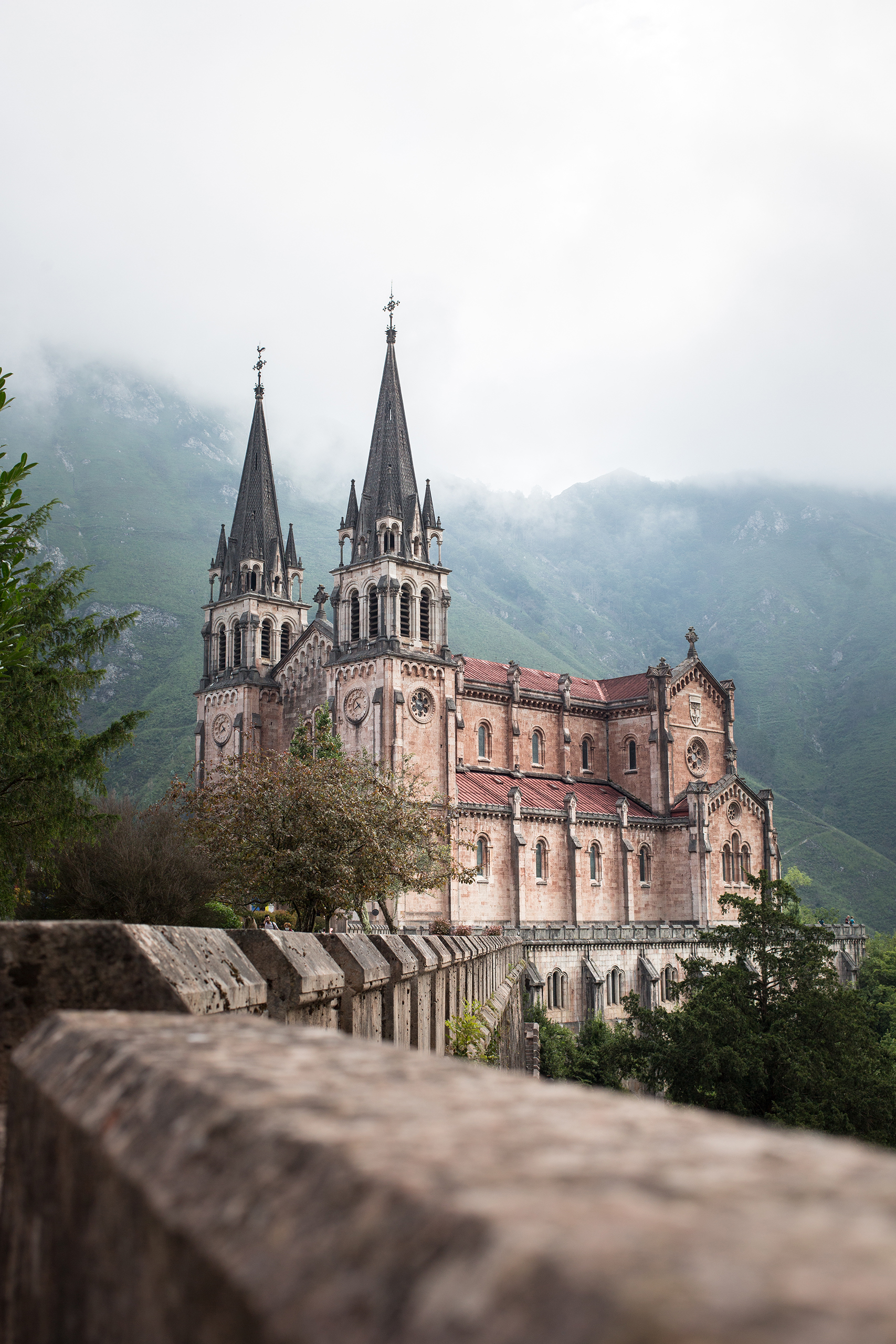
La Basílica de Santa María la Real de Covadonga
After a night punctuated by the occasional snore, the trail runners depart first, their wiry frames disappearing into the mist, while I await Ignacio, who hands me a packed lunch of bread, chorizo and apple, and points out the best route down the notorious Canal de Trea. Temporarily closed last year after wildfires, this treacherous path, marked intermittently by paint-daubed rocks and cairns, is one of the few descending into what writers of the romantic era called the Divine Gorge. As new shoots pop up from blackened soil, it requires intense concentration and surefootedness to negotiate scree slopes and never-ending switchbacks that, over two agonising hours, lead down to join one of Spain’s most iconic hikes, the Ruta del Cares. Heading south towards the village of Caín, another steep ascent leads to the Collado Jermoso refuge, which at above 2,000 metres puts the Picos’ most challenging peaks within reach to those hoping to conquer them within reach. Its vantage, on a west-facing precipice, makes for spectacular sunsets.
The Oviedo-born Cristina Montero has spent 14 years here as the refuge’s warden. “As anything can happen, we always have to be available,” she says, outlining a routine that spans domestic duties and carrying gear, as well as assisting and supporting rescue teams. Managing waste, which is hiked back down the mountain, power and water, which depends on the previous winter’s snowfall, presents constant challenges. “At the start of the season, we stock up as much as possible to make our provisions last, but we have to plan very carefully, since logistical failure could mean having to carry what’s needed on our backs. Whenever we go down and back up, we carry fresh items, but we try to ensure that everything else arrives by helicopter.”
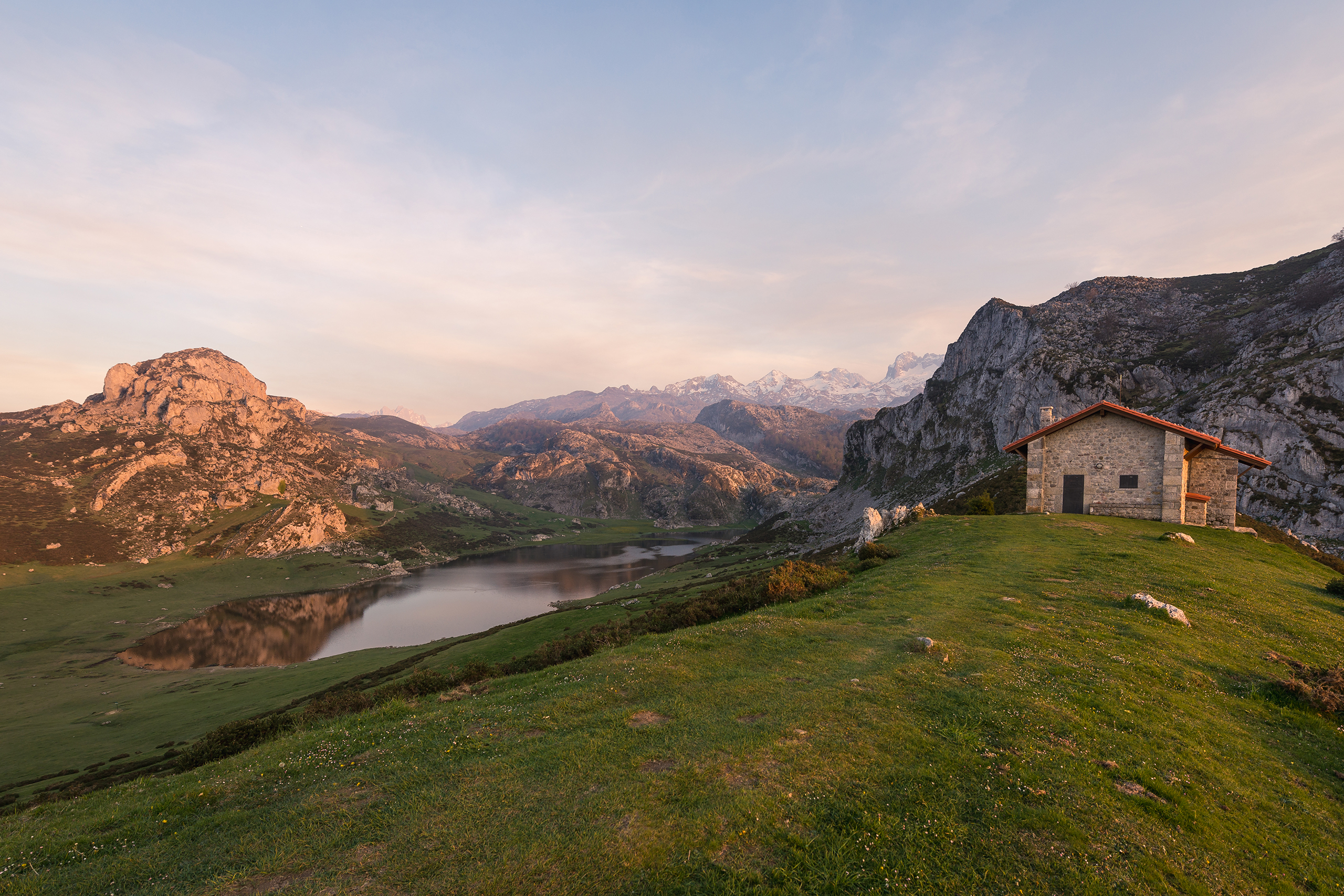
Gimme shelter: a refuge in the mountains
Montero fell in love with the Picos at the age of 10, and she remains intent on preserving what makes life here so special. “Within a relatively small range, there is incredible flora and fauna – and it’s such a luxury to me that you can stand atop a mountain, touching snow, while gazing at the sea.”
Photographs by Getty Images; Adobe Stock
Newsletters
Choose the newsletters you want to receive
View more
For information about how The Observer protects your data, read our Privacy Policy