

Walk down Kilburn Lane in Queen’s Park, northwest London, and you pass an unassuming building called the Linen House. Dating from around 1890, it’s one of the last hints that this road used to be lined with laundries, built to service posher households in Notting Hill. Today the area still has a light-industrial flavour – there’s a motorbike workshop, a fashion designer’s atelier and an organ restorer mixed in among the homes.
When the architectural designer Jonathan Tuckey first stepped into the building that would eventually become his home, it was a stainless-steel fabricator’s workshop. “I used to come to get kitchen counters made for projects,” he recalls. One day in the late 1990s, he overheard the owners planning to move the company out of London. “That was the beginning of our journey to see if we could buy it” – and buy it he did.
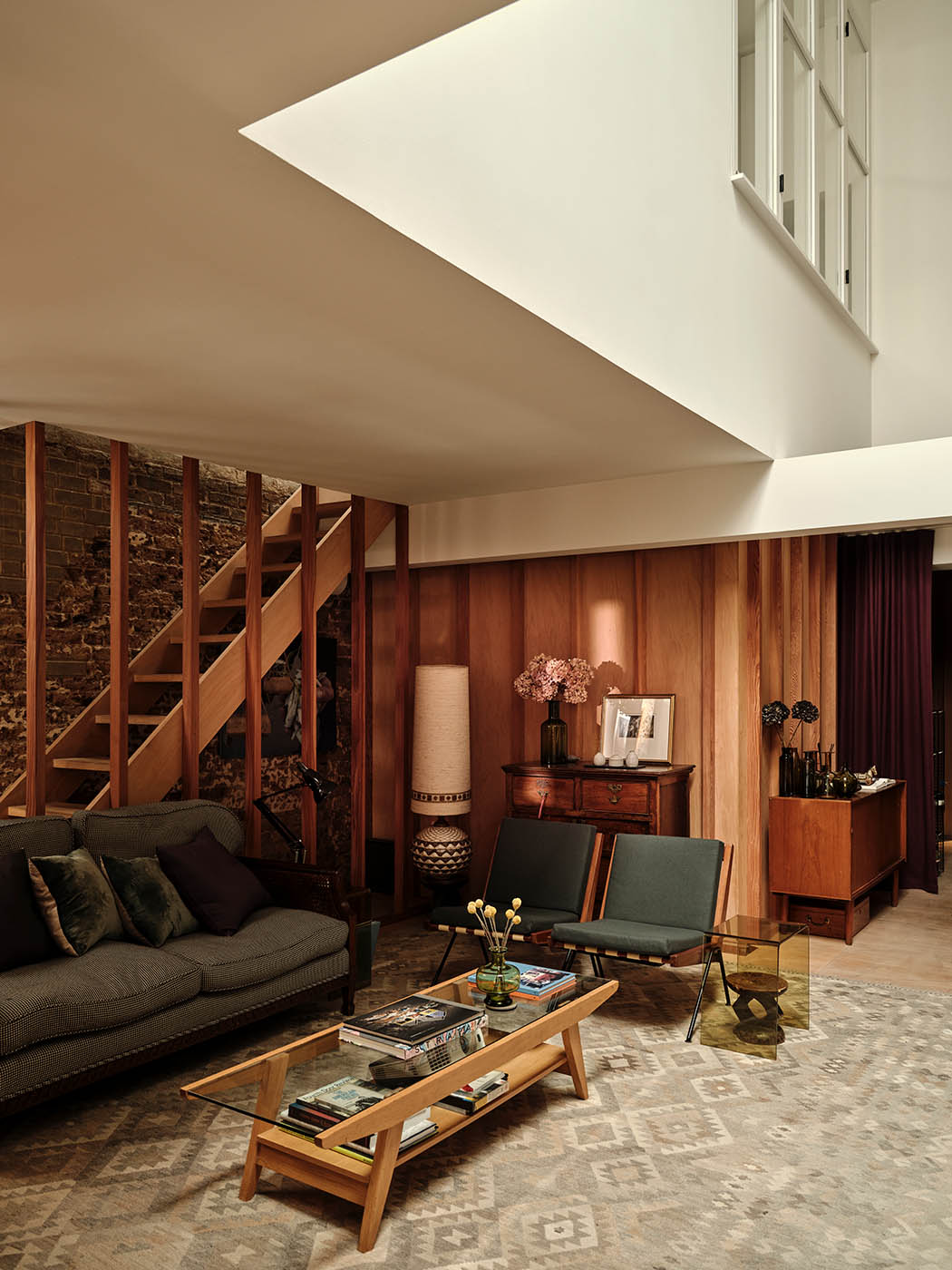
Another level: wooden stairs lead from the sitting room up to the guest bedroom
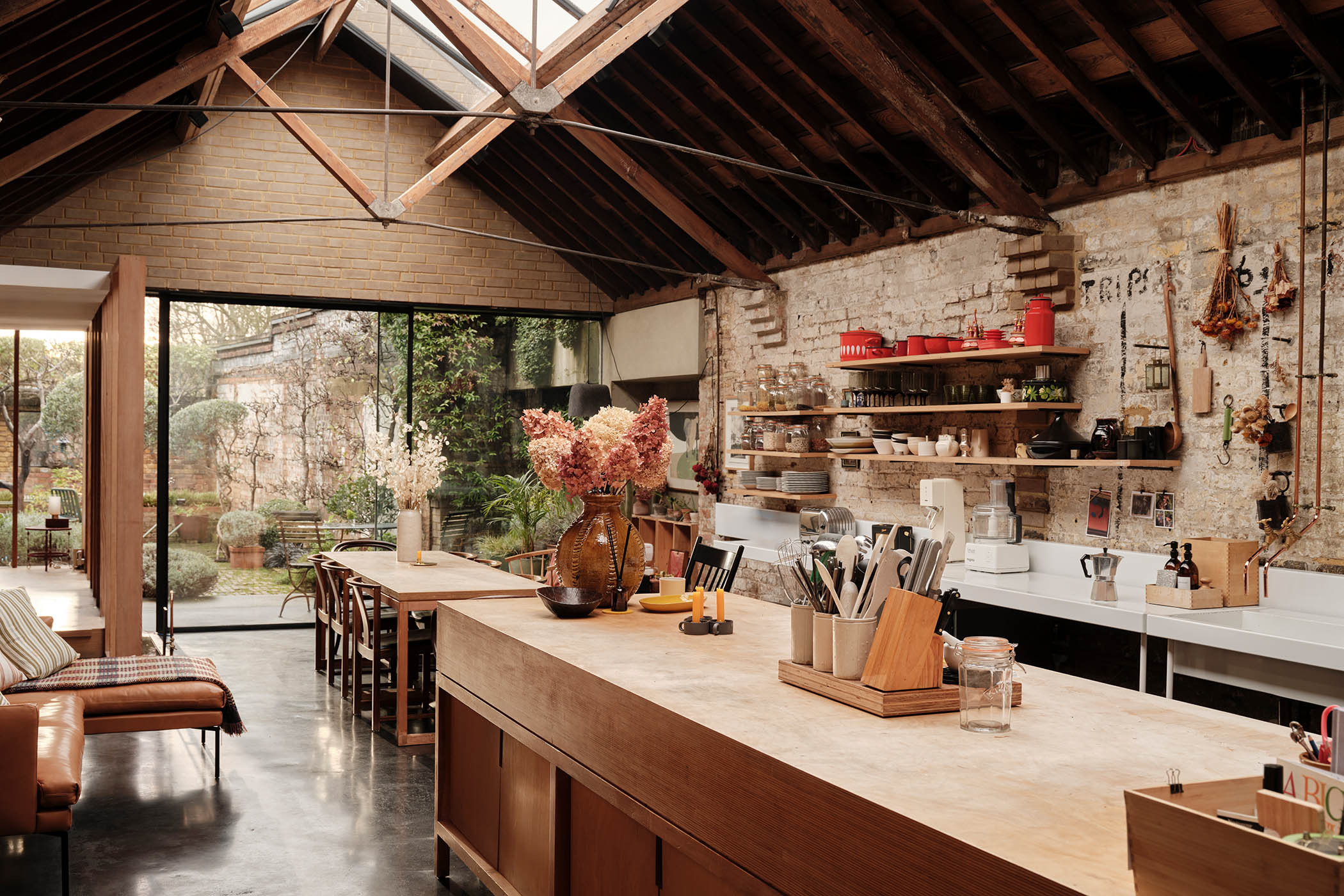
It was still three years before he and his family actually moved in, partly because his young design studio was busy with its first projects but mainly because the renovation was a colossal job. It was a “weird plot”, Tuckey says. He is standing in what is today a church-like, open-plan kitchen and dining space with a high, vaulted ceiling. It wasn’t so stunning 25 years ago. The ground floor was one massive L-shaped room, covered by a tin roof, with windows boarded up and no natural light. “It was a complete tunnel,” he says.
To solve the problem of the layout, Tuckey demolished the back part of the building to create a garden, then added windows looking into it. “I was inspired by parts of the world where courtyard housing is more commonplace,” he says. “Particularly in North Africa, where rooms get their calm, peace and nature from the courtyard.” (Before pursuing design, Tuckey studied anthropology.)
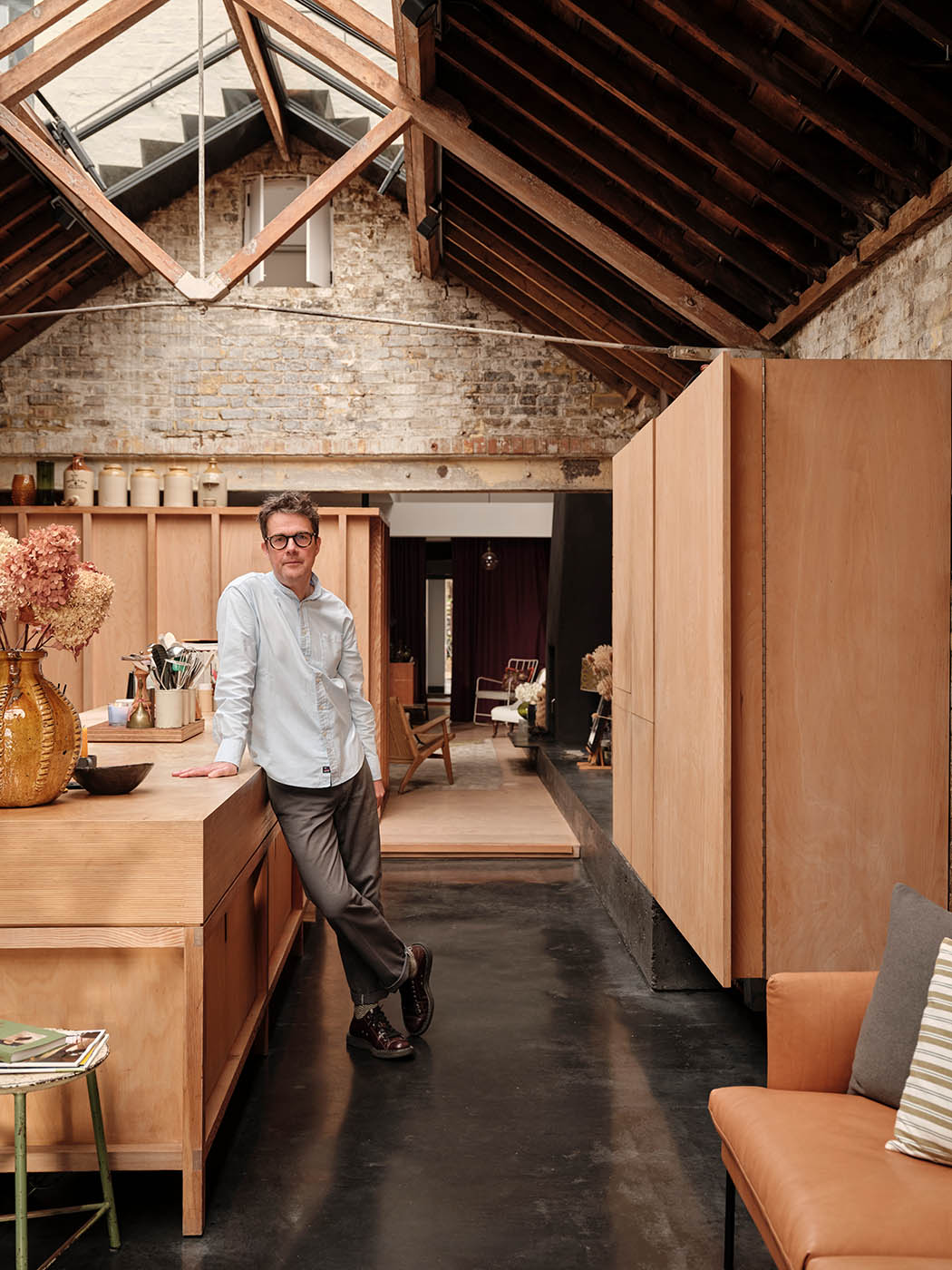
Architect on a journey: Jonathan Tuckey
The other challenge was the sheer size of the property. “When it was dark and full of catering equipment, it was difficult to get a sense of scale,” he says. “But the day we got in and all the stuff had gone, I thought: ‘It’s absolutely enormous.’” That scale shaped the home’s aesthetics. “Our choices were born out of having to stretch our budget over a much bigger space than we’d imagined.” Instead of paying to plaster “acres of wall”, he left the brickwork exposed and kept the chipped paint that demarcated where different types of steel were stored.
Everything else followed from that decision. “If you’re going to see the walls, how do you take the same approach to plumbing?” Tuckey asks. The answer was to reveal the pipework that is usually hidden in homes. He went to a plumbing shop and found some copper pipes. “It looked so beautiful,” he recalls. So he installed visible copper pipes in the kitchen and main bathroom. A polished-concrete floor was cheaper than wooden floorboards, so they simply poured that over the earthen floor.
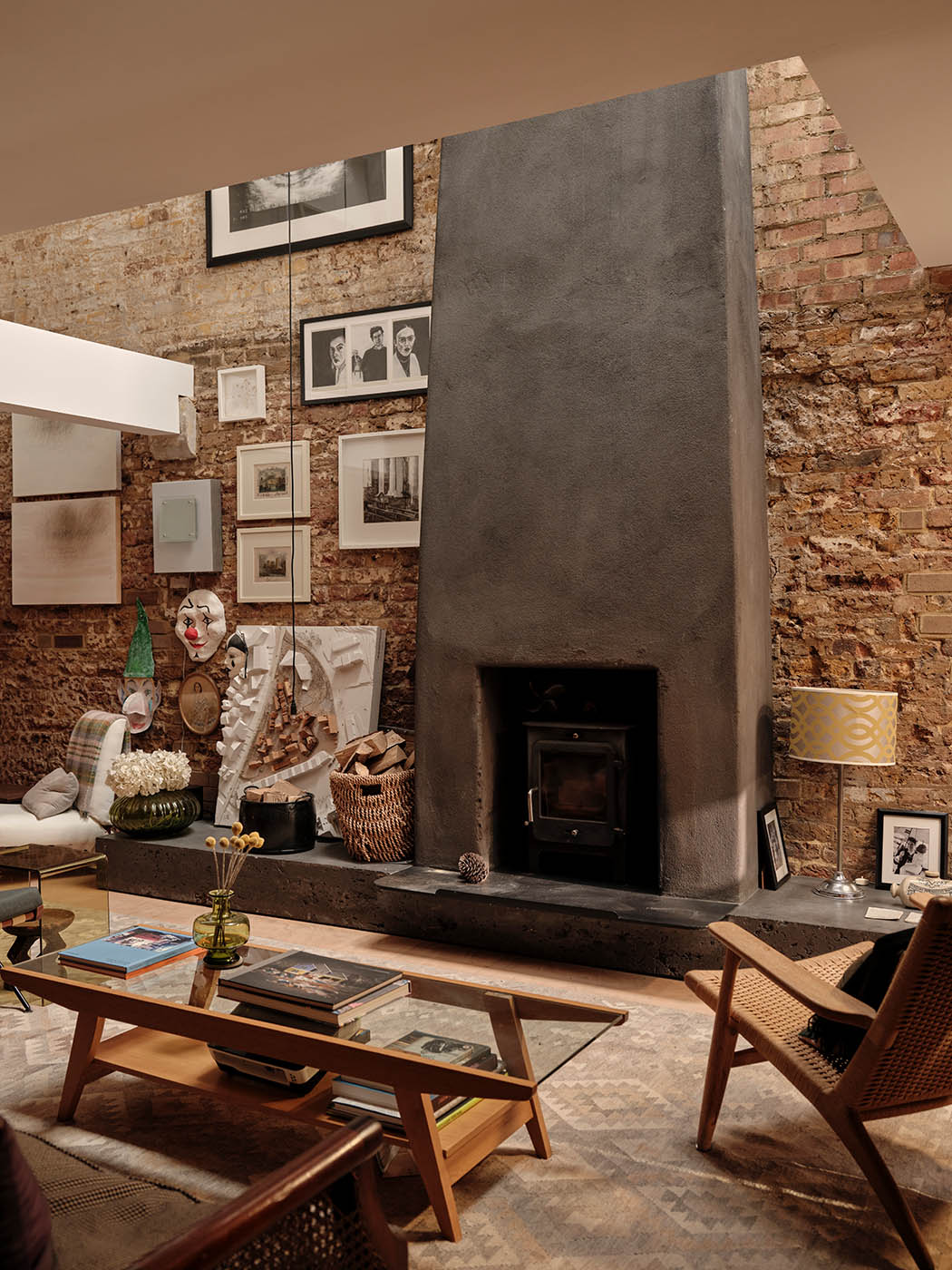
Hot stuff: the kiln-like chimney in the double-height living area
Exposed brickwork, concrete floors and copper pipes have, over the past two decades, become a shorthand for trendy urban interiors, the kind found in Shoreditch bars and £200-a-month gyms. It’s hard to imagine that this was once radical. “It feels completely normal now, but it definitely was not. I remember everyone coming in and asking, ‘When are you going to finish? Have you run out of money?’”
In a sense, they were right – he was trying to be “very frugal”. But he was also trying to retain the property’s character and history. “Our job was to find the building that had been concealed.”
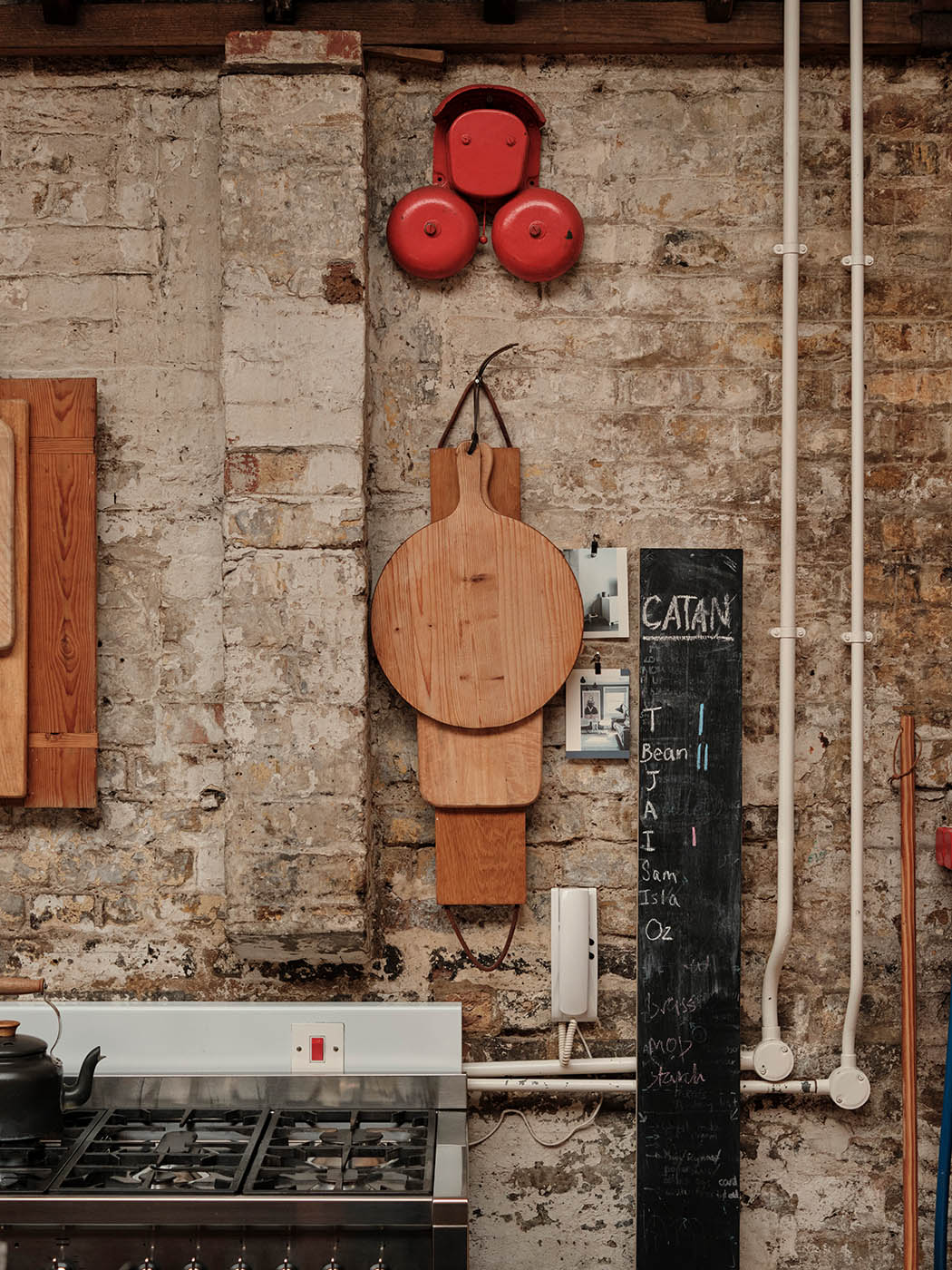
Ring the changes: red bells that used to signal the arrival of deliveries
The history of Tuckey’s eponymous design studio is hard to disentangle from the story of this home. He launched his practice in 1999 and bought the property in 2001. There was actually a period when he and his only employee worked in the old office above the derelict workshop, with just a small log fire to warm them (“very Dickensian”).
From the outset, he had a clear idea of what he wanted to focus on. “I said firmly: ‘We work on existing buildings; we don’t do new buildings.’”
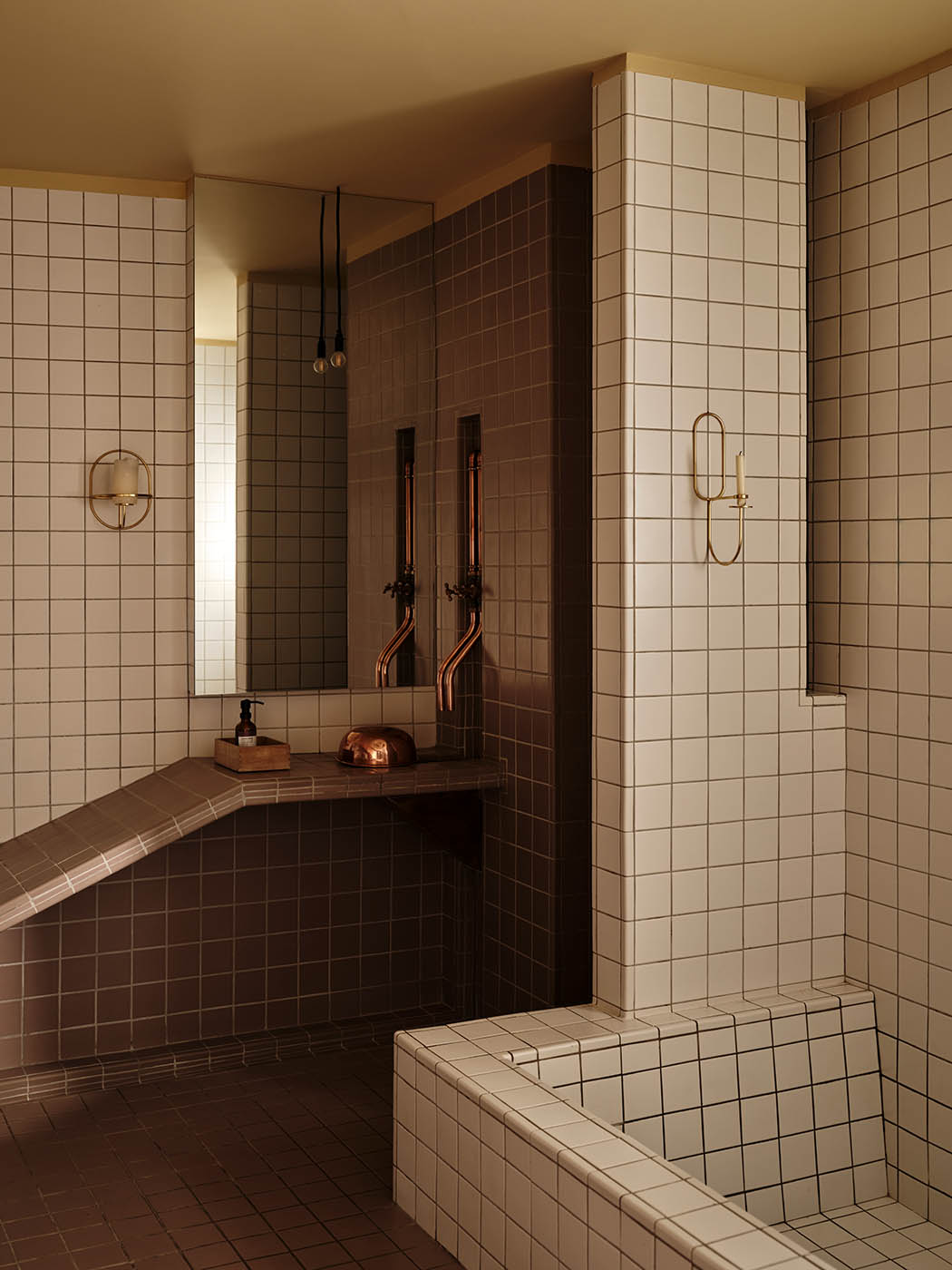
Tiles with style: the bathroom
Over the years, the house has served as a calling card for the studio’s philosophy, though sometimes it has been “unhelpful”, he says. “Look at the walls, for instance. Exposed brick works here, because we’ve got buildings on either side. But insulation-wise, it’s a disaster.” He was always wary of this aesthetic becoming trendy, because of this environmental issue. “That isn’t the future,” he says. “The future is making beautiful spaces and insulating them properly.” Nonetheless the house is a showcase for what you can do with existing buildings. Everywhere you look, the old has been given new life: the little window high up in the kitchen wall that once allowed the office to speak to the workshop below is now a fun way for guests to yell down to the kitchen. The red bell that used to signal the arrival of deliveries.
That mindset even carries through to the furniture. The desk in Tuckey’s office once belonged to the architect James Gowan (“What a privilege to sit at the same desk”). The upstairs bathroom is clad in repurposed worktops from the science lab of a nearby school. As we talk, a grandfather clock (a family heirloom) chimes every 15 minutes. “There’s a familiarity to its ring that induces a lot of good memories for me,” he says.
The bed in the master bedroom previously belonged to his grandparents. “I remember them reading to me in the morning, when my parents were still asleep,” Tuckey says. A slightly paler panel of wood reveals where he had it widened. “We took the same approach as we do to our buildings,” as he puts it.
This is no museum, though. There are countless traces of a home full of life, from the scratches on the sturdy kitchen island (made by dancing feet during parties) to the blackboard that keeps score in an ongoing family league of the board game Catan.
Meanwhile, along one wall by the tall, black-plastered chimney (designed to resemble an industrial kiln, says Tuckey), there is a raised “plinth” covered in objects. “We wanted a place to gather the souvenirs of life,” says Tuckey. “It’s curated, but it’s always changing.”
Newsletters
Choose the newsletters you want to receive
View more
For information about how The Observer protects your data, read our Privacy Policy