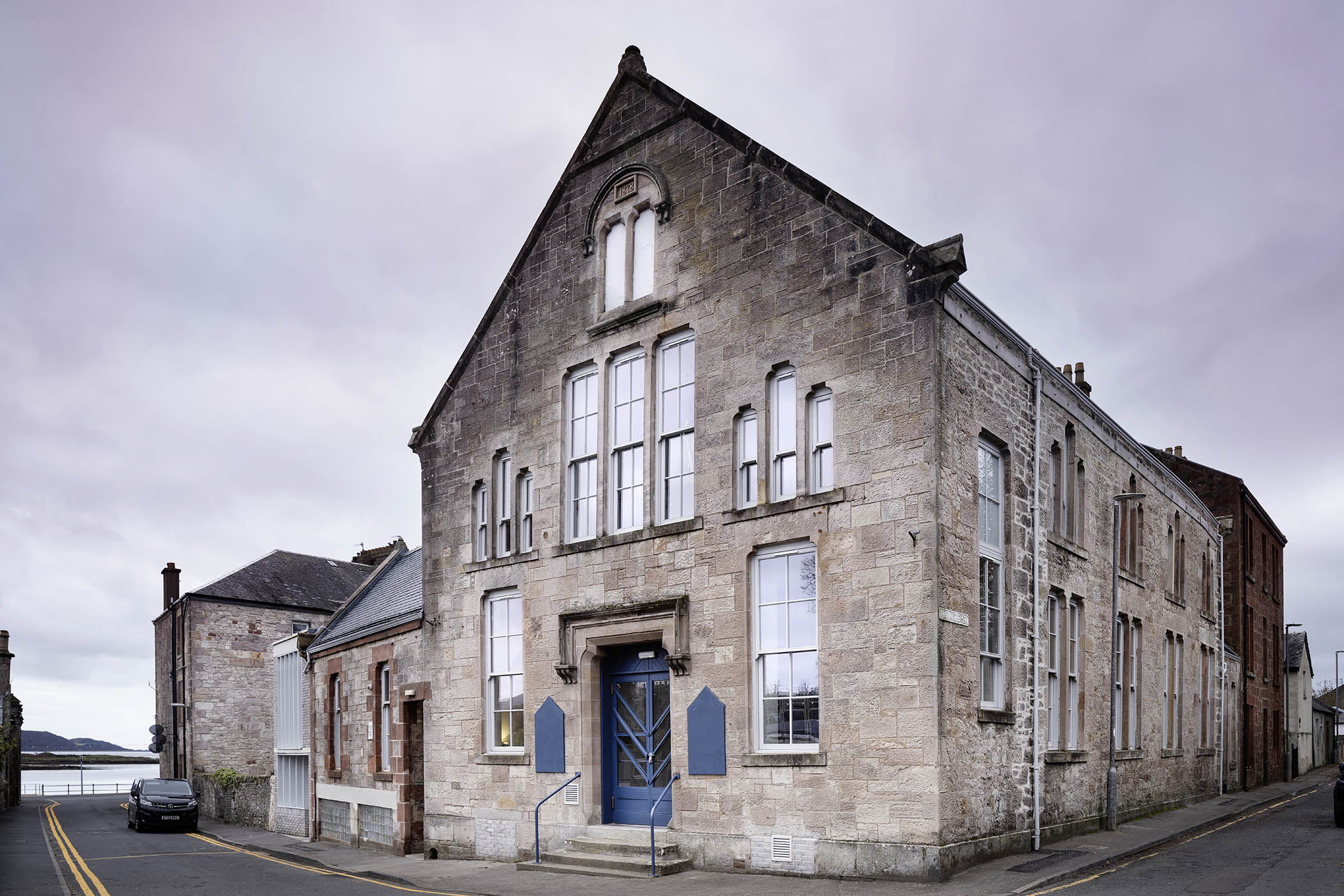

“This project is all about the spirit of community,” says Rhona Gourley, resident of the Scottish island of Great Cumbrae, about the revival of Millport Town Hall that she and a dedicated band of fellow campaigners helped bring about. It’s a line you hear often, with varying degrees of conviction, in relation to regeneration projects up and down the country. Here it looks like the real deal. A Victorian building that was once at the heart of the town, then seemingly doomed to destruction, is brought back to life by concerted popular effort.
Millport (population approx. 1,200) is the only town on the island, which sits near the mouth of the Clyde to the west of Glasgow, between the mainland and the Isle of Bute. It is a place both remote and connected. Anne Brown, who has lived all her life on Great Cumbrae, can remember a “wonderful but challenging” time when there were only three car ferries a week and going to school meant staying on the mainland. The island was “quiet and protective”, and leaving it was terrifying.
At the same time Great Cumbrae’s relative proximity to Glasgow puts the bare beauty of western Scotland, and an ancient place that features in a Norse saga, in reach of urban holidaymakers. Millport has been a popular resort since Victorian times, giving it a fringe of handsome houses and villas in stone and render along its waterfront. It boasts the smallest cathedral in Great Britain. It inspires affection: “I came here as a kid for the whole of August,” says Susan Hunter, another of the hall rescuers, and “I moved back purely because of my love of Millport.”
The town hall, designed by an unknown architect in the 1870s, is a stone barn of a building in an eclectic baronial-esque style. Its chief use was to create an all-purpose space for performances and gatherings. The main hall is covered by an intricate vault like the skeleton of an unknown animal, made up of small pieces of wood. Film matinees were held here every Saturday, fondly remembered by residents and visitors.
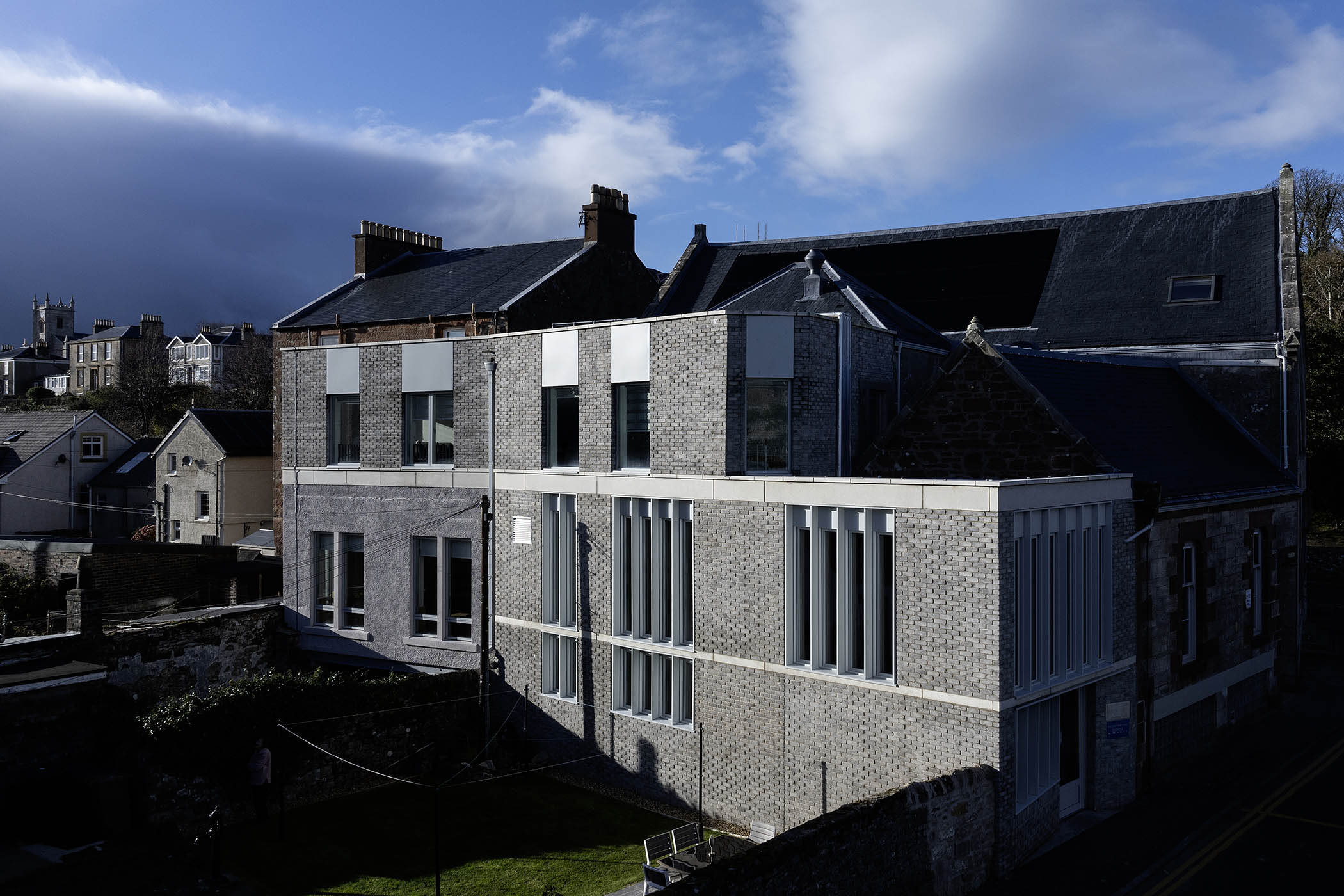
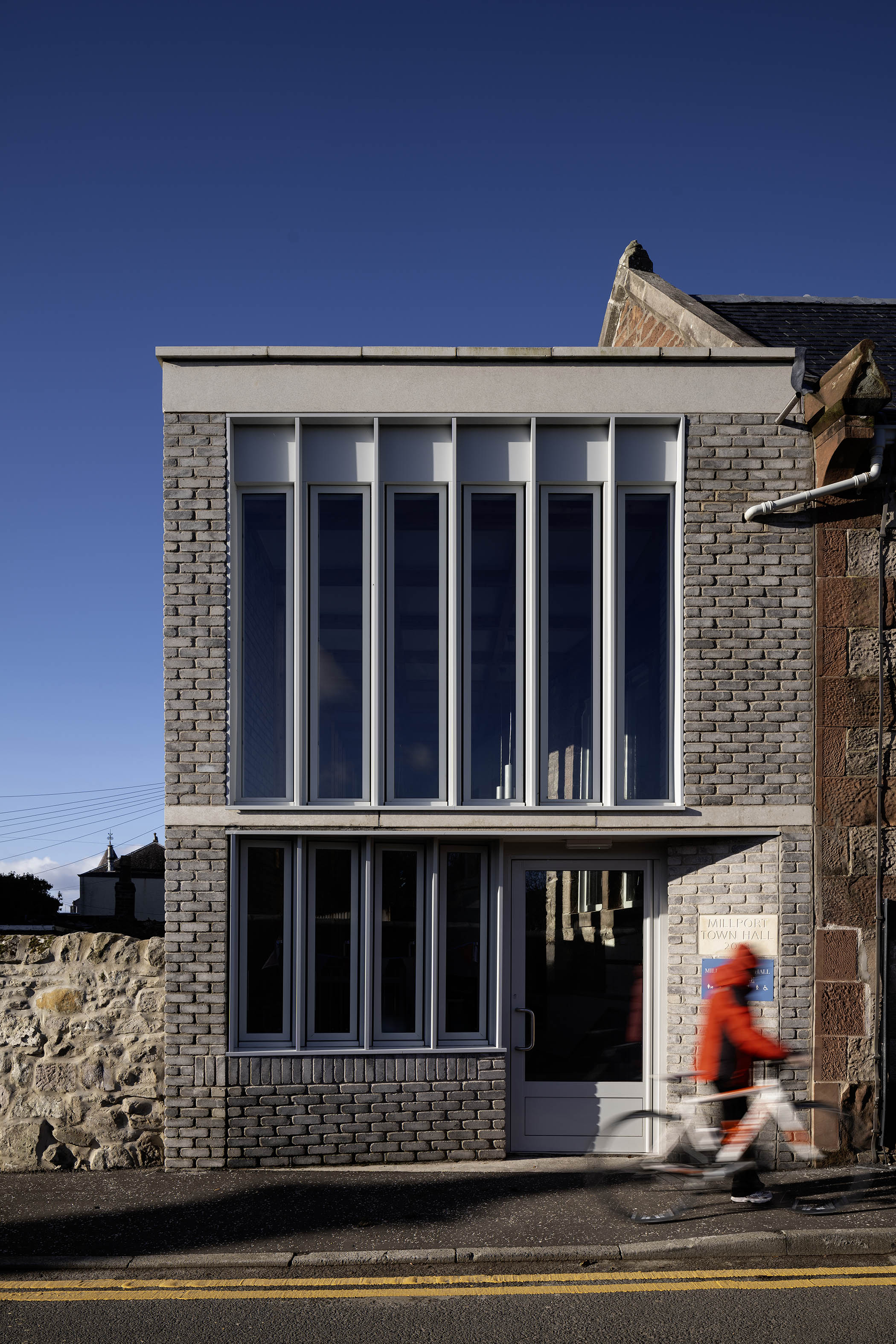
O’Donnell Brown’s designs are ‘complementary rather than imitative’, with an extension sliding down the side of the old building and, below, a ‘vertical rhythm of windows’
By 2015 it was closed and falling to pieces – a “deathtrap”, I’m told, with water running down the walls and mingling with the electrics. The building’s remaining uses were to provide toilets and local authority stores. Demolition seemed the only option. The people of Millport, however, disagreed. With the help of North Ayrshire council, they set about the labour of giving it a future.
A charity was set up, with a board led by Angie McCallum, one of the staunchest campaigners for the hall. There had to be a credible business plan, the legal transfer of ownership arranged, and 146 funding applications made. Support would eventually come from more than 30 different organisations, including the Scottish government, the Scottish Crown Estate and Thomas Tunnock Ltd, maker of the famous teacake. Locals lent space for storing building components, donated furniture, organised meetings and fundraising events, gave their time and sponsored bricks and plaques.
There were setbacks – Covid, rising construction costs, unpleasant surprises in the fabric, bad weather, which complicated the already expensive business of transporting building materials over the water. But, with what Craig Hatton of North Ayrshire council calls “sheer tenacity”, the group kept at it.
The result, designed by the Glasgow-based architects O’Donnell Brown, is a main hall filled with light, as it has not been for decades, with windows unblocked and a suspended ceiling removed. There’s a smaller hall to one side, an art room, a bar. An extension slides down the side of the old building that takes you down to a foyer and an exhibition space. There are three holiday-let apartments carved out of the upper levels of the complex, to help provide the income to keep the hall going.
It’s a layered building, with the patched and worn stonework of what were exterior walls now revealed on the inside, and fragments of old tiles and terrazzo. The new work is complementary rather than imitative, with timber structures in the ceilings, stone-toned brickwork and a vertical rhythm of windows that echoes the old building. It’s built on a budget, with moments of improvisation when money ran short. The reception desk, for example, is made with mahogany boards going spare from another of the architects’ jobs.
Now the town hall is a vessel for the life of the community. It opened with a concert by a Neil Diamond tribute band, and there’s a bridge club in progress in the smaller hall when I visit. It will be used for weddings and parties. The exhibition space displays items donated by residents and found in the old building – glimpses of bygone lives that include a poster announcing 1970s beauty contests, a chunky movie projector, a child-sized red rocket ship from a funfair, and precise models of old boats.
Newsletters
Choose the newsletters you want to receive
View more
For information about how The Observer protects your data, read our Privacy Policy
The project creates a space for the future that connects with the past. At the hall’s opening, says Gourley, “a lady up from Bristol burst into tears. She used to come here and go to the town hall.” Which is, surely, a sign of success.
Photographs by David Barbour/O’Donnell Brown