

Photographs by Sophia Evans
It’s the best of places, it’s the worst of places. There’s a new health centre in rose-tinted concrete, dignified and thoughtful in its design, and next to it is a new library with a block above that contains 122 flats, including social rent homes for over-55s. It’s “brilliant” says John Charnock, a 90-year-old retired carpenter. “Moving there is the best thing I’ve ever done.” A short distance away, some of the best council housing you’ll find has recently opened: well insulated, with leafy courts and streets, and views of a neighbouring park.
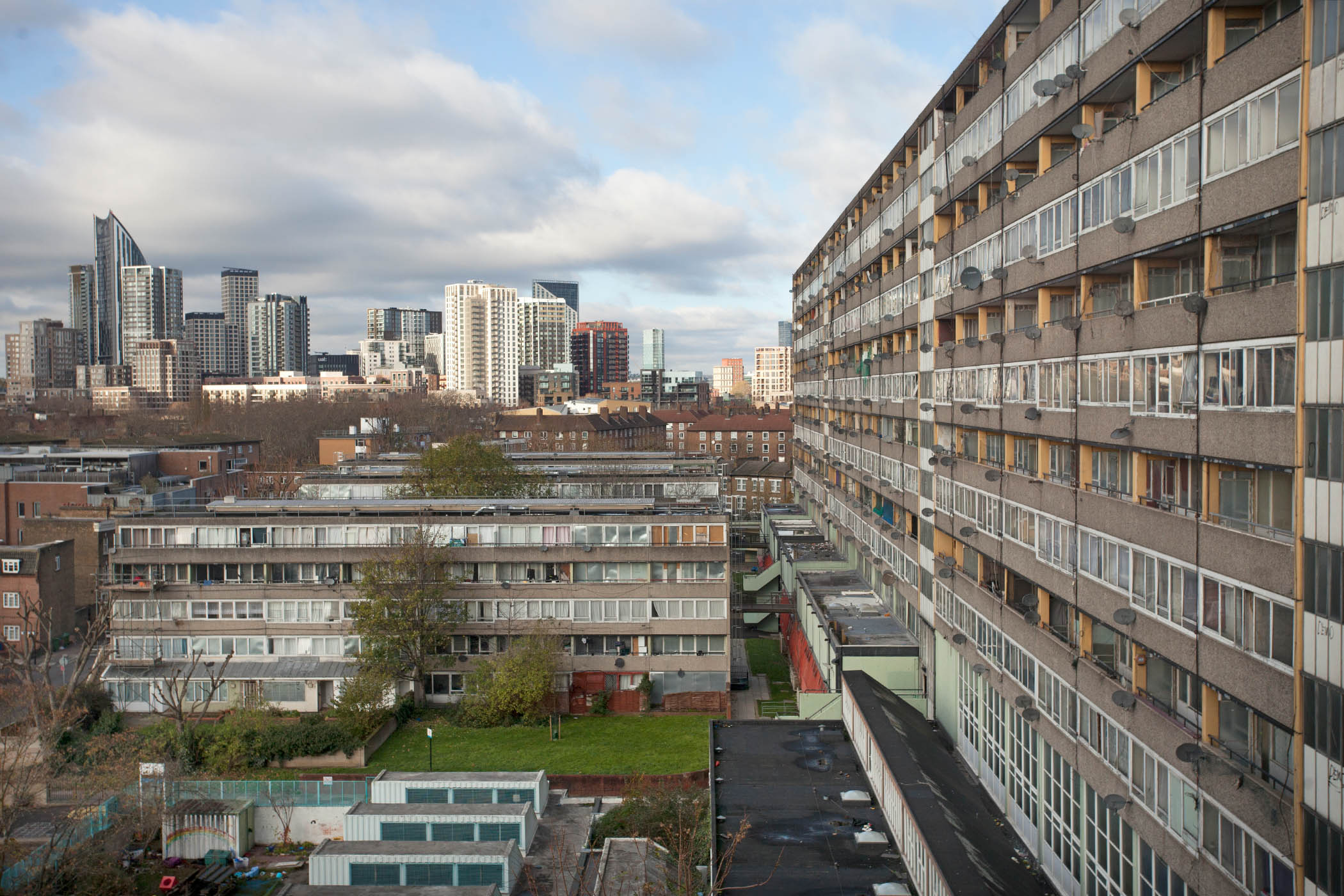
Then again, across the road from the health centre are blocks of vacant flats littered with shattered glass, human excrement, cups of urine and used needles – and where multiple fires have broken out. “It looks disgusting and very unwelcoming,” says Kam, who lives there with her children, aged four and seven. “You don’t want to go outside; there are loads of people sitting on the stairs, there are binbags burst open with nappies everywhere.”
This is the Aylesbury estate in Southwark, south London, sometimes called the largest regeneration project in Europe, or at least one of them. A classic example of 1960s council housing – repetitive blocks up to 14 storeys high, spread over 28 hectares (almost 70 acres) and providing approximately 2,700 dwellings for about 7,500 people – it was built in the name of efficiency, with prefabricated concrete panels mass-produced in factories. It has been demonised; the conventional wisdom being that such places can only be hellholes.
In 1997, Tony Blair came here to make his first speech away from Westminster as prime minister, posing next to a policeman on a concrete balcony. “There will be no forgotten people in the Britain I want to build,” he announced.

‘Moving here is the best thing I’ve ever done’: John Charnock, 90, has lived on the Aylesbury estate, far left, since 1972
“There are estates,” he continued – clearly including the Aylesbury – “where the biggest employer is the drugs industry, where all that is left of the high hopes of the postwar planners is derelict concrete.” The message was that his government would get rid of such places.
Almost 30 years later, much of it is unchanged – some better and some of it worse than before. The best of the new work offers glimpses of what successful public provision could look like, and some positive change – after decades of political and journalistic pronouncements –has at last happened. The problem is that its delivery is achingly slow.
The story of the Aylesbury raises other questions. Was the estate really as bad as Blair and others made out? And were the sweeping plans of demolition and reconstruction that flowed from these perceptions the best way to address their problems? In recent years, the construction industry has discovered the environmental benefits of refurbishing rather than destroying old buildings. Could this yet be done here? And would it have helped if the Aylesbury estate was treated as a series of neighbourhoods, rather a giant problem to be solved?
People who’ve lived there a long time are keen to challenge the notion that the Aylesbury was the den of misery and crime portrayed by journalists and politicians.
Longstanding residents speak of the strength of the communities there, and of the well-lit and generously proportioned flats. “I sometimes come home at 4 o’clock in the morning,” says Josephine Ocaka, a worker in a local church who has lived on the estate for 35 years. “I don’t think that it’s scary or anything.” Ketzia Harper, a local councillor who has lived on the Aylesbury for 10 years, says she experienced no crime until recently, when someone stole her doormat.
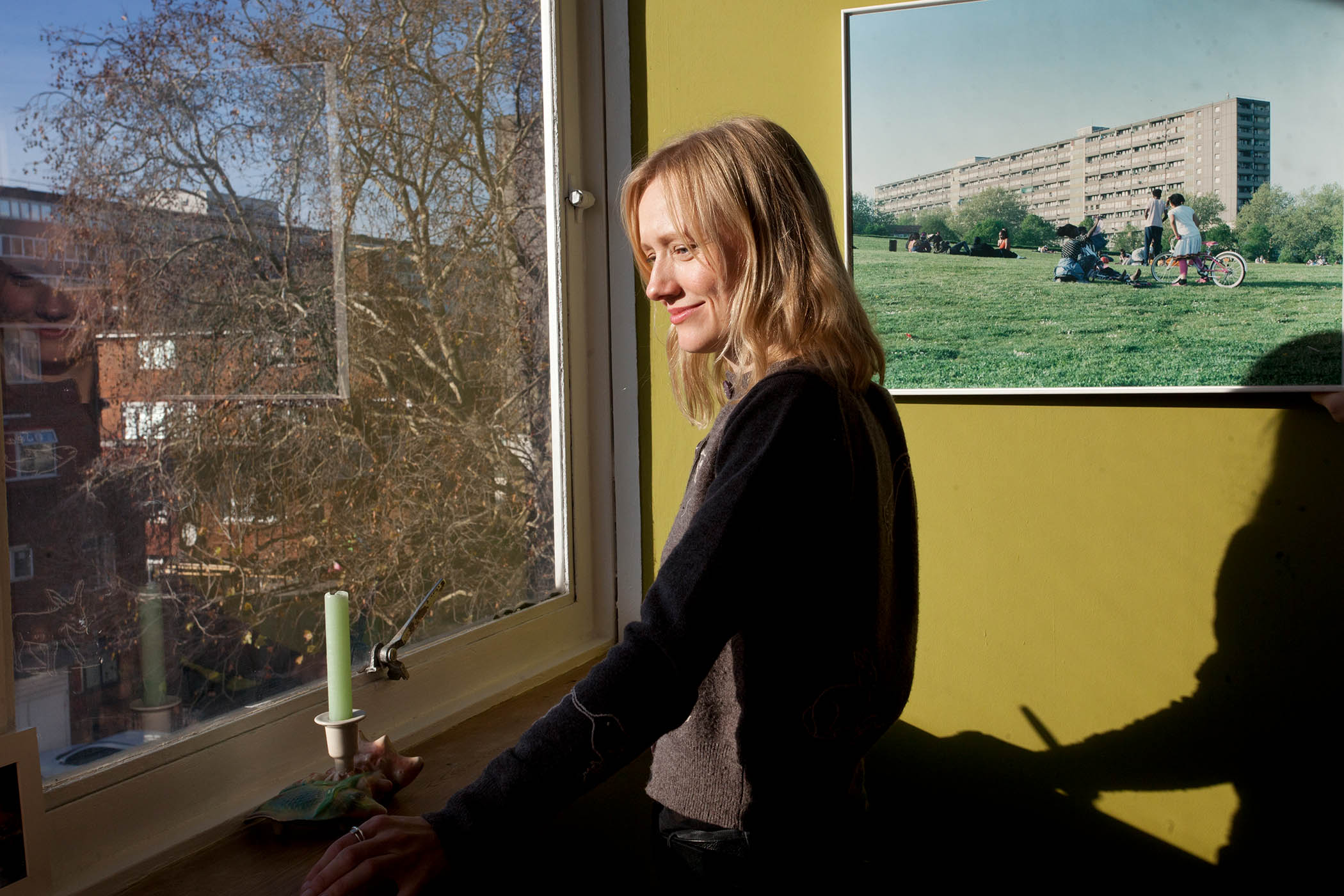
Ketzia Harper, a local councillor who has lived on the estate for 10 years
Residents resent negative media portrayals of the Aylesbury in the many crime shows that use it as a location and in TikTok videos made in front of parts of the estate that are due for demolition. I ask Charnock, who has lived there since he moved in with his young family in 1972, what he thought when Blair came and made his remarks. “Cheeky sod,” he says. It’s not that they think everything is perfect; only that they don’t recognise these caricature versions of their home.
The Aylesbury estate was conceived in 1963, designed by Hans Peter Trenton and Frank Hayes of the London borough of Southwark’s architects’ department, and built from 1967 to 1977. It replaced an area made up of streets of small houses, mostly from the 19th century, with poor sanitation, many of which were not expected to last more than 15 or so years. Although the Aylesbury blocks took their names from bucolic Buckinghamshire towns and villages – Taplow, Missenden, Foxcote – its construction was to be industrial and its extent vast.
This was a time when government and contractors encouraged the building of homes with repetitive factory-made components – in this case, the Danish Jespersen 12M precast concrete large panel system. Following the contemporary belief in separating pedestrians from vehicles, miles of raised walkways and bridges were built. Meanwhile, a new 56-hectare green space, Burgess Park, was to be created next to the estate.
For Charnock and his family, there was much to like about their new home. In their previous lodgings, they had to share a toilet with other residents and, he says, “my wife had to go to her mother’s to have a bath”. He had to go to the local public baths for a proper clean. Now “you had hot water running out of your ears”.
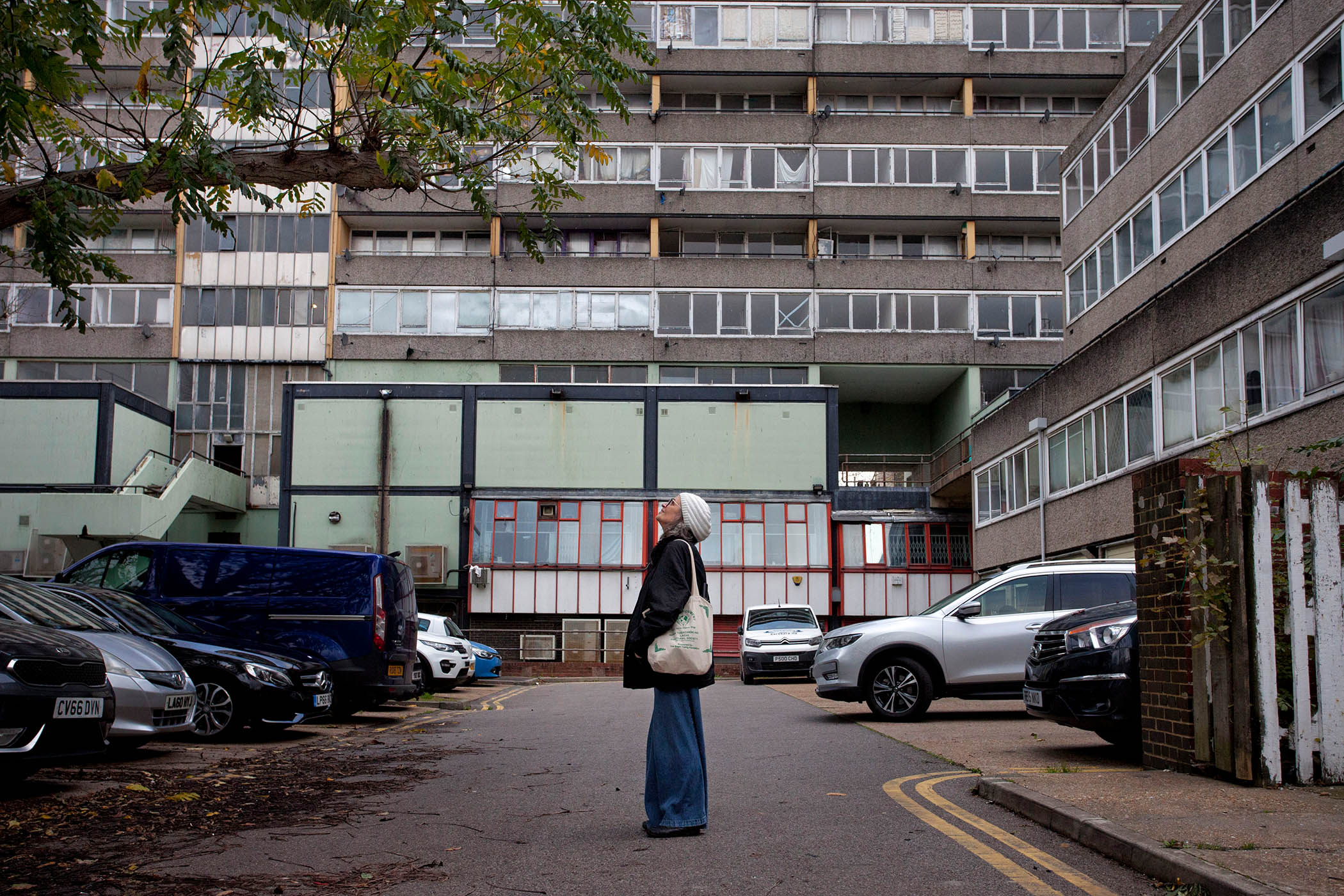
Resident Laura Fudge outside the estate’s Taplow building
Some residents speak well of the walkways; examples of the “streets in the sky” favoured by 1960s architects that are now almost universally considered to be catastrophic, and later partly demolished at the request of the police. “I really like them – you meet neighbours on them,” says Harper, while others remember them as safe places for children to roam away from cars.
But doubts were raised about the estate’s design even before it was finished. The “extensive areas of bare concrete, asphalt and cheap obscured glass” were, according to a 1973 report by Southwark’s architects’ and planning department, “an insult to the many tenants who are proud of their homes”.
“An epitaph to a council dream that turned into a nightmare,” said the South London Press in 1976 of a topping-out ceremony on one of the blocks. The Pevsner Buildings of England guide for London south calls it an “impersonal megalomaniacal creation”.
The stage was set for what the historian Holly Smith in her new book on high-rise living, Up in the Air, calls the “theatre of stigma”. On the one hand, there were outsiders who looked at the architecture and assumed the worst; on the other, residents insisting that, as the historian Michael Romyn put it in his 2020 oral history of the Aylesbury, it was “mostly normal, unremarkable; a place of routine and refuge, of rest and recreation, of family and familiarity”.
This is not to say there were no problems. There was crime, albeit at rates no worse than in other parts of Southwark. There was deprivation, although this was a reflection of housing policy that favoured the most needy – people were poor before they came to the Aylesbury, not because the architecture made them so.

Uthmaan, an 18-year-old who lives on the estate, on his way to a university lecture
The buildings had faults – including, in Smith’s words, “water penetration, poor insulation, rebounding noise, central-heating failures, and lift breakdowns” – made worse by cuts in maintenance budgets in the 1980s.
And while there are peaceful pockets of green that bely the estate’s image as a concrete jungle, much of its open space is definitely bleak and unfriendly.
Most residents would happily see the concrete blocks replaced with the type of architecture seen in the new housing, but they also want to be secure in their homes and to get on with their lives. They want whatever is going to happen to the estate to happen quickly, or at least less glacially than the many false starts so far.
Blair’s speech was followed by the granting, in 1999, of £56.2m of funding to improve the Aylesbury. In 2005, the local council announced its plan to demolish the estate and rebuild it with more than 2,000 additional homes. In 2010, it launched the Aylesbury area action plan, under which it would partner with housing associations to redevelop the estate.
In 2014, an agreement was made between Southwark council and Notting Hill Housing (now Notting Hill Genesis) to rebuild the estate over the next 20 years. A masterplan was drawn up by a team led by the architects HTA, where walkways would be replaced by smaller-scale blocks, with new streets, squares, pocket parks and play areas between them.
Newsletters
Choose the newsletters you want to receive
View more
For information about how The Observer protects your data, read our Privacy Policy
Even the most ardent fans of brutalism would be hard-pressed to argue that the work completed so far is not an improvement, but 12 years on from the agreement, only 1,111 new homes have been built out of a planned 4,055. The proposed deadline to complete the development by 2036 seems increasingly unlikely.
Meanwhile, residents must endure neglect. Some flats have been “voided” in anticipation of demolition, closed off with security doors that are often prised open by squatters and drug users. The drawn-out promise of renewal is turning parts of the estate into the hellhole of antisocial behaviour it has long been accused of being. Maintenance of other homes has declined, says Harper, though the council denies this. She says residents don’t bother with the tedious process of getting repairs done, believing their homes are temporary. “The stress and uncertainty of not knowing what is going on takes an emotional toll.”
One reason for the slow pace of change is a long war of attrition between the council and many residents. The plans required leaseholders – people owning flats originally sold by the council under right to buy – to be bought out. Unhappy with the amounts that they were offered for their homes under compulsory purchase orders, they challenged them in court.
In another legal case, a resident won a judicial review against a planning application by Notting Hill Genesis for the still undeveloped phase 2B. It had to go back to the drawing board. In the meantime, external factors intervened: inflation caused in part by the Ukraine war pushed building costs up, and heightened building safety requirements added another degree of difficulty. The longer the project goes on, the more obstacles appear.
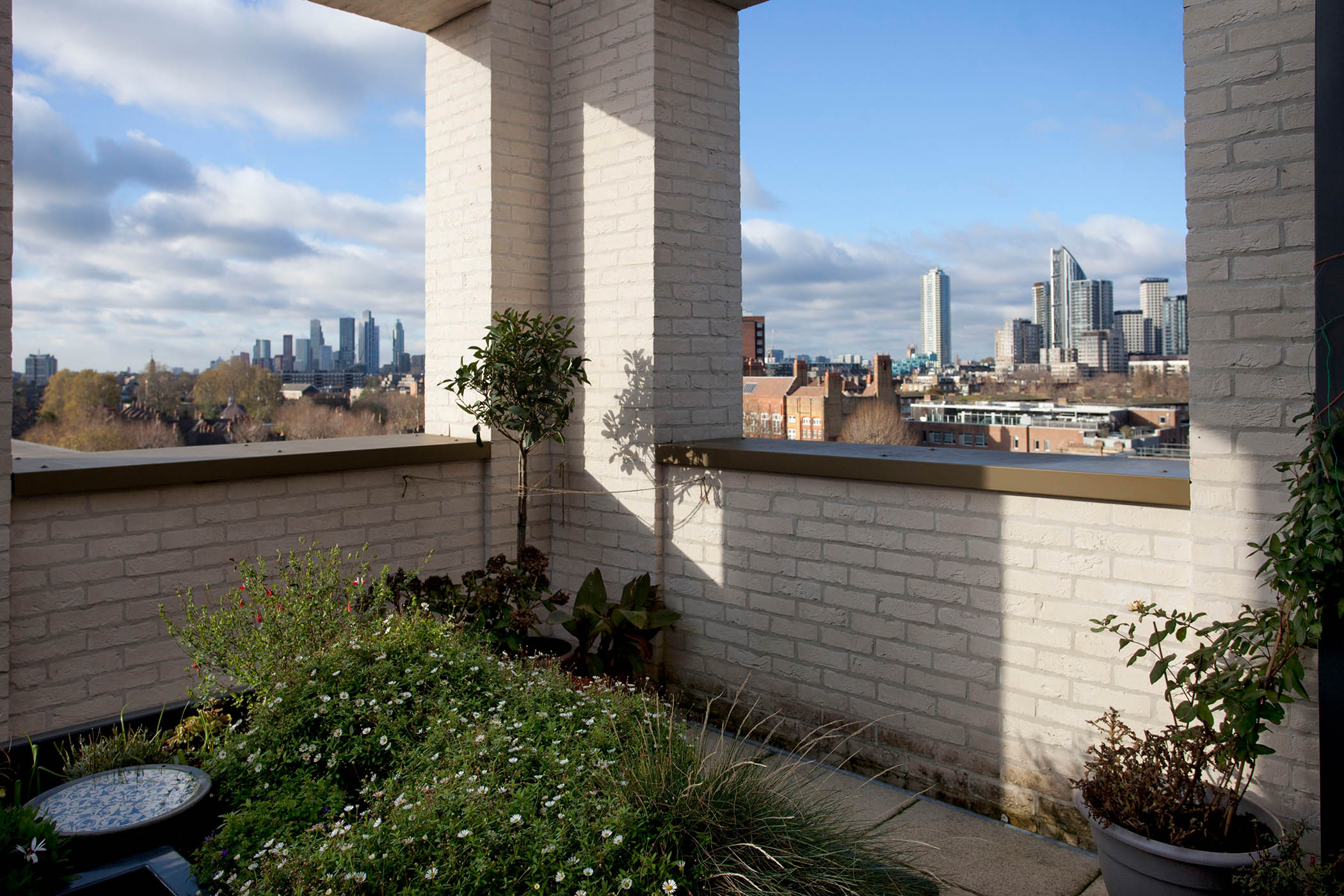
Peaceful pockets of green bely the estate’s image as a concrete jungle
The development’s funding model, whereby some of the money would come from private home sales at market prices, seizes up when values are stagnant and costs rising. The scale and technical flaws of the original buildings don’t help. And Notting Hill Genesis seems to have struggled with its task.
Many of the new homes that have been built were delivered by Southwark council, apparently frustrated by the housing association’s rate of progress. Harper accuses Notting Hill Genesis of a “lack of commitment or desire to actually build”. It says that the delays occurred “for reasons beyond our control”.
A representative of the London borough of Southwark says: “At this scale, you have to expect hiccups along the way.” HTA architect Simon Bayliss says the project’s “evolving character potentially brings you to a richer piece of city”, and that “a 20-25 year horizon is not too bad if it lasts 120 years”.
These words are cold comfort to those who have to live with uncertainty and dereliction in the meanwhile. Residents, according to a recent report by the research organisation Social Life, said that conditions had worsened in the last four years, and that they felt unsafe. There are also the financial costs of slow progress – of maintenance, security and management.
Then there is the question of whether it would be better for the environment to keep the old estate’s many tonnes of concrete and upgrade it. The French architects Anne Lacaton and Jean-Philippe Vassal have won awards for projects that revive blocks much like the Aylesbury by adding layers of winter gardens to their exterior.
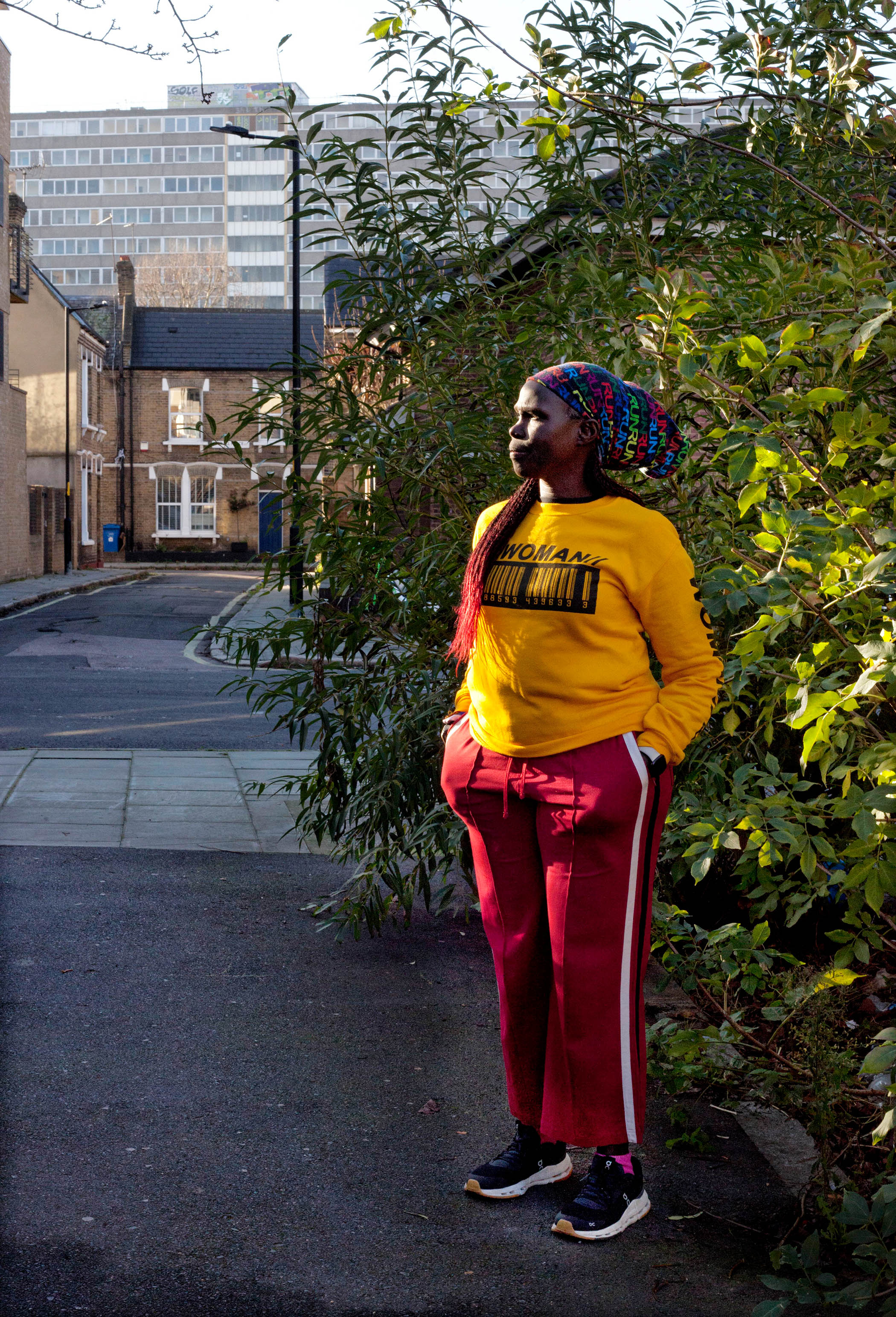
Josephine Ocaka has lived on the estate for 35 years
Little Ships, a non-profit organisation that seeks to encourage affordable homes on underused land, has volunteered a similar proposal by the Brighton-based architects Urban View for the Aylesbury, with extra floors built over the lower-rise blocks to provide additional homes.
Bayliss “would like to think that there were realistic and deliverable refurbishment options for the Aylesbury”, but says they are impractical: “You could spend a lot of money on it and not solve the problems.” The way in which the concrete advances and recesses, he says, makes it difficult to raise the standard of insulation to modern levels.
If everyone were starting now, creative refurbishment might be more thoroughly considered than it was 20 years ago. A less apocalyptic attitude to the existing estate might have led to less drastic and more achievable renewal plans; now, there’s limited appetite for tearing up plans and starting again. Pressing on with the current project seems to be the only option.
The newest work is not perfect. The top floor of the health centre building is empty, as the nursery that was supposed to go there can’t afford to fit it out. The fountains that were supposed to play in the public square outside are fenced off and switched off – hopefully, a temporary glitch.
But the health centre, designed by architects Morris+Company, has the internal generosity and external pride you want in a public project, but rarely get.
If the whole of the Aylesbury were rebuilt to these standards, it would be an incontrovertibly better place.