
An email arrives. It’s from Clag, which is short for Christ’s Lane Action Group. It is an organisation of Cambridge residents who are furious about a proposal by the 589-year-old Christ’s College to build a new library building designed by the Dublin-based Grafton Architects. The objectors say it will “dwarf and darken” Christ’s Lane and loom over the adjacent Grade I-listed Bodley library building of 1897.
The group has taken the college to court, along with Cambridge city council, which granted permission last autumn, arguing that the council’s officers gave misleading advice to its planning committee. Clag has won the first round of its case, with a judge allowing it permission for a judicial review. The group is also supported by Create Streets, “a design practice, town-builder and thinktank” that aims to create “beautiful, sustainable places”.
Create Streets have produced alternative images of what they say the library building could look like: lower, more traditionally styled, with a row of gables echoing that of the Bodley library. They also commissioned a survey from Deltapoll in which 71% of respondents preferred a picture of the Create Streets version, compared with 21% for one of the Grafton design. It’s an approach often used by supporters of traditionalist architecture, to compare a single image of a design they like, with one of a project they don’t, and invite public comparison.
This device has the air of democracy, but it’s a poor way to determine the fate of an endeavour where much more is at stake than the style of a wall. It’s a trial by snapshot that flattens genuine understanding. “Assuming all other things being equal,” went Deltapoll’s question, “which one of these options do you yourself prefer?”
The city’s fabric is made up of multiple contributions from different eras and styles that are sympathetic but not sycophantic to their predecessors
The city’s fabric is made up of multiple contributions from different eras and styles that are sympathetic but not sycophantic to their predecessors
But all other things are not equal. The Grafton design is a work of immense care, skill, thought and imagination, which responds to complex demands and has multiple qualities that cannot be communicated in one image. The Create Streets version is an illustration, with no attempt to consider how a building might be organised behind the facade. It would not survive its first encounter with practical reality.
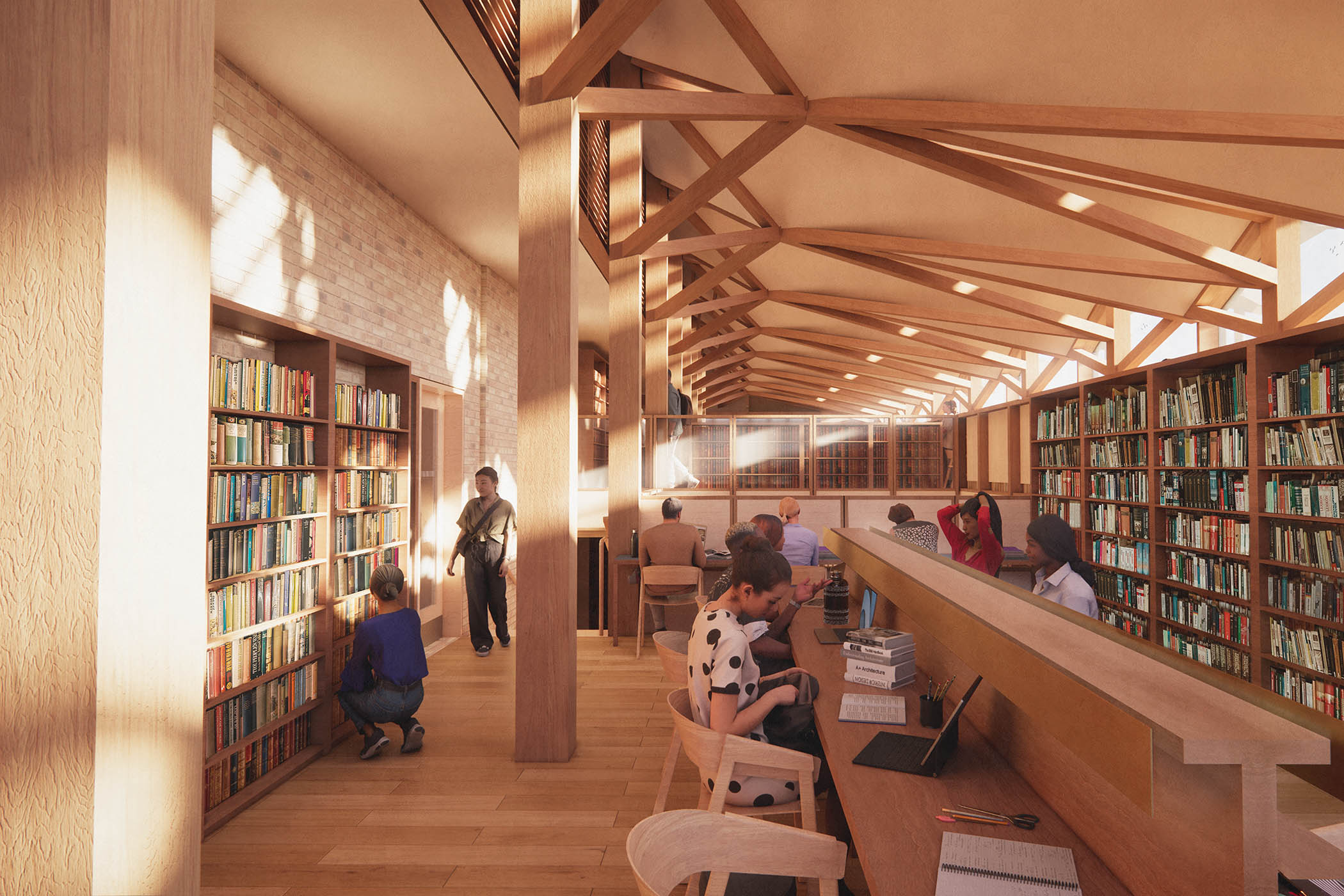
The Grafton design offers a beautiful array of serene spaces for study, with high spaces that connect one part of the interior to another and to a small courtyard garden. Its timber structure does lovely things with the way light would enter the building. It also performs essential tasks, such as making both the library and adjacent parts of the college easily accessible to people who have difficulty walking, which currently they are not. It does all this on a constrained site surrounded by historic buildings.
It has, of course, a duty to the general public who pass by, as well as to the lucky students inside. Which, I would say, it fulfils. Its brick facade towards Christ’s Lane is handsome and intriguing, and will make the street better. It advances and recedes, and nicely balances horizontal and vertical and solid and void. It rises up towards an array of tall chimneys that serve the building’s sustainable ventilation system. It offers glimpses into green spaces beyond and provides a long stone bench along the street. Being on the north-west side, it wouldn’t overshadow it.
Grafton also show a more profound understanding of history than Create Streets. Their design is inspired by narrow streets elsewhere in Cambridge, where the flank walls of old colleges also rise towards high chimneys. They know that the city’s fabric is made up of multiple contributions from different eras and styles that are sympathetic but not sycophantic to their predecessors.
The most contentious issue is the new building’s height relative to its neighbours. Historic England, while not objecting to the overall proposal, called it “too big for its location”; the architects responded with some modifications. It could indeed be lower, if it descended into a basement, as was proposed by earlier schemes for the site and by Create Streets. But to build this, says the college, would entail risk to the historic buildings and would have an environmental cost.
It is also, as a library, a vital building of an educational institution. There’s good reason why it should be proud and prominent – as Cambridge libraries have been in the past – rather than half-buried underground. There are plenty of architectural monstrosities in British cities that should be opposed, but this is not one of them.
Newsletters
Choose the newsletters you want to receive
View more
For information about how The Observer protects your data, read our Privacy Policy
Photograph by Grafton Architects