A spectacular insight into the experience of “lady artists” in Britain appears in an anonymous memoir published in 1839. A Voice from a Picture tells a terrible tale of neglect. The picture narrates its own life, at first so eagerly made by the painter, then so lovingly framed and offered for display, only to be hung too high or low at exhibitions, or even withdrawn altogether when its creator is unmasked as a woman.
It may be praised in private, but never in public. Critics never name the artist. It remains unsold, year upon year, until its “parent” eventually goes bankrupt, whereupon the picture becomes, like so many, before and since, a screen against draught or fire. Only after the artist is dead does it achieve any kind of fame, restored from grime and soot, talked up by connoisseurs, sold to an aristocrat. But by then it is far too late.
The painting was a landscape, the artist-author was Harriet Gouldsmith. Her name survives along with some of her images, unlike almost all of the lost and forgotten women who showed (or tried to show) their work during what is generally known as the golden age of British landscape art. Ten other women have been rescued from oblivion in this riveting Courtauld show, although not without serious labour.
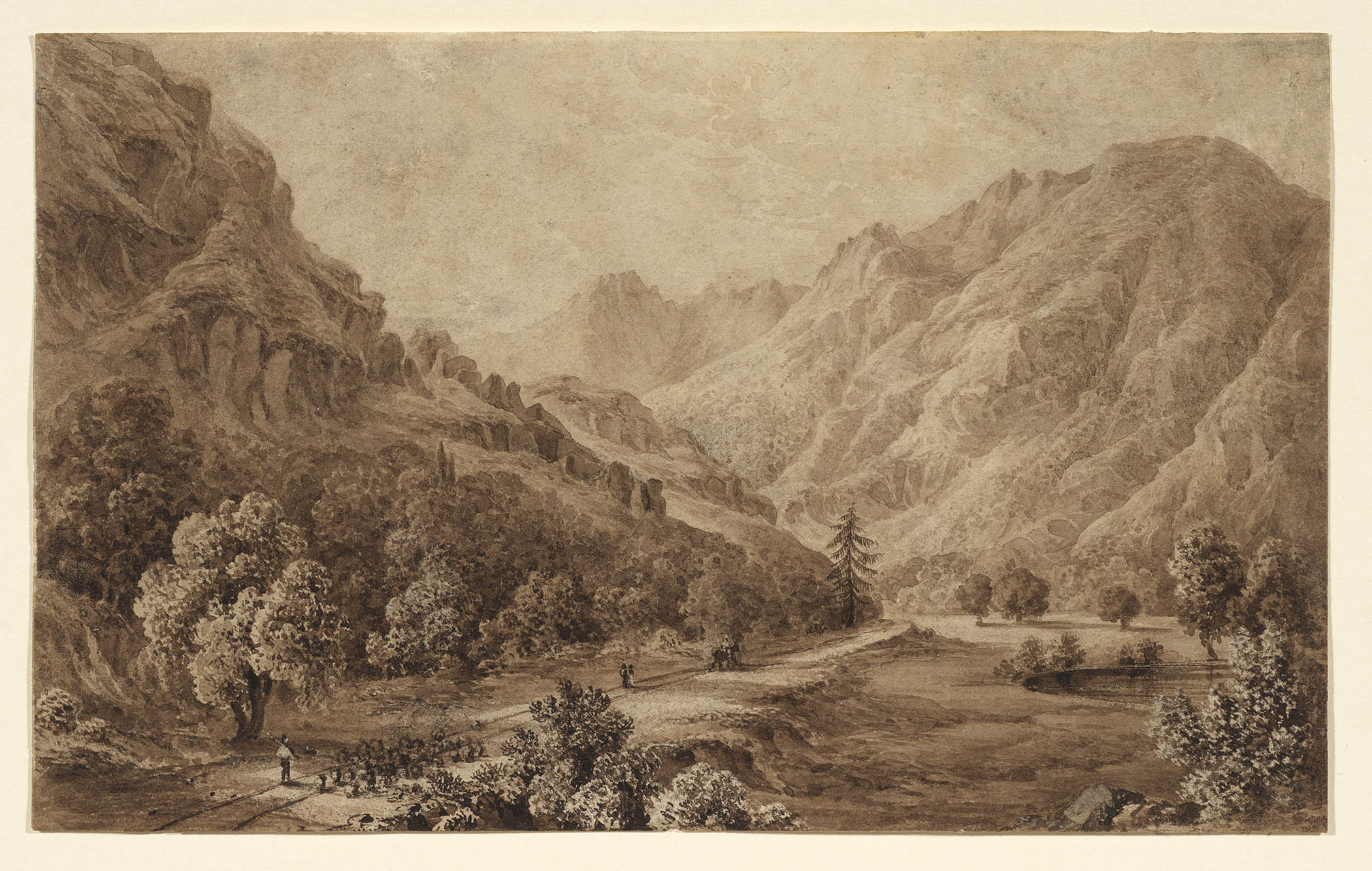
A single group of ink and wash landscapes is all that survives by Elizabeth Batty (1791-1875) , for instance, at least as far as we know. They were only rediscovered in 2019. Fantastically small, these scenes of honeycomb villages and glassy lakes in Italy are so refined they capture the parched rut of a summer road in the foreground as beautifully as the hazy splendour of faraway mountains. So lucid and graphic they hardly need to be translated into the engravings for which they were clearly made, these visions were laid down when Batty was barely 25. It is wonderful to think she voyaged abroad with a solid commission for a future book of prints.
Some of Mary Smirke’s pictures were ascribed to her brother and Elizabeth Batty’s entire output was assumed to have been her son’s
Some of Mary Smirke’s pictures were ascribed to her brother and Elizabeth Batty’s entire output was assumed to have been her son’s
Mary Lowther (1738-1824), granddaughter of Lady Mary Wortley Montagu, goes out into the Lake District with amazing joie de vivre. Her watercolours are surprisingly large and quite possibly made in situ (tiny damp spots appear, like raindrops, on one). Her vivacious view of Long Meg and Her Daughters, a neolithic stone circle near Penrith, shows a direct and gregarious relationship between human figures and upright stones, sunshine igniting both in one painting, clouds just beginning to burst beneath cerulean skies in another.
Lowther was unhappily married to the 1st Earl of Lonsdale, otherwise known as Wicked Jimmy for his many mistresses and political corruption. She left him, and what the diarist James Boswell called “the cold imprisonment” of Lowther Hall, in her 30s. Ninety-one views exist, almost all painted in one year. You sense her excitement outdoors, the landscape her lifeline.
Nobody knows exactly when Mary Mitford was born or died, only that she was still active in 1780. All we have of her is the handful of watercolours that first emerged on the market in 1989. She painted all over England, from Nottingham to Fowey in Cornwall. A stunning view of Southampton, away in the distance, shows picket fences, church facades and grazing cattle picked out by sharp rays of afternoon light.
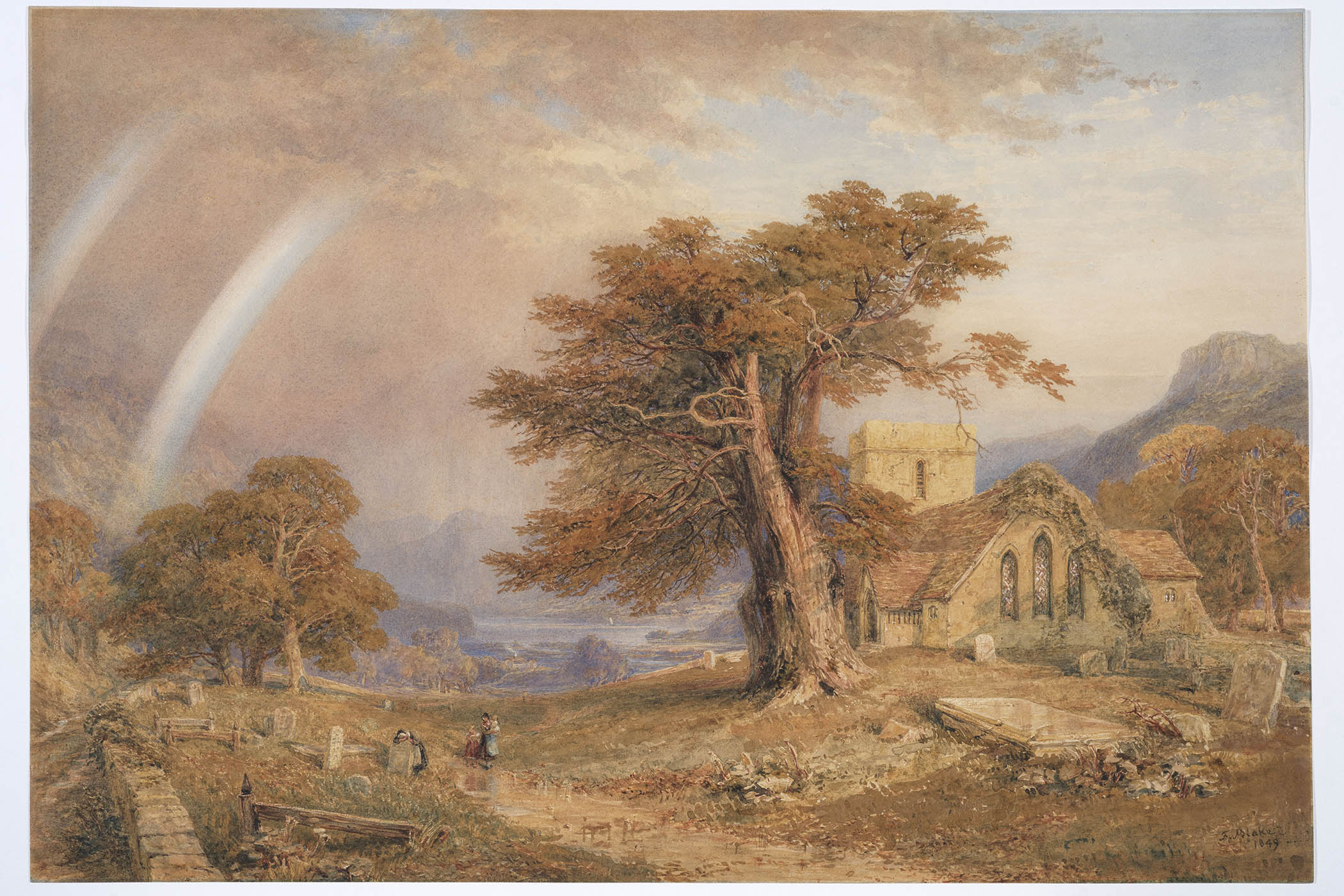
‘Scarcely a name in this show will be known’: Fanny Blake’s watercolour of Patterdale Church, 1849. Main image: Elizabeth Batty’s Simplon Road between Baveno and Gravellona, 1817
It’s been suggested that Mitford studied with the influential artists Paul Sandby and William Gilpin, and that her Italian landscapes must all be copies. But the show’s curator, Rachel Sloan, is surely right to reject this. A volume of light rolls down an Italian river in early morning, illuminating terracotta roofs, tall trees and fishermen’s faces. There is nothing inert or second-hand about this scene: Mitford must have seen it.
Of the 34 founder members of the Royal Academy in 1768 only two were women: Angelica Kauffman and Mary Moser. Not until Laura Knight in 1936 would another female academician be elected. This seems stranger still when you consider that one of the most exquisite paintings in the Courtauld show, of a bend in the river near Richmond, was actually exhibited there in 1812 under the artist’s own name. Mary Smirke’s watercolour is all subtle serenity: shimmering reflections in the still waters, a pink tinge to the overcast light and a single sail, chalk-white against a pale green bank, the geometric pivot of the whole painting.
Harriet Gouldsmith’s book had so little impact, alas, that scarcely a name in this show will be known. Not Amelia Long, one of the first British artists to depict Paris after the defeat of Napoleon in 1815; or Fanny Blake, who travelled as far as Russia, painting transcendent skies. Smirke may have worked in both watercolour and oil, never mind translating Don Quixote, but her father still felt able to have her pictures downplayed and even removed from the annual RA show.
Newsletters
Choose the newsletters you want to receive
View more
For information about how The Observer protects your data, read our Privacy Policy
Some of Smirke’s pictures have been ascribed to her brother and Elizabeth Batty’s entire output was assumed, almost up to the present day, to have been the work of her son. Which only goes to show that in reversing the proposition that women’s art was not just some genteel accomplishment, as amateur as tatting, the Courtauld exhibition is both revelatory and vital.
A View of One’s Own: Landscapes by British Women Artists, 1760-1860 is at the Courtauld, London until 20 May
Photographs courtesy of ©The Courtauld