
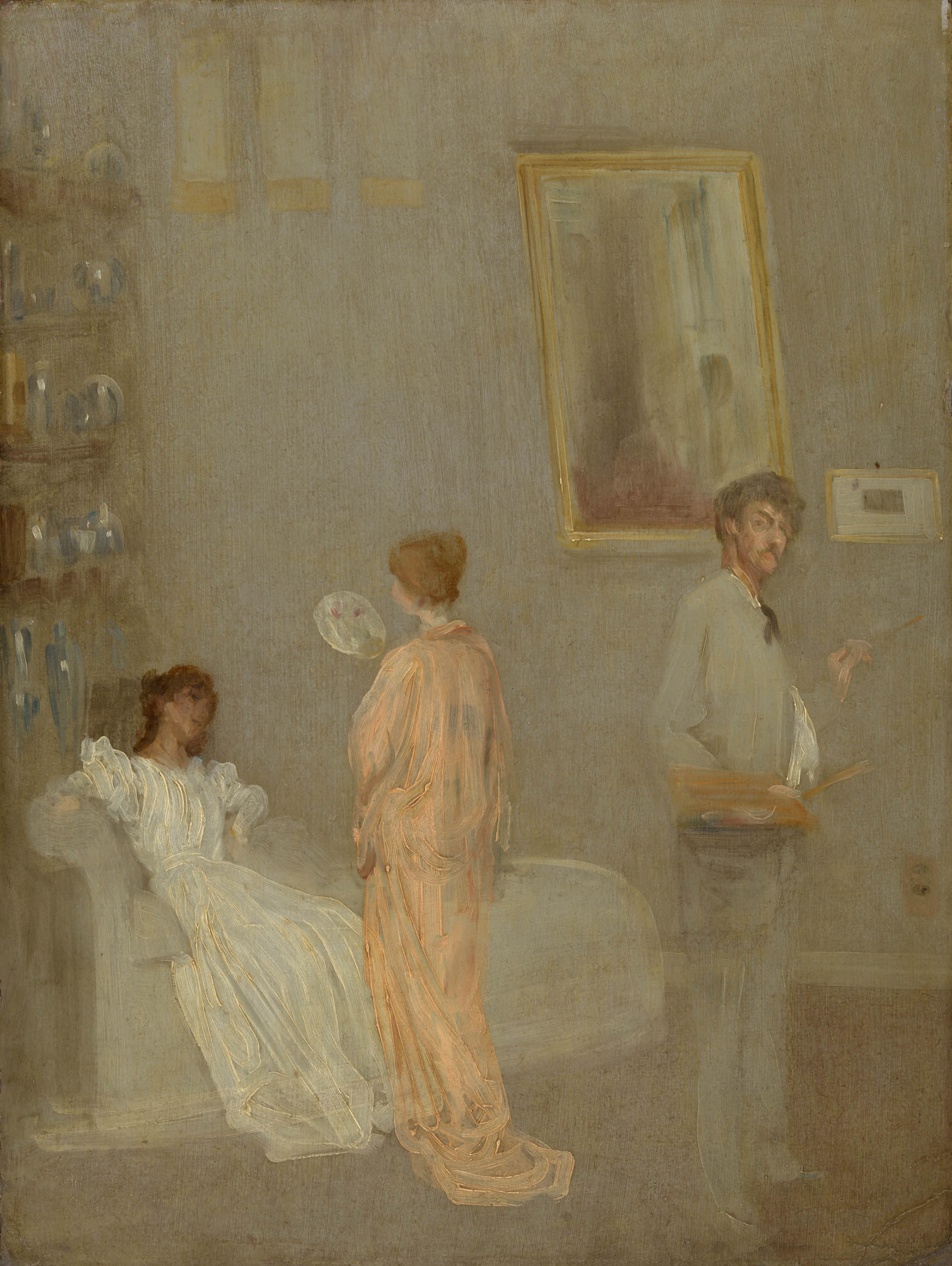
Tate Britain’s enormous homage to James McNeill Whistler opens with a painting and a mirror. What a gambit: which is the emptier of the two? Is it the radiant rectangle that only comes to life when you show up in its polished surface? Or is it the painting in which such a mirror appears, on loan from Chicago, titled The Artist in His Studio?
Whistler glances irritably out from the studio, palette in one hand, brush in the other. Behind him, a woman in white languishes on a couch. A third figure in an apricot kimono appears to raise a fan, though how can you tell in this diaphanous image, where human gestures are so much less important than strokes of paint? What strikes is not the presence of Whistler and his women – wraiths so transparent you can see the furniture through them – but the tonal range, from grey to taupe to misty green, with flashes of white and gold, and their abstract interplay. The optical vibration, which no reproduction can convey, is entirely achieved through colour.
‘Devoted to every nuance of white in Whistler’s repertoire’: Symphony in White, No 2. Main image: one of his greatest paintings Nocturne in Blue and Silver
The Massachusetts-born Whistler (1834-1903) was in his early 30s when he painted this “nod to Velázquez”, as the wall text has it. The fusion of hand and brush certainly quotes directly from that artist’s incomparable Las Meninas. Whistler spent years trying to raise the Spaniard’s spirit in these ghostly seances, invoking both the paintwork and the poses of the 17th-century master. To an admirer who had the temerity to praise them both in the same breath, however, came one of Whistler’s famously barbed retorts: “Why drag Velázquez into it?”
This show takes Whistler at his word, displaying the works according to his stipulations: white walls for specific images, exact colours for others, the Venetian etchings spaced in keeping with his given measurements. Here are his brushes, tubes and boxes, his Chinese porcelain and his gold-painted cabinet, a full-size replica of a screen with Japanese paintings on one side and one of his own floating-world nocturnes on the other, its golden moon bisected by the horizontal strut of London’s Old Battersea Bridge.
The early rooms are stuffed with weak pastiches, to the point you wonder when Whistler (and this show) will begin
The early rooms are stuffed with weak pastiches, to the point you wonder when Whistler (and this show) will begin
Whistler was prolific to the point of garrulity, his style absorbing every new influence, and the exhibition follows suit. The early rooms are stuffed with weak pastiches of Rembrandt, Courbet, Hiroshige, Degas, to the point you wonder when Whistler (and this show) will begin. But there are hints: the glimmering nocturnes of the 1870s are prefigured in rapt and liquid seascapes made a decade earlier in France, where Whistler painted alongside Courbet. A single brushstroke unfurls across the canvas to indicate an overturning wave, white running to slate grey. The brushstroke is more beautiful than the wave; that is what the painting declares.
And so it seems with Symphony in White, No 2: The Little White Girl, Whistler’s vision of his model, muse and longtime lover Jo Hiffernan, leaning against the mantelpiece in her copious white dress. The mirror behind her appears to reflect another woman (think of Ingres’s Madame Moitessier, another passing influence) and half the picture is devoted to every nuance of white in Whistler’s repertoire. Contemporary writers tried to discover a narrative – the day after the wedding, a new bride contemplating her lost virginity – but there is no story here, and perhaps no portrait either.
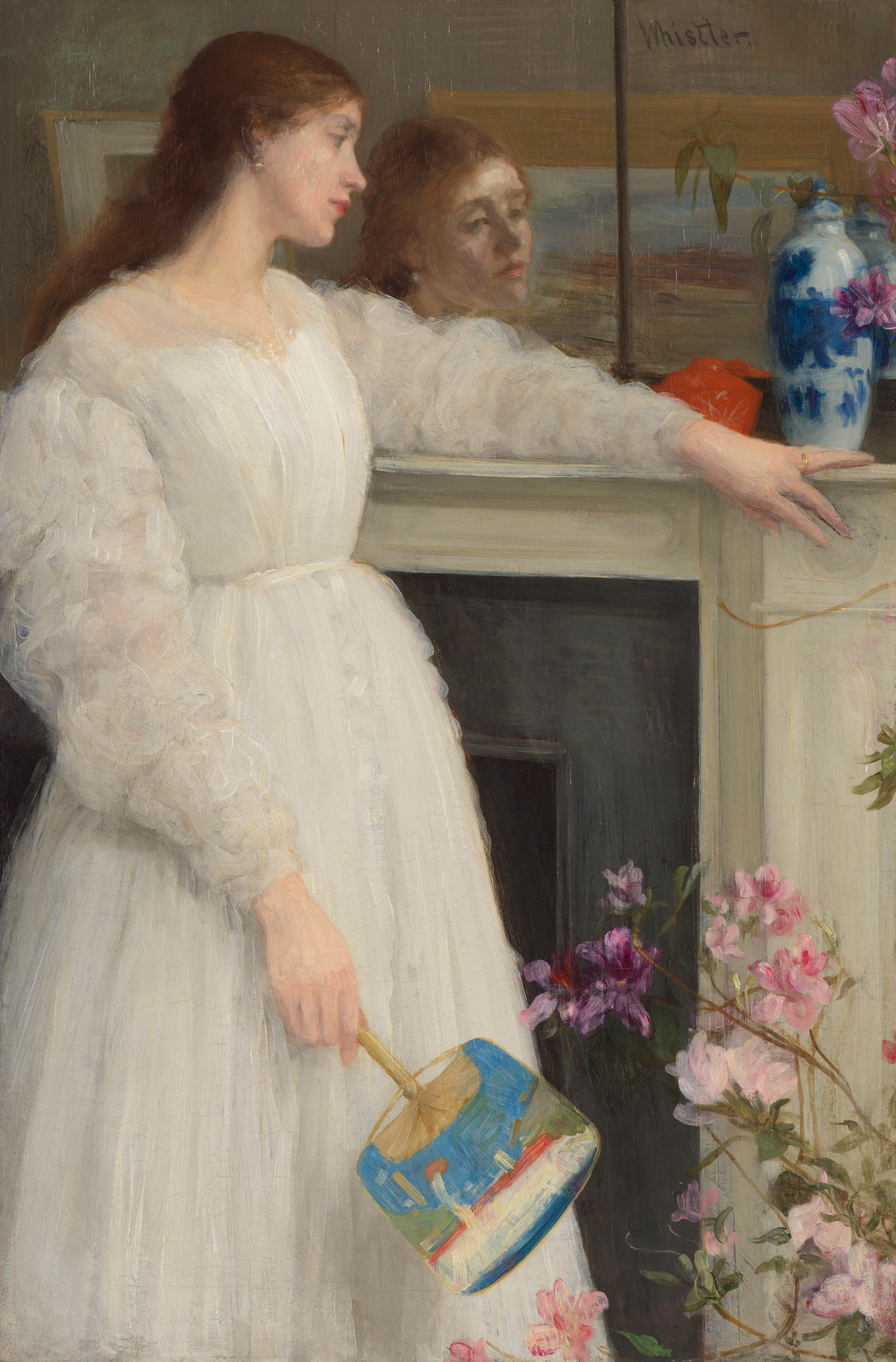
Symphony in White, No. 2 The Little White Girl. 1864.
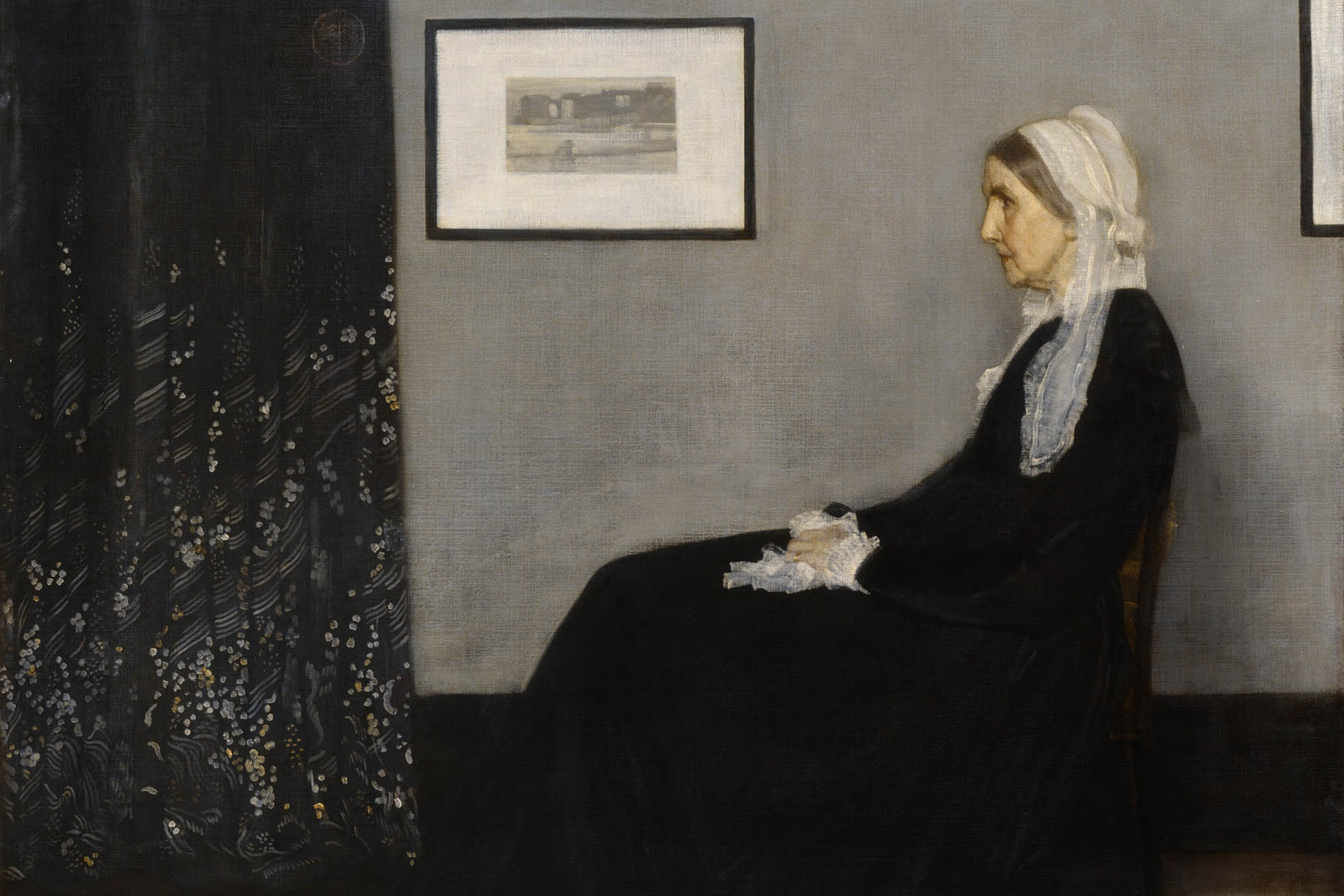
Symphony in White hangs at right angles to the most celebrated painting in this show, Arrangement in Grey and Black No 1, AKA Whistler’s Mother. This is apt. The artist had to clear Hiffernan out to accommodate Mrs Whistler upon her arrival in London from the US in 1864. “General upheaval!!”, he wrote to a friend. “I had to empty my house and purify it from cellar to eaves.” Mrs Whistler came to tolerate her son’s “bohemian” life (Tate Britain’s favoured euphemism) and sits before him with patient forbearance.
The painting is as self-consciously composed as she is: a calculated diagram of tonal variations, from the grey walls, dark curtains, ebony frames and white mounts to the black dress flooding out the bottom of the picture. The profile is indelibly precise, yet no character breaks free of its tensile line. Whistler was bored by people’s claims to discover “Mummy” in his picture. What had Mrs Whistler to do with them, and didn’t they notice the musical reference in his title?
The historian Thomas Carlyle admired the arrangement and sat for another (arguably better) painting, alas not in this show. He complained that Whistler was far more interested in his coat than in his face. The artist opposed Carlyle’s campaign to open the British Museum on Sundays, lest “the working man drop the sweat of his brow upon the Elgin Marbles”. Such snobbery was matched only by Whistler’s racism and violence. He once beat a man for being black, assaulted fellow painters and pushed his brother-in-law through a plate-glass window during a row.
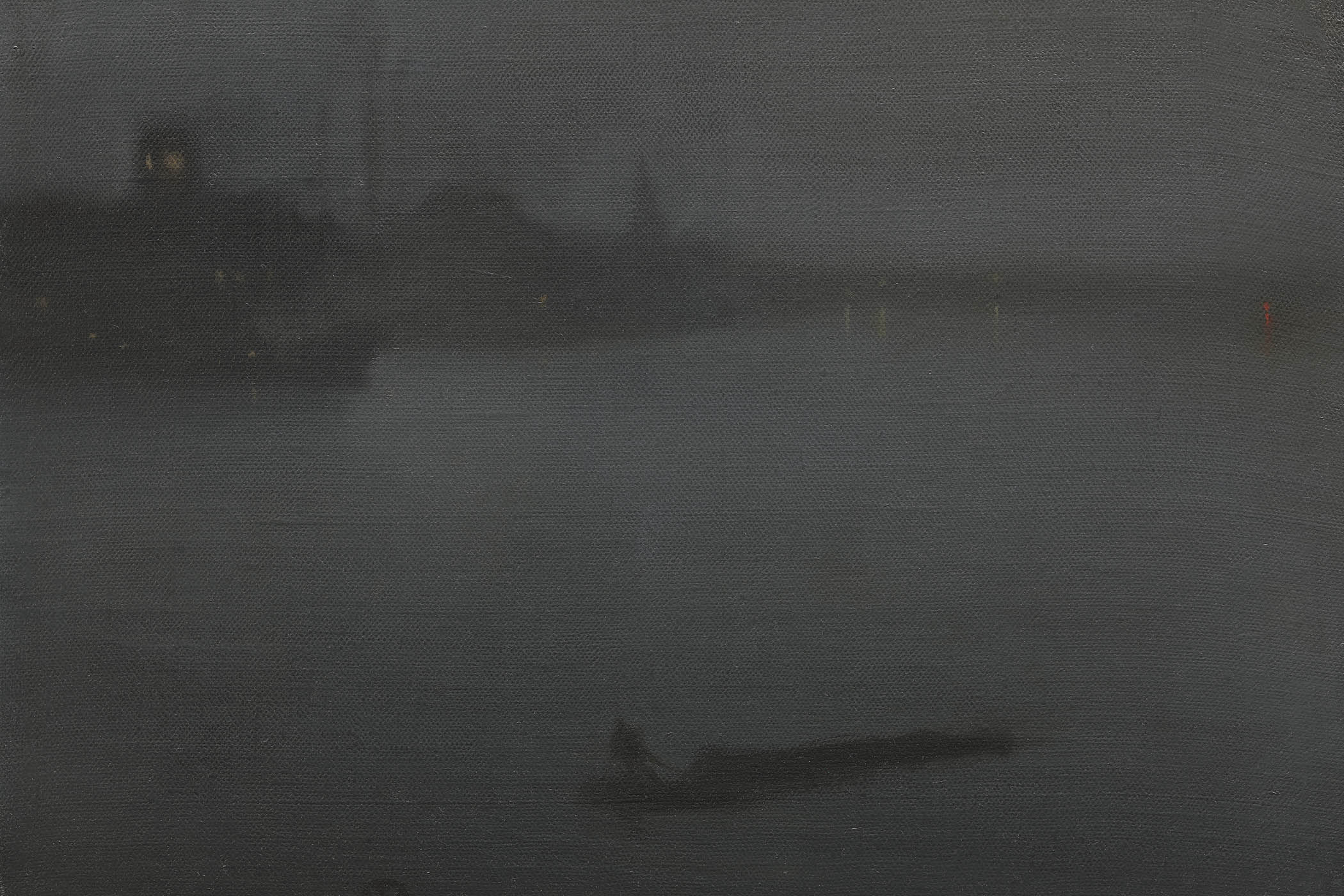
James McNeill Whistler, Nocturne in Blue and Silver, 1872-78
The notorious “flinging a pot of paint in the public’s face” libel case, in which Whistler sued John Ruskin over a damning review and was awarded a bare farthing in damages, left him homeless in 1878. The extraordinary care he took to create pinpricks of light in obliterating darkness is meticulously shown in conservators’ photographs of the scraped and speckled surfaces of the contentious firework paintings. But poverty was a spur; Whistler roamed Europe, supported by small commissions, and came back renewed.
Newsletters
Choose the newsletters you want to receive
View more
For information about how The Observer protects your data, read our Privacy Policy
His etchings of Venice are a revelation: a Don’t Look Now of fogs and echoes and uncertain shadows, half-visible figures turning in alleys. The cityscape over the lagoon is a quivering black line above empty white water. Unlike every other artist who ever went to Venice, Whistler sees form and tone before Venetian light.
There is a small painting in this show of female figures with Japanese parasols staring out at an expanse of vaporous water as if they were viewing cherry blossom or Mount Fuji. One is even dressed in a kimono. But we are in fact in London and this is the filthy old Thames. Whistler might have loved the flattened space of Japanese ukiyo-e but he never abandons western art.
His true gift was for conflating them both in the Nocturnes series: beautiful, glowing, mysterious, even as their brushstrokes are so conspicuously on display. Some are more pointing than painting: look at me, my alluring mood, atmospheric tones, seductive touch. Others are austerely blue and empty. Never before have so many been assembled in a single show.
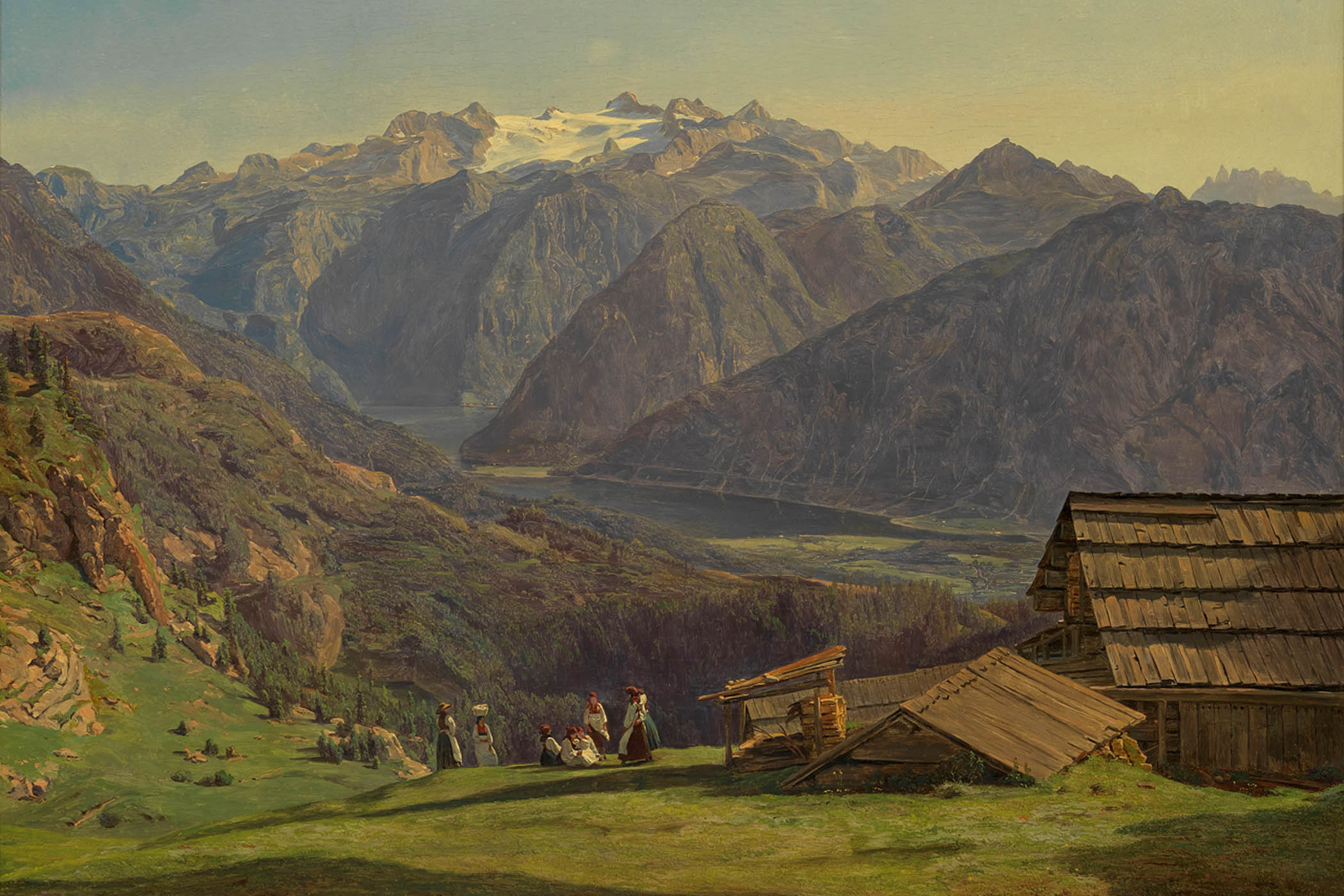
In one of his greatest paintings, Nocturne in Blue and Silver (c1878), on loan from Yale, the Morgan Crucible Tower in Battersea (having then been fined for pollution) looms out of grey-blue depths, its clock face glimmering faintly through the smog. A dark figure strains at a dark vessel lying low in the water, nearly disappearing into the night, like a single note fading into silence.
The Thames dissolves into gloaming and smoke, bridges turn to abstract structures spanning airy nothing. People and objects dwindle into mirages in the silver, blue or grey dusk. It is one of the most baffling paradoxes in all art that such a ragingly aggressive egotist could give the world exactly what he promised with those titles, no more and no less: harmonious arrangements of tone, aesthetic balance and restraint.
Photographs courtesy Yale Center for British Art, Paul Mellon Centre, Wadsworth Atheneum Museum of Art, Art Institute of Chicago, Tate, Musée d’Orsay
Matt Greenwood