Soaring inflation is not usually good news for a central bank tasked with keeping prices stable. Yet the surge in US inflation reported last week may be just what the Federal Reserve needs now.
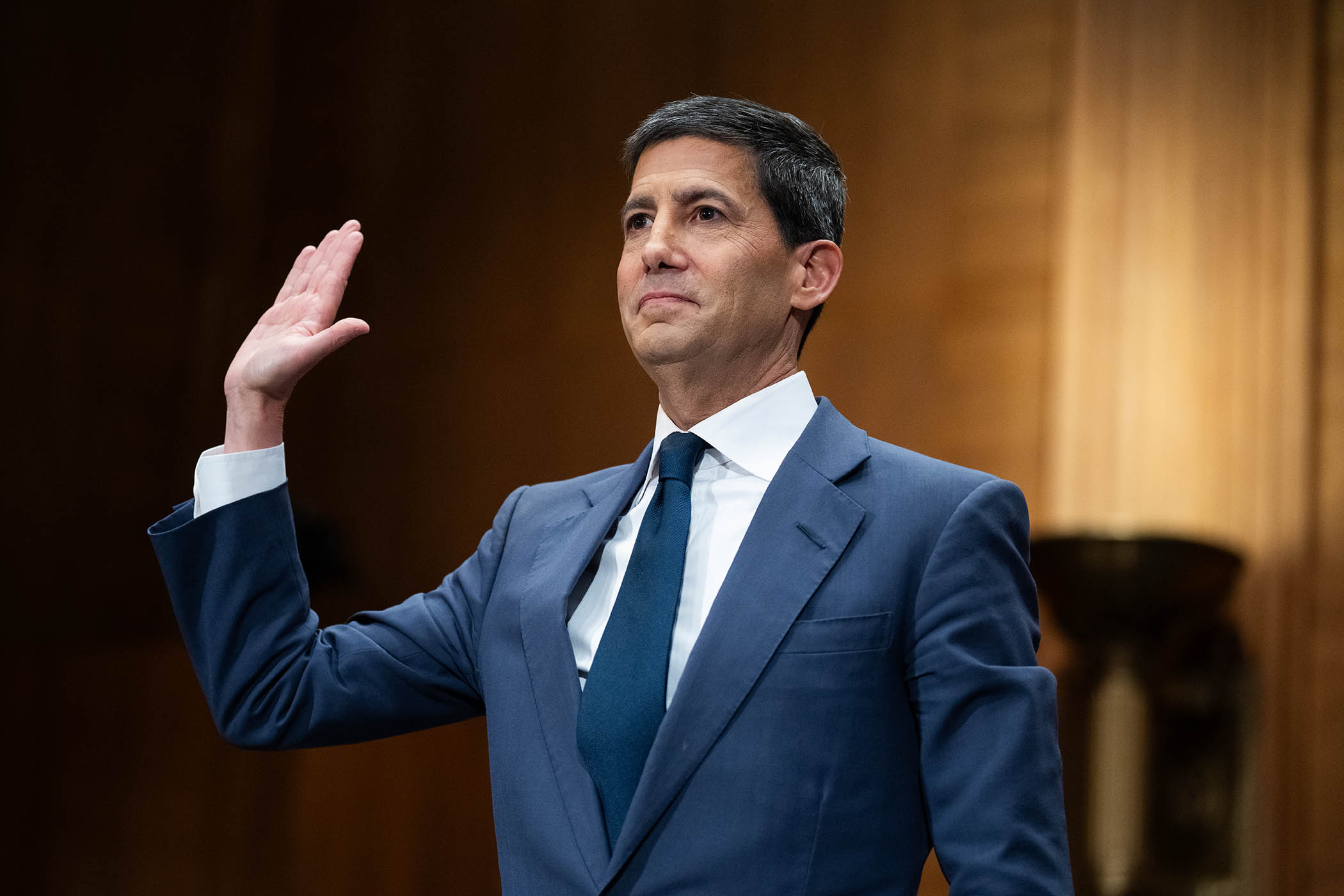
Kevin Warsh was finally confirmed as the new chairman of the Fed last week. After Donald Trump's attacks on his predecessor, Jerome Powell, for refusing to deliver the significant interest rate cuts he wanted, there are genuine fears that Warsh, as Trump's nominee, could put politics before economics and so undermine the independence of the Fed – an independence that has long been a foundation of US economic strength.
The "good news" is that the jump in US consumer inflation to 3.8% in April, and in wholesale inflation to an even more alarming 6%, plus the yield on new 30-year US Treasury bonds topping 5% for the first time since 2007, leaves Warsh with almost no choice. This is no marginal call, where he might have been tempted to deploy his belief that AI is ushering in an economic productivity miracle to justify a "thank-you" rate cut for Trump. Cutting rates in these circumstances would undermine Warsh’s own credibility and that of the Fed, probably triggering a financial crisis.
Testing – and proving – Warsh's commitment to Fed independence right at the start of his term will hopefully clarify things both for him and the markets. The president, who nominated Powell only to feel betrayed by him later, may soon discover that lightning does strike twice. While unsuccessfully trying to fire him or force him to quit, Trump described Powell as a "numbskull", "dummy" and "total loser". Warsh may have to get used to being called a lot worse than "Trump's sock puppet" – the meanest nickname critics of his nomination could come up with.
Billionaires eye classic artworks as war pushes up prices
The Iran war has caused the cost of crude oil to soar. It may also push up the prices of the more refined oils being traded in the latest round of New York art auctions. For the super-rich, when the outlook for other assets is especially uncertain, art can seem an attractive investment.
Bidding is expected to be more competitive than in years. Billionaire mega-collectors such as Jeff Bezos and Ken Griffin are vying with more secretive Asia billionaires and Middle East governments looking to fill their shiny new museums. Christie's, Phillips and Sotheby's are hoping for total combined sales of as much as $2.6bn, the highest since November 2022, giving a much-needed boost to their finances. (Though an unusually high number of price guarantees given to sellers could spell trouble if bidding disappoints.)
Instead of edgier sales, such as crypto tycoon Jason Sun's $5.2m purchase and subsequent devouring in 2024 of a banana taped to a wall by Maurizio Cattelan, this season is dominated by pieces by 20th-century greats such as Mark Rothko, Jackson Pollock and Willem de Kooning. Three classic pieces are tipped to go for more than $100m each. There is also a Banksy – forecast to fetch up to $18m – but even that is a relatively blue-chip "Girl and Balloon" piece.
UBS's claim that the super-rich put about 20% of their wealth into art in 2025 seems high. Yet this week’s priciest sales, many of them works owned by recently deceased collectors, are proof that, done well, art investing can generate magnificent long-term financial returns. Several pieces owned by the media tycoon Samuel Irwing Newhouse, who died in 2017, are expected together to fetch at least $400m, taking the total proceeds for artworks sold by his estate to more than $1bn.
SpaceX prepares to float as risk rises for rocket crash
Newsletters
Choose the newsletters you want to receive
View more
For information about how The Observer protects your data, read our Privacy Policy
As Elon Musk's SpaceX prepares for its imminent, probably record-breaking IPO, forecast to raise perhaps $30bn at an expected value of up to $2tn, is there a message for investors in the recent headlines predicting that a discarded part of one of the company's rockets will crash into the moon in August?
Space waste is certainly contributing to a growing risk of accidents in Earth's increasingly crowded orbit. Back in 1978, this possibility was imagined in a seminal paper by Donald Kessler and Burton Cour-Palais, “Collision Frequency of Artificial Satellites: The Creation of a Debris Belt”, prompting Nasa to set up an orbital debris programme. Scientific American magazine pointed out recently that today's monitoring of space waste is inadequate, roughly where corporate environmental data was in 2008. One positive result of the SpaceX IPO may be greater requirements from investors for better data and disclosure, so they can properly assess this risk.
A key part of SpaceX's appeal is its Starlink satellite network, which it plans to grow significantly, along with building AI databases in space. What if, for reasons natural (say a magnetic solar storm) or man-made, the ability to remotely manage collision risk in low Earth orbit (around 300 miles up, where most Starlink satellites are) was lost, even temporarily? A recent Princeton University Crash Clock study calculated that without active management, a satellite collision could happen in less than three days, after which things might deteriorate fast. That compares with at least 121 days in 2018, when there were many fewer satellites and much less space debris.
This is a growing risk that investors should probably consider seriously before adding their money to Musk's already overflowing coffers.
Photograph by Tom Williams/CQ-Roll Call, Inc via Getty Images