
Related articles:
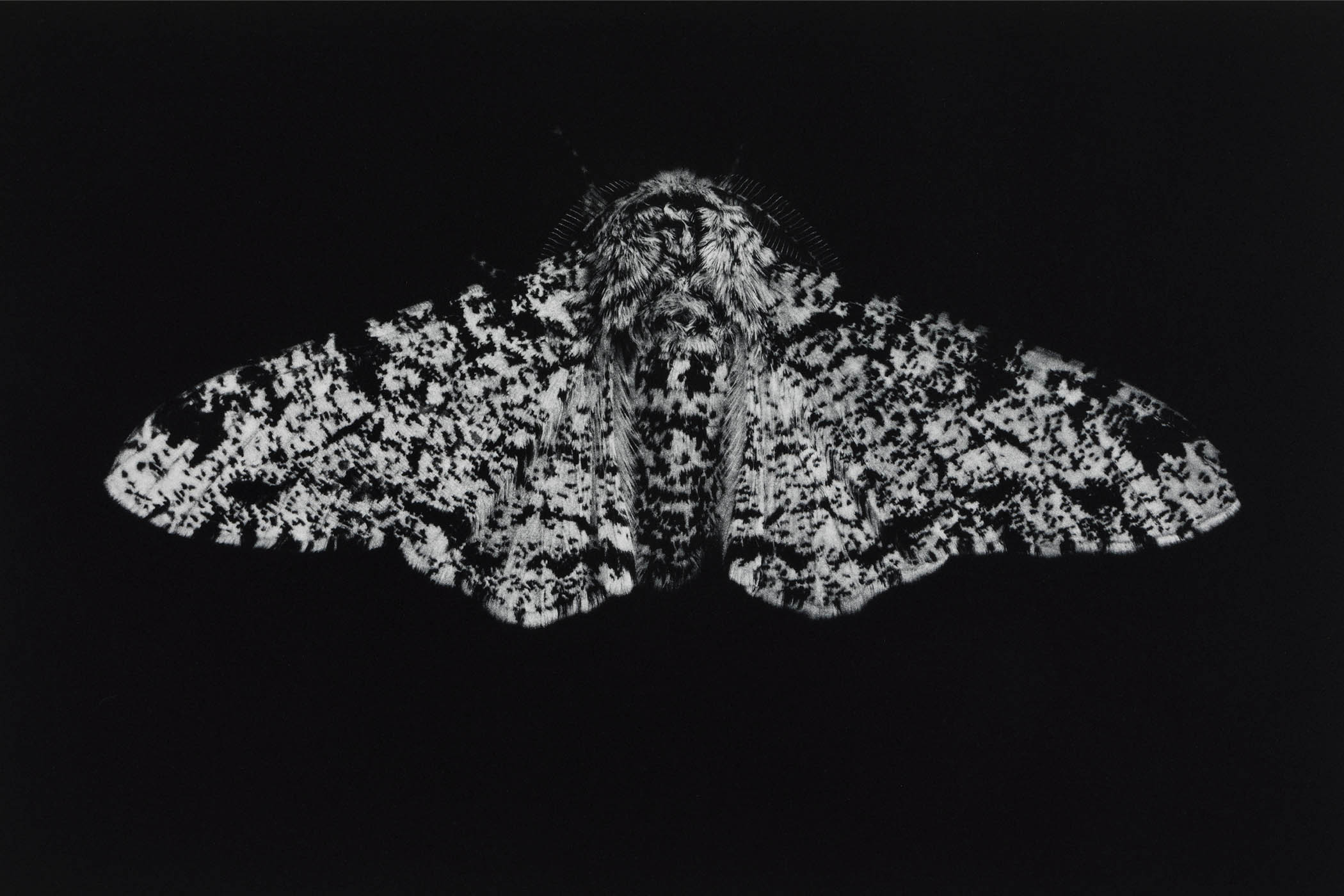
All Japanese citizens who reach the age of 100 receive a silver sake bowl from the state. These have been dispensed since 1963 in gratitude for their long contribution. In the first year, 153 bowls were awarded: radiant, shallow, gleaming like the moon. In 2014, 29,000 were required and the bill had grown so vast the government switched to smaller versions in cheap nickel.
This is the problem with longevity: we all want it, but governments cannot afford it. Even in Japan, where there is a Respect for the Aged national holiday every autumn, there are too many old people and not enough babies to grow up and care for them. The government has been reduced to offering AI-driven matchmaking to improve the birthrate and boost the labour market. But those two bowls, side by side at the start of this show, tell the true story.
The Coming of Age is an enthralling examination of longevity through objects and images. It is brilliant on what we aim for. A portrait of Jean Jacob shows the 18th-century centenarian from the Jura mountains smiling at the age of 120. William Walker, Lancashire soldier, points cheerfully at himself in a popular print c1750. He died at what we call the ripe old age of 123.
Louise Bourgeois’ startling drypoint etchings of an all-seeing spider defending itself with great ingenuity, titled Ode à Ma Mère, were made not many years before her death at 98.
But the ripe old apples in Serena Korda’s enormous installation, scattered around three lifesize female figures, are beginning to rot. Korda’s three graces are split between portrait and anatomical model: half of each face is the skull beneath the skin, all rendered in porcelain. A depiction of what the world sees, you might argue (a bag of bones), compared with what we are to ourselves.
Would Korda have shown men in the same way? At least one fascinating aspect of this show is the historic distinction between spry old guys in their 90s, celebrated with back-slapping images, and the crones of Hans Christian Andersen and the Brothers Grimm.

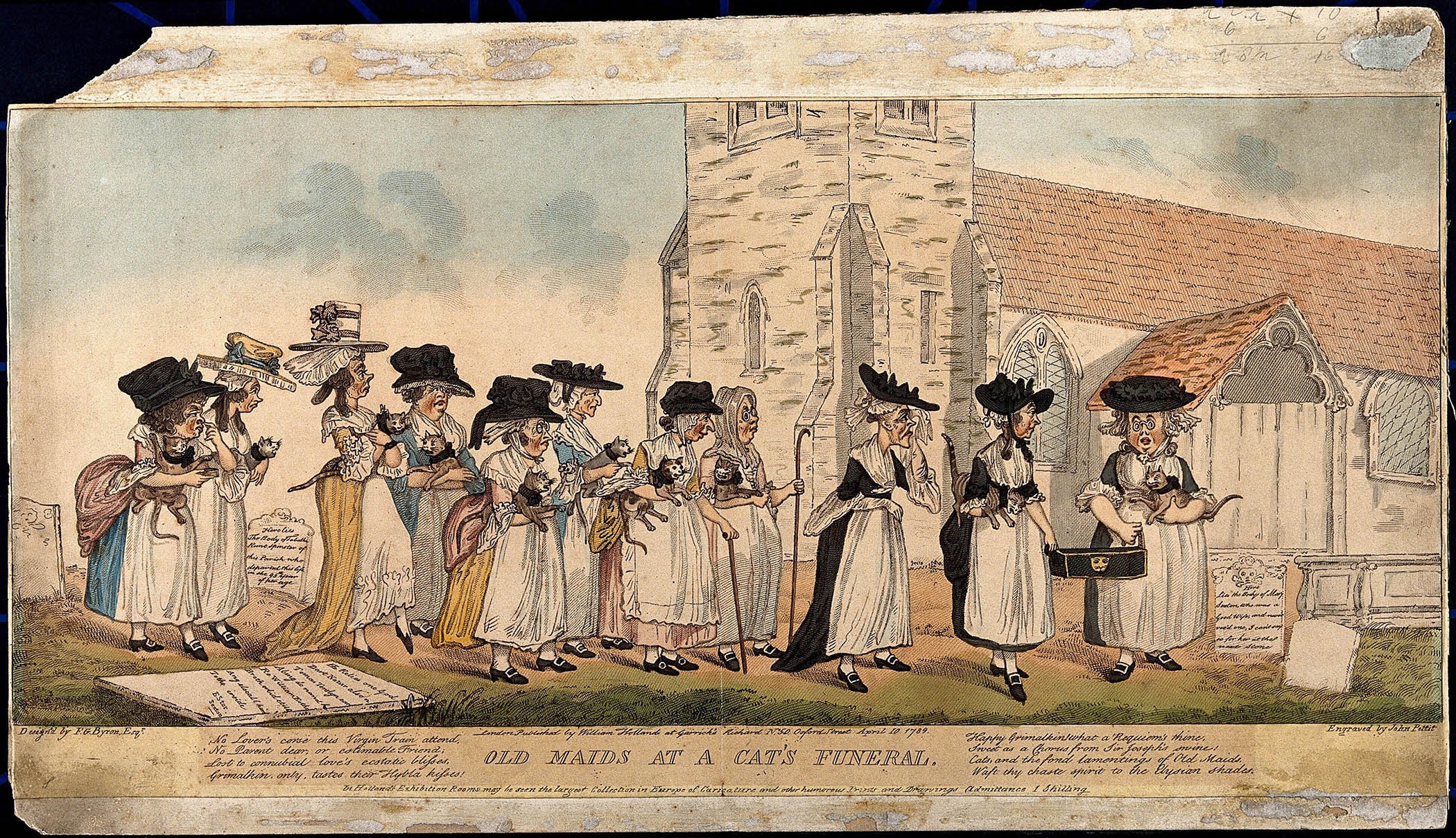
‘Ripe old age’: Serena Korda’s installation Wild Apples, 2024. Main image: Frederick George Byron’s satirical skit Old Maids at a Cat’s Funeral, 1789
A whole section of Georgian satire is dedicated to mutton dressed as lamb and that other hilarious joke, the old maid. A procession of elderly women in mobcaps carry their cats through a churchyard to a dead cat’s funeral in a skit by Frederick George Byron, a cousin of the poet. Poor old moggies, one and all. The artist, incidentally, did not have the last laugh. He died at the age of 28.
So you’re very young – how can you stay this way? The Wellcome Collection is full of ruses. Here’s a bottle of water collected in 1936 from the “Fountain of Youth” in – where else? – Florida. Or try the violet ray apparatus, which could cure just about everything from rheumatism to syphilis to the well-known disease of mortality. And if that didn’t work, then all you needed, from the 1940s, was a thing called All-Bran, which could fend off eventual decay.
Related articles:
The American obsession with perpetual youth has its great retort in the self-portraits of John Coplans. An art historian who only took up photography in his 60s, Coplans photographs himself – naked, hirsute and stocky – in cheerfully undignified poses.
His back becomes a granite slab, his feet, braced on tiptoe, look like gloomy crags separated by a seam of daylight. The only thing you never see is his face. He shows, instead, what we all have in common, with each other, even with the landscape: we’re as old as the hills.
Newsletters
Choose the newsletters you want to receive
View more
For information about how The Observer protects your data, read our Privacy Policy
In some ways, it is hard to see much advance in human longevity in the present century, thus far, compared with the last. The show’s tremendous accompanying publication, with essays by writers such as Lynne Segal and Tom Shakespeare, includes a fascinating explanation of the reasons we age by the Nobel laureate Venki Ramakrishnan. Many more people may reach their centenary, he observes, yet hardly any live beyond 110: our limits on Earth.
And while Bryan Johnson and his Don’t Die community, well represented here, would do anything to stop the march of time, there is still the deathless question of how to live well in old age. A comic Victorian print shows the decades of man as steps, peaking at 50, then all downhill. “The cat keeps house, and likes the fire,” runs a rhyming caption. “At 80, we all have the same desire.”
Would you live for ever? Finnish artist Maija Tammi’s hydra works are a highpoint of this show. She has been studying these tiny freshwater organisms for years, marvelling at their biological “immortality”. A hydra can regenerate even when its head is removed. Her lyrical film asks what time might mean to a hydra if it never aged. Nothing at all, perhaps, given that it has no brain and must tear itself a new mouth every time it needs to feed.
Daphne Wright’s delicate artwork Zimmer, made by casting the frame’s tubular interior in fragile clay, is hung with a pale linen cloth that might be a bib or a shroud. Inspired by visits to nursing homes, where she noticed the residents personalising their frames, Wright’s sculpture is the embodiment of gallant resilience against poignant loss.
But perhaps most spirited of all is the Japanese artist Kimiko Nishimoto, who took up photography at 72 to make comical and surreal images of herself. Nishimoto was approaching half a million followers on Instagram when she died last year at the age of 97. Her best image shows the artist joyfully floating in midair, weightless, carefree. “I just want,” she wrote, “to do something funny.”
The Coming of Age is at the Wellcome Collection, London, until 29 November
Photographs by Alamy/© Serena Korda, Photography by Jesse Wilde