
“Are you Eve or Joan?” It is a question impenetrable to most passing by on east London’s Mare Street, but for the attendees of the Eve Babitz Readings at Moth Club, it is an important icebreaker. The Eve and Joan in question are Eve Babitz and Joan Didion, famed Californian writers whose tempestuous relationship was brought to wider attention in 2024 by the journalist Lili Anolik’s best-selling book Didion & Babitz. A few attendees clutch copies in the darkened room. There are about 150 fans here, mostly young women, and a wait list of 200 who failed to snag a ticket. A long queue forms for £10 stickers, which read: “IF YOU CAN’T HANDLE ME AT MY DIDION, YOU DON’T DESERVE ME AT MY BABITZ”.
Five years ago, when the two writers died a week apart, Didion’s death sent the literary world into deep mourning, with hypercompetitive auctions for her possessions. Babitz’s death from Huntington’s was far less noticed. Many of her books – delightful dispatches from her life of “shallow, callow” Hollywood debauchery – had fallen out of print when Anolik sought her out in 2012, after finding her first book, Eve’s Hollywood, online. Their subsequent conversations transpired into a Vanity Fair profile which went viral, All About Eve, then a biography, Hollywood’s Eve, then, posthumously, Didion & Babitz, which has expanded Babitz’s reach to millions. Suddenly, there were mass desertions from the legion of Didion girls, as Anolik shepherded them away from the cool prose of their hero to the glittery chaos of Eve Babitz – who seemed freer and more fun. For Anolik, Didion was “part princess, part wet blanket,” and Babitz was finally getting her due.
Babitz’s published works include the semi-fictionalised novel Sex & Rage, and the essay collections Eve’s Hollywood, and Slow Days, Fast Company. Dismissed during the 70s as too lightweight and hedonistic, the last few years have seen Babitz reclaimed by a new, younger female audience who see themselves in her writing, and want to be seen with her writing. In 2019, Kendall Jenner was pictured with Babitz’s novel Black Swans poking out of her tote bag, prompting a flurry of articles with various titles like “Kendall Jenner wants you to read THIS book.” In a 2024 essay in Time magazine, the supermodel Kaia Gerber described “seeing herself” in Babitz, who is both “aloof and self-aware,” and released a video discussing the book with the pop star Gracie Abrams. This celebrity visibility, alongside Anolik’s work, garnered Babitz a cult-like following. The Eve Babitz Estate, led by her sister Mirandi, started to run an Instagram account, regularly posting photos of Babitz and updates on her writing.
Now Babitz, via Anolik once again, is back with Too L.A, a selection of unsent letters. In them, Babitz writes about the world around her: sex, fame, Hollywood. Her work feels like light, frothy gossip – often taking the form of edited or fictionalised personal essays that avoid the “hard” stuff in favour of who is sleeping with whom, what parties are the most fun, or whether Harrison Ford or Annie Leibowitz is the better kisser.
These newly unearthed letters will satisfy all the old Babitz impulses. They include digs at Joan Didion, tales about Jim Morrison, and a tender discussion with Joseph Heller, writer of Catch-22, who wrote a quote for Babitz’s first book and then became her friend. Anolik says that she considered the letters almost “diary entries” because Babitz didn’t send them. She kept them, waiting for a better audience. They are released in the US this week, but not out until September in the UK – still, that hasn’t stopped Babitz fans turning up to celebrate their idol a few months early.
At the event in East London, Steven T. Hanley, who organised the night through his film club Deeper Into Movies, announced to the room that he has a lineup of “beautiful, talented, and mentally ill” performers to read as Eve. Everyone cheered. One letter performed is from Babitz to Joseph Heller, which ends “I love and yearn for you tragically.” Another, to Didion, “Could you write what you write if you weren’t so tiny, Joan?… Would the balance of power between you and John have collapsed long ago if it weren’t that he regards you a lot of the time as a child…” When Hanley told his mother about what he was planning, she was in disbelief: “Wait, you’ve got 150 people to hear letters of this dead woman from the 1960s?” He replied with confidence: “It’s going to be loads of cool young women.”
For Yelita Ali, 27, an essayist and filmmaker, one of the cool young women who read as Eve at the event, Babitz shares the “same brand of insane” with her peers today, something more “raw and real” than the curated memoirs of everyday social media. “In the seventies, you were more true to yourself,” she says. Jaya Twill, a 26-year-old actress and performance artist — agrees. “She doesn’t lecture, she tells you what happens.” What is so raw and real about Babitz, for Henley, is her commitment to having fun. “It’s much more difficult to write a happy novel celebrating a city or a life than it is to write a tale of despair, she just loves parties, gossip, sleeping around,” he says, “It’s not shallow and empty and soulless. This is not brain rot or short form content.”
In a letter to Joseph Heller included in the new book, Babitz says that critics and peers thought her writing was too shallow to be taken seriously. “I’m not trying to write Oedipus [Rex] or anything. I’m just trying to tell these stories I love and can’t resist.” She knows that what she’s writing is new and different: “I think sometimes that if I were really serious, I’d “master my craft,” but I have this overriding feeling that I’m inventing my craft as I go along.” The literary world was resistant to her then, but in the last few years this light, breezy autofiction writing has become all the rage.
The success of Babitz’s reissues in 2016 were a turning point for the industry’s confidence in what they call ‘backlists’ – publishing works that have gone out of print. Martha French, a 25-year-old literary scout, credits much of Babitz’s success to how well Didion & Babitz was marketed: “The cover became and continues to become a status symbol for a really important demographic of readers: young women.” Didion, after her death, became a shorthand for “certain, very alluring breed of literary coolness and coolness in the cultural imagination,” and putting her together with Babitz let her join her. By being forced together in death they became something bigger, a cultural marker. According to French, “if you can talk about Babitz and Didion, then you can talk about what it is to be a serious woman, writer and artist. You’re in.”
At Moth Club, phones were out capturing content – our new form of memoir – that, like Babitz, lets a document of everyday living become a form of art. But what will endure? This pull towards the newly branded Babitz – the Babitz of hashtags and stickers and supermodels – seems at odds for a woman so fantastically unwilling to sell herself short. She lived first and then wrote about it afterwards. Now you can buy the sticker, but becoming Eve has always been the difficult part.
Newsletters
Choose the newsletters you want to receive
View more
For information about how The Observer protects your data, read our Privacy Policy
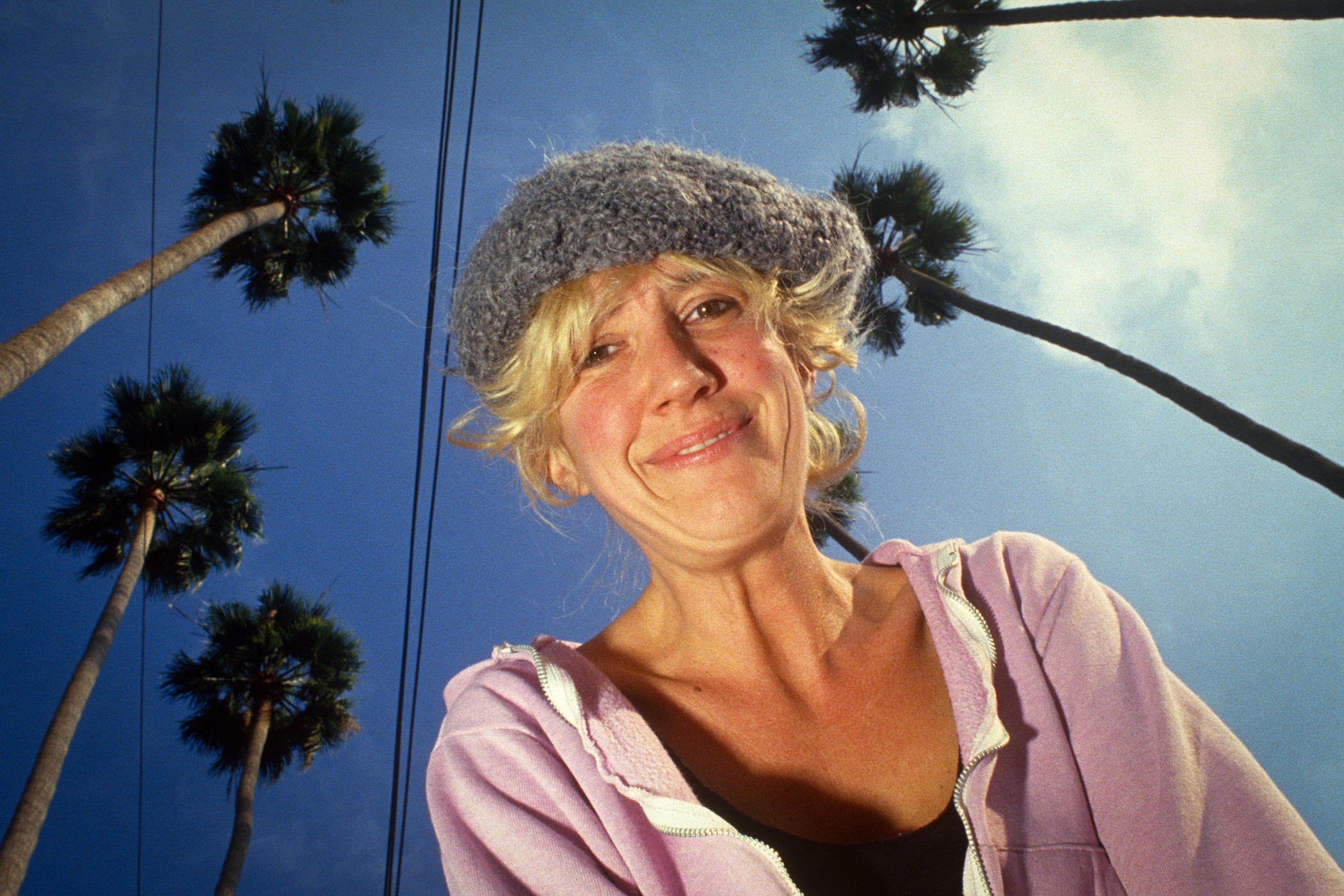
Photograph by Paul Harris/Getty Images