

Max Beerbohm claimed that “people who insist on telling their dreams are among the terrors of the breakfast table”. And who among us would disagree? Yet, from Frankenstein to Twilight and beyond, the road to publication is strewn with their literary deployment. Mercifully, dream-writing – unlike recollection – can serve several masters at once. So, while Colson Whitehead credited Zone One to his 12-year-old self’s post-Dawn of the Dead nightmares, and Book of Dreams saw Kerouac instrumentalising his, others have put dreams to work more as means than material.
Some, like Arthur Schnitzler and Olga Tokarczuk, have acknowledged Freud’s influence in this. Virginia Woolf, on the other hand, discovered all by herself what an excellent thwart the articulated unconscious could provide to the obligations of realism, with its wearisome laws of physics and flesh. Of course the most extreme dream novel remains Joyce’s book of the dark, Finnegans Wake, whose linguistic gymnastics prove foxing to most. But the Wake’s notorious impenetrability has – if only by comparison – eased the path for later novelists similarly preoccupied with the underself, and the under language required to communicate it.
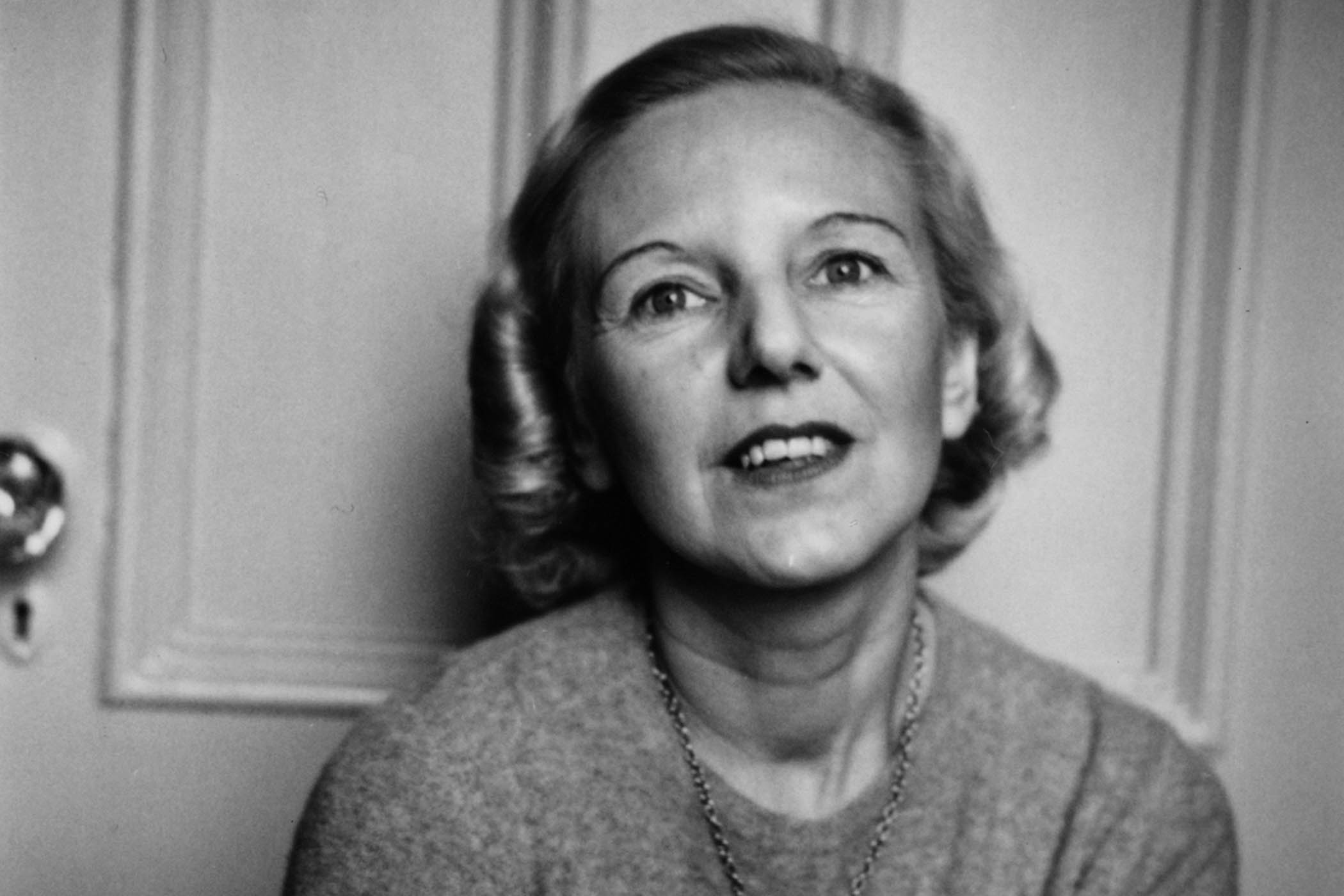
Given the self-activated mystery surrounding the life and work of the late British novelist Anna Kavan – born in 1901 as Helen Woods but later taking the married names Ferguson and Edmonds – conclusions about influence can never be assumed. But, to quote the author herself, a “writer must speak, as it were, the language of the subconscious before he can produce his best work. And this is true, not only of such writers as Kafka and James Joyce, who communicate by means of a dream or fantasy medium … It is the interpretation of complexes, together with their sequence of inevitable events, which gives to any book the truly satisfactory rhythmic progression of music.’’
In marked contrast to Joyce and her much admired Kafka, Kavan’s work is conveyed through a strikingly a-national lens. Nevertheless, her 1948 novel Sleep Has His House makes it abundantly clear just how far she had travelled, imaginatively and intellectually, beyond the postwar, kitchen-sink tenor of her literary times. With its lengthy dream sequences and minimal narrative, Sleep’s affiliation with the concerns of contemporary European modernism is unmistakable. Given this, the high-handed critical scolding it received on publication, and subsequent commercial failure, seems – then as now – almost a forgone conclusion. At the time, however, the effect on Kavan’s career, and creative confidence, was catastrophic. It would take nearly 20 years before critics and readers – spurred into action by her last, and greatest, novel, Ice – finally began to catch on to her, and up with her. Too late for Kavan, however, who died in 1968 – the year after Ice's publication.
With its title lifted from “The Tale of Ceyx and Alcyone”, an adaptation of the Greek myth in John Gower’s epic 14th-century poem Confessio Amantis, Sleep Has His House makes an unlikely addition to the drug, as well as dream, novel tradition (although comparisons to the work of De Quincey and Coleridge have been made by Kavan’s biographers). In spite of the lack of drug references throughout, there is a hallucinatory, inside-out quality to match the outside-time setting. But it would be a mistake to pigeonhole the work as this alone.
‘The daylight world was my enemy, and to the authorities of that world who had rejected me I would not submit’
‘The daylight world was my enemy, and to the authorities of that world who had rejected me I would not submit’
Rather than progressing her story through the traditional meat and two veg interactions of plot, protagonist and pressure, Kavan divides it into two unequal parts, with “daytime” being a cleanly picked carcass, offering only the sparest of character detail and situational fact. A girl and her family return – where to and where from is unclear, although, given Kavan’s habitual recycling of autobiography, the drabness of Britain after her Californian childhood might be a good fit. Their home is filled with exotic knick-knacks from their travels, but on the death of her mother, the girl slowly retreats into the night world, upon whose relief she becomes inextricably dependent. “The daylight world was my enemy, and to the authorities of that world who had rejected me I would not submit.”
The setting out and development of this slim premise occupies no more than a couple of interspersed pages, and even this appears to have been unwillingly conceded. Kavan’s foreword describes Sleep as written in the “night-time language”, adding: “No interpretation is needed of this language we have all spoken in childhood and in our dreams; but for the sake of unity a few words before every section indicate the corresponding events of the day.”
It is in this rejection of the day that the true nature of Sleep Has His House reveals itself. In contrast to her sparse descriptions of the girl’s acute loneliness at being trapped in a boring, isolating world, the “night-time” dream sequences cast aside realism’s leash and work their way outward, seemingly without limits. Between the appearance of tiny, velvet-footed tigers, who expand into giant savages of uncontainable anxiety, and the grey uniformed liaison officer who dourly negotiates both worlds, Kavan spools through a scarifying litany of terrors and horrors. As in Ice – set in a frozen postapocalyptic landscape – nature is monstrous and brutalising. Civilisation barely clings on as it dangles over the maw of the abyss. An Orwellian totalitarianism scratches at every door while – and again, Kavan shows herself to be ahead of her time – a very modern paranoia speaks:
Related articles:
“One feels under constant observation. One has the conviction that every trifling act is noted and set down either against one or in one’s favour. And at the same time one hasn’t the faintest clue to the standards by which one is being judged. How is it possible to avoid anxiety and indecision when a move of any kind involves the whole of one’s future status?”
It is a novel that wilfully upends reader expectation. Kavan’s sensibility shifts only at the behest of its own surreal logic, from the cages of memory, to gouging evocations of alienation, to clear-headed assertions about the instability of truth. “There’s the truth that you go to bed with and the truth that wakes you up at three o’clock in the morning when the tigers are jumping up and down on the roof and eternity is flapping at the earth like somebody shaking a rug.” But the only key needed to unlock Sleep is reading. Skimmers need not apply.
Newsletters
Choose the newsletters you want to receive
View more
For information about how The Observer protects your data, read our Privacy Policy
It’s been said that Kavan wades in similar dystopian waters to her posthumous champion JG Ballard, and Sleep’s protagonist, having intentionally cast herself off from the “daytime”, can certainly be aligned with his characters and what he called their “inverted Crusoeism”. But there is an intensely uncooperative introspection to this novel which sets it apart.
Several writer friends and a little reviewing for Horizon magazine in the 1940s aside, Kavan rigorously avoided contact with her contemporaries and their cultural and political fixations. This self-imposed isolation, alongside a near 40-year addiction to heroin, turned her eye inward and kept her vision pure. As a result, there is no ideological influence on her writing, no popular sentiment perforating her insight and no grovelling whatsoever before the sacred cows of her time – which is every bit as refreshing, and curative, as the agonised beauty of her prose.
Without question, some of Sleep Has His House is hard work. But more of it is stunning. And none of it is, really, like anything else.
Sleep Has His House by Anna Kavan is published by Pushkin Press (£10.99). Order a copy from The Observer Shop for £9.89. Delivery charges may apply
Photograph by Pushkin Press