
Related articles:

‘Seizure moves like a tide,” the email begins. “Quiet at first, then unsettling, then impossible to pull away from. The inheritance, the stone cottage by the sea, the pull between Janet and Tom, and the way myth and memory blur into one lived reality make the novel feel intimate and slightly dangerous in the best literary sense.”
You had me at hello, as Renée says to Tom in Jerry Maguire. Seizure is my first novel, published in 2007. The message – which came from the Gmail account of someone called Naomi Cole – continued in this vein, thoughtfully written, knowledgeable about me and my work, and blissfully flattering. “Books like Chief Engineer show your precision with history, while Seizure reveals your comfort with ambiguity and emotional risk. Not every writer balances both so naturally.”
But then: “I am Cole Naomi, a lifelong reader who guides a community of more than one thousand two hundred engaged readers including librarians, educators, parents, and serious book lovers.”
Spoiler: I was wise to what was going on, even before the bot got its name the wrong way round; I thought the reasonable number of readers it claimed to have access to was a smart touch. I’m not going to get you on Oprah, but I’ll help you reach real people; isn’t that what all we writers want? There’s no mention of cold hard cash in this email: but a demand for lucre is certainly what’s coming next.
Thanks to an “alarming increase” in AI-driven scams targeting writers, the Society of Authors and the Writers’ Guild of Great Britain have published urgent guidance to help writers protect themselves. It is as you would expect (“Assess any unsolicited offers warily and sceptically”; “Watch out for familiarity with your work”), which is not intended as a criticism. As Anna Ganley, chief executive of the Society of Authors, tells me, scams have been around for a long, long time. But, she adds “with AI, they’ve really been able to work at scale. And they’re targeting a vulnerable audience: as an author you’ve got to find your own opportunities. It’s often word of mouth, and so authors are accustomed to getting cold calls, whether from book clubs or festival organisers.”
Vulnerable too, because the economy of attention has either imploded or exploded, depending on how you want to look at it: we’re all fighting for air in a terrifyingly crowded and fast-moving marketplace.
“My advice is that if it looks too good to be true, it is,” says Ian Gardiner, a former royal marine and equerry to the late Prince Philip. He has published books about his own experiences as a soldier and a history of first world war aviation. He is willing to admit he fell prey to a scam – handing over a total of about £700 to have his books “promoted” to book clubs in New York and Canada. Again, you might say it’s the oldest advice in the world, but his contact with the scammers made him feel as if his work were really being read and understood.
The messages he received were, by his telling, not just “gushing encomiums” but showed real engagement with his books. As with many scams, there did come a point when he felt something was fishy, but by then he was in. And he felt the size of the sum he was asked for each time proved a kind of genuineness. “You’re not going to scam someone for $225, are you?” he says. Now he knows better. Eventually he accused the “person” emailing him of being a scammer, but this didn’t cause his contact to back off.
Related articles:
“He came back very hard and strong,” Gardiner says, and threatened legal action. “You’ve got to be quite resilient.” He wanted to share his story because he hopes it will help others.
The ground beneath writers’ feet is constantly shifting. In between the time I arrange to speak to Anna Ganley and our actual conversation, a new story starts to emerge: that one of the regional winners of the Commonwealth short story prize is AI-generated. Pangram, the AI detection programme that the Society of Authors views as most reliable, seems to show that it is.
Newsletters
Choose the newsletters you want to receive
View more
For information about how The Observer protects your data, read our Privacy Policy
This is not, however, any kind of failsafe, and Razmi Farook, director general of the Commonwealth Foundation, has responded robustly. The prize does not use AI-detection software, Farook says. “All shortlisted writers have personally stated that no AI was used and, upon further consultation, the foundation has confirmed this. We place our confidence in the integrity of our contributors and the calibre and experience of the judges and chair of the judging panel, and stand by the assurances given by our authors as part of our process.”
Louise Doughty, chair of the judges, adds: “Some online critics… seem to be conflating disliking a work of fiction with the suggestion that it is written by AI. AI diagnostic tools are notoriously unreliable, and making such an accusation without acknowledging that is deeply unfair.”
The story in question – along with all the winners – was published in Granta magazine, which has long had a connection to the prize and does not have anything to do with choosing who wins. Overnight, Granta’s publisher, Sigrid Rausing, released a statement that is, to my mind anyhow, extremely odd. How did they decide to think about this issue over at Granta, one of the English-speaking world’s most storied literary mags? “We showed Claude.ai the story and asked whether it was AI-generated. The response was long, concluding that it was ‘almost certainly not produced unaided by a human’.” But what do you folks really think? “Perhaps we never will know.” Right then. Yikes.
Let’s assume the story is completely human-authored and the rumours are malicious or simply false. I’d argue that, by now, what is alarming is that it hardly matters: the genie of doubt – or the possibility to do harm by making accusations – has emerged from the bottle.
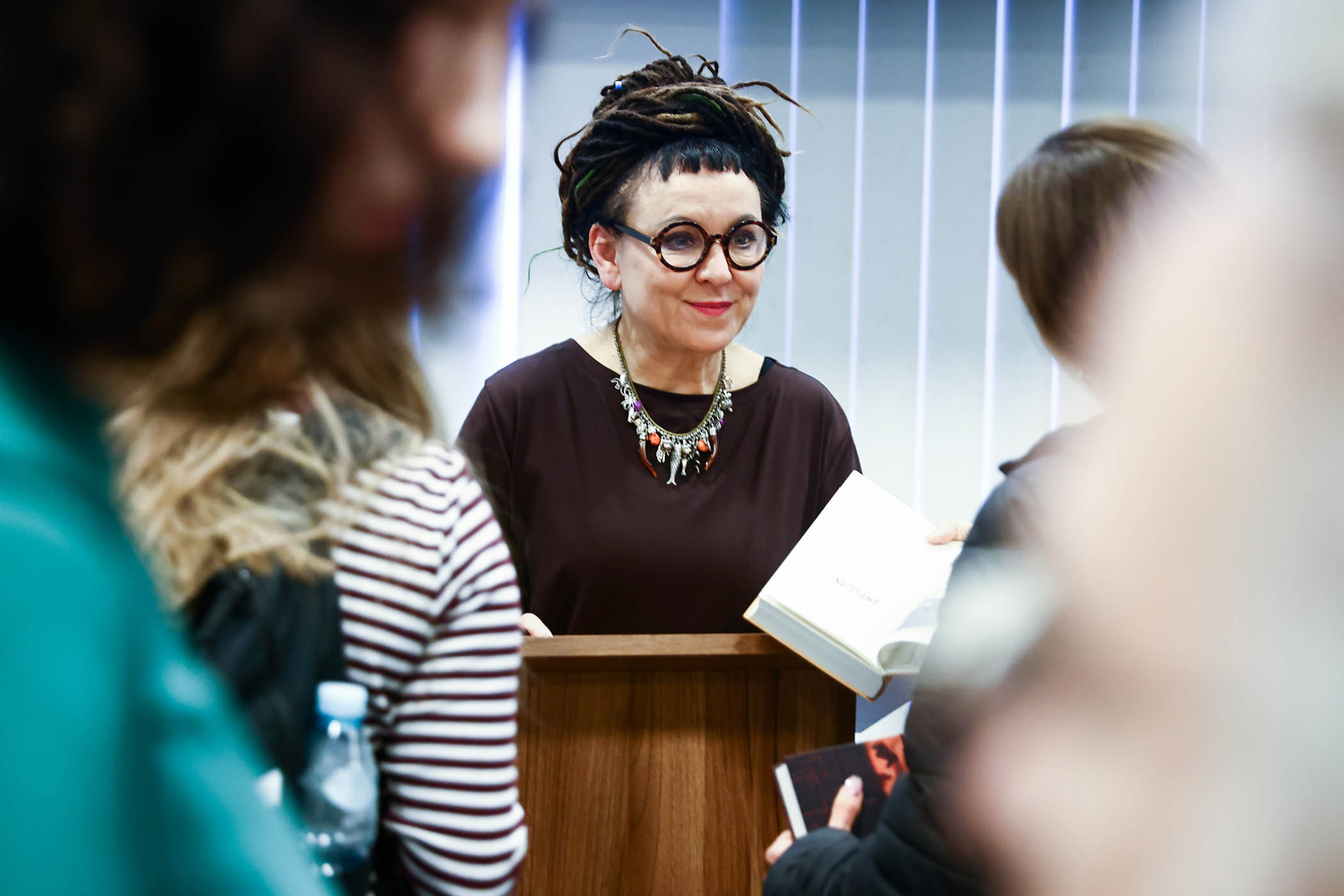
I make Ganley aware of the story and the apparent controversy. We both wonder if there will eventually be a prize that functions like the Enhanced Games, rewarding the “creative” use of AI in writing. “It may exist already,” Ganley says. And why not, when the Nobel prize-winning author Olga Tokarczuk has started to say things like: “I often throw an idea to the machine for analysis, asking, ‘Honey, how could we develop this beautifully?’ Even though I know about the hallucinations and numerous errors of factual algorithms in the fields of strict economics and hard data, I must admit that in fluid literary fiction, this technology is an asset of incredible proportions.” The article appears in her native Polish; it is translated, of course, using AI. She has since attempted a retreat, saying that “remarks made before a live audience can be incorrectly understood”. That is certainly true: but honey, really?
We are all thirsty for praise and desperate for assistance, whether we have small audiences or large ones; whether we are writers or not. Go out of your way to be human, and find a way to truly help.
Erica Wagner’s new novel, Wash, is published by Salt. Join Erica, an actual human person, at an Observer Book Club event on 4 June.
Photograph by Beata Zawrzel/NurPhoto via Getty Images