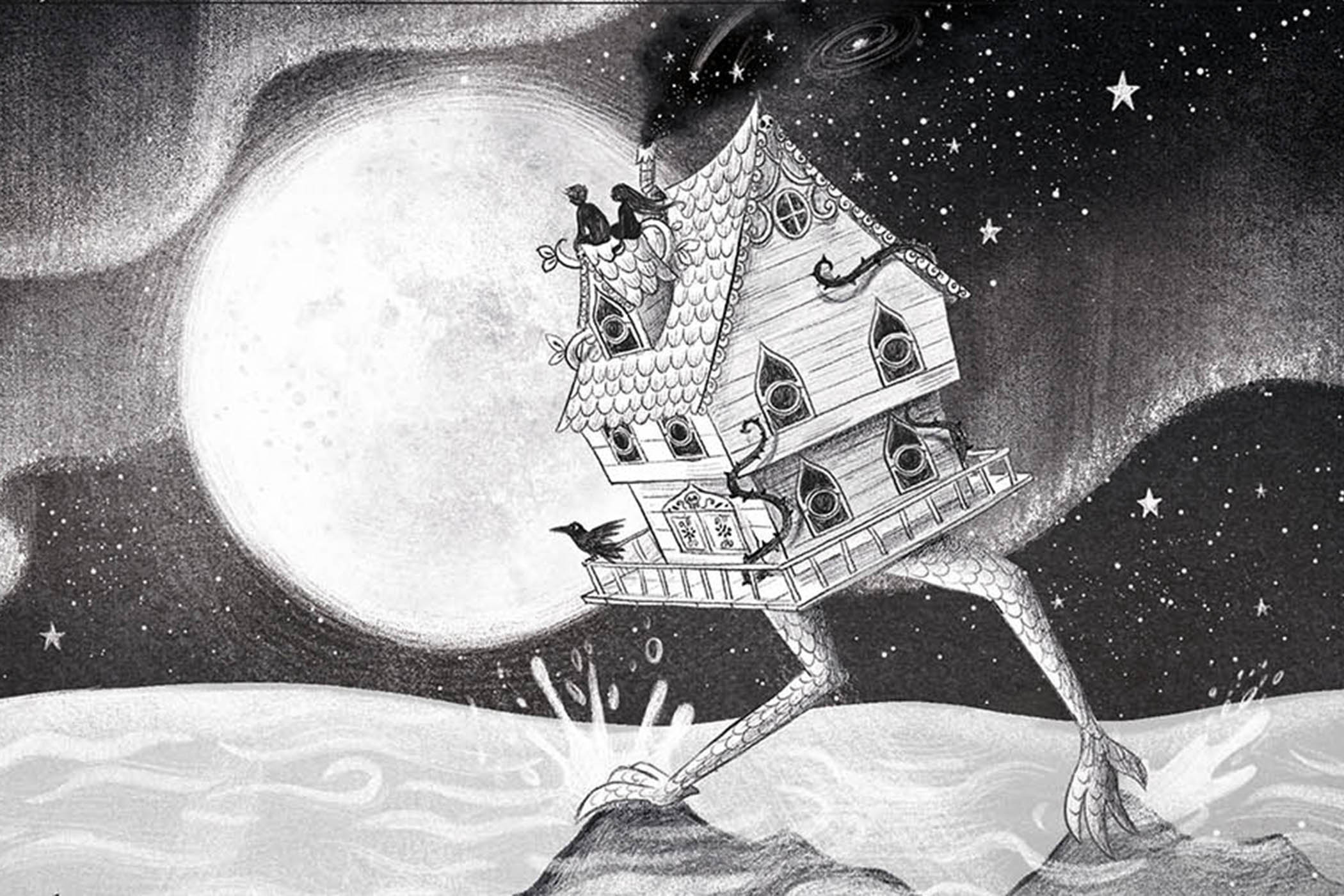


Who could forget a house perched on scaly chicken legs? Sophie Anderson’s debut, based on Slavic folklore, took children’s publishing by feathery storm in 2018. Four books later, Anderson has returned to the Baba Yaga house for The House With Chicken Legs Runs Away (Usborne, £8.99), where young Marinka, caught between the dead and the living, ushers on the recently departed with feasting, songs and a benediction.
But the life Marinka has managed to fashion for herself since her grandmother’s passing is upended when her house begins acting erratically. Mid-ceremony, with the gate to the next world yawning open, it bolts. Marinka and her living friends, Benjamin and Jack the jackdaw, are pulled along on an engrossing adventure that does not shy away from big themes: courage in the face of slim odds, the existence of multiverses and how to trust one’s inner voice.
Other big names revisiting familiar territory this quarter include Michael Morpurgo, with his retelling of Black Beauty (Harper Collins, £16.99), and MG Leonard, whose Wind in the Willows spin-off, The Adventures of Portly the Otter (Farshore, £14.99), is aimed at the younger end of the age range.
Celebrity authors remain something of a pestilence, but the debut children’s book from David Quantick – a comedy writer for Chris Morris and Harry Hill, as well as Veep – is proper. Spoiler incoming: the plot twist comes early.
Comic and poignant, Imagine a Friend (Stars and Sabers, £13.99) is told from the point of view of an abandoned imaginary friend. As an anguished Louie tries to get his buddy Marcie back – she can’t see him any more, it’s as if he never existed – he discovers other unhappy imaginaries and lost souls in the same boat. Eventual reunions between the imaginary friends and their “reals” are often complicated, and hard won.
Marinka and Louie are not the only ones hovering between worlds. So is Alex, a reluctant vampire who has messed up the delicate balance between the world of monsters and mortals, and is keeping a diary about it. First-time author Louise Austin crams a cast of otherworldly creatures into Alex Abbott Is [Un]Dead (Macmillan £7.99, out 23 April) as they set off on a road trip to southern Italy to tap into a fire demon’s powers. (One immortal, Mr Tilbury, strongly recalls Colin Robinson, the energy vampire from What We Do in the Shadows.) The undead and the living must join forces, however, when Alex’s bad bargain with the demon threatens his sleepy home village of Draihampton. A zany tale with a grownup message: always read the fine print.
The diary format itself doesn’t look like dying any time soon, with two more talented authors looking to refresh the template. Tolá Okogwu, author of the Onyeka Nigerian myth fantasy epic, punches below her authorial weight here. But the very likable Bím Blake’s Hot Takes: My Pencil Case Does Not Define Me (Puffin £8.99, out 21 May) follows Nigerian-British tween Bím at the start of year seven as she struggles with maths, crushes and a dad who is acting weirder than usual after the loss of her mum.
Comic polymath Nat Luurtsema returns with The Overthinkers Club: Happy List (Usborne, £7.99), another first in a series. Twelve-year-old Birdie worries about climate breakdown and her new, soon-to-be blended family’s house move. Luurtsema, as Birdie, is a proper hoot, full of unexpected perspectives (a boy called Herb apologises to Birdie for mansplaining mansplaining to her) and goofy quips. Elsewhere, the book is packed with gentle wisdom about anxiety.
Set in an all-too-plausible future, where mammoths have been brought back from extinction to help with climate change, SJ Poynton’s Mammoth Rider (Simon & Schuster, £14.99) is a good old-fashioned thriller. Ash Grimes lives at the research centre where her parents helped found the mammoth programme. Now a few generations on, the birth of a rare white calf sets off a chain of events that threatens the herd, the institute and the village. Ash struggles with bereavement and online learning. But her instinctive way with the mammoths proves her salvation, as poachers storm the compound and Ash and her friends risk life and limb to avert catastrophe.
Poynton, who herself grapples with dyslexia, dyscalculia and dyspraxia, writes deftly about the heat and smell of the mammoth herd, as well as the bond between human and beast, and the intriguing science behind the mammoth’s return.
Order any of the titles listed from The Observer Shop to receive a 10% discount. Delivery charges may apply
Illustration from The House With Chicken Legs Runs Away by Elisa Paganelli
Newsletters
Choose the newsletters you want to receive
View more
For information about how The Observer protects your data, read our Privacy Policy