

It would be hard to overestimate the sense of cataclysm in France on the evening of 21 April 2002, when Jean-Marie Le Pen, leader of the far-right Front National, knocked out the favourite Socialist candidate in the first round of the presidential election.
No poll, journalist or expert analyst had predicted the result that was, for reasons partly linked to ill-judged choices by leftwing voters in the first-round ballot, something of a fluke. Still, there he was: the former paratrooper and rabble-rouser previously dismissed as all mouth and no manifesto. The man who described the Nazi gas chambers as a “minor detail” of history, and had convictions for denying crimes against humanity, had come in from the political cold. And nobody was more shocked than Le Pen himself.
Le Pen’s hopes were crushed a fortnight later when rival parties ganged up to re-elect the conservative Jacques Chirac in a tactic now known as a “republican barrage”. It worked, but it was the far-right party’s first major victory and a breach in the social, political and psychological wall that had kept it out of power for more than 50 years. In his book, Far-Right France: Le Pen, Bardella and the Future of Europe, the award-winning journalist and author Victor Mallet traces the slow but inexorable rise of the Front National – repackaged and rebranded as Rassemblement National (usually translated as National Rally) by Le Pen’s daughter, Marine – from fringe party to France’s largest political force.
Mallet, former Paris bureau chief for the Financial Times, has produced a crisply written, meticulously researched narrative with the structure of a long-read news feature: factual, analytical but easy to digest, and free of polemic, as he promises in the preface.
The book shuns a linear, chronological history, instead charting the who, what, where, when and why of the party’s ascent since the 1980s in themed chapters.
Since Marine Le Pen inherited her father’s party in 2011 and set about cleaning it up, a process labelled “de-demonising”, support for the RN has moved away from the skinhead, boot-boy crowd of old to encompass an eclectic mix of people spanning generations, geography and social class. Mallet traces its gradual osmosis from traditionally conservative areas in the south to previously Communist-voting working-class regions of the de-industrialised north, and outwards through rural communities of disaffected farmers and “medical deserts” bereft of health services. Here people feel forgotten by what they view as a Parisian elite, personified by the Jupiterian president Emmanuel Macron. As a result, elements of the RN’s anti-immigration, anti-liberal, France-first rhetoric have seeped into mainstream political discourse.
Victor Mallet finds out who these ‘ordinary working people’ who support the RN are, and what they want
Victor Mallet finds out who these ‘ordinary working people’ who support the RN are, and what they want
“RN supporters now include middle-class professionals and civil servants,” notes Mallet. “Perhaps the biggest difference between the RN voters today and those of 20 years ago is the lack of embarrassment about being associated with a party the French establishment has long dismissed as fascist, racist and beyond the pale.”
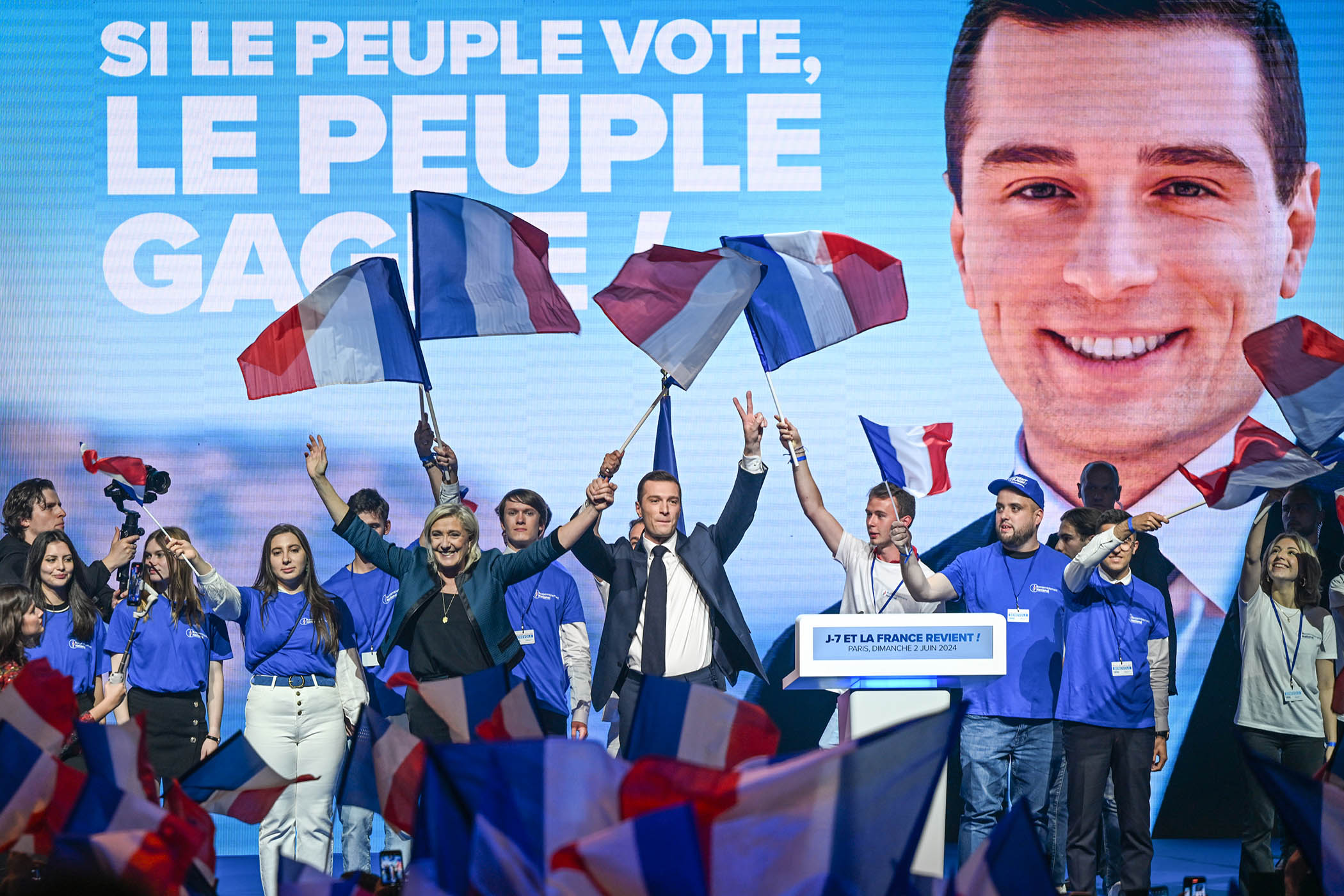
Mallet draws on interviews with the main far-right protagonists, the late Le Pen senior (who died in January 2025), Marine and her young protégé, 30-year-old Jordan Bardella, the RN president.
Marine Le Pen and Bardella complement each other perfectly to broaden the party’s appeal. She, a trained lawyer, has the dynastic heritage of the Le Pen name and a privileged background; he, the only child of divorced parents with immigrant Italian and north African roots, who grew up on a Paris banlieue housing estate – although it is said reports of his childhood hardship have been greatly exaggerated – is a university dropout with more than 2 million TikTok followers and youth appeal. If their views diverge, it is over the small print and rarely in public, where she will not say a word against him and he declares undying loyalty to her.
Aware of the French aphorism that Paris is not France nor France Paris, Mallet has also taken his notebook outside the capital, where RN support is strongest and growing. He finds out who these “ordinary working people” who support the RN are, what they want and why they are putting their faith in the far right. Mallet puts the party’s fortunes in the context of nationalist and populist currents in Europe and the wider world (he notes in passing how Bardella’s speeches echo those given by Donald Trump).
Newsletters
Choose the newsletters you want to receive
View more
For information about how The Observer protects your data, read our Privacy Policy
Keeping up with fast-moving events is a challenge in a country where a week, let alone a year, is a long time in politics. The book is published as Marine Le Pen returns to court to challenge a conviction for embezzling European Union funds and overturn a five-year ban on standing for public office. If she wins, she will make her fourth bid to become president next year; if not, it seems almost certain Bardella will stand in her place.
Either way, Mallet concludes, there is a real possibility of the RN winning both the presidential election and the subsequent legislative election, sparking an “earthquake” in European politics. “With populists and right-wing nationalists in the ascendant across the world, the likelihood is that [the RN] will triumph in France as well in the years ahead after decades of diligent preparation,” he writes.
Marine Le Pen agrees. “There is a genuine collective realisation, even among our own voters who didn’t necessarily use to believe it, that we can win,” she said in a 2024 interview with the rightwing magazine Valeurs Actuelles, adding: “In a way, our victory is inevitable.”
Kim Willsher is The Observer’s Europe correspondent, based in Paris
Far-Right France: Le Pen, Bardella and the Future of Europe by Victor Mallet is published by Hurst (£20). Order a copy from The Observer Shop for £18. Delivery charges may apply
Photograph by Artur Widak via Getty Images