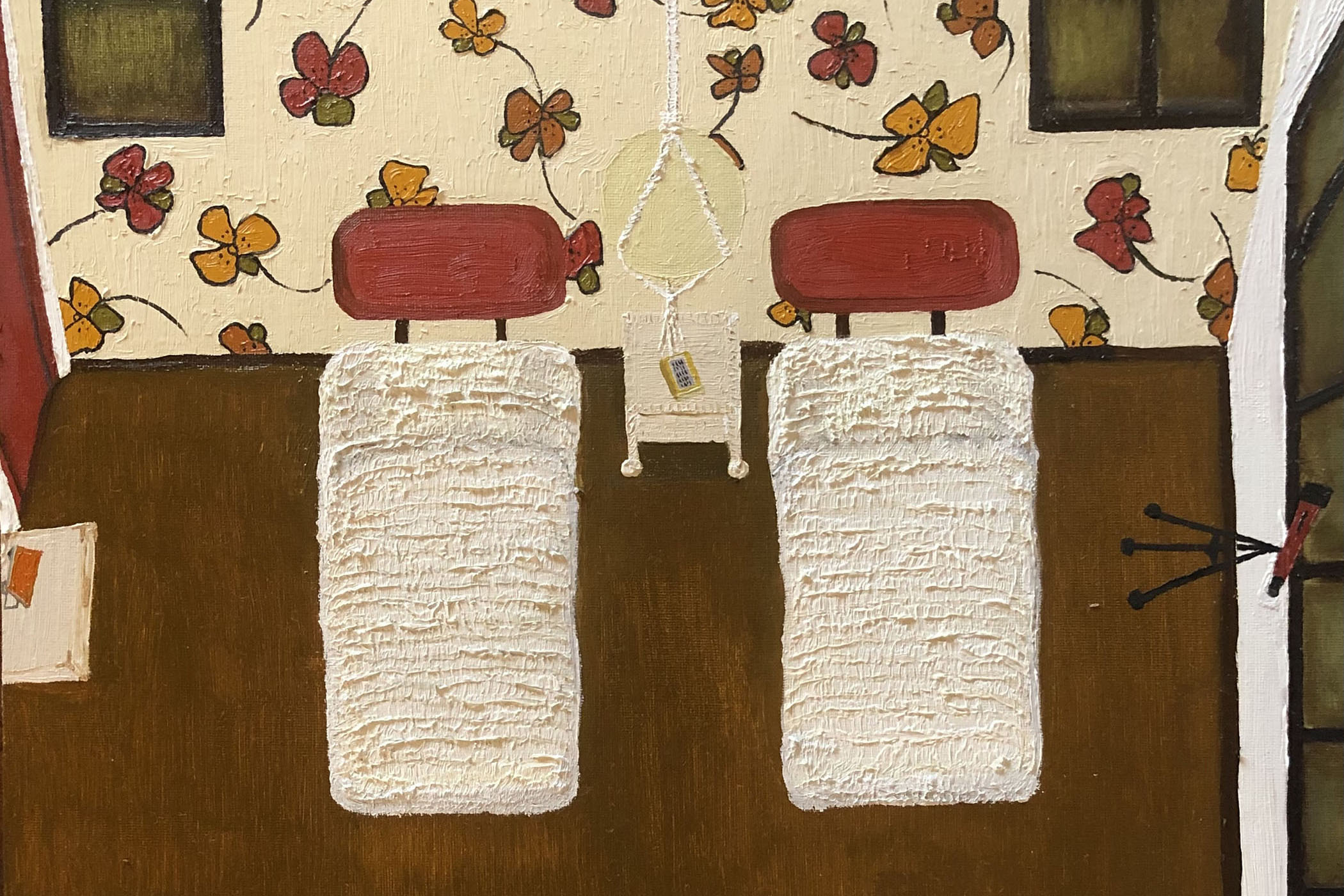


The writer Sara Baume first encountered the artist Mollie Douthit in a shed in rural West Cork in October 2021. At a pop-up exhibition in a friend’s outhouse, Baume was drawn to a painting by Douthit featuring a pair of single beds with a telescope set up on a tripod on the floor.
“There was something synchronously ordered and disorientating about it, inviting and confining,” Baume writes in her book, Opening Night.
She went immediately to another of Douthit’s paintings at the exhibition, this time of an overfilled, seemingly abandoned bath. “Again, I could not unravel the point of view, again I found the painting’s atmosphere pitched somewhere between cheer and creepiness, and I was suddenly reminded of my dreams, in which there are rarely any fixed points.” She felt she had to meet the artist; that somehow she was already a friend.
The pair did not meet until the following spring, but Baume followed Douthit on Instagram for several months after that first exhibition. There, she found other intriguing artworks, such as a painting of “the oval view from an airplane window”, as well as clues about Douthit’s life, including “a series of photographs of slices of toast on patterned plates”. When they eventually met, Baume writes that she felt a sense that “the person sitting in front of me had rather a lot to live up to”, and that thought made her shy, but eventually her sense of feeling a profound connection to the artist behind the painting proved correct.
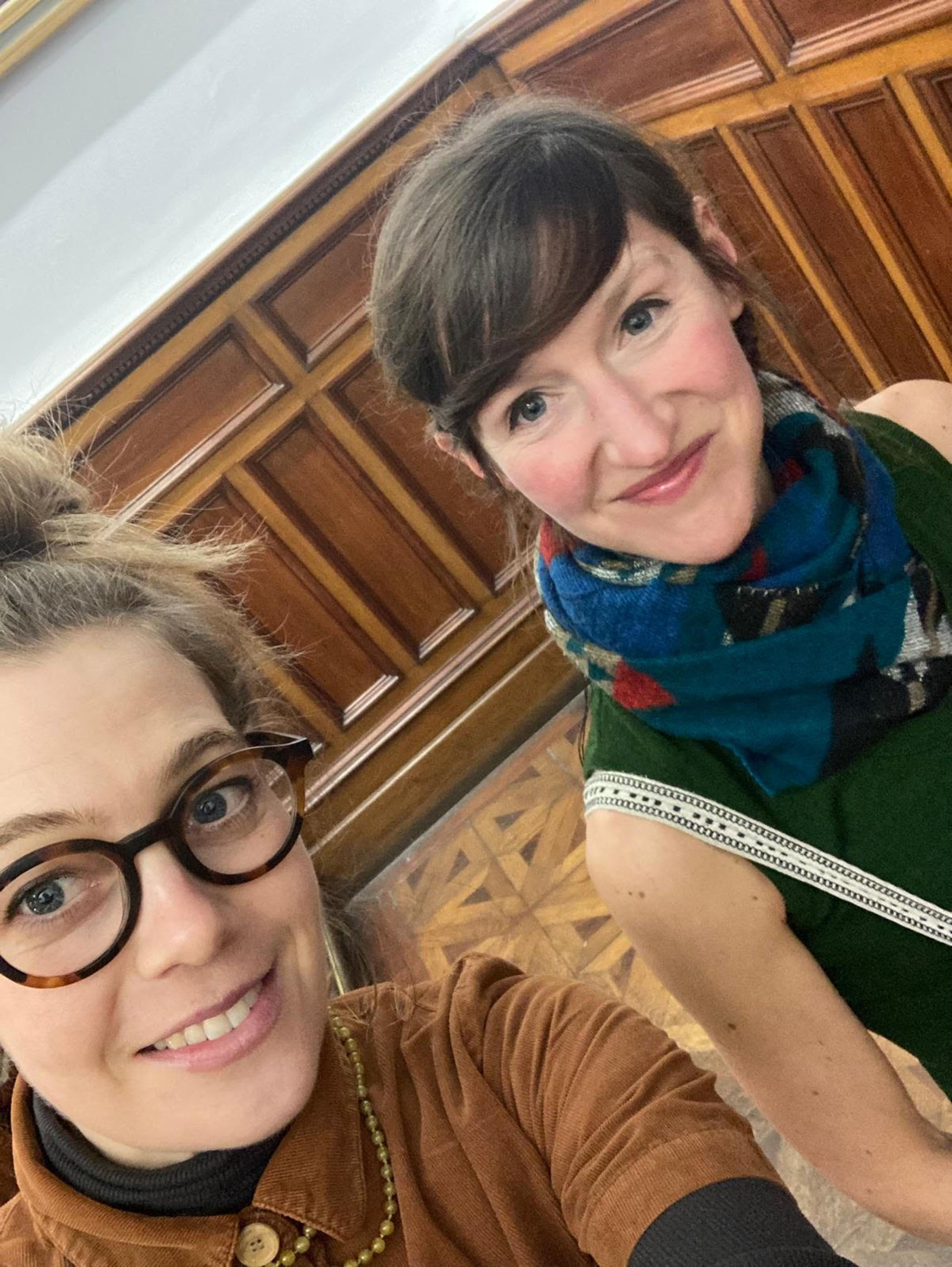
Mollie Douthit, left, and Sara Baume
The feeling was mutual. “All of my friends have just accepted that I do life this way,” Douthit, the artist, tells me on a call from Malmö, Sweden. “Then I met Sara and she does life like me. There was just something different there, I didn’t have to explain.” Douthit speaks slowly in a soft American accent that is hard to place (she is from North Dakota).
As she pauses to find the right words to describe their relationship, Baume joins us from West Cork in her native Ireland, apologising for being late in a jolly way. “I have a choice of connections and neither of them seem to be working,” she says.
Opening Night, published this month, simply charts the crossing of paths of these two women across just more than two years, from that not quite first meeting until the start of a solo exhibition of Douthit’s work in Kilkenny in January 2024. It is a book that has arresting things to say about connection, and about friendship. Baume is the Irish author of four novels who in 2023 was named one of Granta’s best of young British novelists. Douthit makes small-scale oil paintings, often of domestic scenes.
The book itself began to take shape when Douthit asked Baume to write a catalogue essay for another exhibition, something Baume had done before. It wasn’t the first time this kind of thing had happened to Baume. “My tendency was always to visit the artist’s studio and have lunch with them, and then irresistibly I would end up writing about the weather on the day that I visited, what their garden was like or what they gave me for lunch,” she says.
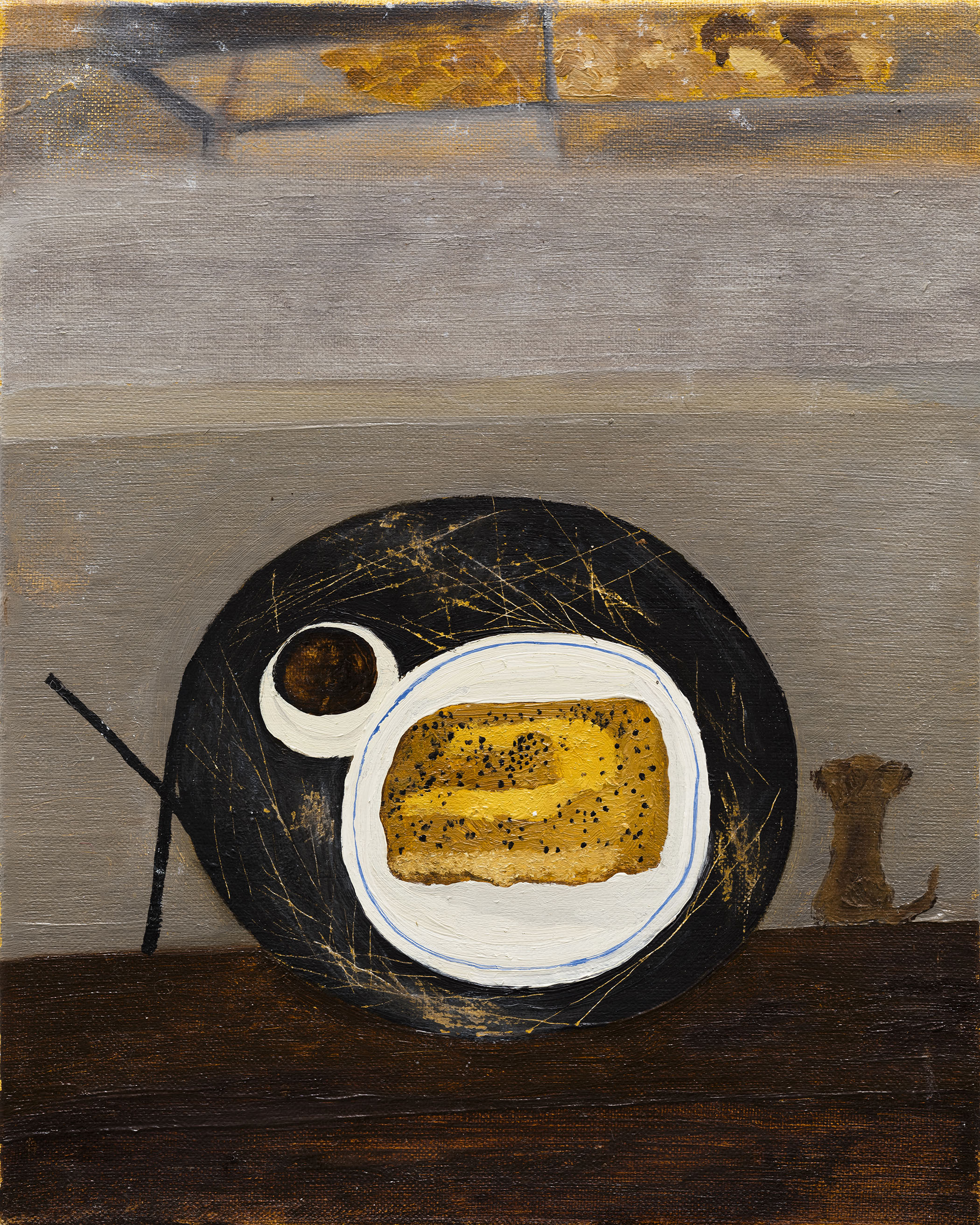
Baume was drawn to the ‘unusual angles and folksy colours’ of Douthit’s work
The eventual book is a record of days, conversations and bracing swims they took together every month in the Irish Sea, followed by bowls of soup and chewy bread – scenes which, like the contained domestic settings that Douthit paints, often have an intriguing, slightly askance sense of perspective. Baume is writing, Douthit is her subject, but both maintain that this imbalance didn’t alter their friendship. “We were going somewhere together and someone said, ‘But she’s writing about you’, and I said ‘No, this is what we do’, because nothing actually changed in what we did together.” Douthit laughs. “I didn’t feel like a zoo animal,” she says.
Still, Baume wrestles with contradictory responsibilities in the book as Douthit’s life takes increasingly novelistic twists and turns. In the summer of 2022, as the pandemic continued to disrupt communal life, Douthit tells Baume conspiratorially about a man she has met on an astrology dating app. After four months she travels to meet him in Malmö, where he lives on an old houseboat with a rescue dog, and before long they are engaged. Baume feels a frisson of jealousy at this new person entering Douthit’s life, a sense of having “known her slightly longer” and a confidence that “surely, I comprehended Mollie in a way he never could”.
Meanwhile, as Douthit prepares for her solo exhibition, a debilitating pain related to mysterious dental issues grows worse. She undergoes several root canals, extractions and CT scans, but dentists and doctors tell her they cannot explain the pain which often cripples her. Baume writes of how “Mollie seemed to be completely in control of her paintings, and considerably less in control of her life”.
Baume, who is recording this downward spiral, is uncomfortably aware of its story potential, while also doubtful about what is really going on. “The most honest parts of the book are when [Douthit] started to suffer from the dental pain, and I am asking, is this in her head?” she says. “Then there are times when I’m questioning my ethics, asking myself, am I doing this because I’m a good friend, or am I doing this because she’s my material?”
This realisation prompts Baume to look back at her first female friendship with a girl called Maria, whose younger sister had Down’s syndrome and died as she was about to reach puberty. Maria became less fun and occasionally mean. The pair drifted apart, and all these years later Baume wonders if she cut herself off from Maria to avoid the “cloud of sadness” that hung over her. “She troubles my sleep, or rather my own past actions do,” she writes, “the fact that I let her down, my first, best friend, when she needed me the most”.
Then there are times when I ask myself, am I doing this because I’m a good friend, or am I doing this because she’s my material
Then there are times when I ask myself, am I doing this because I’m a good friend, or am I doing this because she’s my material
Douthit eventually moved to Malmö, where she now lives, but despite Baume’s fears that their relationship would “likely peter out” after she left, the sense of symmetry between their work has inspired a lasting connection. Baume admits that for some encounters in the book she has relied solely on the words “LUNCH” or “SWIM” or “WALK” jotted in her pea green diary and memories around these appointments that may be a little wrong – but this is mirrored in the way that Douthit paints.
“What I always love about Mollie’s paintings is they’re a scene that she remembers, but because memory is full of gaps and omissions, they’re misremembered versions of the past, full of inaccuracies and embellishments,” says Baume. “It was amazing how many conversations we had where we were talking about the same process, but she was talking about painting, and I was talking about writing.”
This is particularly noticeable in how the pair both feel about money and how they operate within their respective markets as artists. In the book, Baume recalls feeling uneasy at dinner in Dublin with millionaire art collectors, or while staying in the home of another wealthy collector and entrepreneur. Over dinner in this woman’s house, “slick and spacious with paintings and prints hung scattershot like the summer show at the Royal Academy”, Baume explains the emotional connection she feels to a painting of Douthit’s that the collector has just purchased. “Perhaps I hoped she would donate it to me, but she didn’t,” she writes.
Newsletters
Choose the newsletters you want to receive
View more
For information about how The Observer protects your data, read our Privacy Policy
Douthit has helped her to see the ownership and commodification of art in another way. “I’ve introduced Sara to amazing people who own and really love my work,” says Douthit. “Of course, it goes into some not so great hands at times which is not fun, but on the other hand, [the paintings] are probably living in better air quality than what I can offer them right now.”
In order to write Opening Night, Baume was forced to go back and examine what it was about Douthit’s paintings that had initially enchanted her. When she looked at the “unusual angles and folksy colours”, she recalled how “I always felt as if I was inside them, sifting through my own memory bank, clutching at familiarities”.
This sense of the two artists reflecting each other at times seemed uncanny. More than a year after they had first met, in the car once on the way to the airport, Douthit showed Baume a drawing of that initial in-person meeting. In the composition there are real objects from Baume’s rural studio, such as her sewing machine and workbench, but also some invented stools that were never really there. The scene is enclosed by the curling frame of a looking glass, and when Baume asked why, Douthit said, “When I first met you, it was like holding up a mirror.”
Opening Night by Sara Baume is published by Granta (£16.99). Order a copy from The Observer Shop for £14.99. Delivery charges may apply
Photographs by Mollie Douthit