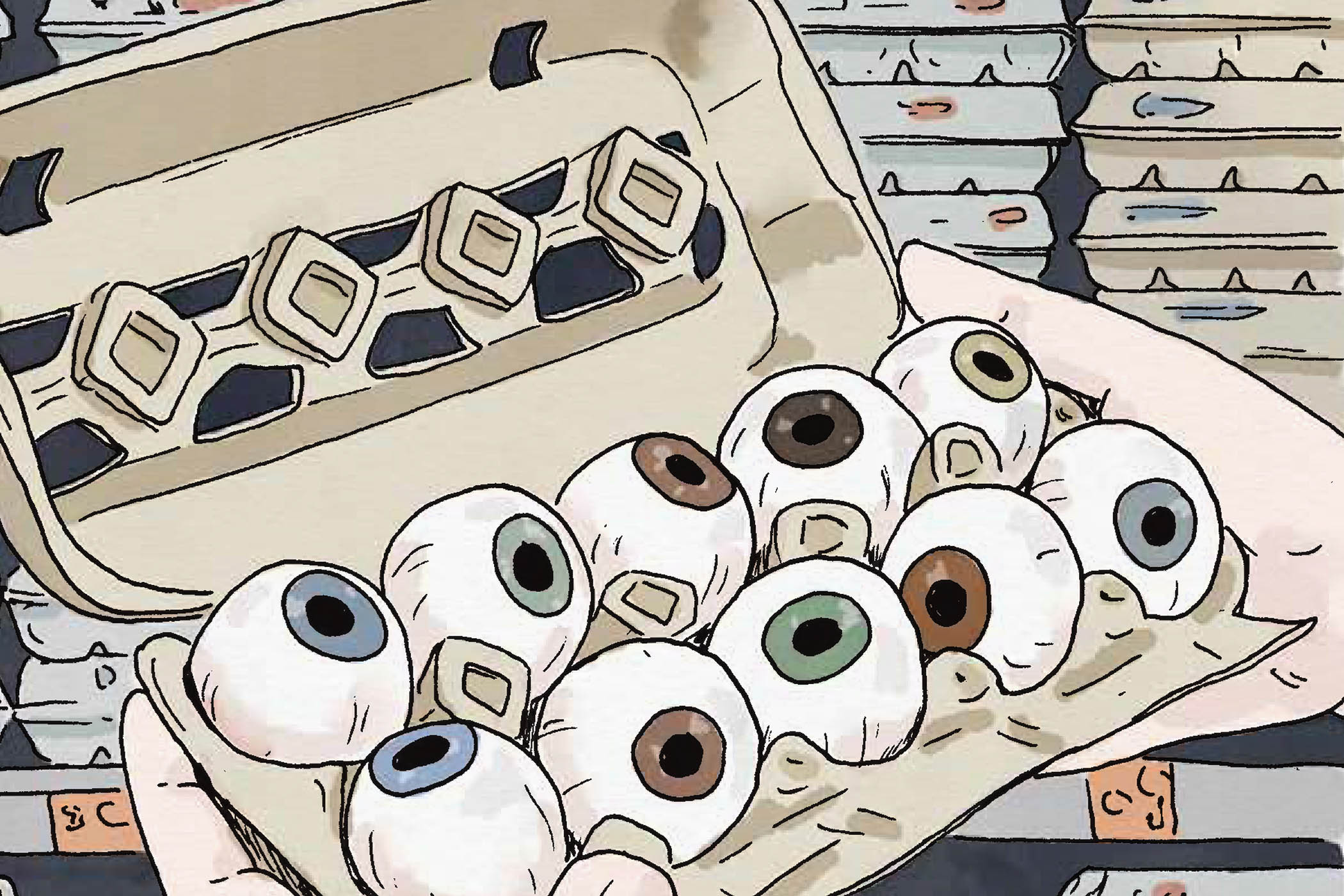

In the opening pages of Arizona O’Neill’s debut graphic novel, we see the author going about her everyday tasks – shopping, gardening, feeding herself – and being repeatedly confronted by body parts. An egg carton, hinged open, reveals rows of eyeballs. A butcher’s shop has a “human meats” section offering legs and hearts. When she lifts a kale plant out of the soil, its roots are connected to a pair of pink lungs. Back at her desk, the pencil she uses to draw a heart – one of many in the book – drips blood on to the page before cascading to the floor in a horror-movie torrent.
O’Neill has good reason to be haunted by visions of human organs. In 2015, at the beginning of the opioid crisis, her father died of a fentanyl overdose in Montreal. He was just 41. As his next of kin, O’Neill was called to the hospital where she felt pressured into signing the donation papers – it’s “the next step that has to be taken”, the doctors told her – before they switched off his life support. She acceded to their request, which felt more like a demand, and was left to contend with her grief and a whirl of questions about what had just happened.
Her father’s heart found a new owner – a family man who poses with his wife and kids in a photo enclosed with their thank-you letter. So, presumably, did all the other organs listed on the form she signed, including his eyes. Her friends are glad that something good came from his death, but O’Neill finds it creepy that pieces of her dad are sitting inside the bodies of strangers. Worse, she sees his fate as part of a longstanding trend whereby organs are taken “from groups of people society deems lesser”, including drug addicts like her father, and passed up the social ladder. The opioid epidemic in North America, she believes, is supercharging the process.
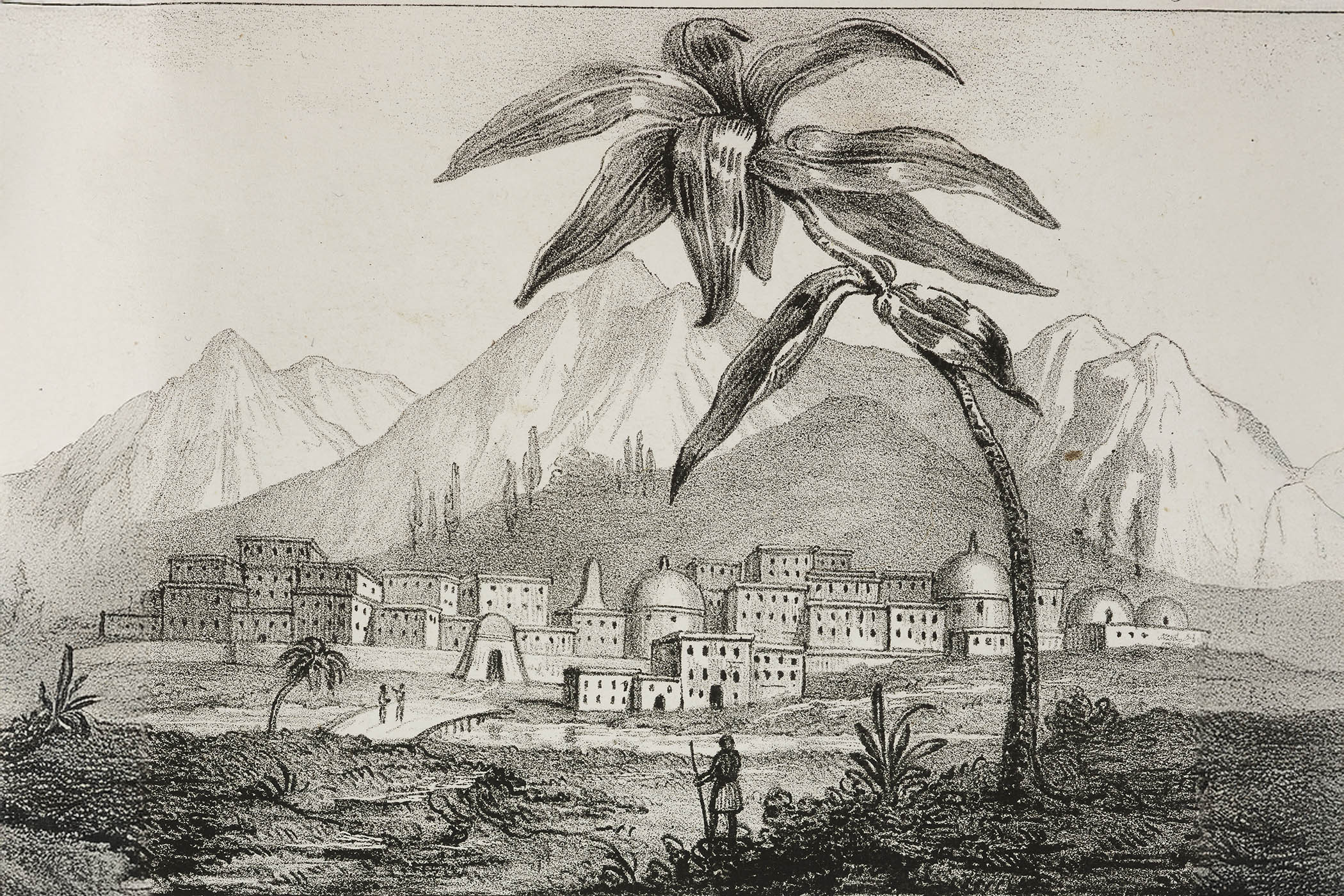
To explore this intriguing and troubling subject matter in all its gruesome particulars, O’Neill sets out on a globe-trotting, time-warping ride around the physical afterlife – from modern organ donation to the grisly pre-history of transplantation, with some body snatching thrown in. This might sound like morbid fare, but O’Neill brightens it with colour and lashings of surrealism. Her companions on the journey are a lizard called Izzy, representing her anxious-obsessive side, and a hunky Frankenstein’s monster nicknamed Frankie, complete with green skin and protruding neck bolts.
The Frankenstein reference is not incidental. O’Neill sees Mary Shelley’s novel, which envisioned new life arising from dead body parts, as a foundational text for the organ trade, responsible for bringing a whole new branch of medicine into existence. It’s hard to imagine a more ghoulish origin story, but, as O’Neill points out, the medical establishment has worked hard to soften the image and language of transplantation in recent decades.
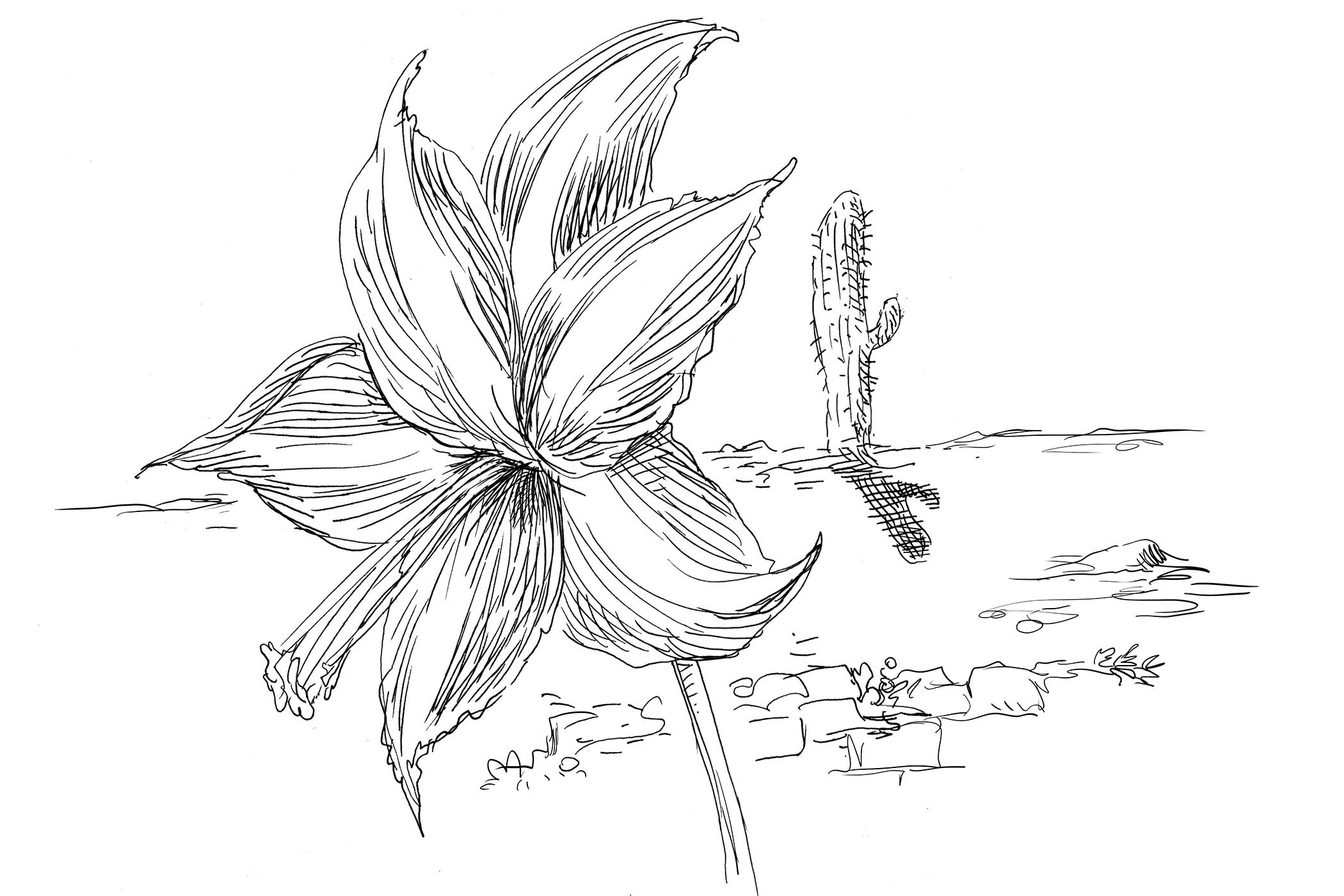
There’s so much fascinating material here, I only wish I could recommend O’Neill’s handling of it more wholeheartedly. The artwork is eye-catching and I admired the fluidity with which she weaves together the real and imagined strands of her story and the various time frames. Sometimes, though, her attempts to enliven the action feel strained – I could have done with fewer odd-couple spats between Izzy and Frankie. And the jaunts on which she hangs her narrative can seem superfluous – a trip to a picturesque Dublin library yields little more than she could have found on a Wikipedia trawl.
But if the execution doesn’t always come off, the questions she’s posing are interesting and challenging. Why is drug addiction treated as a crime and not an illness? Should the family of a donor be compensated financially for their loved one’s organs when, as O’Neill points out, everyone else involved in the process is profiting from it? And is the opioid crisis really being exploited by the organ-procurement industry? When you look back at the history of medical experimentation and its many affronts against the powerless in society, this doesn’t really seem so far-fetched.
It’s to her credit that O’Neill doesn’t give definitive answers in every instance. After all, many of her own questions about her father’s death remain unanswered a decade on. The best she can do, in the end, is to immortalise him by other means. His body may no longer be intact, its organs redistributed far and wide, but in her imagination at least, and here on the page, his memory lives on.
Opioids and Organs by Arizona O’Neill is published by Drawn & Quarterly (£25). Order a copy from The Observer Shop for £22.50 (10% off RRP). Delivery charges may apply
Illustration by Arizona O’Neill
Newsletters
Choose the newsletters you want to receive
View more
For information about how The Observer protects your data, read our Privacy Policy