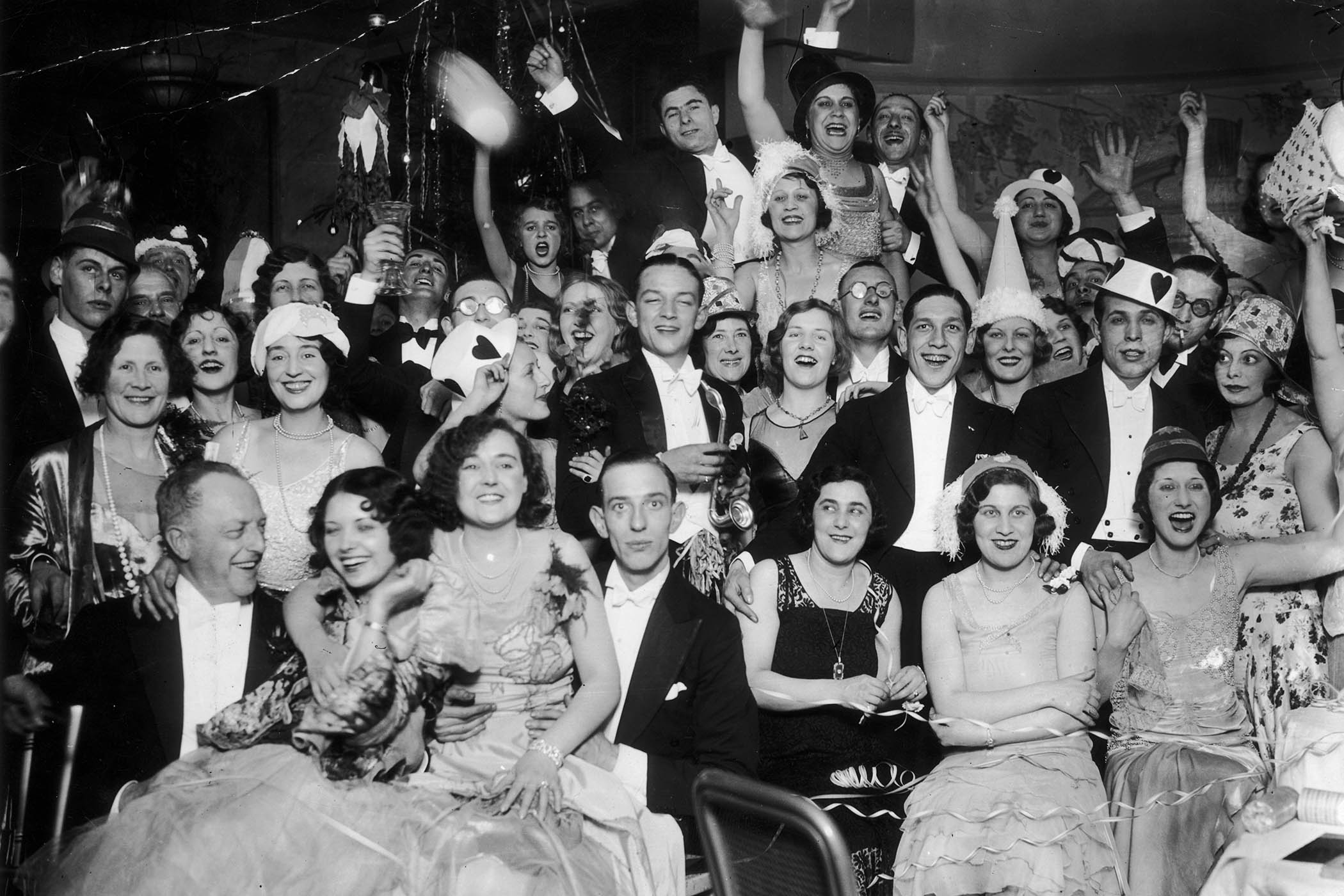

Alwyn Turner opens his panoptic survey of interwar Britain on a moment of stillness, like a conductor tapping his baton before the orchestra commences. It is the first Armistice Day, 1919, when George V asked for a two-minute silence to commemorate the fallen of the first world war. In this stunned pause, the country had to take stock of the catastrophe that had just befallen it, little suspecting they were bound on a wheel heading for another, 20 years hence. The reader is helpless to resist the impression, on every page, of tragedy calling them on.
That moment of calm is soon forgotten amid the busy cavalcade of the 1920s, the relentless flurry of people getting on with their lives. They had already endured the second mass bereavement of the Spanish flu pandemic of 1918 and now they sought relief. Turner unabashedly admits that, in dealing with both highbrow and low, his bias is “towards the popular”, much as it was in his enjoyable Little Englanders (2024) about the Edwardians. The music of the time blares full and loud here, with new dance crazes from the US to accompany it: “the Conga, the Rumba, the Shag, the Shimmy and the Suzie Q”, not forgetting the Charleston, which came to London in 1925. The postwar generation were eager to make merry and forget: “It was your war and I hope you enjoyed it,” some fop tells an ex-serviceman in Nancy Mitford’s Highland Fling, not a dance but a novel, which caught the carefree mood among a subset of bright young people.
But the masses sought ease and diversion, too, first in the home (the wireless radio was the era-defining game-changer) and later the cinema, its golden age bolstered by the advent of talkies. By the end of the 1930s, ticket sales in Britain had reached nearly a billion per year. And while people watched they could also graze on the latest in sweet treats – Aero, Crunchie, Kit-Kat, Maltesers, Quality Street, Rolos, Chocolate Orange, the latter surely the best thing since sliced bread, itself another newcomer on the grocer’s shelf. In the bookshops, detective stories and thrillers sold fast, as did the new Penguin paperbacks at railway stalls.
But for all the new entertainments on offer there remained a notable affection for the old forms such as music hall, which was enjoying a revival both in London and the provinces (“Hear the songs your parents sang!”). Old stagers including Gus Elen were lured out of retirement, answering to an indelible fondness for revivals in the British spirit.
When much of Europe was embracing fascism, why did Britain resist its allure?
When much of Europe was embracing fascism, why did Britain resist its allure?
Turner is in his element here, and touchingly salutes two Lancastrian performers who became the national treasures of their day. One of them was George Formby, somehow endearing himself through his gormless but “unthreatening” persona; the other, Gracie Fields, was a bona fide talent who could sing and act, “as much part of English life as tea and football pools”. Her 1934 film Sing As We Go was, incidentally, the title of a 2023 door-stopper on Britain between the wars by Simon Heffer, also a fan of Fields, but more high-minded in his chronicling of the country’s political and economic trials (if you require a thorough account of the gold standard, for instance, Heffer’s is the book you need).
A Shellshocked Nation is a racier, leaner account, though it does deal with a vital political question: when much of Europe was embracing fascism, why did Britain resist its allure? Oswald Mosley was, at one stage, the coming man of politics, and there was no lack of antisemitism in British society; unlike in Germany, however, it remained a prejudice, not “a political creed”, and Nazism could not gain a foothold among a people generally opposed to interference in everyday life. An “English Hitler” was a contradiction in terms: we liked our leaders to be steady, avuncular types such as Ramsay MacDonald, Stanley Baldwin and Neville Chamberlain. The same went for dance moves. As Clement Attlee observed, the British would prefer the Lambeth Walk (“do as you darn well pleasey”) to the goose step. Democracy won out.
Even seismic events of the period seem to come with shock-absorbers. The General Strike of 1926 actually lasted only eight days, and the disruption was far less than anticipated. In 1936, the abdication of Edward VIII may have sparked an outrage, but it had little effect on the day-to-day business of living. The Depression did cause profound misery up and down the country, culminating in the Jarrow March of 1936, though its effects were often buried in a larger national disillusionment, and a complacent belief that “distressed areas” and unemployment were facts of life.
It is interesting to learn from Turner’s book that in the 1920s and 1930s the proportion of the household budget spent on food and rent declined while gambling (at the dog track, and on horse racing and the football pools) boomed. Upward mobility was matched by actual mobility; driving quickly gathered speed as car manufacturers kept putting out cheaper models. Road safety was sketchy: in 1929, 7,000 motor-related deaths were recorded, most of them pedestrians. Driving tests were only made statutory in 1934, and even that failed to halt the rise in fatalities.
Turner’s book, stacked high with surprises and eye-catching details, is a long tale of light and shade that rarely flags. His pronounced interest in the music hall might not be to all tastes, but it does usefully reflect a truth about the British, specifically their passionate and immovable nostalgia. Just when the storm clouds were gathering over Europe, the public were finding solace in “older, more enduring values”: old dramas, old songs, old halls, old hands. As late as 1939, the Sheffield Empire was hosting eight veterans of the Edwardian music hall, several of them also being featured on the BBC radio show These Names Made Variety. Perhaps the idea of a society that was constantly looking back tells its own story. For who, huddled in this interlude of dread, could bear to look ahead?
A Shellshocked Nation: Britain Between the Wars by Alwyn Turner is published by Profile Books (£25). Order a copy from The Observer Shop for £22.50. Delivery charges may apply
Photography by JA Hampton/Getty Images
Newsletters
Choose the newsletters you want to receive
View more
For information about how The Observer protects your data, read our Privacy Policy