
On Tuesday night Taiwan Travelogue, by Yáng Shuāng-zǐ and translated by Lin King, won the 2026 International Booker prize. The metatextual, footnote-filled tale, which was first published in Taiwan in 2020 in Mandarin, is set in 1938 and follows a young Japanese novelist who travels to Taiwan, then under Japanese rule. There she meets an interpreter who introduces her to the island’s culinary delights as she grapples with the tensions between colonised and coloniser. Yáng, 41, is a Taiwanese novelist and writer of scripts for manga and video games. King, 33, is a Taiwanese-American translator and author based between Taipei and New York. Accepting her award at a ceremony in the Turbine Hall of the Tate Modern, Yáng described how “we writers have been asking the same questions for the past century: what kind of nation do the people of Taiwan want?” The next morning Yáng, speaking through an interpreter, and King met with The Observer in central London.
How was your evening?
Yáng: When I was walking on stage to accept the award, my phone kept buzzing in my pocket. There were so many messages, I haven’t had time to respond to them all. My manager warned me that I should go to bed by 1am, but I stayed awake until 2.
King: I never thought I would be in the Tate Modern after-hours. That was majestic.
The book is in part a queer love story between two women. Why was that relationship important for you to depict?
Yáng: It was fascinating writing a historical novel from a female perspective. I wanted to focus on the relationship between one woman and another, not even necessarily with romance involved. Across East Asia, there is a really strong pop culture output, but only a Taiwanese person could produce this novel.
King: That’s because Taiwan has passed legalised same-sex marriage and there are more codified moves toward equality compared to the rest of east Asia. A historical novel where two women and their relationship feature as the main vessel of the story is unlikely to be told in other countries in the region.
Did you see that kind of representation when you were growing up?
Yáng: I didn’t, until I started watching and reading manga and animation. Then I discovered this category, Yuri – or girls’ love – which refers to relationships between women. But that is unique to Japanese subculture.
The International Booker is the second major prize that Taiwan Travelogue has won in English translation, after it received the National Book Award for Translated Literature in the US back in 2024. How do you feel about this Anglophone recognition, given the book itself grapples with themes of colonialism?
Yáng: While I was writing the novel, I didn’t think about how it echoes back to reality. But you can’t completely sever literature from its political environment. Only after finishing it did I realise that there’s this irony. So I find it very reasonable.
King: In the Anglophone world, or maybe just in the western hemisphere, there is a lot more talk of the role of the [British] empire. But in Taiwan, English is seen as a door to getting your ideas out there. Most Taiwanese writers write in Mandarin, but because of the political situation, it’s not necessarily going to be published in the People’s Republic of China, and so there is really limited reach with the language, even though Mandarin is broadly used. In general, the publishing industry in Taiwan regards [the English language] not as a colonial force, but as an opportunity, a platform to be able to get our stories out there.
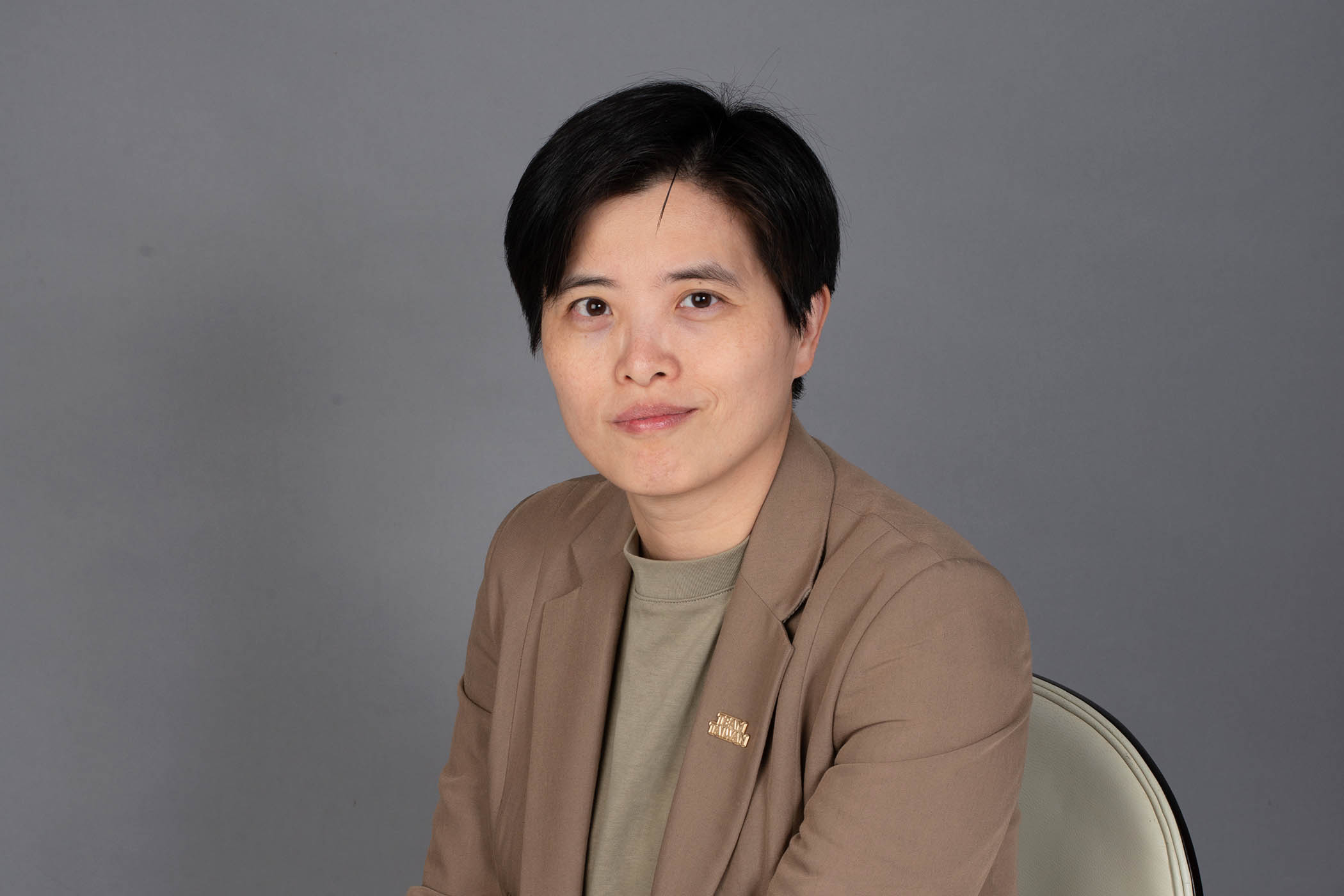
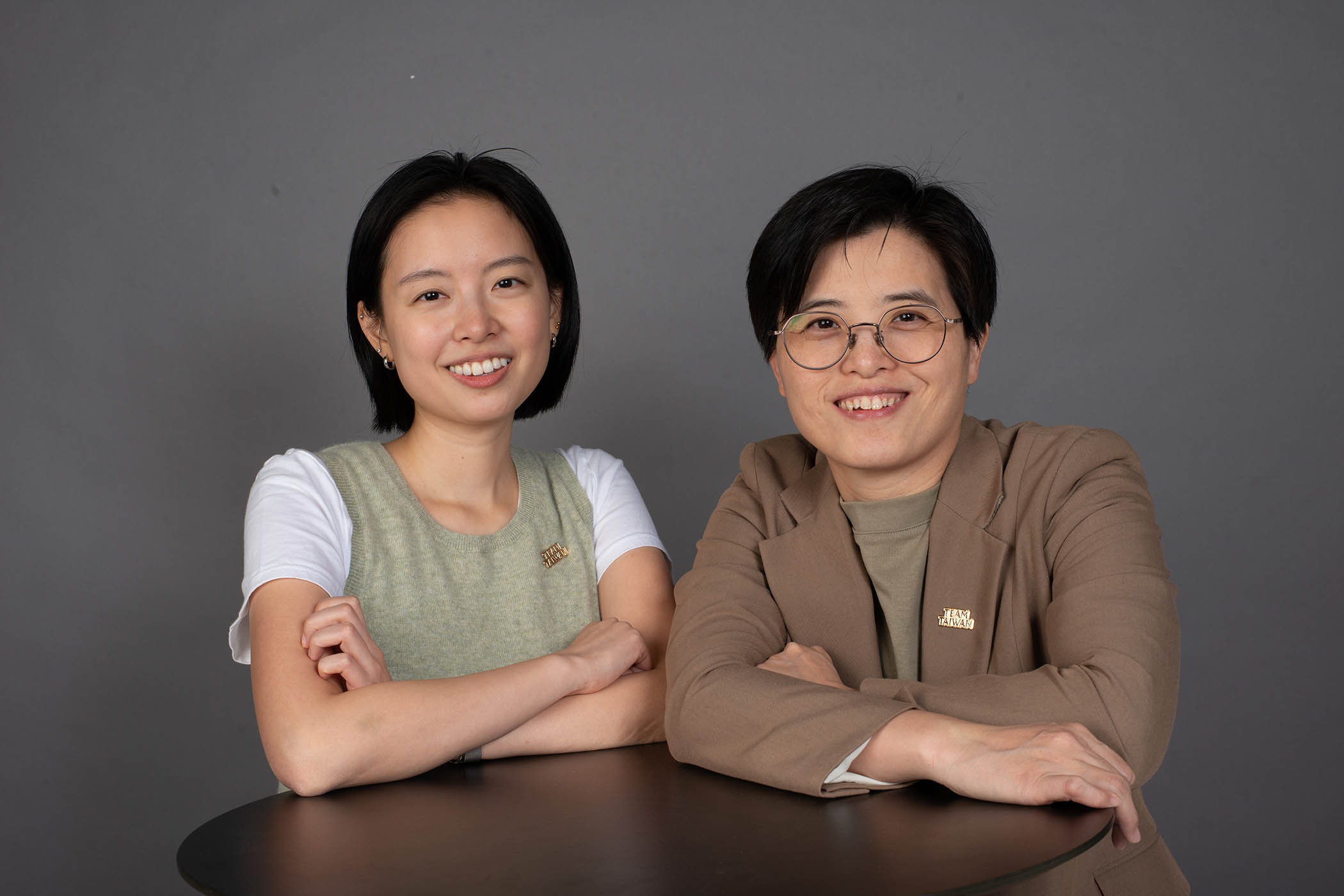
Above: International Booker winner Yáng Shuāng-zǐ; lead image: Yáng with translator Lin King
Taiwan Travelogue hasn’t been published in China. Would you like it to be?
Yáng: When I was writing this book, I foresaw that it would not be published in China. But I do have some Chinese friends who bought copies and, under the table, brought them into the country. It would be fascinating to learn whether there is a bootleg copy in China too. My Chinese friends and I used to read bootleg versions of manga translated into simplified Chinese, so I know there is a streamlined process of adapting foreign texts – and that was 10 years ago or more.
King: We have had a lot of people come to our events in the US and the UK who are from the PRC and who first read the book in its English edition. So translation has become a loophole, a way to work around the firewall and the censors.
Yáng: But since last night, we have had publishers in China asking [about publishing it].
Who would you most like to read Taiwan Travelogue?
Yáng: I have a hierarchy for the target audience. First, I want to have a conversation with Taiwanese people; I want to help them dissect this complicated emotion we have towards the period of Japanese colonialism. Then, on the second tier, it’s either Japanese people or Chinese people: Japanese people because I want the former coloniser to understand our perspective; and Chinese people because I want them to acknowledge that a long time ago there was a fork in the road that separated our history from China’s, so they can see how we are culturally and therefore nationally distinct populations.
Tell me more about the complicated feelings you have about Taiwan’s history.
Yáng: We never had enough time to fully digest a post-colonial stage because soon after [Japan ended its colonial rule, in 1945] we had a new coloniser from China, [the Kuomintang, the party that lost the Chinese civil war and relocated to Taiwan]. In Taiwan, we have a proverb where we refer to the Japanese ruling party as dogs and the KMT as pigs. We say: “The dogs just left, and now we have pigs here.”
Xi Jinping met Vladimir Putin this week. What are your fears for the future of Taiwan?
Yáng: When [Russia invaded Ukraine] in 2022, a lot of Taiwanese people saw parallels between Taiwan and China versus Ukraine and Russia. Taiwanese people started to put more thought into getting ready for a possible future war, and I’m not just talking about national security. It’s not just about preventing a military invasion, but also about defending ourselves against cultural invasion.
Which Taiwanese authors deserve to be better known globally?
Yáng: Wu Ming-yi, who was longlisted for the International Booker in 2018. And Apyang Imiq, who is an Indigenous writer from the Taroko people. And Kevin Chen.
King: As an aside, Chen’s next books will be translated by me.
Taiwan Travelogue by Yáng Shuāng-zǐ, translated by Lin King, is published by And Other Stories (£14.99). Order a copy from The Observer Shop for £13.49 (10% off RRP). Delivery charges may apply
Photography by Sophia Evans for The Observer