
At a public meeting at the British Academy earlier this year, the former archbishop of Canterbury, Rowan Williams, gave his definition of the role of the humanities: “I think that humanities are all about helping people to see things weirdly, to be honest,” he said. The project of this passionate and serious book is to show us how extraordinarily weird human solidarity is – or how weird it could and should be.
This book is not what some readers will no doubt imagine it to be. This is no gentle, liberal, softly God-bothering exhortation to show more empathy and kindness. Williams begins by telling us that solidarity has failed, as both an idea and a practice, and failed at the very moment when we need it most desperately.
Solidarity is now suspect. At its worst, it has collapsed into tribalism (a solidarity of friends and enemies). Others reproduce the power dynamics they seek to remedy, as in the white allyship cogently rebuffed by Reni Eddo-Lodge in Why I’m No Longer Talking to White People About Race. Even where it is working, solidarity isn’t working hard enough. “Solidarity!” scream the brightly coloured words on the forever reels of social media, and our grief is sold back to us as something brash and weightless.
Grief is the right word here. At the centre of Williams’s concern is a currently shared, if unequally distributed, vulnerability. Tribal nationalism, technological imperialism, extreme inequality and the climate crisis, not to say reckless violence, have all played their part in wrenching us from a common world. The very rich might believe they’re protected (and they are, up to a point) but the fragility Williams is concerned with is not just political, social and economic, it’s profoundly existential and, for him, spiritual too.
Newsletters
Choose the newsletters you want to receive
View more
For information about how The Observer protects your data, read our Privacy Policy
Instead of a helpless “performative solidarity”, Williams wants to engage us with the moral and imaginative work necessary for the business of being vulnerable together in what he calls “a continuity and mutuality in what is strange”. He uses the tools of the humanities – history, philosophy and theology – to show the way.
The book traces the concept of solidarity from its emergence in 19th-century social movements, through the horrors of 20th-century totalitarianism (the “solidarist state” at its most perverse), total war and the Holocaust, up to the postwar development of human rights and its strong presence in Catholic social thought in the post-cold war period. Williams’s philosophical and theological companions are thinkers who were pressed up tight against this history, such as the theologian Dietrich Bonhoeffer (executed by the Nazis), and philosophers Jan Patočka (one of the leaders of Charter 77 in Czechoslovakia) and Józef Tischner (the first chaplain of Poland’s Solidarity trade union).
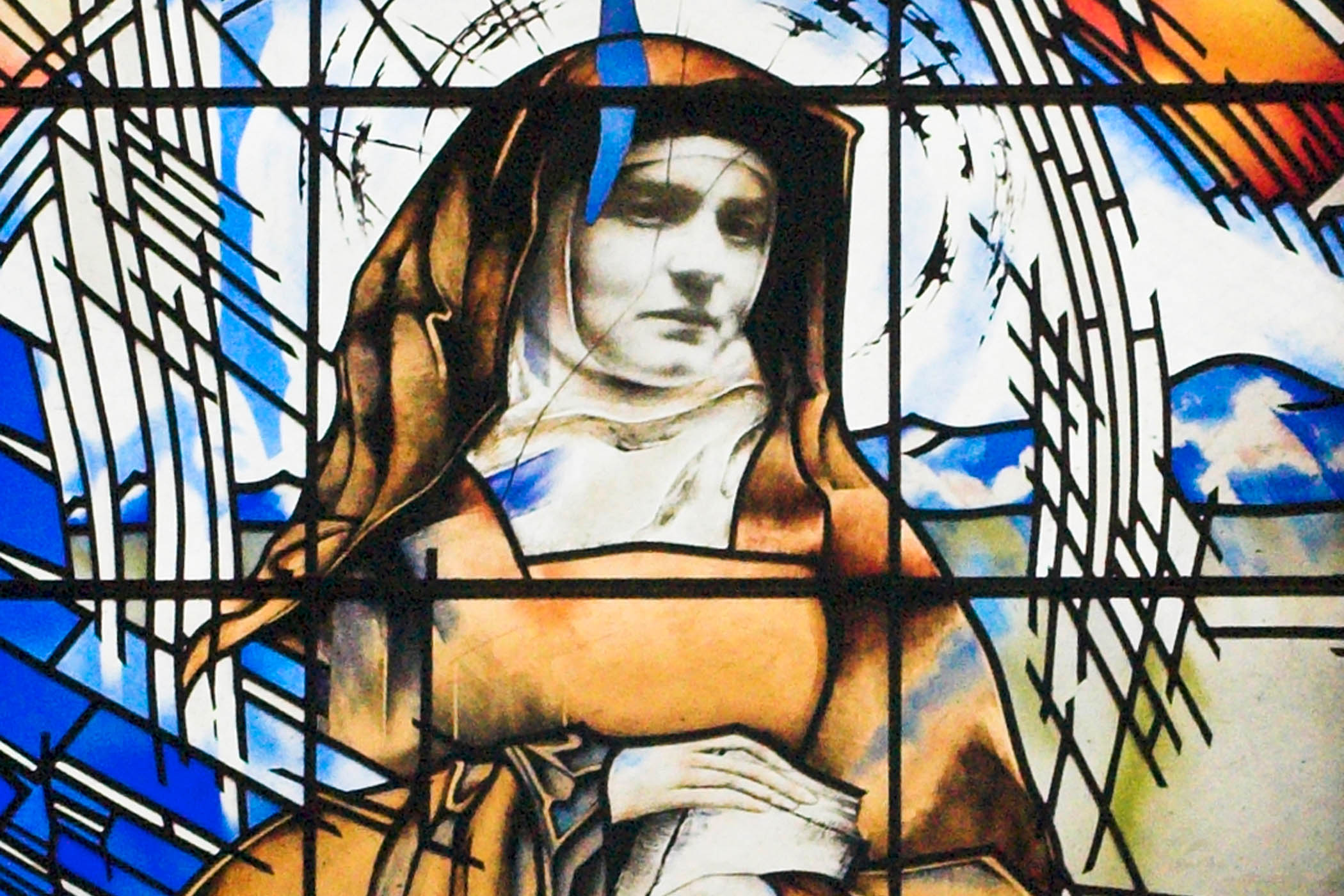
But it is Edith Stein, the philosopher, theologian and Carmelite nun, who is at the centre of Williams’s book. Born into a Jewish family in Poland, Stein was a student of the pioneering phenomenologist Edmund Husserl at the University of Freiburg. She converted to Catholicism in 1922 and was murdered at Birkenau-Auschwitz in 1942.
Tribal nationalism, technological imperialism, extreme inequality and the climate crisis, not to say reckless violence, have all played their part in wrenching us from a common world
Tribal nationalism, technological imperialism, extreme inequality and the climate crisis, not to say reckless violence, have all played their part in wrenching us from a common world
Stein’s thesis was on empathy, which she understood not as a straightforward identification with others, but as a perceptual dance between how we appear to others and also to ourselves. This is the weirdness at the heart of solidarity, for Williams: that we are all strangers. There are no grounds or rules, just a mutual vulnerability that, if we could learn to recognise it in one another, and in ourselves, might shift the meaning and practice of solidarity into something more hopeful.
How might this work in practice? Williams writes of solidarity as a calling, a response to the world, a vocation. But one cannot “do” solidarity in isolation: we need traditions, rituals, histories, contexts and communities to support it. Like the theologian, a person of faith may (although not always) find it easier to embrace the mysteries of communal religious practice – the substitution of bits of the self and the other in holy communion, for example, or the putting of oneself in the place of the other as part of a calling.
Agnostics and humanists may find this a leap too far. I don’t think the divide need be absolute. We can grant solidarity its weirdness without having to sign up to the supernatural. As Ece Temelkuran argues in her luminous Nation of Strangers: Rebuilding Home in the 21st Century, so many now are becoming unhomed, exiled and estranged. In such a world, solidarity no longer feels like a choice but a necessity.
Solidarity: The Work of Recognition by Rowan Williams is published by Bloomsbury Continuum (£20). Order a copy from The Observer Shop for £18 (10% off RRP). Delivery charges may apply
Photography by Uta Poss/Ullstein Bild via Getty Images