

In the middle of Seven Dials, an area of Covent Garden that can be crossed on foot in a matter of minutes, is a thin, elegant stone pillar. I’ve walked past it countless times, assuming it must be as old as this part of London, laid out by Thomas Neale MP in the early 1690s. Yet, as Matt Houlbrook points out in his intricate study of Seven Dials between the wars, this “iconic” (of course it is “iconic”) structure is a replica, introduced in 1989. The original was considered a “rendez-vous for blackguards, &c” and removed in 1773 – for most of Seven Dials’ history, there was no sundial at all. The replacement is a fiction of commerce and heritage that stands as a totem to the tensions, both ancient and modern, at the heart of Songs of Seven Dials.
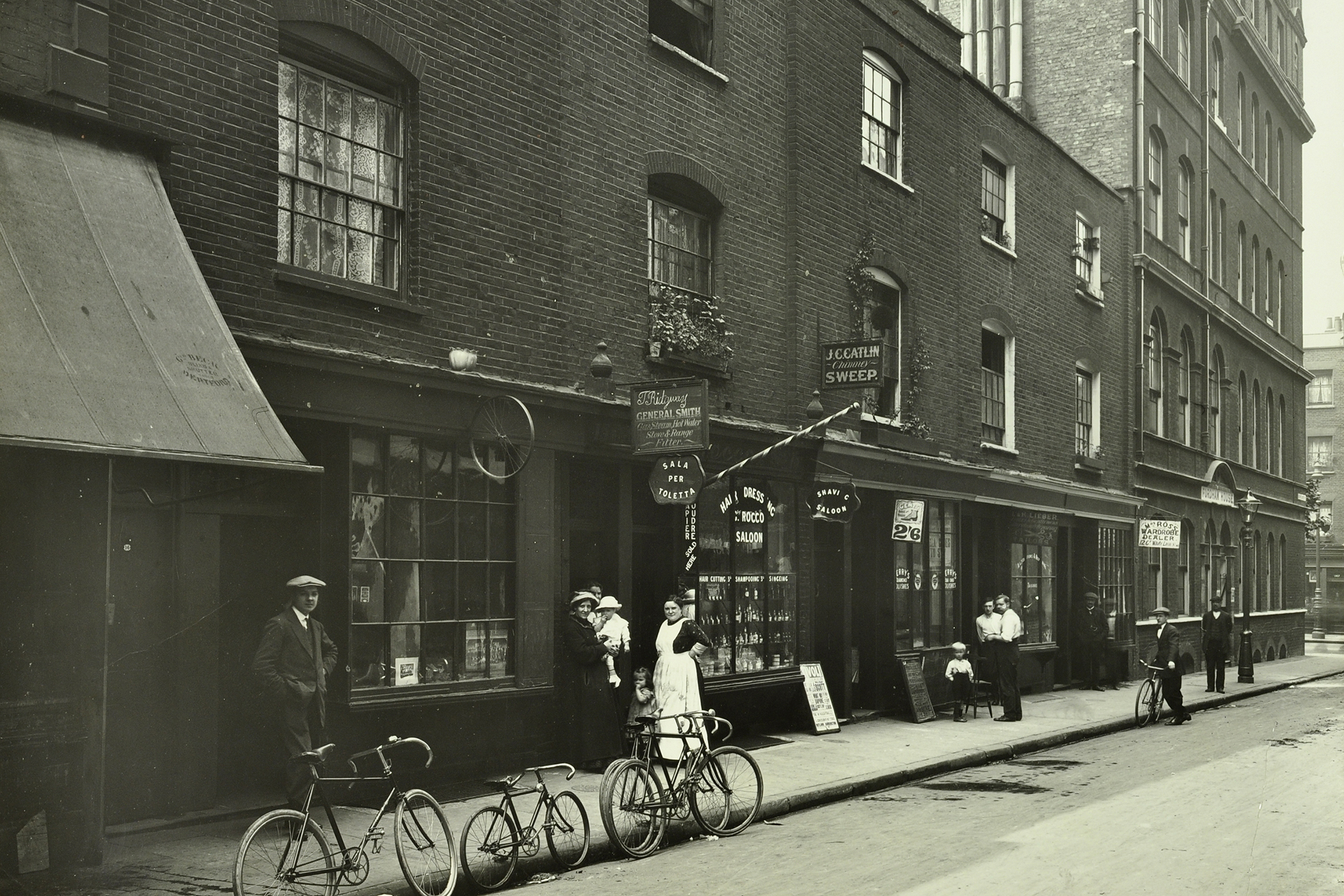
Seven Dials was regarded as a slum by the Victorians, and after the first world war attracted French refugees, a transient population of sailors, and people from across the British empire. It was known pejoratively as London’s “Black colony”, a term that Houlbrook unpacks through this meticulously researched book. His “painstaking effort to reimagine Seven Dials as a place of home, work, and play” energises the pages with the bustle of streets that once had a population density double that of the rest of London. These stagehands, fruit and flower sellers, waiting staff, barrow boys, criminals and artisans bustle through the text, haunting warehouses, factories for making boxes, tarpaulins and glue, as well as tailors and dressmakers, printers, pubs, cafes and a fencing academy.
This rich chorus of Seven Dials finds a more intimate voice through an ordinary couple who tried to build a future there. They are at the heart of Houlbrook’s book. Jim Kitten was a Sierra Leonean cook and former soldier, shot and injured trying to escape a German internment camp during the first world war. He fell in love with Emily Bridger, and together they opened a cafe on Great White Lion Street, serving teas and dishes such as curry and rice to suit the cosmopolitan tastes of the local community. This mixed-race couple are at the heart of a community that “blurs boundaries, inverts hierarchies that define the British world”. The cafe was therefore perceived as a threat, not least to the prejudices of hotelier Bracewell Smith (a future Lord Mayor of London) across the road. The authorities harassed customers, and fined Kitten for allowing prostitutes to congregate and gambling to take place. In April 1926, popular newspaper John Bull branded the cafe “a terrible Negro haunt”. Jim and Emily Kitten sued for libel – and lost.
Stagehands, fruit and flower sellers, waiting staff, barrow boys, criminals and artisans bustle through the text
Stagehands, fruit and flower sellers, waiting staff, barrow boys, criminals and artisans bustle through the text
John Bull was a newspaper posing as “a selfless defender of British culture”, a trope wearyingly familiar today. Further contemporary resonances abound as the obscure lives of the Kittens and the fate of the streets they called home illuminate how our cities work (or don’t), and for whom, a century on. The Bright Young Things flocked to Seven Dials in the 1920s for “the fun of playing in the dirt”, and artists followed in search of cheap studios, accommodation and stationery – Virginia Woolf wandered through trying to buy a pencil, patronisingly remarking on an area “where people have such queer names”. The opening of the Cambridge theatre in 1930 anticipates the contemporary practice of “place-making” – using the arts as an engine of regeneration, whether existing residents like it or not. Houlbrook points out that the facade of the Cambridge was built in Portland stone, the material of English grandeur, in contrast to the humble bricks of the surrounding streets. It is a neat detail typical of the book.
The working class and multiracial communities who lived in the area and gave their custom to establishments such as the Kittens’s cafe were an inconvenience to what Houlbrook describes as “the antagonisms of improvement” driven by “the monstrous machine of capital” – or gentrification, as we call it today. There are echoes of the Seven Dials story in the recent decanting of council tenants and small businesses from Elephant & Castle, a couple of miles south on the other side of the Thames.
Houlbrook describes the Covent Garden of the interwar years as being “a strange island at London’s heart”, and his Songs of Seven Dials becomes a lament to a distinct character now long erased. The area around the replica pillar that pins Seven Dials to London is now a tourist hotspot of high-end international brands, boutiques and chain stores. Last Sunday, I wandered into what, a century ago, was a cardboard box factory. It is now the Seven Dials Market, an echoing hall dank with the miasma of steam and hot fat from aspirational street food stalls. Hunger getting the better of judgment, I was liberated of more than a tenner for a small, greasy, overly sweet pulled-pork bagel, suffering the consequences for the rest of the afternoon. Oh, for a plate of curry and rice at Jim and Emily Kitten’s cafe.
Songs of Seven Dials: An Intimate History of 1920s and 1930s London by Matt Houlbrook is published by Manchester University Press (£20). Order a copy from The Observer Shop for £18. Delivery charges may apply
Editor’s note: our recommendations are chosen independently by our journalists. The Observer may earn a small commission if a reader clicks a link and purchases a recommended product. This revenue helps support Observer journalism
Photograph courtesy of London Archives
Newsletters
Choose the newsletters you want to receive
View more
For information about how The Observer protects your data, read our Privacy Policy