The Iceberg, the 2015 Wellcome prize-winning first book by the British artist, film-maker and sculptor Marion Coutts, is a searing account of life with her art critic husband Tom Lubbock after he was diagnosed with a life-threatening condition. Coutts’s writing was praised for the clarity and candour with which it described the impact of the illness that led to Lubbock’s death, in January 2011, at the age of 53. Now Coutts has written a book, What Did the Deep Sea Say?, which weaves together fictional experiences of bereavement and bringing up a child alone with an appreciation of art and accounts of the history and geology of the sea, including a chapter on the work of the pioneering oceanographer Marie Tharp.
Readers may see your new book as a kind of fictionalised follow-up, or even a sequel, to The Iceberg. Would they be right?
I don’t see it as a sequel at all, although it took me a long time to work out what it is. There were scenes that had been knocking around in my head that I wanted to do something with. They were quite filmic; with something about the beach, about a bath and then about a house as it gets dark. For a long time I kept these paragraphs and sentences in two folders, one called “Near” and the other “Far”.
The book is fictional, although it is based on things I did with my son after Tom died, including a trip we made just three weeks afterwards. We literally stepped off a plane on to a beach in winter. It was not a holiday though, it was an act of agency: the first moment we’d been able to make any choice. By the time we made our trip out to the island of Fogo [in Cape Verde] six years later, we were in a completely different place. I’d applied to work out there, as the dates exactly fitted between my son finishing primary school and starting secondary school. I thought, “That’s mine.” But one of the things I learned writing The Iceberg is just how much of a construct a book always is. It is never, ever what life really is. It is entirely made up and that is incredibly liberating.
Although this book is a novel, it conveys the look and feel of its locations in great detail, almost as if they are pieces of evidence. Was that a conscious move?
Yes, because you [need] that duality in fiction, and to make people believe, or no one is going to stay with you. I want the reader to be with me. That is what I work at in the language. That’s my real fun. It is very much a voice thing, as [this] is certainly not a travel book about where I went and what I did. Nothing is named. It all just came together over time. When we were in Fogo, I started to think there was something about being on the beach that I could knit together. It was a serendipitous connection with the first trip that formed the book.
Why did you pick a song as the new book’s title?
I have a background in music and always liked that song. I used to sing it to my son. It is an old song, but Woody Guthrie made it better known. It asks a good question too: what did the deep sea say? “It moaned and groaned. And it splashed and it foamed. And it rolled on its weary way.” Getting that title made me really happy, as I suddenly thought it made sense. There are threads in the book about loss generally, not just of an individual, but we all hope that the sea is just going to go on and on, although we can’t really know that.
What is the sea’s role in the story?
The sight of the sea is a big presence in the book. The action takes place on the sea’s edge and that means there is a sense of attrition. Everything is getting bashed about since time began, and you are just one of the things getting bashed about. The sea is also blank in a certain way. Quite often when you go to a beach, you don’t really want to be there and yet a lot of time can pass quickly. All my photographs that appear in the book look out to sea.
Does writing have a therapeutic worth to you?
I wouldn’t say it is at all therapeutic. But I’m a person who likes making things so [the book] contains some themes or forms of language that I value, and that I hope others will. So that’s a positive thing, of course. And I enjoy the writing, although I abandoned the whole thing twice for quite long periods of time because it seemed just like a bunch of sentences. I am not a plot-driven person. The narrative comes out of the way things butt up against each other. I don’t want to give someone my therapy: I want to give them a good thing I’ve made and then they can do what they like with it. Any therapy happens on my own with my therapist.
You chart the boy’s navigation of beach life, as well as the mother’s. Did you draw on your own childhood memories?
My memory is quite bad, and anyway I essentially think memory is made up. It changes depending on where you are in life. I know I was quite inquisitive. My childhood was in Nigeria and I have two memories: one is of eating something very hot and another is of the enormous flowers that grew around our balcony. Those are the only experiential memories I have, although I have lots that I have clearly made up from looking at a photograph. The job of a photograph is to act as a sort of a surrogate.
The book contains a series of startling thoughts about time and place, including the narrator’s response to the geology of the shoreline and to the horizon. Did these ideas form as you wrote?
You chase them down; you might have a vague idea, but don’t quite know what it is. And then, as you are scruffling around in the text, you find what you mean. The horizon is always a kind of locator that orients you in the world. I also write a lot about other horizontals and verticals I see, in a way that is framing all my images. And if you are framing an image, then you are not inside it. I would say there was a shift in the writing process, though – analogous to how I felt – from when I was writing about arriving at the first shore, in a zombie state of grief, and then later on the island, where I was able to be more present inside the frame.
Do you ever go back to your visual arts practice, or are you now mainly only a writer?
I am a sculptor and a film-maker and I continue to make both moving and still images, although I don’t do it so much now. But I find I enjoy the portability and lightness of a book. It can go anywhere and is quite cheap, and yet it can be as dense as you like. Before The Iceberg, Tom was the writer, although I had written small things. Books were everywhere in my house and [writing] was a good, exciting place to put my brain in extremis. Ever since then I do think more about writing. I have no answer as to whether I would have written if Tom had lived.
What Did the Deep Sea Say? is published by Fern Press (£20). Order a copy from The Observer Shop for £18. Delivery charges may apply
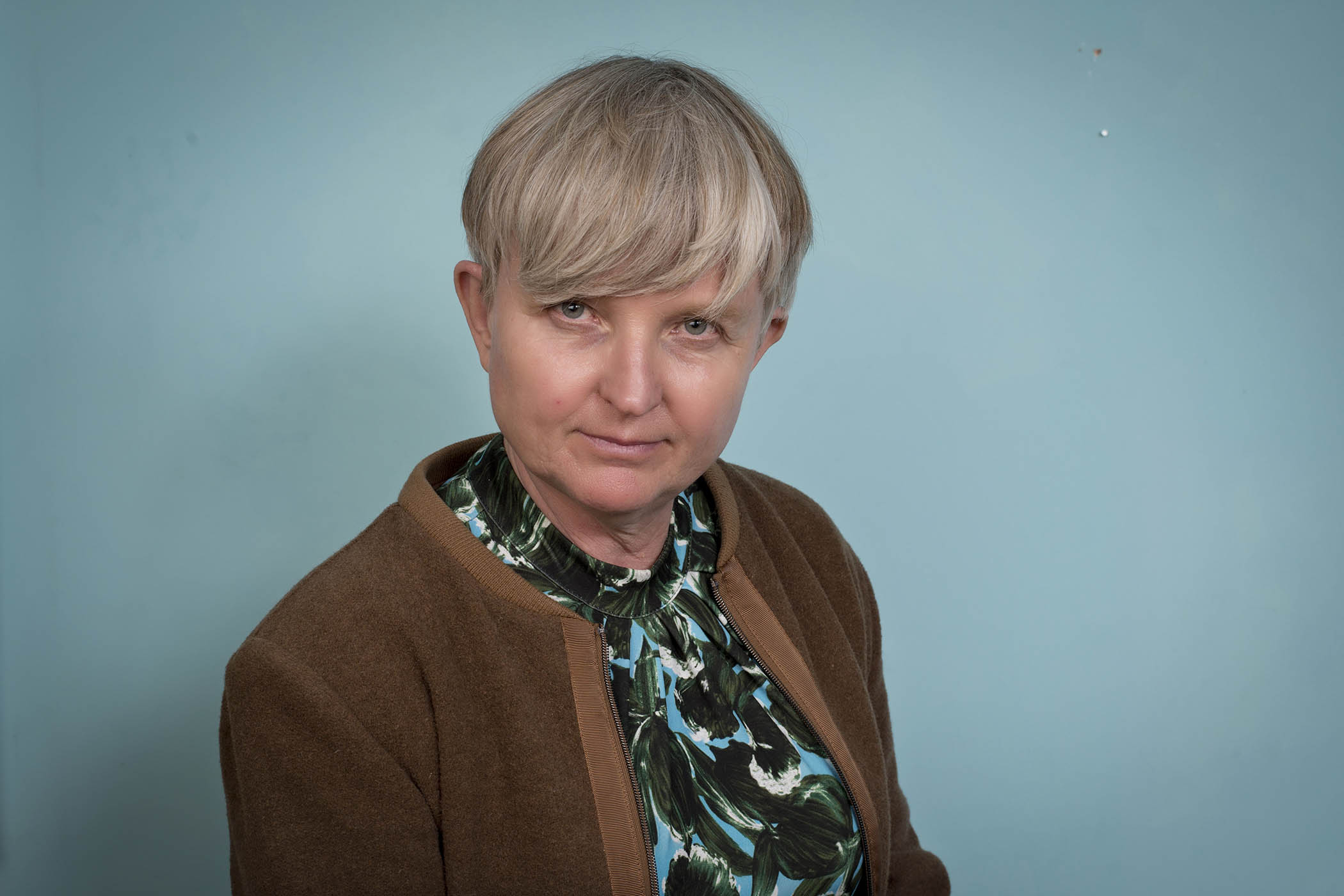
Portrait by Sophia Evans
Newsletters
Choose the newsletters you want to receive
View more
For information about how The Observer protects your data, read our Privacy Policy
Related articles: