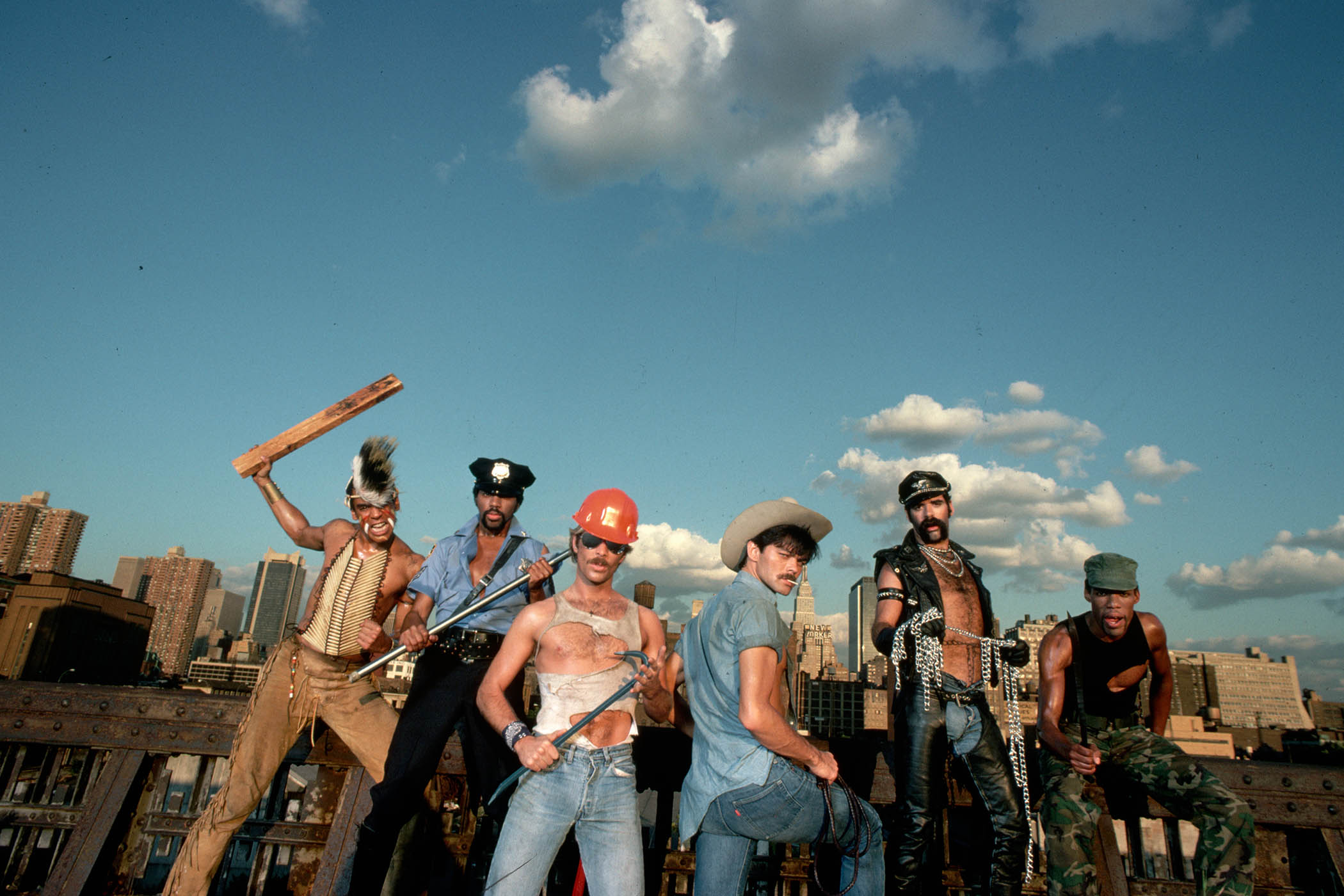


Donald Trump loves the Village People. So much, in fact, that he danced to YMCA at nearly all of his 2020 and 2024 campaign rallies. Online, people were quick to point out that the song has long been interpreted as an ode to gay sex. It’s named after notoriously cruisy health clubs where, the band sing, a “young man” can “hang out with all the boys” and “find many ways to have a good time”. It didn’t help that, on the advice of their gay producer Jacques Morali, the band performed as camp male archetypes – a cowboy, a biker, a sailor etc – or that they filmed the music video at New York’s horniest homosexual havens, from Chelsea to the Christopher Street Pier. Victor Willis, the only original band member still with the group, has threatened to sue anyone who claims such interpretations as fact. (Evidently not Trump, though, who on the Full Send podcast called the song the “gay national anthem”.) The furore raises an interesting question: when is music “gay” and who gets to label it that way?
That question is an unsung refrain throughout Barry Walters’s Mighty Real: A History of LGBTQ Music, 1969-2000. Structured like a sonic encyclopaedia with 60 entries on artists and musical genres, it can be browsed as one might flick through a record shop bin. Walters, a music critic who cut his teeth at the Village Voice and Rolling Stone, includes musicians both living and dead, and both openly queer and closeted – but also straight artists whose work has long been perceived as queer-coded by the LGBTQ+ community, whether or not they meant it to be. (Not one to miss a joke, Walters calls YMCA “as all-American as circumcision”.)
The book’s dates align it with the post-liberation era. It was in June 1969 that a wake for Judy Garland, held by some of her trans, lesbian and gay fans at a Greenwich Village dive bar, was raided by the police, sparking the Stonewall riots. Where queers projected their own traumas on to Garland’s tragic figure, the divas that followed often played to the crowd. Enter the “pink dollar” that was so crucial to the emergence of genres such as house and disco: Walters cites the estimate of a 1970s label owner that a disco record could sell 100,000 copies simply by marketing itself to New York gays. The book is full of nominally straight, camp performers who banked those bucks, from Donna Summer and Cyndi Lauper to Madonna and Cher. Walters invites us to wonder just how knowing Diana Ross’s 1980 empowerment anthem I’m Coming Out really is – and recalls that Kate Bush sings 1978’s Kashka from Baghdad from the perspective of a voyeur watching a midnight tryst between two men. The lives of some of these singers were even gayer than their art: Grace Jones began frequenting queer clubs with her brother while still a teenager, while Bette Midler’s breakout gig was as a lounge singer in a gay sauna.
Walters writes movingly of being a ‘junior high punching bag’ for whom glam rock was a lifeline
Walters writes movingly of being a ‘junior high punching bag’ for whom glam rock was a lifeline
British music was also pretty bent at the end of the 20th century, judging by the string of chapters devoted to UK acts such as Soft Cell, Boy George, Wham!, Bronski Beat and the Pet Shop Boys. All of them sang thinly veiled lyrics about queer love and sex at a time when “promoting homosexuality” was still illegal under Section 28. The 1980s and 90s also heralded a lesbian renaissance, with Sapphic stars such as kd lang, Tracy Chapman, Indigo Girls, Melissa Etheridge and Sinéad O’Connor hitting the charts. Walters makes only passing mention of riot grrrl bands such as Bikini Kill, who deserve a book unto themselves.
Like pop tracks, the book’s chapters can feel too fleeting. This isn’t a musical memoir in the vein of Before Pictures (2016), Douglas Crimp’s journey into the disco night; you won’t be transported to the throbbing, ecstasy-laced dancefloor at Paradise Garage. But some of Mighty Real’s most potent moments are nonetheless its brief personal asides. Walters writes movingly of being a “junior high punching bag” for whom glam rock was a lifeline: “I had the [New York] Dolls, the scrappiest sissies, and my bullies did not. I’d discovered the secret of life, or at least my survival. They proved the so-called bad things about myself were actually good.” Walters and I are more than 30 years apart in age, but we both found our queer kin at raucous midnight screenings of The Rocky Horror Picture Show. Like him, Lou Reed taught me it was OK to walk on the wild side.
Reed’s 1972 homage to his transgender friends Holly Woodlawn, Candy Darling and Jackie Curtis still feels subversive, with trans rights under renewed attack in the US and UK. Mighty Real gets its title from a disco hit by the ethereal singer Sylvester, who would probably be considered nonbinary were he still alive today. There are chapters on brilliant trans pioneers including Wendy Carlos, a godmother of electronic music who scored films such as A Clockwork Orange and Tron. Walters’s project is a bulwark against attempts by Trump and others to appropriate or erase these cultural contributions – and a reminder that music can’t so easily be taken away.
Mighty Real: A History of LGBTQ Music, 1969-2000 by Barry Walters is published by Viking (£30). Order a copy from The Observer Shop for £27 (10% off RRP) with free P&P.
Photography by Lynn Goldsmith/Corbis/VCG via Getty Images
Newsletters
Choose the newsletters you want to receive
View more
For information about how The Observer protects your data, read our Privacy Policy