
Photograph by Chloe Ellingson for The Observer
The publishing story of the summer almost didn’t happen. “You know how, in the past year or so, every writer on Earth has been getting all of these spam emails? I think if I got it now, I would have just deleted it,” says the Canadian author Joan Barfoot, who is 80. The email was from a commissioning editor at Faber & Faber asking for the rights to republish Gaining Ground, Barfoot’s 1978 long-lost debut novel.
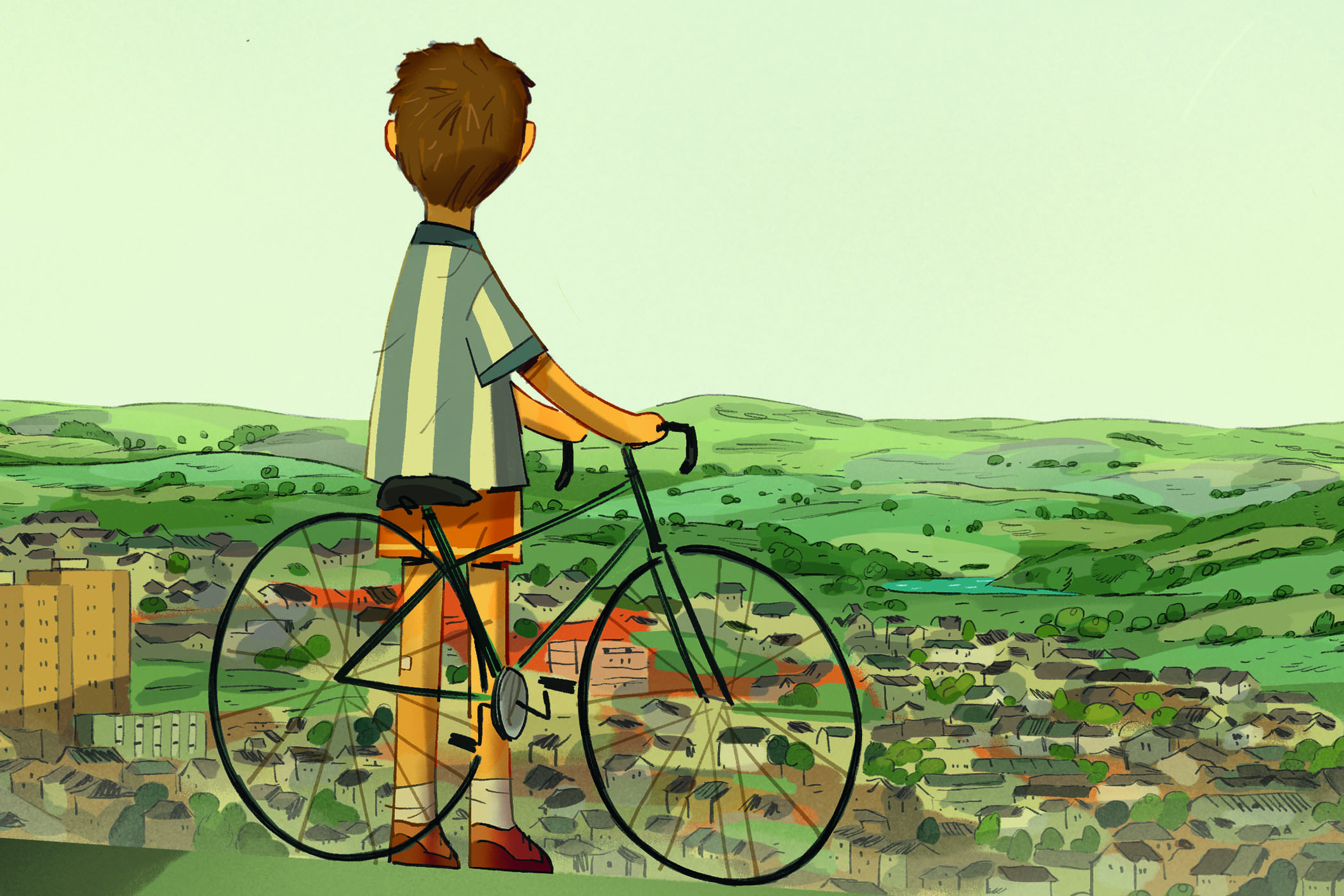
Gaining Ground is a strange and compulsive read, in which a woman named Abra abandons a steady and comfortable life in the suburbs of Toronto to secretly move into a remote cabin. In the process, she leaves her two children and husband without so much as a goodbye. Abra lives by her wits and the seasons, growing vegetables. The reader meets her nine years after she’s vanished, when she is visited by her now adult daughter, Katie. Abra is bemused by Katie’s arrival: she no longer recognises – barely remembers – her own child.
“It’s not hard to see why it never really broke through on original publication,” says Rachel Darling, who works in marketing at Faber and who found Gaining Ground in the secondhand bookshop Books, in Peckham, south-east London. “It’s hard to swallow what [Abra] does.” Yet, despite Abra’s actions, her story is as invigorating and inspirational as it is provocative. Writers including Margaret Drabble and Max Porter, have professed their fascination with the book. Booker prize winner Samantha Harvey called it “a life-changing novel”. Faber’s head of classics and heritage, Ella Griffiths, who is republishing Gaining Ground, says she’s “never seen blurb quotes like this” for a rediscovered gem in her career.
Faber has now sold Gaining Ground’s translation rights in 13 territories, and is entertaining film and television interest (Barfoot explains her agent is “bright and sparky”, but nevertheless 100 and retired). The actor Jodie Comer is said to be a fan. Booksellers are stockpiling gourds for display – Abra must live off the land – in readiness of the book’s release.
“Anyway,” as Barfoot regales me with the surprising new chapter in her career, “it all unfolded, and stuff is happening.”
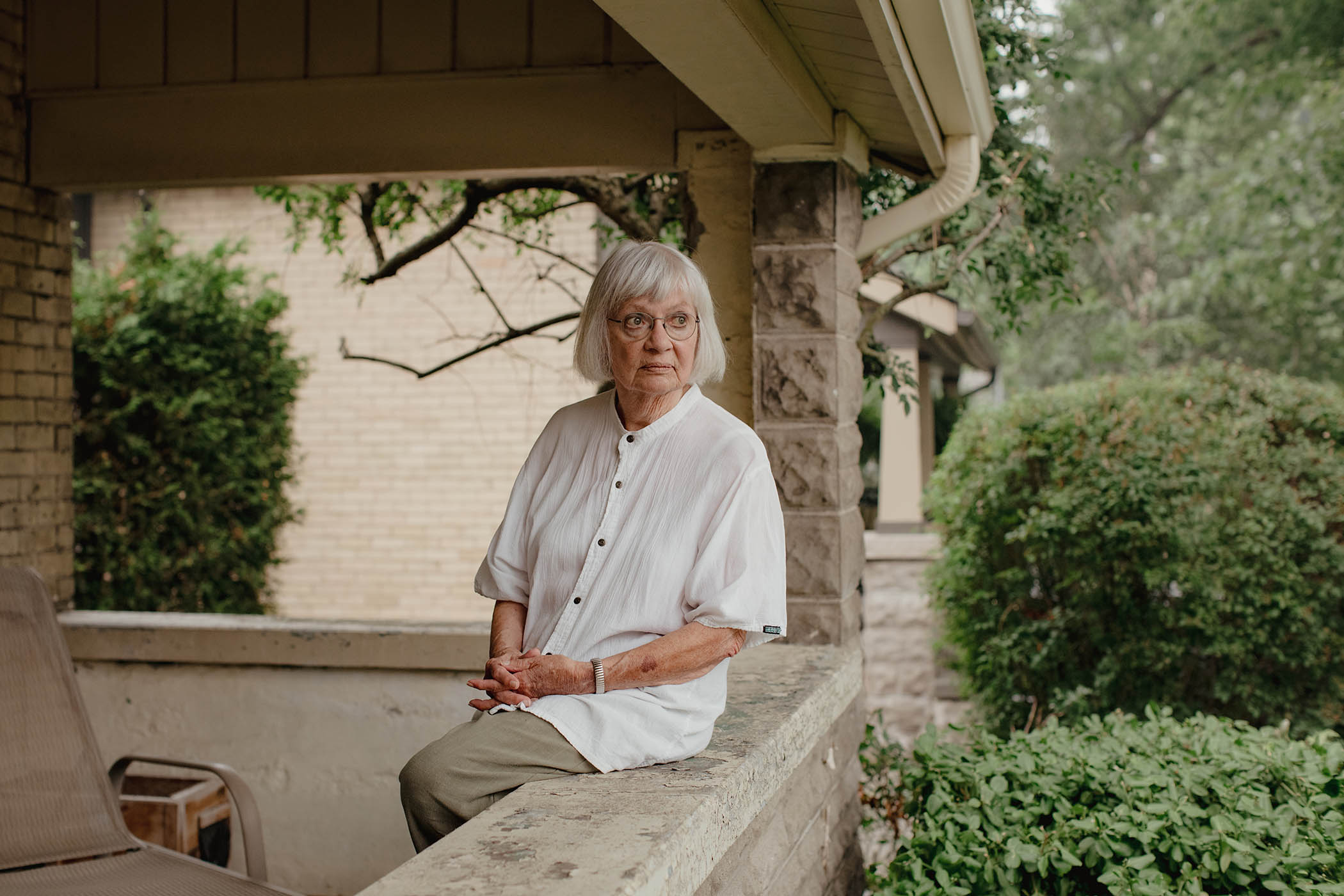
It’s early morning in the yellow-brick bungalow next to a park in London, Ontario, where Barfoot has lived for 20 years, but she has already had a coffee and a couple of cigarettes. She’s witty and self-deprecating, and clearly delighted by this turn of events – the kind of thing even a career author dreams of. She followed Gaining Ground with a further 10 novels; one of them, Critical Injuries, was longlisted for the 2002 Man Booker prize, and her penultimate novel, Luck, was nominated for prestigious Canadian literary award the Scotiabank Giller prize in 2005.
She writes probing and darkly comic books about ordinary people being pushed to their extremes, an oeuvre informed by a parallel career as a journalist, which introduced her to countless stranger-than-fiction situations. She was respected by other writers and literary critics, but Barfoot never made the big time. This summer, she just may.
“My career was wrapped,” she tells me. “I was done. This has all just been amazing to me, in a sort of full-circle way. The first [book] coming up at the end of, I guess I’d call it a career, is just astonishing. I mean, I’m old. Retired. Suddenly, there’s this magic happening.” She has no plans to revive her career in the wake of Abra’s second life. “I would say for all those decades I was addicted [to writing]. Suddenly, the appetite was gone.” Instead, she intends to “sit here and bask”.
Barfoot was the only woman at the Sunday Sun newspaper in Toronto when she started working on what would become Gaining Ground (“They hung pin-up pictures all over the place, so I hung up Burt Reynolds from [Cosmopolitan] – they were terribly offended”). She had been inspired by a returning flatmate – she lived in a house share at the time – who had gone to Central America and returned with a novel manuscript.
Newsletters
Choose the newsletters you want to receive
View more
For information about how The Observer protects your data, read our Privacy Policy
“He said: ‘You know, it’s just one word after another,’ and I thought: ‘I could do that – I do that every day.’ It’s not an original thought, but it really was what opened the door from wanting to be a writer, but not writing because it seemed like too much to do.” Her debut, which was published as Abra in Canada, took her three years, which set the metronome for novels over the course of her career. Barfoot would leave a journalism job to work on a book, then return to the newsroom: “I’m old enough to be from the time when it was a seller’s market, so there was always a job to be had.”
Barfoot wrote Gaining Ground, she says, because she was preoccupied with the “myth or impossibility” of “how can we be when we’re living true?” The first few sentences came to her as she was driving back to the house share after a family Christmas. “What would I be if there was nobody and nothing to tell me that I exist? If you don’t fit into the life that regular people are expected to have, where is the place that you do fit? How far will you go to live in a state of your own nature, how do you even find it?”
Abra is a woman whose life before the cabin is ruled by timekeeping and appearances: how she should look and the languid hours that demarcate a day of caring for young children before emptying out as they grow up. Then she moves. The cabin has neither a clock nor a mirror; she hacks off her own hair by feeling; she rises with the sun; she senses the change in the seasons as an animal would. She survives the winters and undergoes a clarifying fever each spring.
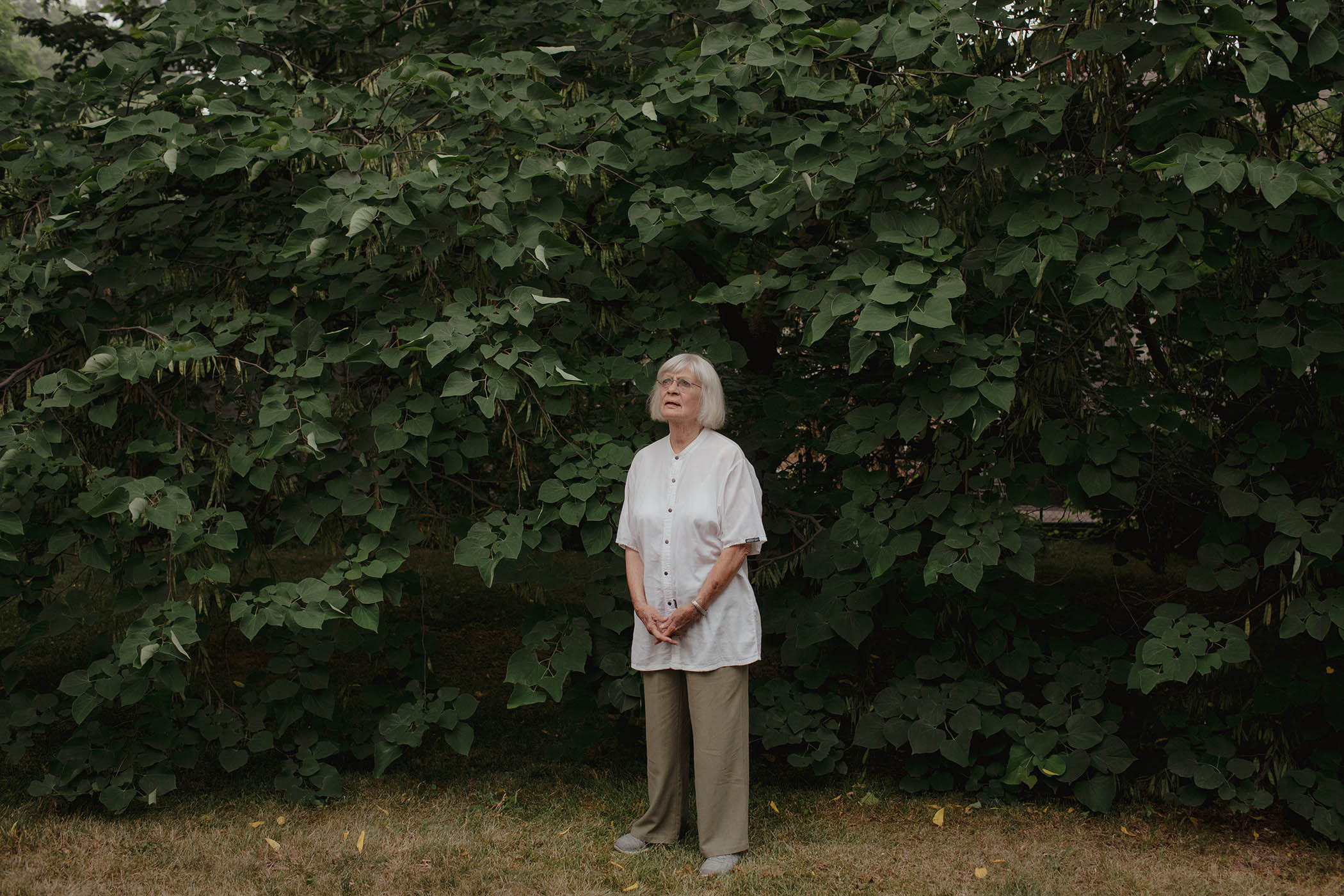
Joan Barfoot wrote Gaining Ground in 1978
Barfoot was an academic child in a cattle-rearing family; she spent her first 18 years on a “thin-soiled, gorgeous, rocky farm” in Ontario, where she was largely left to her own devices, playing with the dog, “falling off horses”. School was boring, aside from the grammar teacher she named Abra after, and she was the first in her family to go to university. Abra’s self-sufficiency was inspired by her mother’s, she tells me: “It’s all down to my mother; she was a gardener – vegetable gardens were preserving and eating – but also designing her own gardens. That’s all her. What I did was watch.” When I ask if she ever married, the author says her life had weathered “periodic serial monogamy”.
When Gaining Ground was published, Barfoot discovered that everyone else thought she had written a feminist book – something that surprised her. “My notions of feminism at the time were not substantial,” she says now. “I didn’t really have a clear idea of what the expectations of women were, as opposed to just being a human on Earth.” She was subsequently encouraged to join a feminist book club by a group of academics. “I learned, and I’ve continued to learn,” she says. They’re still meeting every month now; Barfoot says her members are among “the people who will come to my funeral”.
Later, she emails me to clarify her “earlier babbling and scrabbling” regarding the book’s feminism: “I’ve decided it boils down, simply, to: woman makes choices by and for herself.”
I suspect it’s something she’s been tussling with for a long time. After the novel’s release 48 years ago, Barfoot was touring the book in the UK when one of her event audiences dissolved into a debate sparked by Abra’s abandonment of her home and children. “That was interesting to watch,” she remembers. “It was a terrible, oppressive stereotype that you become a mother and dedicate your life and happiness to those little creatures; there’s got to be something else left over for yourself. I think that’s what people were arguing about.”
Barfoot doesn’t have children – she tells me she would have been “a terrible mother” – but she thinks that the expectations of that generation of mothers have now been “deadened by a certain amount of realism”.
I’m not sure I agree. I first read Gaining Ground six years ago, after seeing it mentioned on an ancient Mumsnet forum entry. At the time, I was contemplating having children, and the book captivated me. Barfoot tells the story from Abra’s clear-eyed, level perspective. “I swear I loved them all, and I did the best I could,” she tells us in the text. “And then I left them, left all of it.”
I now have two children, and reading Gaining Ground cuts differently: both deeper and more desirable. When I tell people – especially other mothers – the plot, they are fascinated and horrified.
“There have been many recent books about motherhood that explore the complicated, ambiguous space of what it means to retain your freedom and identity while raising children,” Faber’s Griffiths says, “but a lot of them are memoirs. In the novel form, Gaining Ground feels – ironically, given that it was written half a century ago – like it is propelling this discourse forward with such exciting, disruptive power.”
Before its republication, Barfoot reread Gaining Ground for the first time in decades, something she admits she was afraid of, before realising that it was “well done”. Abra, Barfoot says, “is more powerful than I am as a character, as a person, and I’m just absolutely fine with that”. She is reluctant to divulge how her creation came into being: “I like to maintain some kind of purity for her, as opposed to intruding myself into it too much or at all, really, because there’s a power in her story that I guess I would like people to actually absorb and encounter rather than being diverted by my mundanity.”
It’s not the first time Barfoot – who is warm and dry-witted and relatively cosy, all told – has had to prove the distinction between herself and Abra. Years ago, she was sharing a stage with Margaret Atwood, who admitted she expected Barfoot to have the gothic trappings of “high cheekbones” and “long hair”. (Atwood’s second novel, Surfacing, shared the theme of escape into the wilderness.) Barfoot’s first editor admitted that she prepared to encounter Abra, not the author herself, at their first meeting.
When I first read Gaining Ground, I was so taken with it that I followed the instructions on Barfoot’s website to email her for copies of her books, more because I wanted to chat to her about it than anything else. She had been self-publishing her own ebooks in recent years. “I was probably aware that it was hard to find copies in bookstores,” she admits.
A secondhand bookseller once recognised her and asked if she had any copies of Gaining Ground, as “they’re worth quite a bit of money, so that was a clue. It became a kind of cult book – I think it was called that. And now maybe we break out of the cult.”
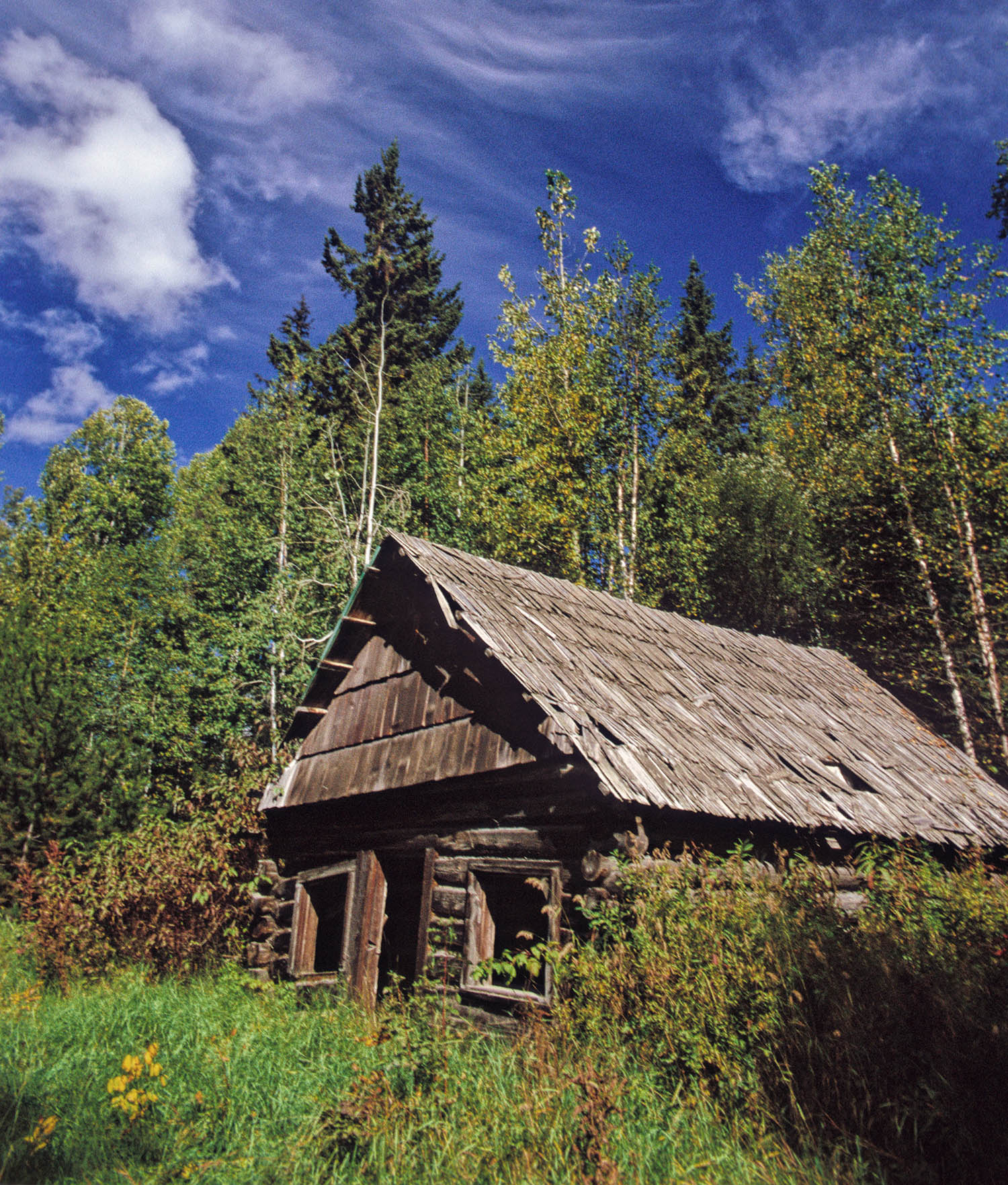
In the book, Abra leaves a comfortable existence to live in a cabin in the woods
______________________________
From Gaining Ground, by Joan Barfoot
It should have been obvious one of them would turn up, one day. I am glad, though, that I did not think about it. It would not have helped.
The girl is pretty, very pretty. I can see her clearly from the garden, where I have been thinning the lettuce, checking growth, weeding; I do this every day, and it is going to be a fine season. She is walking slowly toward the cabin – is a car waiting for her somewhere, or can she have walked all the way from town?
She seems a very pale person, but then my own hands working among the plants are now so brown that I cannot really be a judge of pallor. She doesn’t notice me squatting in the garden. I imagine she knocks very softly on the door, for she looks timid. I consider, at first, staying where I am, waiting, quiet, until she leaves. But she looks around and her face is frightened, so vulnerable, I think I must do something, for I am strong and think it can do no harm. I stand, brushing soil from my hands, wiping them on my jeans, wondering how to approach her so that she will not be more frightened.
I think to call out to her first, gently, not to startle her, because she looks so much like one of the deer I sometimes see here, senses darting, alert for signals of danger. But after so little use, because I have never become a person who talks to herself, or to animals, or to plants, my voice refuses to be normal. “Can I do something for you?” I call softly, but my voice cracks and comes out, I know, gnarled, maybe menacing. She is startled, whirls to see me and stares. I feel badly. I have tried to keep people away, but I have never tried to frighten anyone. It is sad to see someone look at you with fear.
The words are better the second time. I clear my throat, smile, carefully put down my hoe and begin to walk slowly toward her. I wish for something in my hand to offer her, a piece of food, a gift.
“Can I do something for you?” I say again. She is watching me. I approach her slowly, slowly, giving her time to realise my kindness, my lack of will to hurt her. One must do that here with the animals. The things of nature are filled with mistrust.
She watches me still and waits. She does not bolt, the way some animals still do, although I have been here so long. Her face puzzles me, for it looks as if she wants to run, there is a wariness, and yet there is determination too, and she will not run. Closer, I think she looks ill, and I wonder where she has come from. I feel no welcoming; but also, and I am surprised at this, I do not especially want her to go away. I cannot say why.
I stop a few feet from her. She must say now what she wants, give me some sign, for I cannot go further. We stand silently looking at each other. Several times her mouth moves as if she will begin to speak, but each time she swallows back the words. I think I do not look unkind, although I do not know what she may see in my face.
Until finally: “Are you Abra Phillips?” Her voice is very soft, girl-like and high, trembling a little as if it is not her real voice but has just appeared, like mine, unrecognisable to her.
The words mean something to me. Somewhere in my mind, “Abra Phillips” is familiar, and I consider it. “Are you Abra Phillips?” Am I? I think, finally, that I must be; there is no one else to connect with the name.
“I believe I am,” I answer. I say it judiciously, for that is how I have weighed the answer, but she steps back a pace, and her expression tightens. I am puzzled; what is Abra Phillips that this girl, this slim person with large eyes, staring, should be so threatened?
Again there is silence. I cannot think how to reassure her; it does no good to say, “Don’t be frightened. There is nothing to be afraid of.” The things of nature have to learn that for themselves. They take no one’s word for it.
“Do you know who I am?” she asks at last, almost whispering, sounding older that way, not so girlish.
I do not know who she is, and now I, too, feel uneasy. Should I know? I feel pressure from her, an expectation that makes me uncomfortable. I recognise nothing about her, cannot recall meeting her, am sure she can be no one from the town. But still, and again I cannot say why, it seems important to be polite.
“No, I’m sorry, I don’t recognise you. Have we met?”
“A long time ago, yes,” and she looks at me, hopeful. “I suppose you might not recognise me now. I’m Kate.”
It is evident that she expects me to know her by that, and to make some response. But I do not know her, cannot imagine what she wants from me, resent this unspoken burden of hers. I feel the beginnings of anger, for this is my place. I want her now to leave, and I am abrupt.
“Please go away,” I say. “I don’t know you, I think you must have the wrong person. I do not know anyone named Kate, I don’t know what you want from me. I can’t help you.”
I start to turn away. The sun is very high, very hot, and I want to work in my garden, to pull the cool earth from underneath and spread it around my plants, to dampen and comfort them. In such heat they can feel burned.
But she does not go. I can feel her standing there still, watching me, and then I hear her begin to cry. Even so, or especially so, for I can think of nothing I can do about her pain and I want to be away from it, I do not turn back. I am still moving slowly, carefully away, when she speaks again.
“Kate, Mother,” she says. “I’m Katie. Your daughter. I’m your daughter. My name is Kate Phillips.”
I stop, but I do not turn back to her, not yet. Daughter? Someone from so far away, so far back that the time she comes from is no longer with me? A daughter. I consider the word, a strange word; I roll it in my mind, explore what it means, and finally I remember “daughter”; it is child. A nine-year-old, very thin, with enormous eyes, like this young woman who is here now. Daughter was that little girl. Can this person also be daughter?
I turn to consider her again. The eyes, yes. The slenderness yes also, although this person is not thin in the same way as the nine-year-old. Not a child’s face, though, not the daughter’s face at all. Much older, not lined, not older like that, but somehow tired. Not fresh, like the daughter’s face. They cannot be the same person, the daughter was someone else altogether, a child. I have not thought about her for a very long time, and this person has no right.
“No,” I say strongly, my voice supporting me this time, giving me timbre and strength and harshness. “No, you are not my daughter. I remember her, and she is not like you. Go away now.”
She does not move.
______________________________
Gaining Ground by is published by Faber (£9.99). Order a copy from The Observer Shop for £9 (10% off RRP). Delivery charges may apply
Additional photographs by Chloe Ellingson and Robert McGouey/Alamy