
Around 8am on the day that the town of Dunblane would be wrenched from obscurity to become headline news across the globe, I took the train from Glasgow to Stirling. I was going to the office of the law firm which, back then, was my place of work.
When I boarded the train there was nothing to distinguish the day from any other. But within just a few hours, everything would change. 13 March 1996 would become one of the darkest dates in Scottish and UK history.
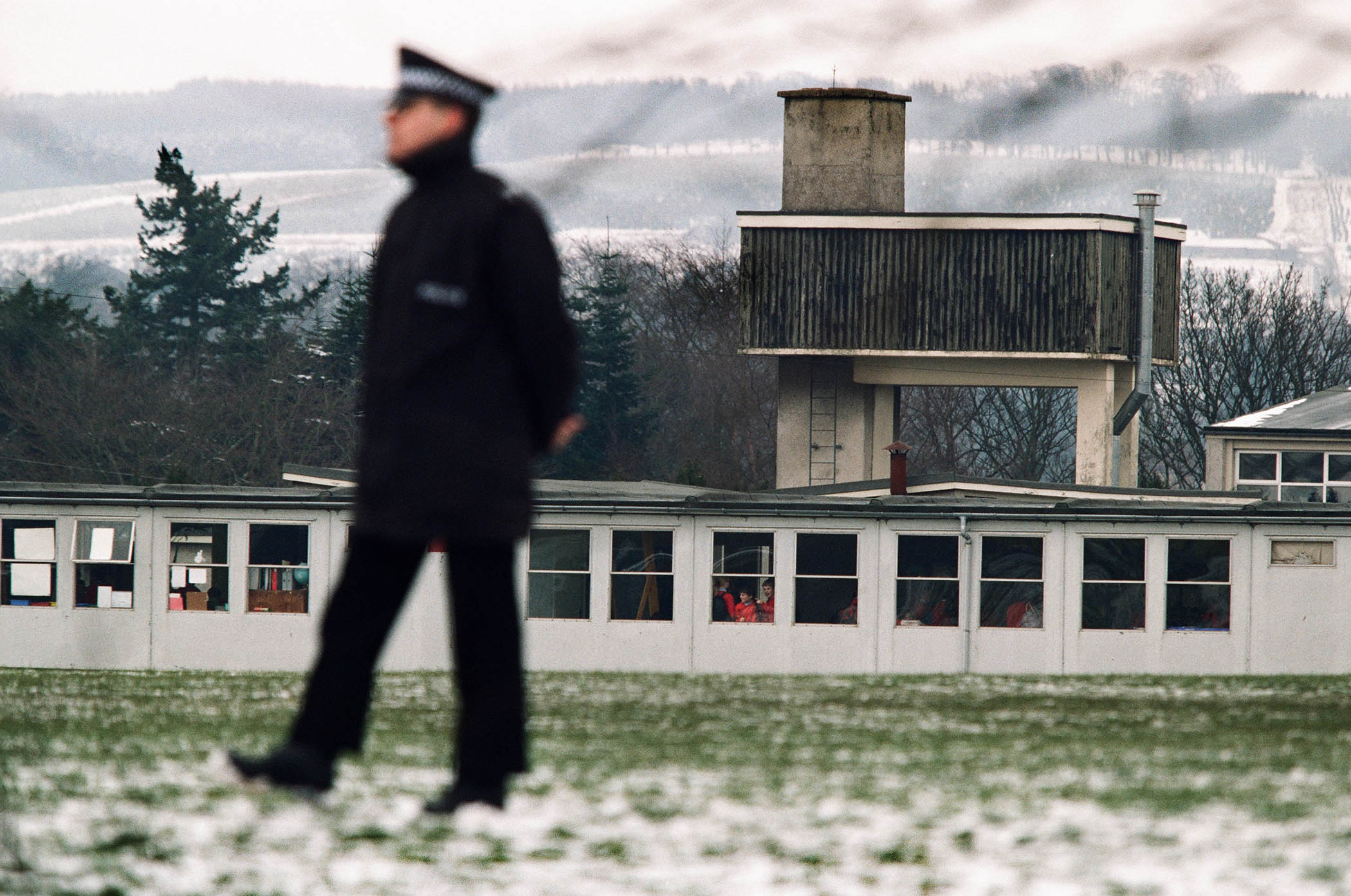
A few minutes after I embarked, a man called Thomas Hamilton left his home in Stirling. He scraped ice from the windscreen of a hired van and had a brief conversation with a neighbour, who was surprised to see him out so early. Hamilton then went back inside. A telephone directory lay open at a page containing the address of Dunblane primary school. He pulled on four leather holsters and put two semi-automatic pistols and two revolvers into them. He packed two canvas bags with 501 rounds of 9mm and 242 rounds of .357 ammunition. He then drove to Dunblane primary school. When he arrived, he got out of the van, made straight for a telephone pole to cut its wires, and then walked the short distance to the school full of children who had just finished morning assembly.
Stirling is around six miles from Dunblane. The complex I worked in, Stirling Business Centre, sits just below the road linking the two places. It must have been around 10am when news of the horror unfolding in Dunblane primary school started to filter into my office. It didn’t come, initially, from the media – this was well before the days of instant social media reporting – but from inside the building I worked in and from sounds immediately outside it.
If I close my eyes, I can still hear the noises I am about to describe.
A woman who worked in one of the other firms in the centre ran, screaming in anguish, to the main entrance of the building. Her child was a pupil at the school. I didn’t know the woman, but in an instant she became, for me, the human face of an unimaginable atrocity. Mercifully, her child was unharmed though it would be several hours before that news reached us.
Then there was the wail of sirens of ambulances speeding to Dunblane and, a short time later, making the return journey with seriously wounded children and teachers on board.
For most of that day I sat huddled with colleagues waiting for news. Slowly, the enormity of what had occurred became brutally clear. Sixteen primary one children – aged five and six – and their class teacher, Gwen Mayor, had been shot dead in the school’s gym hall by a crazed gunman, who then killed himself. The name Thomas Hamilton meant nothing to me, but for some colleagues who lived locally, it did ring a bell. Hamilton did not appear from nowhere. He already had notoriety in and around Stirling as the organiser of boys’ clubs – where his methods had brought him into conflict with many parents over the years – and as someone with an unhealthy fascination with guns. He was well known to the authorities, including the police.
Reading the journalist Stephen McGinty’s harrowing and engrossing book One Morning in March: Dunblane and the Shooting That Changed Britain, the sense that the atrocity might have been prevented is almost impossible to ignore. There is no question that McGinty does his subject justice. The book is meticulously researched but written with deep humanity and an immediacy that makes it hard to put down, even though the reading experience is an extremely painful one. There is no hint of gratuitous sensationalism but every page is imbued with emotion. He lays bare the grief of parents as well as their determination to change gun laws, to ensure that their children’s deaths were not in vain. He describes not just the immediate shock of the wider Dunblane community but also the more complex feelings that would later set in, as overwhelming sympathy for the bereaved began to sit uneasily with the desire of the town to move on.
The police missed many chances to address Thomas Hamilton’s alarming behaviour towards young boys and, most importantly, take away his guns
The police missed many chances to address Thomas Hamilton’s alarming behaviour towards young boys and, most importantly, take away his guns
McGinty chronicles the ups and downs of the Snowdrop campaign, so named for the only flowers visible above ground that chilly March morning, and the remarkable women who spearheaded it – Ann Pearston, Jacqueline Walsh and Rosemary Hunter – as they battled to secure an outright ban on the private ownership of handguns, a campaign that partially succeeded under John Major’s government and prevailed fully under Tony Blair’s. Before Dunblane, any civilian could obtain a licence to own a handgun – they simply had to show “good reason” (usually target shooting at a gun club), pass background checks and show that they had secure storage for the weapon.
Newsletters
Choose the newsletters you want to receive
View more
For information about how The Observer protects your data, read our Privacy Policy
But more than any of that, what hits the reader hardest is McGinty’s painstaking account of the multiple complaints raised by parents about Hamilton over the years and the many missed opportunities on the part of the police to address his increasingly alarming behaviour towards young boys and, most importantly, take away his guns.
The book opens in 1988 when police are called to an island on Loch Lomond where Hamilton has taken a group of eight and nine-year-old boys on a trip. The police receive reports of maltreatment and find the boys stripped to their swimming trunks, with only basic food to eat and no adult supervision other than Hamilton. One boy gives an account of physical abuse: “You also got a slap if you didn’t call him ‘Sir’. He insisted that everyone call him ‘Sir’.” Over the following years there are repeated complaints of abuse and inappropriate photography of young boys but little is done about it.
Any time he comes under scrutiny, Hamilton claims that he is the subject of harassment and makes it his practice to write frequent and lengthy complaints to the police, the council and local politicians. This “victimisation”, coupled with an apparent blind spot on the part of the police and local council – an unwillingness to contemplate that Hamilton might be an actual risk to children and a confirmation bias that everything would be fine – seems to have hampered any chance of the police taking action. Instead of acting on a precautionary basis, they repeatedly conclude that there is insufficient evidence to do anything about him.
Most heartbreaking of all is the account of the renewal of his gun licence in 1995. The detective constable who interviewed him found the experience “disturbing”. She said that it gave her a “strange feeling”, but as she had no access to the intelligence file on Hamilton, she decided that it was just her imagination.
The deputy chief constable who ultimately approved the application was fully aware of Hamilton’s background and yet, in spite of it, declared Hamilton a “fit and proper” person to possess guns. Even worse, there was a mistake made in the issuing of the licence: it erroneously permitted him to hold two guns of the same calibre without having given a persuasive reason for doing so. This was contrary to the firearms legislation of the time. The deputy chief constable resigned in the wake of the public inquiry into the atrocity.
If there is a straw to clutch at here, it is the knowledge that reforms made in the wake of Dunblane – the ban on handguns, but also the strengthening of child protection regulations – make it much less likely that someone like Hamilton could commit such a heinous crime today. It must be cold comfort for all of those whose lives were scarred by his actions.
There were other positive responses to Dunblane – some of which might be different now. The relative restraint of the media, for example. Although the world’s press descended on Dunblane, they agreed after a few days to allow families space to grieve privately. My late uncle was a tabloid journalist in those days. The weekend immediately following the tragedy, after a family gathering for my sister’s birthday, my then partner and I drove him to Dunblane to start his shift. By then it was clear that the media presence was winding down. Would the same restraint be exercised today? I’m not sure.
The aftermath of the shooting also brought displays of political unity. By a quirk of fate, the secretary of state for Scotland, Michael Forsyth, was MP for the town and his Labour shadow, George Robertson, lived there. Robertson’s son had briefly attended one of Hamilton’s boys’ clubs. Forsyth and Robertson demonstrated incredibly unified leadership in those dark days. Indeed, Forsyth – always a controversial figure in Scottish politics – emerges from the book with immense credit for his determination to push the Tories as far as possible on gun control. Would the same political courage and unity of purpose be shown in today’s political culture – or would a tawdry blame game kick in instead?
The date 13 March 1996 will be forever etched in the soul of everyone who remembers it. Recalling that awful day will never be easy. But McGinty’s account is a fitting reminder of the lessons that had to be learned – and of the courage of so many in the face of such unbearable horror and heartbreak.
One Morning in March: Dunblane and the Shooting That Changed Britain by Stephen McGinty is published by Swift Press (£20). Order a copy from The Observer Shop for £18. Delivery charges may apply
Photography by Corbis/Getty Images